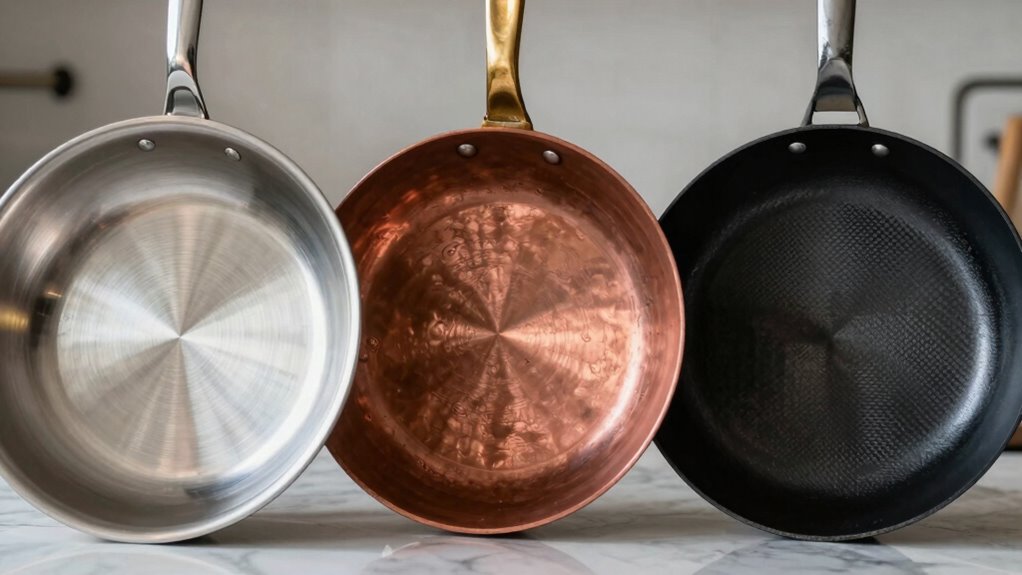

Choosing between stainless steel, copper, or carbon steel depends on your cooking style and maintenance preferences. Copper heats quickly and offers precise control, but requires regular polishing and is more costly. Stainless steel is durable, easy to care for, and great for versatile cooking, while carbon steel provides a rugged look and excellent heat response for everyday use. To find the best match for your kitchen, explore how each material’s strengths align with your needs.

Get home appliances delivered free — and shop member deals
- Fast, free delivery on millions of items
- Access to Prime Big Deal Days deals on October 6–7
- Prime Video, Amazon Music and more included
Key Takeaways
- Choose copper for precise temperature control and quick heat responsiveness, ideal for delicate and high-precision cooking.
- Opt for stainless steel for durability, low maintenance, and even heat distribution suited to everyday and professional kitchens.
- Use carbon steel for versatility, resilience, and developing a natural non-stick surface, perfect for sautéing and high-heat techniques.
- Consider maintenance needs: copper requires polishing, stainless steel is low-maintenance, and carbon steel needs seasoning to prevent rust.
- Match your cooking style and aesthetic preference—modern for stainless steel, vibrant and responsive for copper, rugged and versatile for carbon steel.
As an affiliate, we earn on qualifying purchases.
Which Pan Material Is Right for Your Cooking Style? (A Quick Comparison)
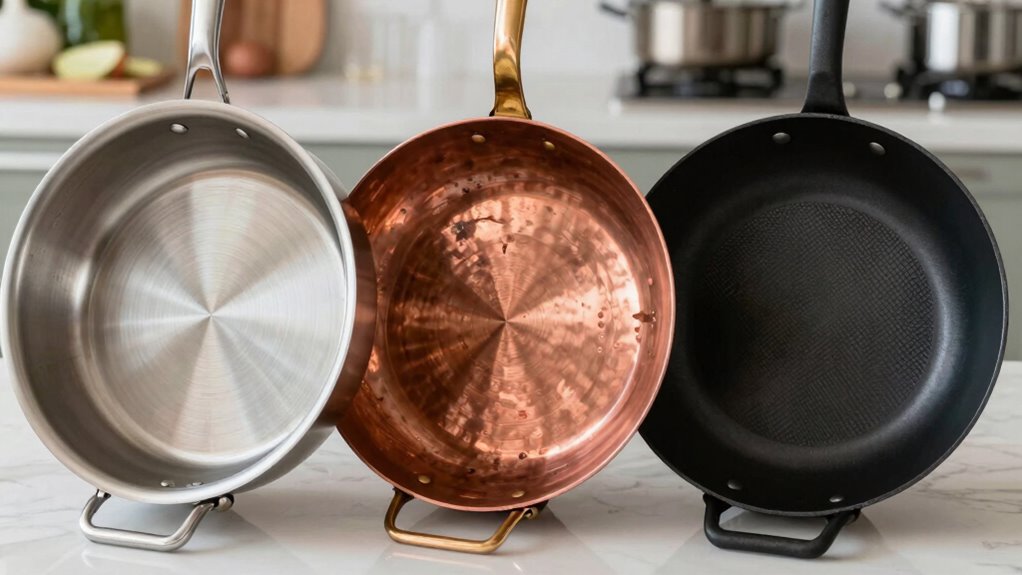
Choosing the right pan depends on your cooking style, as each material offers distinct benefits. If you prefer lightweight utensils, a stainless steel pan might suit you best because it’s generally easier to handle. Copper pans are often heavier but provide a sleek, stylish look that enhances your kitchen’s aesthetic appeal. Copper also has excellent heat conductivity, allowing for precise temperature control which is ideal for delicate recipes. Copper pans tend to heat up quickly and respond rapidly to temperature changes, making them especially valuable for precision cooking. Carbon steel pans strike a balance, being lighter than copper but still durable. Consider how much weight you’re comfortable lifting during extended cooking sessions. Additionally, think about the visual impact of each material; copper adds a vibrant, classic touch, while stainless steel offers a modern, polished appearance. Your choice should align with your comfort in handling the pan and the visual vibe you want in your kitchen. Practical, room-by-room solutions can help you maintain your cookware collection with ease.
How Do Heat Conductivity and Retention Affect Your Cooking?
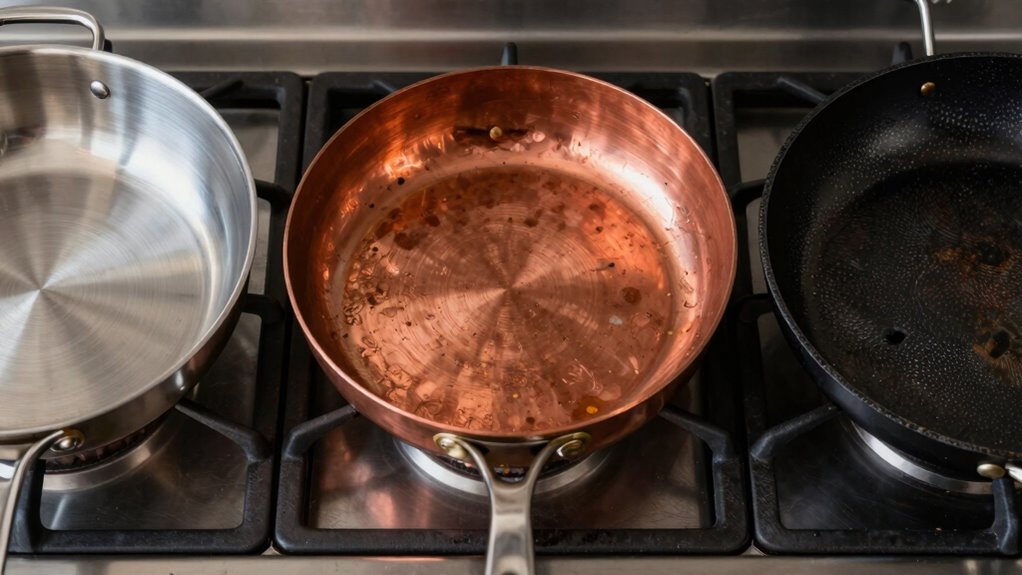
Heat conductivity and retention are essential factors that directly influence how effectively your pans cook food. A pan with high heat conductivity heats quickly and evenly, reducing hot spots and ensuring uniform cooking. Copper pans excel here, offering rapid heat transfer, while stainless steel and carbon steel are also efficient but slightly slower. The importance of heat transfer is vital for achieving precise cooking results. Heat retention determines how long a pan stays hot after removing it from the heat source, which is crucial for tasks like simmering or searing. Heavier pans, often made from copper or carbon steel, typically retain heat better, providing consistent results. Additionally, the thermal properties of materials affect how well your pan performs under different cooking conditions and influence energy efficiency. The thermal conductivity of a material impacts how quickly heat moves through the pan, affecting cooking speed and accuracy. Material composition plays a role in both durability and heat performance, impacting your cooking experience. The aesthetic appeal of these materials affects your kitchen’s look—copper’s shiny finish is eye-catching, while stainless steel offers a sleek, modern look. Your choice impacts both cooking performance and visual appeal. Furthermore, understanding Heat retention can help you select cookware that maintains temperature consistency during extended cooking sessions, ensuring better results.
What’s the Best Pan Material for Searing, Sautéing, and Gentle Simmering?
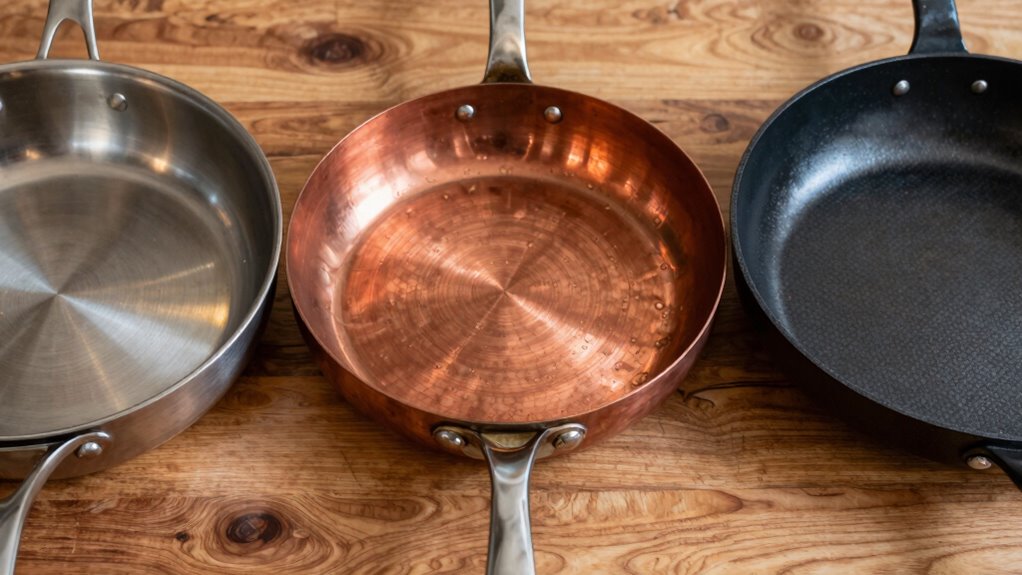
Choosing the right pan material depends on how well it retains and distributes heat for tasks like searing, sautéing, and simmering. You’ll also want a surface that minimizes sticking and gives you precise temperature control. Considering these factors helps you pick the best option for your cooking style and versatility needs. For example, heat conduction varies significantly among stainless steel, copper, and carbon steel pans, influencing their performance in different cooking scenarios. Additionally, the reactivity of certain metals can affect the flavor of your dishes, especially when cooking acidic ingredients.
Heat Retention and Distribution
When it comes to heat retention and distribution, the material of your pan plays a crucial role in how well it performs for different cooking techniques. Copper pans excel here, offering superb heat responsiveness and even heat distribution, which helps you sear or simmer precisely. Carbon steel pans also distribute heat well and retain it effectively, making them versatile for various tasks. Stainless steel pans tend to have more cookware weight and may heat unevenly, but they hold heat well once heated thoroughly. Pan aesthetics matter too; copper adds a sleek look and improves heat control, while carbon steel offers a rugged, attractive appearance. Choosing the right material depends on your cooking style and preference for heat performance versus pan weight and visual appeal.
Non-Stick Capabilities
While heat retention and distribution influence how evenly your food cooks, the pan’s non-stick capabilities determine how easily food releases and how well it performs for techniques like searing, sautéing, or gentle simmering. Non-stick coatings are essential for preventing sticking, especially with delicate ingredients or low-fat cooking. Copper and some stainless steel pans often require added fats or oils to improve food release, but high-quality non-stick coatings make it easier to cook with less oil and clean up quickly. Carbon steel pans can develop a natural non-stick surface over time through seasoning, offering good food release without synthetic coatings. Your choice depends on your cooking style—if ease of release and minimal sticking matter most, a non-stick coated pan provides the best performance for these techniques. Additionally, non-stick coatings can vary in durability and safety, so selecting the right one is key for both performance and health considerations. Properly seasoned carbon steel pans can also serve as a versatile alternative to non-stick cookware without synthetic coatings.
Temperature Control and Versatility
The best pan material for temperature control and versatility depends on your cooking techniques. Copper heats quickly and adjusts temperature precisely, perfect for searing and delicate simmering. Carbon steel offers great heat retention and responsiveness, ideal for sautéing and browning, with a relatively lightweight feel. Stainless steel is durable and versatile but heats more slowly, making it suitable for slow simmering and browning. Consider the pan weight and aesthetic appeal: copper pans are often lightweight and attractive, while stainless steel offers durability and a sleek look. Here’s a quick comparison:
| Material | Temperature Control | Best Uses | Aesthetic Appeal |
|---|---|---|---|
| Copper | Excellent, quick adjustments | Searing, simmering | Stylish, eye-catching |
| Carbon Steel | Responsive, good heat retention | Sautéing, stir-frying | Rustic, modern |
| Stainless Steel | Moderate, steady heat | Browning, simmering | Classic, professional |
How Durable Are These Pans, and What’s Involved in Caring for Them?
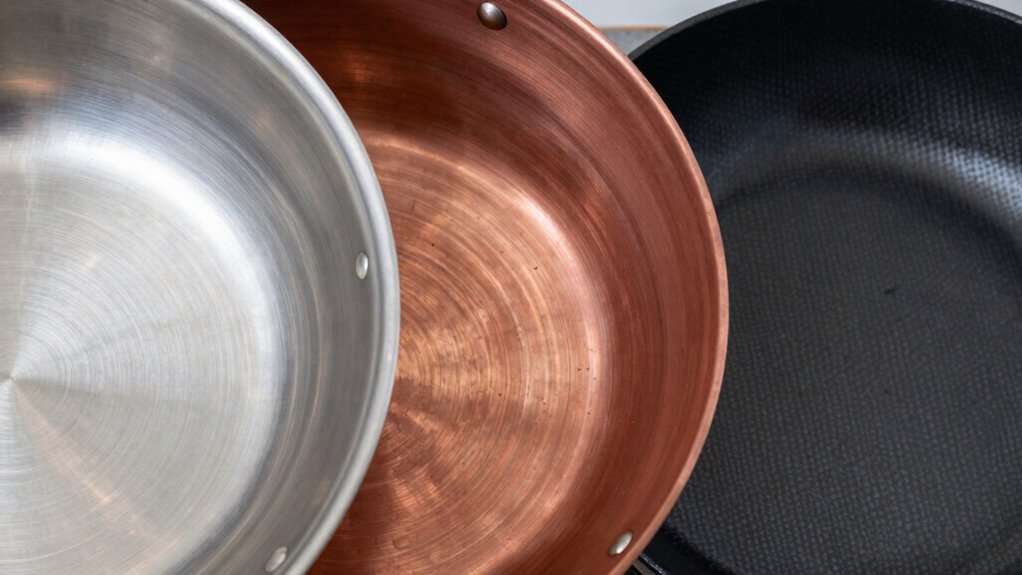
Your pans’ durability depends on their material and how well you care for them. With proper maintenance, they can last for years, but each requires specific tips to avoid damage. Understanding their repair options and longevity helps you get the most from your investment. Creating cozy spaces that promote proper storage and handling can also extend the lifespan of your cookware. Additionally, knowing the corrosion resistance of different materials can help prevent deterioration over time. Being aware of the material properties can further guide you in selecting the best cookware for your needs. Moreover, understanding material-specific maintenance can ensure you follow the appropriate cleaning and care routines for each type.
Material Strength and Wear
Stainless steel, copper, and carbon steel pans each offer different levels of durability, but understanding how they wear over time helps you choose the right one for your cooking habits. Stainless steel pans typically have excellent coating durability, resisting scratches and stains, though their surface can dull with heavy use. Copper pans are softer, with less material flexibility, making them prone to dents and scratches if mishandled. Copper’s high thermal conductivity allows for precise temperature control, but it also requires careful handling to prevent damage. Copper’s ethnic heritage and unique properties make it a preferred choice for many professional chefs. Copper’s maintenance requirements mean that regular polishing and cleaning help preserve its appearance and performance. Carbon steel pans are quite tough and flexible, allowing them to withstand regular use without warping or significant wear. While all three materials can last for years, their wear patterns vary. Proper care helps maintain their strength, ensuring you get the most out of your investment and that your pan’s material integrity stays intact over time. Material properties also play a role in how these pans respond to cleaning and maintenance, affecting their longevity. Additionally, understanding the wear patterns associated with each material can help in developing effective cleaning routines to extend their lifespan.
Maintenance Requirements and Tips
Maintaining these pans properly can substantially extend their lifespan and keep them performing their best. For carbon steel and cast iron, seasoning techniques are essential—they create a natural non-stick surface and protect against rust. Regularly applying a thin layer of oil and heating the pan helps build this seasoning. When cleaning, avoid harsh abrasives; instead, use hot water and a gentle scrub. For stainless steel, use warm water with a mild detergent and a non-abrasive sponge to prevent scratches. Copper pans should be cleaned with a soft cloth and specialized copper cleaner to preserve their shine. Always dry your pans thoroughly after cleaning to prevent corrosion. Proper maintenance ensures your pans stay durable, functional, and looking their best over time.
Longevity and Repair Options
Proper maintenance not only extends the lifespan of your pans but also influences how durable they are over time. For stainless steel, corrosion resistance helps it withstand regular use and cleaning, making pan repair less common. Copper pans are durable but can tarnish or develop dents, requiring polishing or minor repairs to restore their appearance. Copper’s excellent thermal conductivity also means they often require less frequent replacement. Carbon steel pans are highly resilient, often improving with age, but they can warp or rust if not properly cared for. To maximize longevity, avoid harsh abrasives and ensure thorough drying after cleaning. Additionally, seasoning techniques can help protect and enhance the surface of carbon steel and cast iron pans. If damage occurs, pan repair options like re-seasoning or professional restoration can help, especially for copper and carbon steel pans. Proper care and maintenance also involves regular inspections and timely repairs to prevent minor issues from becoming major problems. Overall, choosing a pan with strong corrosion resistance and practicing good maintenance guarantees it remains functional and lasts for years. Proper care and maintenance practices play a crucial role in extending the life of your cookware and ensuring it remains in excellent condition over time.
What’s the Cost and Value of Each Pan Material?
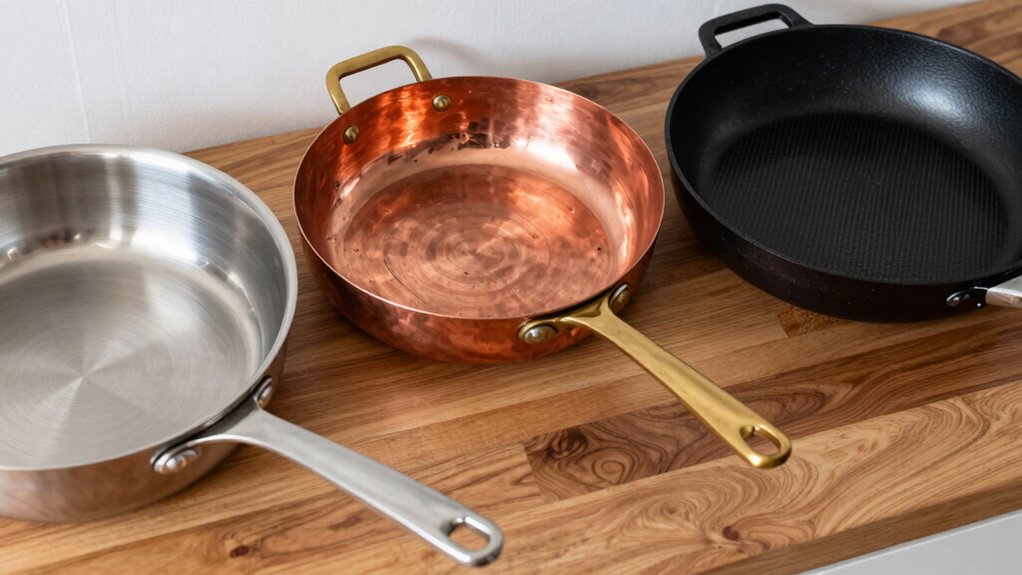
Although stainless steel pans tend to have a higher upfront cost, they often provide long-term value thanks to their durability and versatility. When doing a cost comparison, stainless steel pans may seem pricey initially, but their durability means you won’t need to replace them often. Copper pans, while more expensive upfront, offer excellent heat conductivity, making them a favorite for precise cooking, but their maintenance costs can add up. Copper pans also require specialized cleaning to maintain their appearance and performance over time. Carbon steel pans are generally more affordable than copper and offer good durability, especially if properly cared for. For your value assessment, consider how often you’ll use each pan and how long it will last. While initial costs are important, factoring in longevity and performance helps you determine which material offers the best overall value for your kitchen. Material selection is a key aspect of building your ideal outdoor cooking setup, influencing both cost and performance over time.
Which Pan Material Fits Your Kitchen and Cooking Needs?
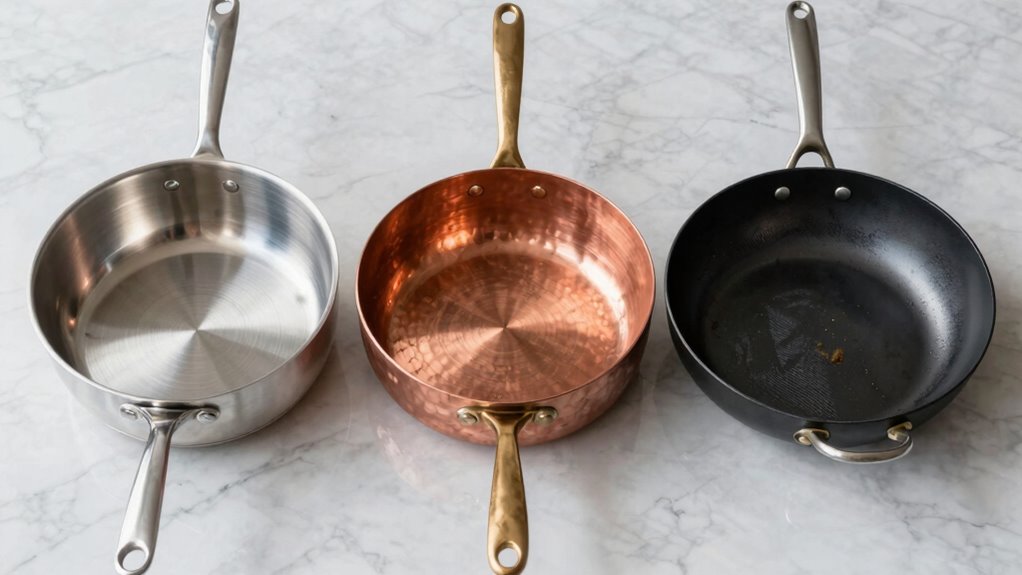
Choosing the right pan material depends on your cooking style, kitchen routine, and specific needs. Consider how each material complements your space and preferences. For example:
- If you value a sleek pan aesthetic, stainless steel offers a modern, shiny look that enhances your kitchen decor.
- If eco friendliness matters, copper pans are highly recyclable, but require sustainable sourcing and maintenance.
- For versatile cooking, carbon steel pans combine durability with a rustic aesthetic and are great for various recipes.
Think about your routine: do you prefer low-maintenance options or those needing more care? Your choice should align with your aesthetic taste and environmental values, ensuring your pan fits seamlessly into your kitchen and cooking style.
Frequently Asked Questions
Can These Pans Be Used on Induction Cooktops?
Yes, these pans can be used on induction cooktops if they meet magnetic requirements for induction compatibility. Stainless steel pans are usually induction-ready because of their magnetic properties, but check if your specific pan is labeled as induction-compatible. Copper and carbon steel pans can also work if they have a magnetic layer or base. Always verify induction compatibility to guarantee peak performance and safety.
Are Stainless Steel Pans Dishwasher Safe?
Stainless steel pans are generally dishwasher safe, but it’s best to check the manufacturer’s cleaning recommendations. Dishwasher safety often depends on the pan’s quality and specific coatings. To keep your stainless steel cookware in top condition, you might prefer hand washing with warm water and mild detergent. Avoid abrasive scrubbers, which can damage the finish. Proper cleaning helps maintain your pan’s shine and prevents long-term damage.
How Do I Prevent Copper Pans From Tarnishing?
Copper tarnish can ruin the shine of your pan, but you can prevent it with simple care. Regularly clean copper by mixing lemon juice and salt or using a copper-specific cleaner to remove tarnish and restore its glow. Avoid leaving moisture or acidic foods in the pan, which accelerate tarnishing. Proper cleaning and drying keep your copper pan looking stunning, ensuring it stays beautiful and functional for years to come.
Which Pan Material Is Best for Non-Stick Cooking?
For non-stick cooking, ceramic coatings are your best choice, offering a natural non-stick surface without chemicals. Non-stick coatings like Teflon also work well but may wear over time. Ceramic-coated pans provide easy food release and simple cleanup, making them ideal for delicate items like eggs or pancakes. Just avoid metal utensils to preserve the coating’s longevity, and always follow manufacturer care instructions for best results.
Are There Health Concerns With Any of These Materials?
Sure, your cookware’s health risks are worth a quick chat. Stainless steel is generally safe, but some worry about nickel leaching—though you’d need massive consumption to be concerned. Copper can pose risks if unlined, as it may cause stomach upset. Carbon steel is safe but might have trace metals. Overall, choosing high-quality, well-maintained pans minimizes material safety issues, so no need to panic—just cook smart!
Conclusion
Choosing the right pan can transform your cooking experience from good to legendary. Whether you go for stainless, copper, or carbon steel, each material has its unique magic—like a secret weapon in your kitchen arsenal. Pick the one that matches your style, and you’ll find yourself creating culinary masterpieces that could make even a pro chef jealous. Remember, the right pan isn’t just an accessory; it’s the key to turning everyday cooking into an unforgettable adventure.
Fall yard work Picks
leaf blowers
As an affiliate, we earn on qualifying purchases.