Electric pasta makers are great for quick, hassle-free results, letting you make fresh pasta with just the push of a button. However, they limit your manual control over dough texture and restrict flavor customization, reducing your creative options. You also miss out on the tactile satisfaction of kneading and shaping by hand. While convenient, these machines can’t quite match the artistry and craftsmanship of traditional methods—if you’d like to explore these tradeoffs further, keep going.

Get home appliances delivered free — and shop member deals
- Fast, free delivery on millions of items
- Access to Prime Big Deal Days deals on October 6–7
- Prime Video, Amazon Music and more included
Key Takeaways
- Electric pasta makers save time and effort but limit manual control over dough texture and flavor customization.
- They offer quick, consistent results, reducing the tactile and artistic experience of traditional pasta-making.
- Pre-set functions prioritize speed, often reducing flexibility for experimenting with shapes or ingredients.
- Manual methods provide sensory satisfaction and artistic expression, which electric machines typically lack.
- While convenient, electric models may diminish appreciation for craftsmanship and the personal touch in pasta-making.
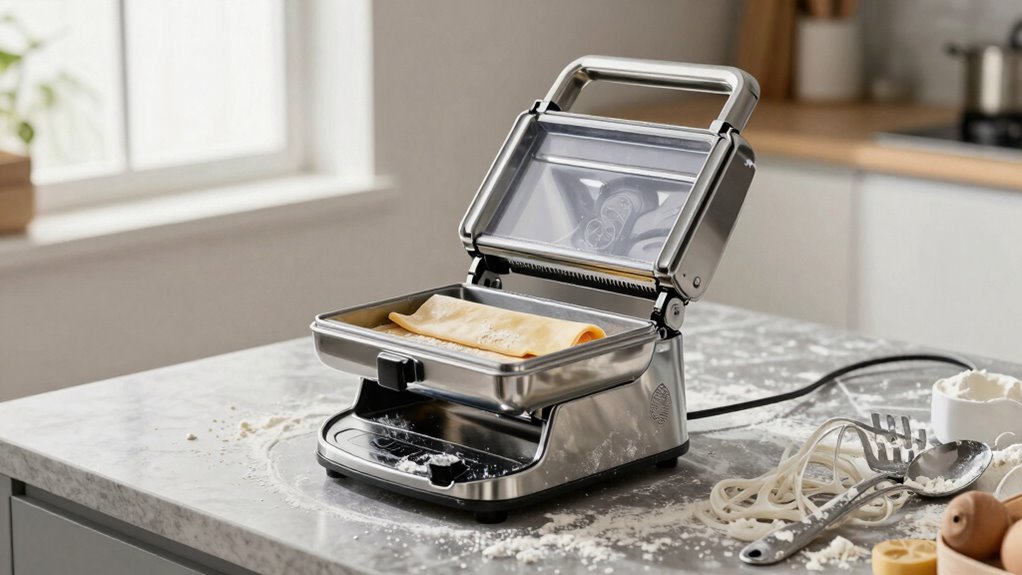
Electric pasta makers promise a quick and effortless way to create fresh noodles at home, making pasta-making more accessible than ever. With just a push of a button, you can produce perfectly shaped pasta without the mess or cleanup of traditional methods. But while convenience is a major selling point, it’s worth considering what you might be sacrificing—particularly in regards to manual control and flavor customization. When you rely on an electric machine, you give up some of the artistry that comes with manual pasta-making, where you control every step of the process.
Electric pasta machines offer quick, easy results but limit manual control and creative customization.
Manual control allows you to fine-tune the texture of your dough, adjusting hydration and kneading intensity to suit your preferences. It also gives you the flexibility to experiment with different ingredients, adding herbs, spices, or even vegetable purees directly into your dough for flavor customization. With electric models, these options are limited. The machines often come with preset programs, and while they do a good job of producing consistent pasta, they don’t offer the same level of personal touch or creative input. If you’re someone who enjoys tweaking recipes and experimenting with flavors, an electric pasta maker might feel a bit restrictive.
Moreover, manual control isn’t just about flavor; it’s about the tactile experience of making pasta. Many cooks find the process of kneading dough by hand therapeutic and satisfying. It allows you to feel the dough’s transformation from rough mixture to smooth, elastic ball—something an electric machine can’t replicate. When you use a manual method, you’re more engaged in the process, which can lead to a deeper appreciation of the craft. Electric pasta makers, on the other hand, simplify the process to a mechanical operation, removing some of that hands-on involvement.
Another tradeoff is the potential for less variation in pasta shapes and styles. Manual methods often involve rolling out dough and cutting it into various shapes, giving you creative freedom. Electric machines usually come with attachments for specific pastas like spaghetti or fettuccine, but they might not accommodate more intricate or custom shapes. If you’re into crafting unique pasta shapes or experimenting with different textures, manual control allows for more artistic expression.
In the end, electric pasta makers excel in convenience and speed, making fresh pasta accessible to everyone. However, if you value manual control, flavor customization, and the tactile satisfaction of traditional pasta-making, you might find the tradeoff worth considering. While electric models streamline the process, they also limit some of the personal touches that can turn pasta-making into a satisfying culinary craft. Additionally, the manual process provides a deeper connection to the traditional roots of pasta-making, which some enthusiasts find essential to the experience. Understanding the benefits of manual control can help you decide which method aligns best with your culinary preferences. Recognizing these craftsmanship aspects can enhance your appreciation for handmade pasta.
As an affiliate, we earn on qualifying purchases.
Frequently Asked Questions
How Long Does It Take to Make Pasta With an Electric Pasta Maker?
You can make pasta with an electric pasta maker in about 10 to 15 minutes, depending on the recipe and thickness you prefer. This quick cooking speed allows you to enjoy fresh pasta faster than traditional methods. Plus, using an electric pasta maker helps preserve flavor because you control the ingredients and avoid overmixing, ensuring your pasta tastes authentic and fresh every time.
Are Electric Pasta Makers Easy to Clean and Maintain?
Think of cleaning your electric pasta maker as tending to a garden. The cleaning process is straightforward, often involving disassembling parts and wiping with a damp cloth. A simple maintenance routine keeps it running smoothly, much like watering your plants. While it requires some effort, regular care guarantees your machine stays in top shape, making future pasta-making sessions easier and more enjoyable. With a little attention, it’s a reliable kitchen companion.
Can Electric Pasta Makers Handle Different Pasta Shapes and Sizes?
Electric pasta makers handle different pasta shapes and sizes well when your dough has the right consistency. They often come with various attachments for shape versatility, allowing you to make everything from spaghetti to lasagna sheets. However, if your dough is too dry or too wet, shaping can become tricky. Keep your dough consistent, and your electric pasta maker will easily handle the variety of shapes and sizes you desire.
What Is the Typical Lifespan of an Electric Pasta Maker?
Think of your electric pasta maker as a trusty kitchen companion, likely to serve you well for 5 to 10 years. Durability concerns vary, with some brands built like tanks, others more delicate. Brand differences play a big role; investing in reputable names can prolong its lifespan. Proper maintenance, like gentle handling and regular cleaning, helps guarantee your pasta maker remains a loyal partner in your culinary adventures for years to come.
Are Electric Pasta Makers Energy-Efficient Compared to Manual Ones?
Electric pasta makers generally consume more energy than manual ones, making them less energy-efficient. They use electricity for operation, which increases energy consumption and impacts the environment more than hand-cranking models. If you’re environmentally conscious, you might prefer manual pasta makers, as they have a lower environmental impact with minimal energy use. However, electric models save time and effort, balancing convenience against energy efficiency.
Conclusion
While electric pasta makers make your culinary dreams come true with a flick of a switch, they also cast a shadow of compromise. Like a shiny mask hiding hidden cracks, they promise convenience but may dull your connection to the art of making pasta by hand. Choose wisely—embrace the magic of tradition or indulge in effortless modernity. Either way, remember, every tool shapes your journey, but your passion is what truly flavors the dish.
Fall Picks
fall essentials
As an affiliate, we earn on qualifying purchases.