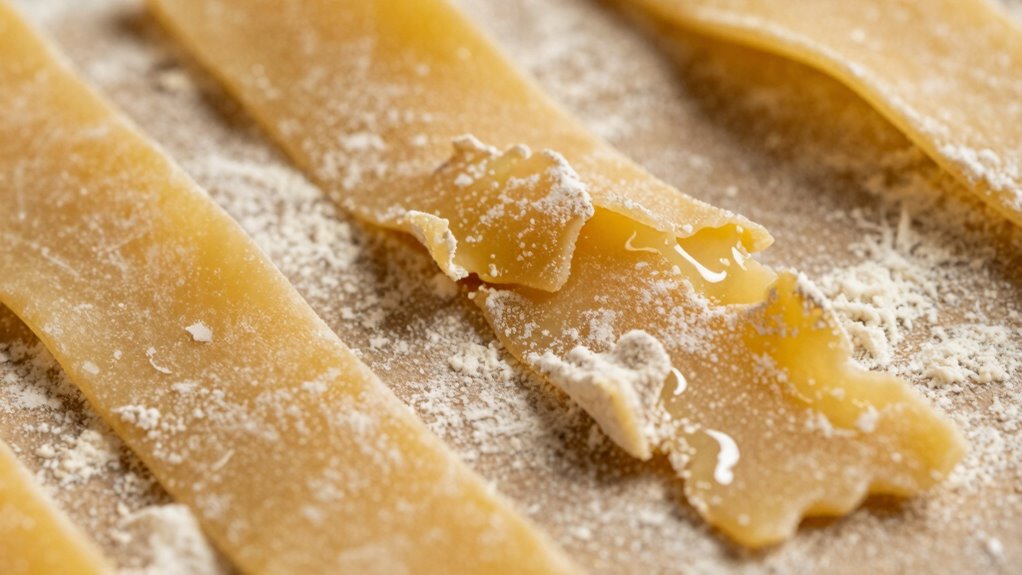

If your fresh pasta turns out sticky or brittle, it’s likely due to improper hydration, mixing, or resting. Measure ingredients carefully, knead until smooth, and let the dough rest to relax gluten. Dry and store pasta correctly, cooking until al dente and avoiding overdoing it. To fix issues during cooking, adjust timing or rehydrate with a splash of water. Keep these tips in mind, and you’ll get perfect pasta every time—if you keep exploring, you’ll find even more solutions.

Get home appliances delivered free — and shop member deals
- Fast, free delivery on millions of items
- Access to Prime Big Deal Days deals on October 6–7
- Prime Video, Amazon Music and more included
Key Takeaways
- Ensure proper dough hydration by measuring ingredients precisely and adjusting liquids based on flour type.
- Rest dough for at least 30 minutes to develop gluten and improve elasticity.
- Dry or store pasta correctly to prevent stickiness and spoilage, rehydrating if overcooked.
- Monitor cooking time closely, testing for al dente to avoid mushy or undercooked textures.
- Use quality tools like pasta rollers and scales for consistent shape, texture, and proper dough handling.
As an affiliate, we earn on qualifying purchases.
Why Does Fresh Pasta Sometimes Turn Out Too Sticky or Brittle?
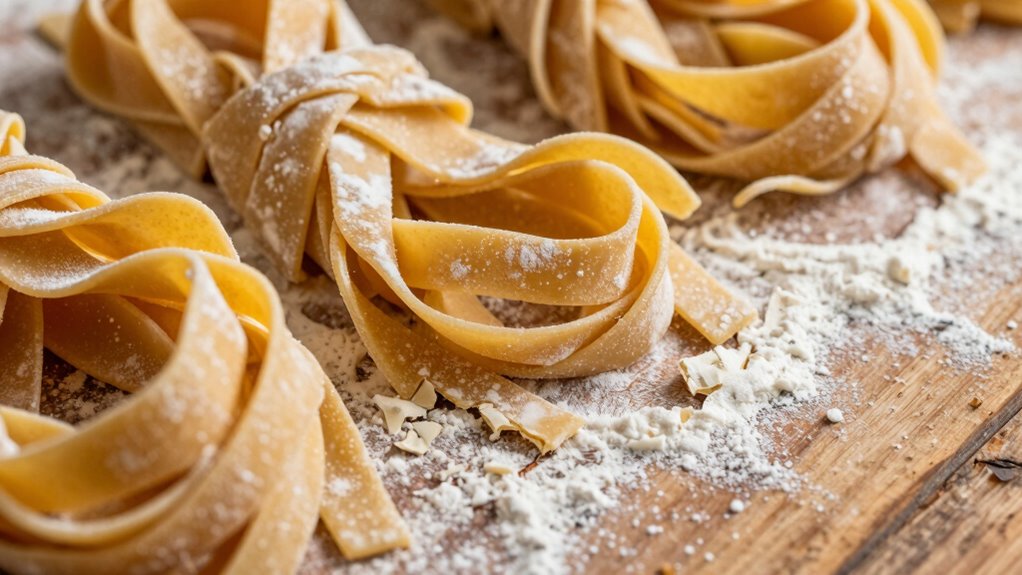
Fresh pasta can turn out too sticky or brittle due to improper dough hydration or mixing. If your dough is too wet, it clings and becomes sticky, making it hard to handle and affecting the pasta’s flavor. Conversely, under-hydrated dough results in brittleness, leading to cracks and breakage during cooking. Ingredient substitutions, like replacing traditional eggs or flour with alternatives, can also impact texture if not adjusted properly. For example, using a different type of flour may require more or less liquid to achieve the right consistency. Ensuring correct hydration and mixing techniques helps you control the pasta’s texture, preventing stickiness or brittleness. Adjusting ingredients thoughtfully preserves ideal pasta flavor and makes handling much easier.
How to Measure and Mix Pasta Dough for the Perfect Texture
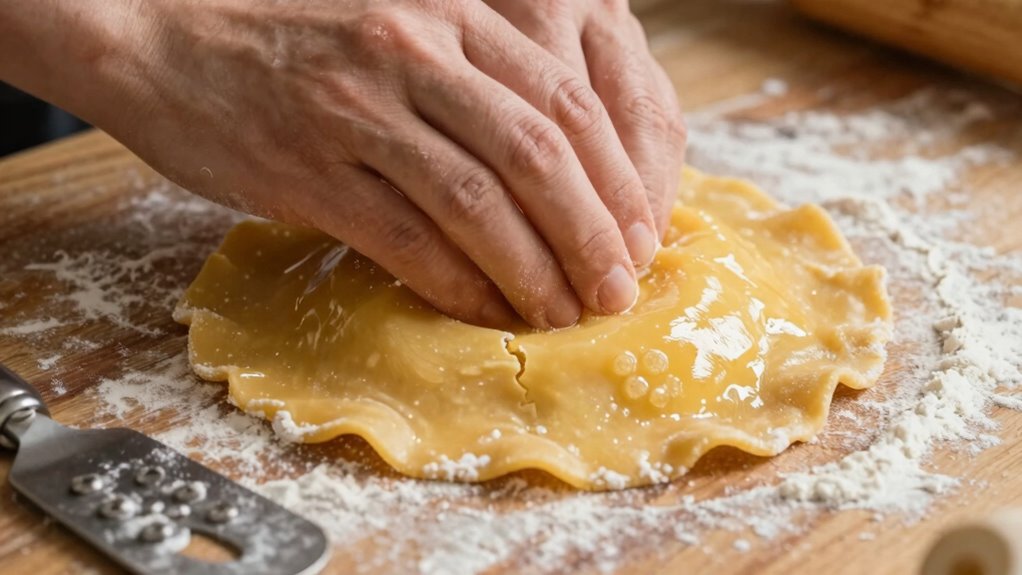
Achieving the perfect pasta dough texture starts with precise measurement and proper mixing. Use accurate measuring tools like a kitchen scale for flour and eggs to guarantee consistency. Start by weighing your ingredients instead of relying on volume, which can vary. When mixing, combine flour and eggs gradually, using mixing techniques that promote even distribution. Knead the dough until it’s smooth and elastic, avoiding overworking it, which can make it tough. Rest the dough briefly if needed, but don’t rush the initial mixing process. Proper measurement prevents excess moisture or dryness, while good mixing techniques develop gluten structure for ideal texture. Incorporate color accuracy considerations into your process to ensure your dough has the right consistency and appearance. Maintaining proper temperature control during mixing and resting can also significantly influence the final texture. Paying attention to humidity levels can help you adjust your ingredients accordingly and achieve better results. Additionally, understanding the gluten development process allows you to fine-tune your kneading and resting times for optimal elasticity. Focus on accuracy and technique, and you’ll create a dough that’s tender, elastic, and easy to roll out.
How Resting and Drying Improve Fresh Pasta Consistency
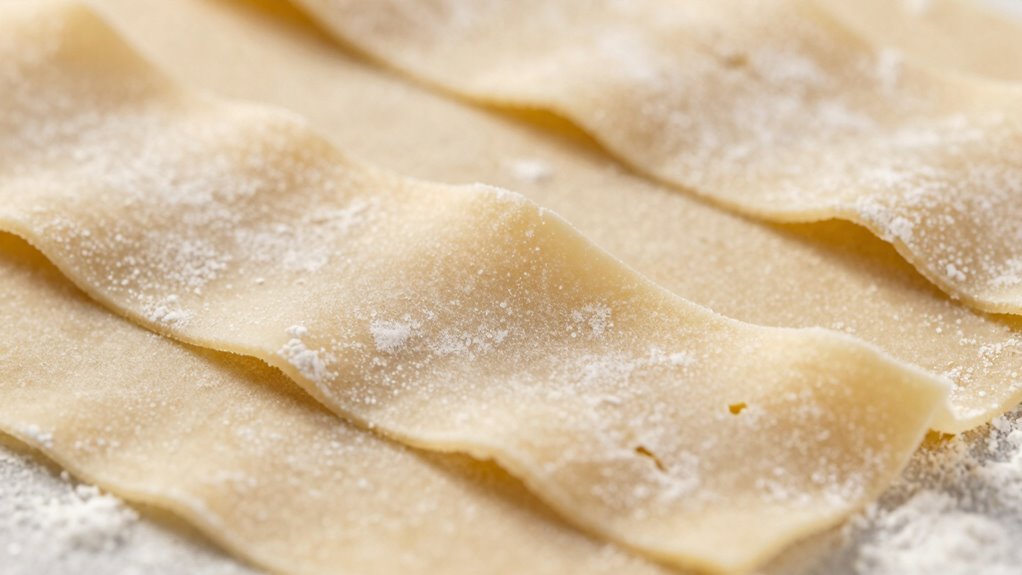
Resting your pasta dough properly allows the gluten to relax, making it easier to work with and less prone to tearing. Drying the pasta before cooking helps it hold its shape and improves overall texture. These techniques directly influence the final consistency, ensuring your pasta turns out just right.
Proper Resting Techniques
Though it may seem simple, allowing your pasta to rest and dry slightly after mixing plays a crucial role in improving its texture. Proper resting techniques give the dough time for better dough hydration, which leads to more uniform consistency. Resting also enhances the gluten development, making the pasta easier to shape and less prone to tearing. To maximize these benefits, keep the dough covered to prevent drying out and allow it to rest for at least 30 minutes. This downtime helps relax elastic strands, resulting in a more tender, cohesive pasta.
- Cover the dough with plastic wrap or a damp cloth
- Let it rest in a cool, draft-free area
- Avoid overworking the dough during mixing
Effective Drying Methods
Proper drying methods are essential for ensuring your fresh pasta maintains the right texture and shape. Air drying is a simple technique where you lay the pasta on a clean surface and let it dry at room temperature. This gradual process helps the pasta firm up without becoming brittle. Alternatively, oven drying offers a quicker solution; set your oven to a low temperature (around 200°F or 93°C), place the pasta on a baking sheet, and keep the door slightly open to allow moisture to escape. Both methods reduce moisture content, making the pasta less sticky and easier to cook. Effective drying not only preserves the pasta’s shape but also enhances its overall consistency, ensuring a better cooking experience and improved texture. Proper drying techniques are crucial for achieving optimal pasta quality and preventing over-drying or under-drying issues.
Impact on Pasta Texture
Allowing your fresh pasta to rest and dry before cooking considerably improves its texture by allowing the gluten to relax and moisture to evenly distribute. This process enhances pasta elasticity, making it less likely to overcook or break apart. Resting helps develop a stronger gluten network, which results in a firmer yet tender bite. Drying increases surface toughness, reducing stickiness and making handling easier. When properly rested and dried, your pasta maintains a consistent texture and better holds sauces. To maximize these benefits:
- Let the pasta rest for at least 30 minutes before cooking
- Ensure the pasta is sufficiently dry on the surface
- Avoid overworking the dough, which can hinder gluten development
These steps improve the overall pasta texture, ensuring a more satisfying eating experience.
Common Mistakes That Ruin Pasta Texture and How to Avoid Them
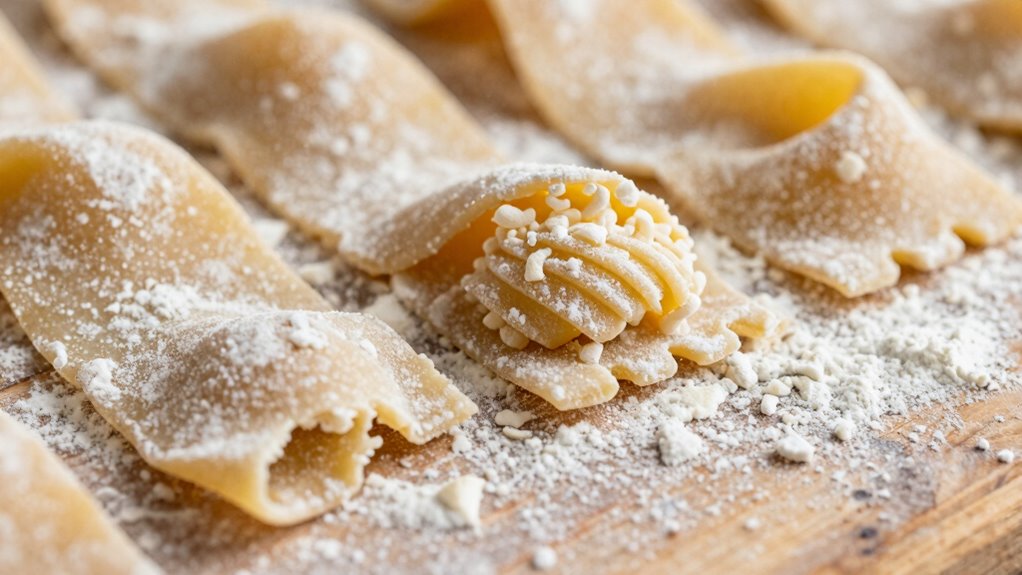
One common mistake that ruins pasta texture is overcooking it, which makes the noodles mushy and loses their firm bite. This also diminishes the pasta’s flavor and hampers proper sauce pairing. To avoid this, always cook pasta until al dente, tasting for doneness. Overcooked pasta can’t hold sauces well, resulting in a soggy dish. Also, avoid rinsing pasta after draining, as it washes away surface starches that help sauces cling. Proper pasta cooking techniques are essential for achieving the perfect texture. Here’s a quick guide to prevent mistakes:
| Mistake | Effect on Pasta | How to Avoid |
|---|---|---|
| Overcooking | Mushy, flavorless pasta | Cook until al dente |
| Rinsing after boiling | Loss of starch, poor sauce adherence | Skip rinsing |
| Using wrong sauce pairing | Clashing flavors, poor texture | Match pasta shape with sauce |
| Not salting the water | Bland flavor | Salt water generously |
Avoid these pitfalls for perfect pasta texture and flavor.
Tips for Cooking Fresh Pasta to Prevent Mushy or Undercooked Results
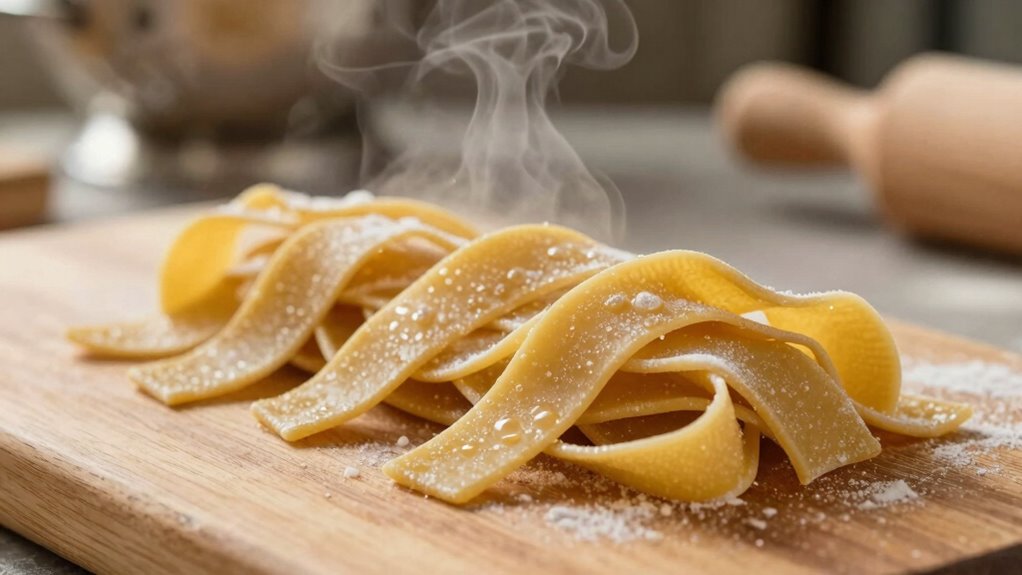
Cooking fresh pasta to the right doneness can make all the difference between a perfectly tender bite and a disappointing mush or undercooked center. To achieve ideal results, focus on these tips. First, use plenty of salted water; it enhances pasta flavor and prevents sticking. Second, cook the pasta for just 1-2 minutes less than package instructions—fresh pasta cooks quickly, so keep a close eye. Third, taste-test a piece near the end of cooking to ensure it’s al dente; this guarantees you stop cooking at the right moment. Remember, ingredient quality matters—fresh, high-quality ingredients cook more evenly and taste better. Proper technique guarantees your pasta retains its texture, avoiding mushiness or undercooking.
How to Test and Adjust Your Pasta’s Texture While Cooking
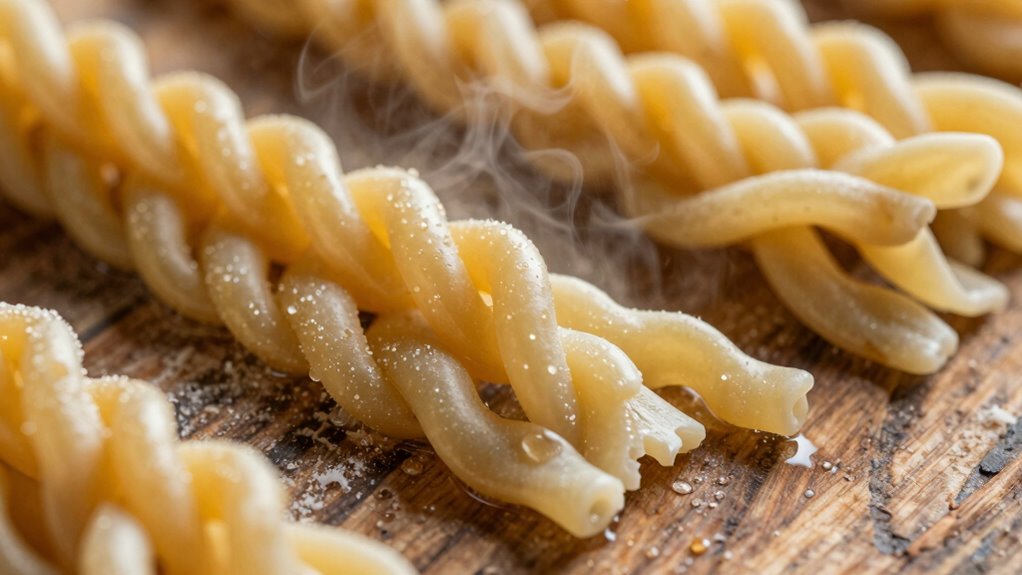
To guarantee your pasta reaches the perfect texture, it’s essential to test it frequently during cooking. Use a slotted spoon or fork to sample a piece every couple of minutes, checking for the desired doneness. The pasta should be tender yet slightly firm to the bite, known as al dente, which enhances its pasta flavor. Adjust your cooking time based on these tests, removing the pasta from heat just before it fully reaches your target texture. Remember, different cooking techniques can influence how quickly pasta cooks, so keep a close eye. Stir gently to prevent sticking and ensure even cooking. Constant testing allows you to fine-tune the process, ensuring your pasta isn’t overdone or undercooked, resulting in a better overall dish. Paying attention to cooking techniques and timing adjustments can help you achieve consistent results with various pasta types. Additionally, understanding heat control can be crucial in managing how quickly your pasta reaches the desired texture. Proper water salinity also plays a role in enhancing pasta flavor and texture. Maintaining the correct water temperature during cooking can further influence how evenly your pasta cooks and maintains its ideal texture.
Fixing Mushy, Crumbly, or Overcooked Pasta: Troubleshooting Tips
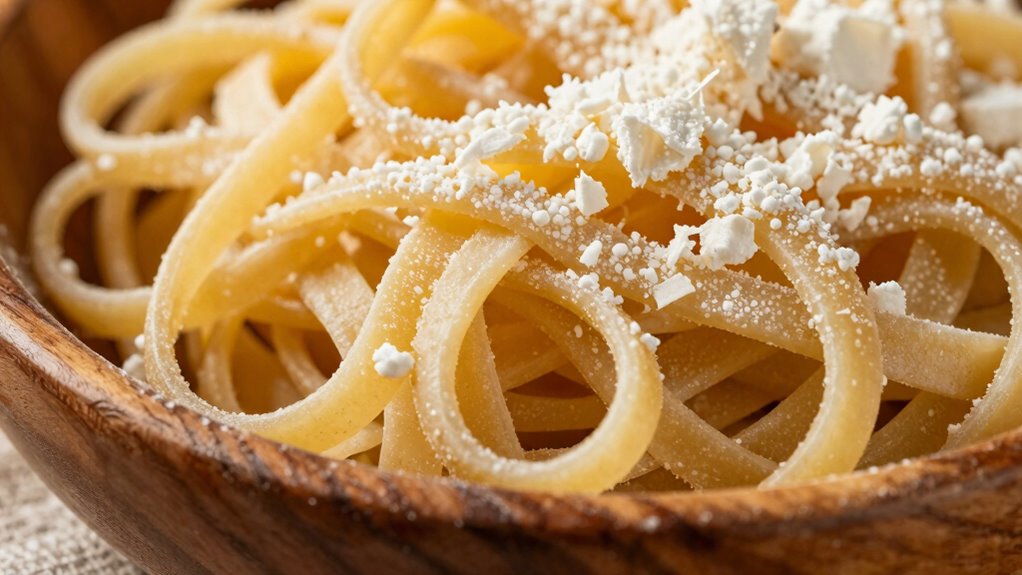
To fix mushy, crumbly, or overcooked pasta, start by adjusting your cooking time to prevent overdoing it. Improving your dough consistency helps create a firmer texture, while proper storage can keep your pasta from becoming overly soft before cooking. Additionally, incorporating sound vibrations into your cooking routine can enhance cellular regeneration in the pasta, helping maintain its ideal firmness. These steps will help you achieve a better balance and avoid common texture issues. Regularly monitoring the home security systems in your kitchen can also alert you to changes in temperature or humidity that might affect pasta quality. Being aware of art conservation techniques can also assist in understanding how environmental factors influence food textures. Understanding precious metal investments can guide you in choosing the best storage methods for your ingredients, ensuring they stay fresh and maintain their desired texture. Incorporating proper food storage methods based on environmental conditions can also significantly improve pasta quality.
Adjust Cooking Time
If your pasta turns out mushy, crumbly, or overcooked, adjusting the cooking time can often fix the problem. Keep a close eye on the pasta as it cooks, tasting frequently to find the perfect al dente texture. Shortening the cooking time prevents over-softening, while extending it slightly can better suit your desired firmness. Proper timing ensures your pasta pairs well with your sauce and allows the flavors to shine. Remember, overcooked pasta doesn’t absorb seasonings well, so adjusting cooking time helps with better pasta seasoning. For best results:
- Use a timer to track cooking duration precisely
- Test pasta a minute before the recommended time
- Keep a bit of pasta water to adjust sauce consistency if needed
Improve Dough Consistency
When your pasta dough is too mushy, crumbly, or overworked, addressing the underlying consistency issues can make a big difference. Using the right flour types and adjusting hydration levels is key. For softer dough, opt for higher-protein flours like semolina or bread flour. For a tender texture, use lower-protein options like pastry or all-purpose flour. Proper hydration involves adding enough water to form a cohesive dough without it becoming sticky or dry.
| Flour Type | Ideal Hydration Level |
|---|---|
| Semolina | 30-35% |
| All-purpose | 35-40% |
| Bread flour | 40-45% |
| Pastry flour | 30-35% |
| Whole wheat flour | 40-45% |
Proper Pasta Storage
Proper storage techniques are essential for maintaining pasta’s ideal texture and preventing issues like mushiness, crumbliness, or overcooking. To preserve freshness and avoid these problems, store cooked pasta properly. Keep it in an airtight container or a tightly sealed plastic bag to prevent moisture loss and contamination. For short-term storage, refrigerate for up to 2 days; for longer periods, freeze it. When reheating, add a splash of water to restore moisture. Avoid leaving pasta at room temperature, which accelerates spoilage. Proper pasta storage ensures your leftovers stay fresh and maintain the desired texture.
- Use airtight containers or resealable bags for maximum freshness preservation
- Refrigerate cooked pasta within 2 hours of cooking
- Freeze when storing for more than 2 days
Essential Tools and Equipment for Perfect Homemade Pasta
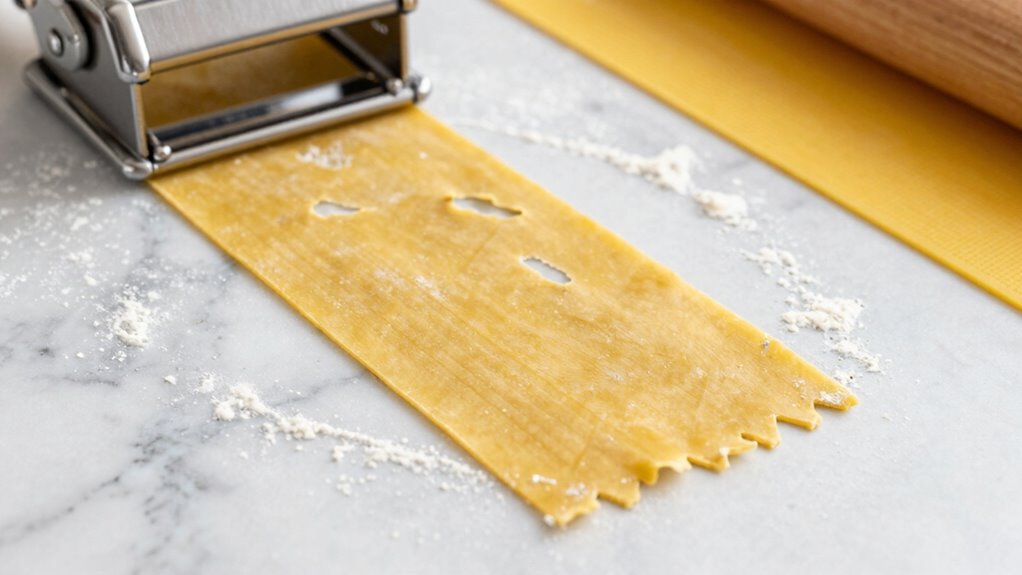
Achieving perfect homemade pasta starts with having the right tools and equipment. Essential pasta accessories include a high-quality pasta roller or machine, which guarantees even dough and consistent thickness. A sharp, sturdy knife or pasta cutter helps you create uniform shapes. A digital scale guarantees precise measurements for your dough, leading to better dough techniques. A silicone rolling mat or parchment paper prevents sticking and makes handling easier. Quality mixing bowls and a sturdy work surface are also vital for kneading and shaping. Investing in a pasta drying rack can help your pasta dry evenly if you plan to store it. With these tools, you can control the dough consistency and shape, making your pasta more uniform, improving texture, and simplifying the entire process.
How to Save and Fix Overcooked or Underprepared Pasta
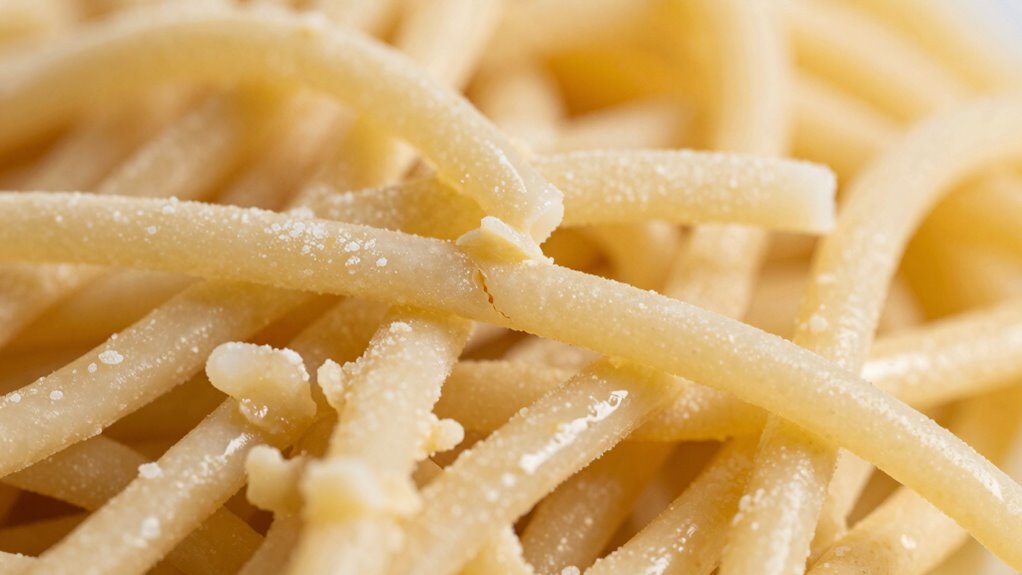
If your pasta turns out overcooked or underprepared, don’t panic—there are quick fixes to salvage it. Overcooked pasta can be refreshed, while undercooked pasta just needs more time. To improve the pasta flavor and sauce pairing, consider these tips:
- Drain and toss overcooked pasta with a splash of olive oil or butter, then reheat gently in a pan with a bit of broth to regain some texture.
- For undercooked pasta, simply continue boiling until it reaches your desired doneness, then drain and toss with your sauce for better flavor integration.
- If the pasta’s texture is still off, mix it with a flavorful sauce that complements its current state, masking any flaws and enhancing overall taste.
These tricks help you fix pasta quickly, ensuring a delicious dinner regardless of initial mishaps.
Frequently Asked Questions
Can Adding Oil Prevent Fresh Pasta From Sticking Together?
Adding oil can help prevent fresh pasta from sticking together temporarily, but it isn’t the best solution for sticking issues. Oil creates a thin barrier, reducing friction, but it can also make the pasta greasy and affect sauce adherence. Instead, use plenty of well-salted boiling water and stir frequently during cooking. Rinsing with cold water after draining also helps, but avoid oil as your primary prevention method.
Is There a Way to Rescue Overcooked or Undercooked Pasta?
If your pasta’s overcooked, quickly rinse it with cold water to stop the cooking process and toss it with a bit of olive oil to prevent sticking. For undercooked pasta, simmer it a little longer, tasting frequently for the perfect doneness. Remember, the pasta flavor can be enhanced with a good sauce pairing, which also helps mask minor texture issues and makes your dish more enjoyable.
How Does Humidity Affect Fresh Pasta Texture and Drying Times?
Did you know that humidity levels can change by 20% throughout the year? Humidity effects on fresh pasta are significant; high humidity can make drying times longer, leaving your pasta damp and prone to mold. Conversely, low humidity speeds up drying, risking cracks. To get perfect texture, control your environment, and adjust drying times accordingly—using a dry, well-ventilated space helps you achieve ideal freshness.
What Are the Best Storage Methods to Maintain Pasta Quality?
To maintain your pasta’s quality, store it in airtight containers to prevent moisture loss and contamination. Refrigeration techniques are essential—you should keep fresh pasta in the coldest part of your fridge, ideally wrapped tightly or in sealed containers. This helps preserve its texture and flavor, preventing it from drying out or absorbing other odors. Always consume within a couple of days for the best taste and quality.
How Do Different Types of Flour Influence Pasta Firmness and Elasticity?
Did you know that higher protein flours, like semolina or bread flour, can increase pasta firmness by enhancing gluten development? You’ll find that these flours create a more elastic dough, giving your pasta better texture. Conversely, softer flours like cake or pastry flour produce a more delicate, tender bite. So, choosing the right flour based on protein content directly impacts your pasta’s elasticity and firmness, making all the difference in your dish.
Conclusion
With these tips, you’ll master the art of perfect pasta, turning each dish into a culinary symphony. Think of your pasta as a delicate dance partner—you just need to guide it with care and attention. When you understand the nuances of dough and cooking, even mistakes become stepping stones to greatness. Keep experimenting, stay patient, and soon you’ll have a pasta repertoire that’s smooth, tender, and always a hit at the dinner table.
Fall yard work Picks
leaf blowers
As an affiliate, we earn on qualifying purchases.