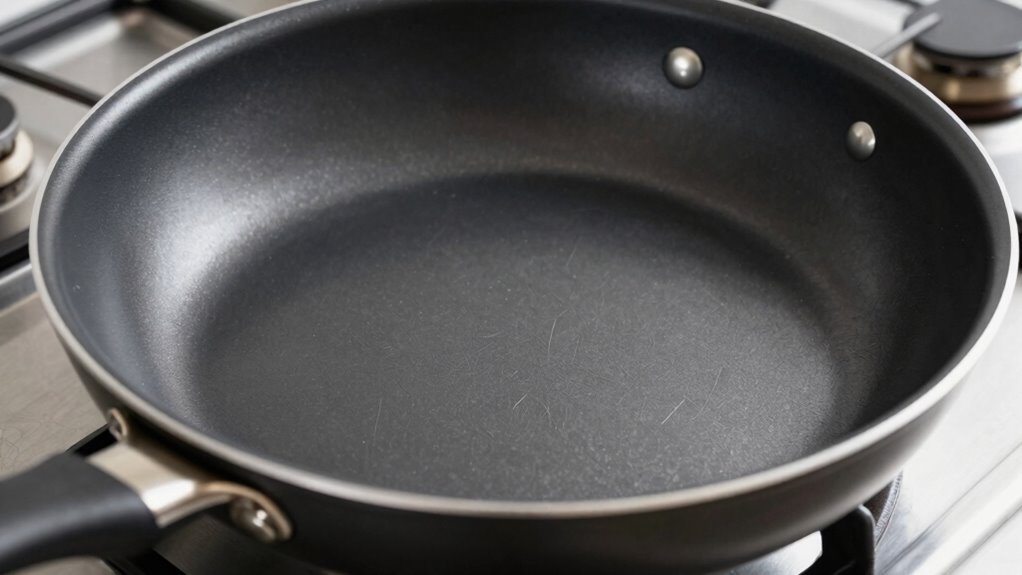

When you see ‘PFOA-free’ on high-end nonstick cookware, it mainly means that PFOA was eliminated during manufacturing, but it doesn’t guarantee overall safety or the absence of other chemicals. Durability and coating quality matter more for safety and performance. Some coatings might look safe but could contain alternative chemicals with unknown risks. To truly understand what you’re buying, it helps to learn more about coating technologies and certifications. Keep going to discover what else you need to know.
Key Takeaways
- ‘PFOA-free’ indicates absence of one chemical but doesn’t guarantee overall safety or the exclusion of other harmful substances.
- High-end coatings may prioritize durability or appearance over chemical safety, requiring verification of safety standards.
- Removing PFOA doesn’t address potential risks from alternative chemicals used in nonstick coatings.
- Coating longevity and scratch resistance are crucial for safety, as damaged coatings can release harmful particles.
- Certification and industry testing are essential to confirm that high-end nonstick cookware is truly safe beyond just being PFOA-free.

CAROTE 14Pcs Pots and Pans Set Non stick, Ceramic Cookware Set, Non-toxic Kitchen Cooking Set, PFAS and PFOA Free
Ceramic nonstick coating with durability of perfection is free of PFOA, PFOS, and the other harmful chemicals. You…
As an affiliate, we earn on qualifying purchases.
As an affiliate, we earn on qualifying purchases.
What Does ‘PFOA-Free’ Really Mean for Your Nonstick Cookware?

Many nonstick cookware brands now proudly advertise as “PFOA-free,” but what does that really mean for your safety? It primarily relates to chemical safety, ensuring that harmful substances like PFOA aren’t used during manufacturing processes. PFOA, once common in nonstick coatings, raised concerns because it could linger in the environment and pose health risks. When a product is labeled “PFOA-free,” it means manufacturers have changed their manufacturing processes to eliminate this chemical. However, this doesn’t automatically guarantee the entire coating is safe or free of other potentially harmful chemicals. It’s important to understand that “PFOA-free” focuses on a specific chemical, not the overall safety of the nonstick coating. Always research how the cookware is made to better understand its safety profile. Additionally, understanding the coating technology used can help consumers make more informed choices about nonstick cookware safety. Recognizing the chemical composition of the coating can reveal whether other hazardous substances might be present despite the absence of PFOA. For example, some nonstick coatings may contain perfluorinated chemicals that aren’t classified as PFOA but could still pose health concerns.

SENSARTE Nonstick Frying Pan Skillet with Lid, 12 Inch Large Deep Frying Pan, 5 Qt Non Stick Saute Pan with Cover, Induction Pan, Healthy Non Toxic Cooking Pan with Helper Handle, PFOA PFOS Free
HEALTHY SKILLET – Switzerland ILAG nonstick surface. Free of PFOA, PFOS, lead, cadmium and other toxic materials that…
As an affiliate, we earn on qualifying purchases.
As an affiliate, we earn on qualifying purchases.
Are PFOA-Free Nonstick Coatings Safe for Your Health and the Environment?
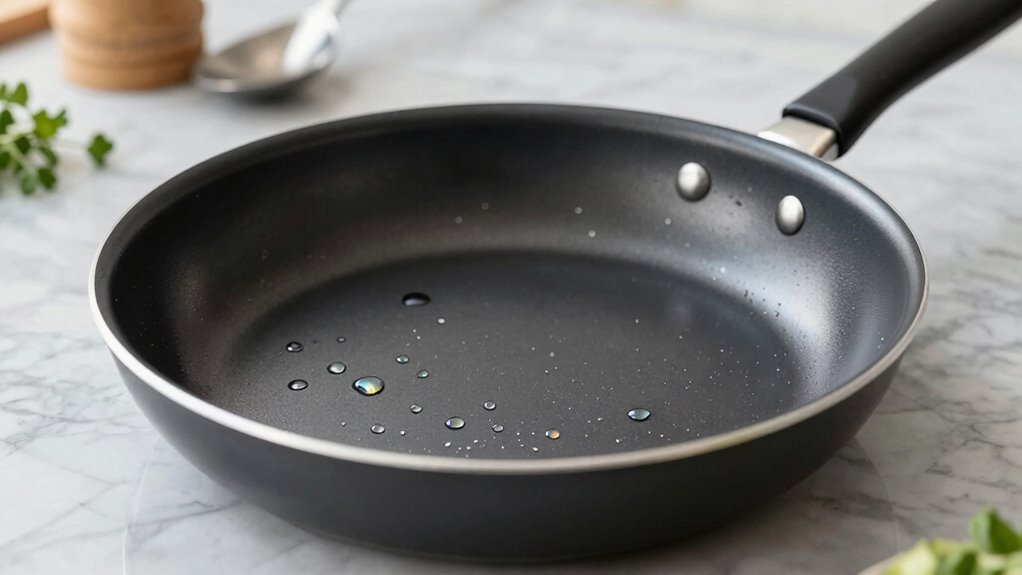
While removing PFOA from nonstick coatings addresses specific chemical concerns, it doesn’t automatically mean these products are completely safe for your health or the environment. Many PFOA-free options use alternative chemicals that may still raise health questions or impact the environment. Nonstick durability is vital here; if the coating doesn’t last long, you’ll need to replace it more often, increasing waste and exposure risk. Coating longevity varies widely among brands and materials, affecting both safety and sustainability. Some newer coatings might seem appealing but haven’t been extensively tested for long-term health effects. It’s essential to think about not just the absence of PFOA but also the overall safety profile and how well the nonstick surface maintains its integrity over time. Additionally, understanding filter maintenance can help ensure indoor air quality when using nonstick cookware that may release fumes if damaged.

CAROTE 21Pcs Pots and Pans Set, Nonstick Cookware Sets, White Granite Induction Cookware Non Stick Cooking Set w/Frying Pans & Saucepans(PFOS, PFOA Free)
Reinforced die-cast aluminum construction ensures long-term durability and reliability while maintaining a lightweight design, bringing convenience to your…
As an affiliate, we earn on qualifying purchases.
As an affiliate, we earn on qualifying purchases.
Comparing High-End Nonstick Coatings: Safety and Performance
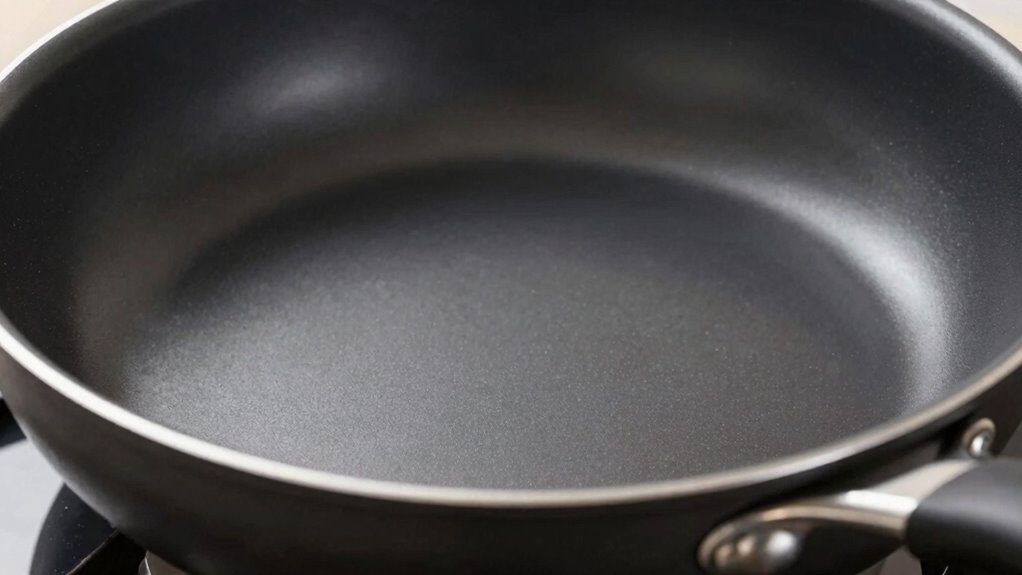
When choosing high-end nonstick coatings, evaluating their safety and performance becomes essential because not all premium options deliver the same benefits. You should consider nonstick durability, as some coatings resist scratches and wear longer, ensuring your cookware stays effective over time. Coating adhesion is equally important; a well-adhered coating prevents peeling and ensures consistent nonstick performance. High-end options like ceramic-infused or diamond-reinforced coatings often excel in these areas, offering better longevity. However, some coatings may prioritize durability at the expense of safety, so it’s crucial to verify how each brand balances these factors. Additionally, understanding the manufacturing processes behind these coatings can give insight into their safety and performance standards. The testing and certification of these coatings can further assure you of their safety and reliability. It is also beneficial to review industry standards to ensure the coatings meet established safety and quality benchmarks. Conducting thorough comparative analyses can help identify which coatings truly deliver on both safety and durability. Furthermore, researching how coating application techniques influence the overall quality can be very helpful. Ultimately, comparing these coatings based on their durability and adhesion helps you pick cookware that performs reliably and remains safe for your cooking needs.
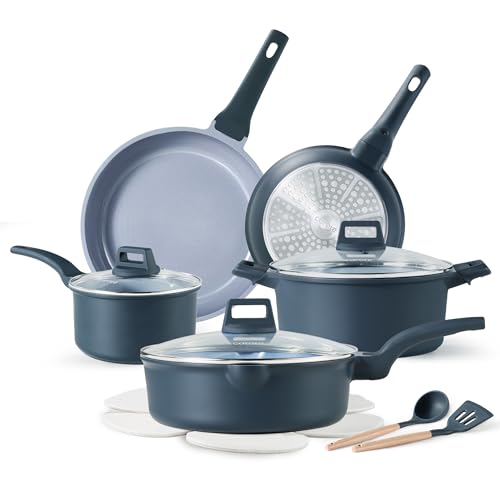
CAROTE 14 Pcs Ceramic Cookware Set, Pots and Pans Set Non Stick with Ceramic Coating, Induction Kitchen Sets
Ceramic nonstick coating with durability of perfection is free of PFOA, PFOS, and the other harmful chemicals. You…
As an affiliate, we earn on qualifying purchases.
As an affiliate, we earn on qualifying purchases.
How to Choose Safe Nonstick Cookware: Key Factors to Consider

Choosing safe nonstick cookware requires careful attention to the materials and coatings used, as not all options are equally safe for your health. To guarantee durability and coating longevity, look for cookware with high-quality, non-toxic coatings that resist scratching and peeling. Consider the construction—solid, heavy-bottomed pans tend to last longer and maintain nonstick properties over time. Selecting cookware with proper coating application can significantly impact safety and performance. Additionally, being aware of urban traffic confidence and proper gear care tips can help you maintain your cookware and other cycling equipment effectively over time. Ensuring that your cookware features safe manufacturing standards can further enhance your confidence in its long-term safety and effectiveness.
Eco-Friendly and Healthier Nonstick Alternatives to Explore

As concerns about the health and environmental impacts of traditional nonstick coatings grow, many consumers seek safer, eco-friendly alternatives. You can explore options like biodegradable cookware, which breaks down naturally and reduces landfill waste. Ceramic alternatives are another popular choice; they’re durable, non-toxic, and offer excellent nonstick performance without harmful chemicals. Additionally, some eco-conscious brands incorporate sustainable manufacturing practices to further reduce their ecological footprint. These options provide peace of mind for your health and the environment.
Choose eco-friendly cookware like biodegradable and ceramic options for safer, healthier, and environmentally conscious cooking.
- Biodegradable cookware made from natural materials
- Ceramic-coated pans with non-toxic, eco-friendly finishes
- Other sustainable nonstick options that avoid PFOA and PTFE
Switching to these eco-friendly and healthier nonstick alternatives guarantees you’re cooking safely while reducing your ecological footprint. You gain peace of mind knowing your cookware aligns with your values.
Frequently Asked Questions
Are There Any Hidden Toxins in Pfoa-Free Nonstick Coatings?
You might be surprised, but PFOA-free nonstick coatings can still contain hidden chemicals from manufacturing residues or other additives. These hidden chemicals aren’t always listed on labels, so you might unknowingly expose yourself to potential toxins. It’s wise to research brands carefully and look for certifications. Even when a product claims to be PFOA-free, it’s important to stay informed about possible hidden chemicals that could pose health risks.
How Durable Are High-End Pfoa-Free Nonstick Surfaces Over Time?
You get what you pay for, and high-end PFOA-free nonstick surfaces are generally quite durable if you handle them with care. While coating longevity varies by brand and usage, most are designed to last several years with proper maintenance. Durability concerns often stem from scratches or high heat, so avoid metal utensils and harsh cleaning. With gentle treatment, your nonstick will stay reliable and perform well over time.
Can Pfoa-Free Coatings Withstand High Cooking Temperatures Safely?
Yes, PFOA-free coatings can withstand high cooking temperatures safely if they have good thermal stability. You should look for cookware with coatings designed for heat resistance, which helps maintain coating integrity under high heat. However, avoid overheating beyond recommended temperatures, as excessive heat can degrade the coating over time. Proper use and following manufacturer guidelines guarantee your PFOA-free nonstick remains safe and effective during high-temperature cooking.
Do Pfoa-Free Nonstick Pans Require Special Cleaning Methods?
You don’t need special cleaning techniques for PFOA-free nonstick pans. Simple maintenance tips, like avoiding abrasive scrubbers and using mild dish soap, keep them in top shape. For example, Sarah noticed her pan’s coating stayed smooth after she used gentle sponge cleaning and avoided metal utensils. Regularly cleaning with these basic techniques prevents damage and prolongs your pan’s lifespan, making your cooking experience smoother and safer.
Are There Potential Health Risks From Nonstick Particles Shed During Cooking?
You might wonder if nonstick particles shed during cooking pose health risks. While some shedding can occur, especially if the pan overheats or gets scratched, the particles are usually inert and unlikely to cause significant health implications. To minimize risks, avoid high heat and use gentle utensils. Regularly check your pan for damage, and replace it if you notice excessive shedding or deterioration.
Conclusion
Ultimately, understanding the truth behind ‘PFOA-free’ labels helps you make smarter, safer choices. Don’t be deceived by shiny surfaces or superficial promises—delve into details, compare coatings, and consider eco-friendly options. By prioritizing proper preparation and persistent research, you prevent problems before they start. Protect your health, promote the planet, and pursue peace of mind with prudent, proactive picks. Power up your cookware choices—because safer, smarter cooking starts with you.