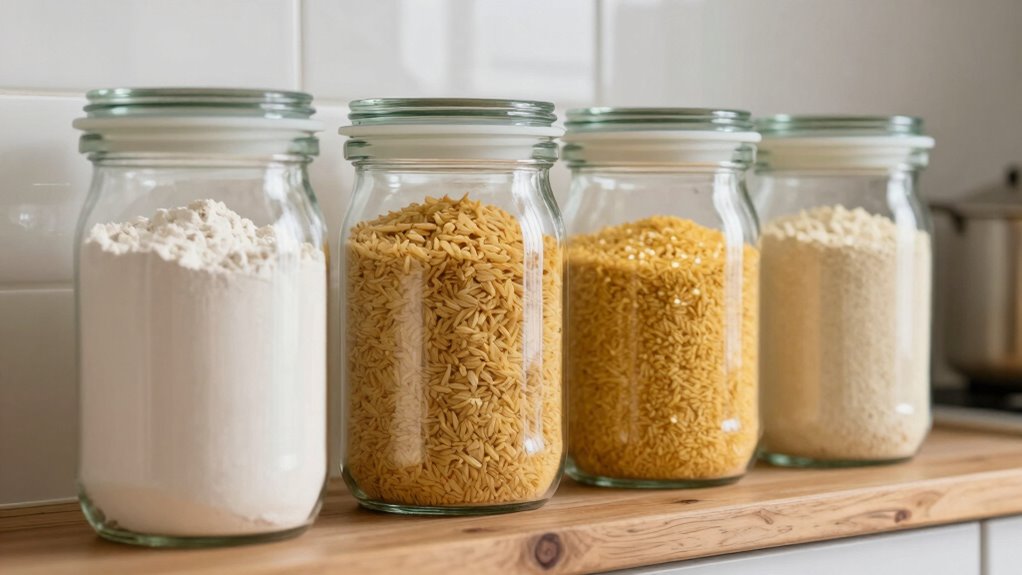

To keep flour, yeast, and semolina fresh, store them in airtight containers made of glass, BPA-free plastic, or metal, and keep them in a cool, dark place away from heat and sunlight. Label each with dates and check regularly for signs of spoilage like mold, odors, or clumping. Maintain low humidity and proper ventilation to prevent pests and moisture buildup. Continue exploring for more tips on ideal storage techniques.
Key Takeaways
- Store in airtight, moisture-proof containers like glass jars or BPA-free plastic bins to prevent spoilage.
- Keep ingredients in a cool, dark place at 60-70°F to maintain freshness and prevent mold.
- Label containers with content and expiration dates for effective rotation and usage.
- Use moisture absorbers and maintain low humidity to inhibit mold growth and clumping.
- Regularly inspect stored items for signs of spoilage or pests and re-seal containers as needed.

Vtopmart 78oz Glass Food Storage Jars with Airtight Clamp Lids, 3 Pack Large Kitchen Canisters for Flour, Cereal, Coffee, Pasta and Canning, Square Mason Jar with 8 Chalkboard Labels
Perfect for Dry Food Storage —- This glass jar set include 3 large 78oz food jars, measures 4.5…
As an affiliate, we earn on qualifying purchases.
As an affiliate, we earn on qualifying purchases.
Why Proper Storage Keeps Flour, Yeast, and Semolina Fresh
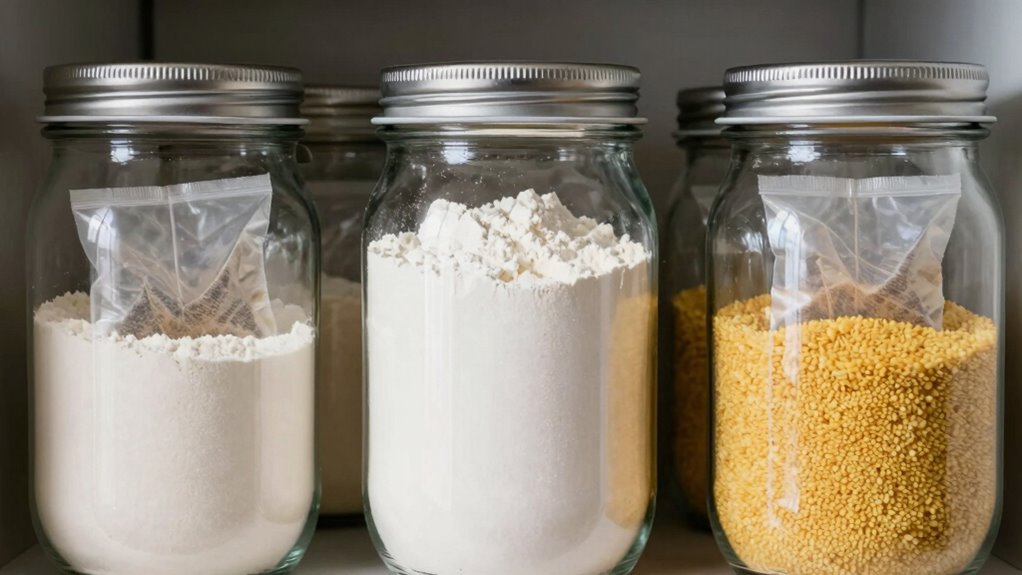
Proper storage is essential to keep flour, yeast, and semolina fresh because it prevents exposure to moisture, heat, and pests that can cause spoilage. When these ingredients stay fresh, you preserve their nutritional value, ensuring you get the maximum health benefits from each use. Proper storage also plays a key role in flavor enhancement, maintaining the rich, natural tastes that make your baked goods exceptional. Moisture and temperature fluctuations can lead to rancidity or mold, diminishing both quality and safety. Additionally, using appropriate storage containers helps maintain optimal conditions and extends shelf life. By storing these staples correctly, you prevent nutrient loss and keep their flavors intact, making your baking more reliable and delicious. Consistent storage practices help you enjoy fresher ingredients, ultimately elevating every dish you prepare.

ProKeeper Flour Storage Container, 4-Quart, BPA-Free Plastic, Dishwasher Safe
Contains (1) ProKeeper Flour Storage Container, 4-Quart, BPA-Free Plastic, Dishwasher Safe
As an affiliate, we earn on qualifying purchases.
As an affiliate, we earn on qualifying purchases.
How to Choose the Best Containers for Baking Staples
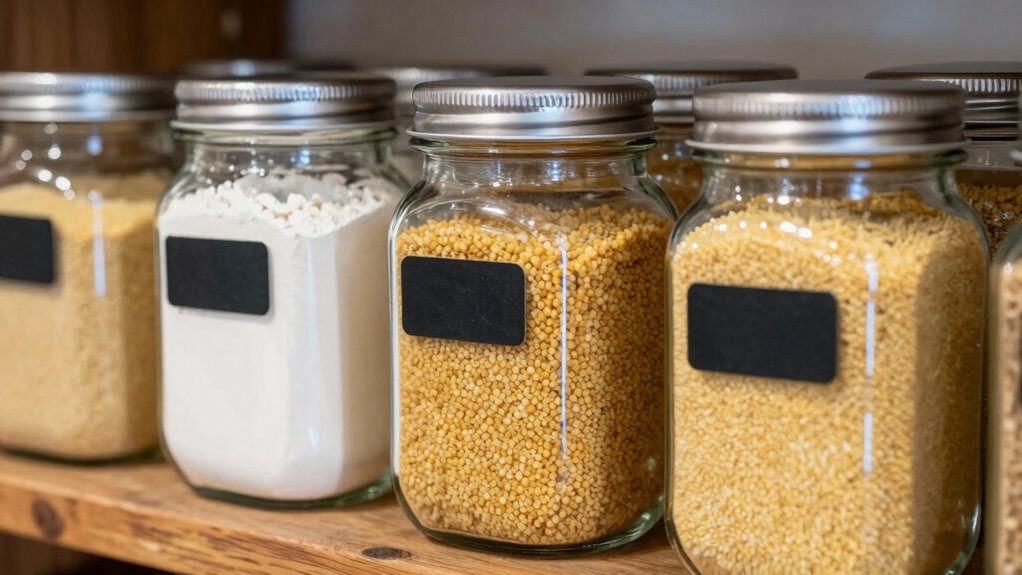
Choosing the right containers for your baking staples is vital to maintaining their freshness and quality. The best containers protect against moisture, pests, and air exposure. Proper storage techniques are essential to prevent spoilage and keep your ingredients in top condition. Consider container types like airtight jars, plastic bins, or glass containers. Material considerations are essential: glass is non-reactive and preserves flavors, while BPA-free plastic is lightweight and durable. Metal containers are sturdy but may affect the contents if not sealed properly. Here’s a quick comparison:
| Container Type | Material Considerations | Benefits |
|---|---|---|
| Airtight jar | Glass or BPA-free plastic | Keeps out moisture and pests |
| Plastic bin | Food-grade plastic | Lightweight, easy to store |
| Metal container | Stainless steel or tin | Durable, long-lasting |
Ensuring proper container sealing is crucial for preventing spoilage and extending the shelf life of your baking essentials. Choose containers that suit your space and guarantee a tight seal to keep your baking staples fresh.

Cooks Standard Stainless Steel Food Jar Storage Canister Set Large 4-Piece, 1.6qt/2.5qt/3.5qt /5qt Airtight Containers with Glass Lid for Tea Coffee Sugar Flour Pantry Kitchen Counter
4 Piece Canister Set: Includes components 5 Qt/4.7 L canister with Lid, 3.5 Qt/3.4 L canister with Lid,…
As an affiliate, we earn on qualifying purchases.
As an affiliate, we earn on qualifying purchases.
Where to Store Flour, Yeast, and Semolina for Maximum Freshness
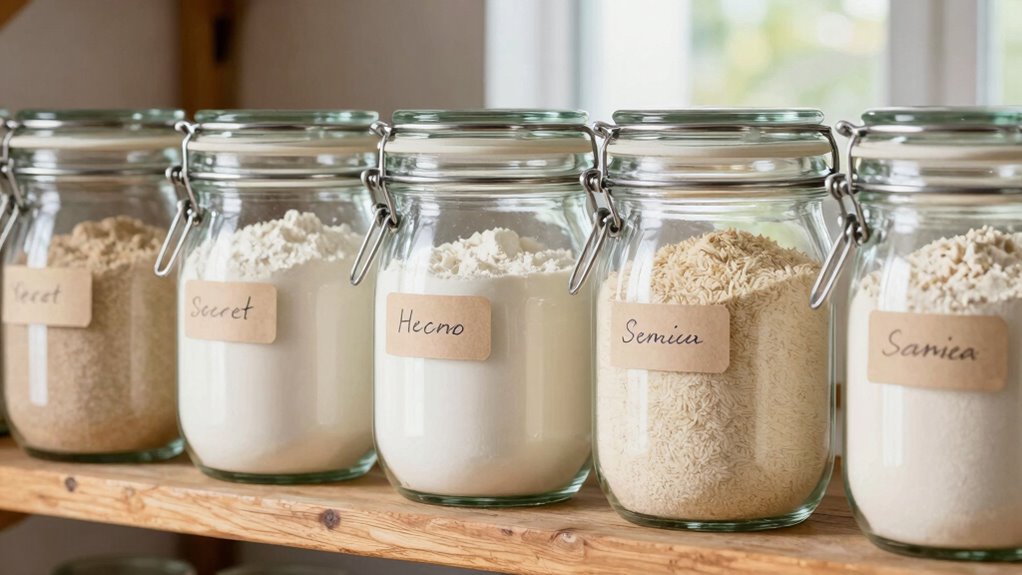
To keep your flour, yeast, and semolina fresh, store them in a cool, dark place away from direct sunlight and heat sources. Proper moisture control is essential, so choose a location with stable humidity levels to prevent clumping and spoilage. Temperature regulation is equally important; aim for a consistent temperature between 60-70°F (15-21°C). Avoid storing these ingredients near appliances that generate heat or in areas prone to temperature fluctuations. A pantry or cupboard away from the stove or oven works well. Keeping them in airtight containers helps maintain ideal moisture levels and prevents exposure to air, which can accelerate spoilage. Additionally, proper storage practices can help prevent pest infestations. Ensuring proper storage conditions is vital for preserving their freshness and quality. Using airtight containers can also help prevent contamination and extend shelf life. Maintaining consistent temperatures in your storage area further supports the preservation of these baking staples. Implementing proper humidity control can further enhance the longevity of these ingredients. Proper storage ensures your baking staples stay fresh and ready whenever you need them.
![FURWEY 100g [ 6 Packs] Rechargeable Desiccant Packs for Storage, Color Indicating Silica Gel Desiccant Packets, Moisture absorbers for storage, Dehumidifier bag for Closets](https://m.media-amazon.com/images/I/51+FVaudz3L._SL500_.jpg)
FURWEY 100g [ 6 Packs] Rechargeable Desiccant Packs for Storage, Color Indicating Silica Gel Desiccant Packets, Moisture absorbers for storage, Dehumidifier bag for Closets
Convenient To Carry: One desiccant pack measures 5.5×3.1 inches in size and weighs 100 grams, making it very…
As an affiliate, we earn on qualifying purchases.
As an affiliate, we earn on qualifying purchases.
How to Seal and Protect Your Ingredients From Pests and Moisture
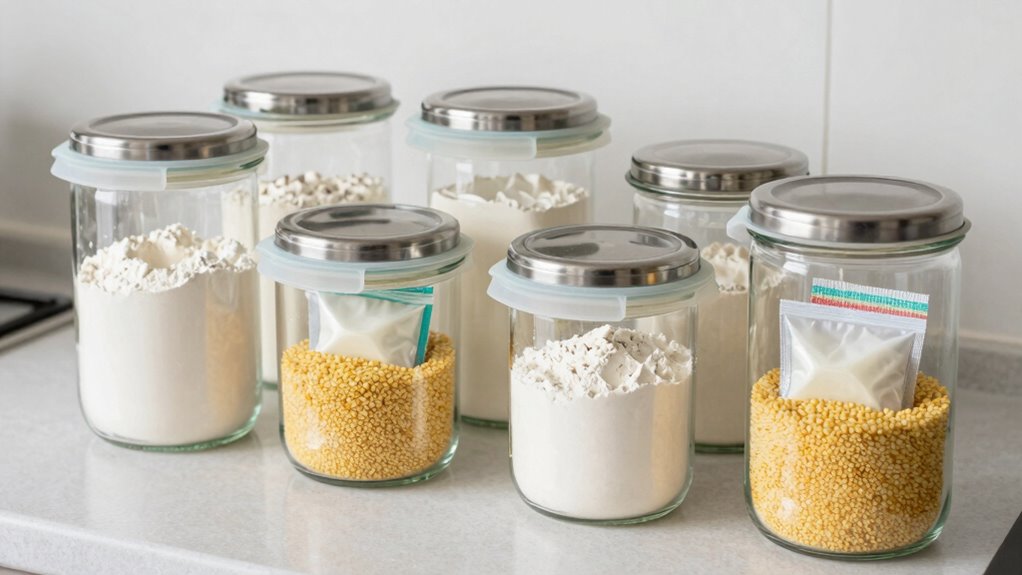
To keep pests and moisture out, use airtight containers for your flour, yeast, and semolina. Store them in a cool, dry place away from humidity and temperature fluctuations. Proper sealing and placement help preserve freshness and prevent spoilage. Additionally, maintaining a consistent temperature within your storage area can enhance the longevity of your ingredients. Regularly checking your storage conditions and ventilation can further reduce the risk of mold and pests. Incorporating energetic alignment techniques can also promote a positive environment for your stored items, helping to keep them fresh longer.
Airtight Container Usage
Using airtight containers is crucial for keeping your flour, yeast, and semolina fresh and safe from pests and moisture. Airtight containers create a secure seal that prevents air and humidity from entering, which is essential for moisture prevention. When you store ingredients in these containers, you reduce the risk of mold growth and spoilage caused by excess moisture. Choose containers made from food-grade materials with tight-fitting lids to ensure a proper seal. Be sure to label them clearly with the contents and date of storage. Properly sealed airtight containers also keep out insects and other pests that could contaminate your ingredients. Regularly check the seals to maintain freshness and prevent any accidental exposure to moisture or pests. Additionally, understanding the history of grain storage can help you appreciate the importance of proper sealing techniques in preserving ingredients over time. Implementing these practices is part of a long-standing tradition of grain preservation methods that have evolved to keep food safe and edible for extended periods. Modern food storage innovations further enhance these traditional techniques, making preservation more reliable and efficient. Maintaining the integrity of these storage methods can also be supported by modern food storage innovations, which enhance traditional techniques for better preservation. Incorporating airtight storage solutions can significantly extend the shelf life of your ingredients and prevent waste.
Store in Cool, Dry Place
Storing your flour, yeast, and semolina in a cool, dry place is essential for maintaining their freshness and preventing spoilage. A stable environment enhances shelf stability and reduces the risk of pests and mold. Keep your ingredients away from heat sources and direct sunlight, which can accelerate degradation. Proper moisture control is key—excess humidity can cause clumping and spoilage, so choose a pantry or cupboard with low humidity levels. Guarantee your storage area is well-ventilated and clean to prevent pests from settling in. Using airtight containers in this environment further protects your ingredients from moisture and pests. Regularly check your storage space to maintain ideal conditions and extend the life of your flour, yeast, and semolina. Free Floating environments are ideal for storing these ingredients, preventing them from absorbing unwanted odors or contaminants. Additionally, utilizing proper storage techniques can significantly prolong the freshness of your ingredients over time. For added protection, consider using moisture absorbers to help control humidity levels within your storage containers.
Tips for Maintaining the Right Temperature and Humidity
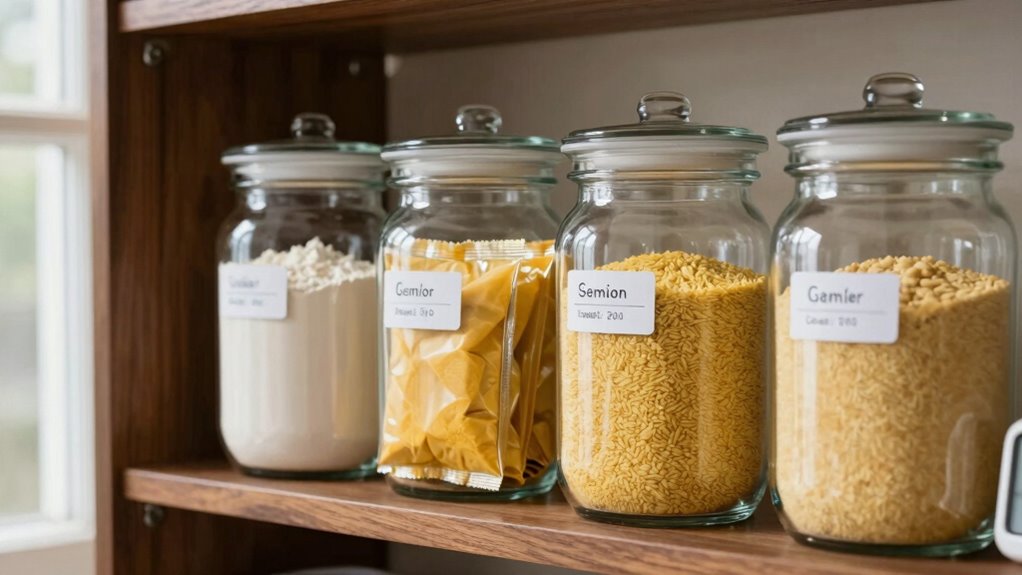
Maintaining the right temperature and humidity is essential for keeping flour, yeast, and semolina fresh and effective. Proper climate control prevents spoilage and preserves their quality. Aim for a cool, consistent temperature between 50-70°F (10-21°C), avoiding fluctuations that can cause moisture buildup or dryness. Humidity levels should stay low, ideally around 60% or less, to prevent mold or clumping. Use a dehumidifier or air conditioner if necessary, especially in humid environments. Keep storage areas well-ventilated, and avoid storing near heat sources or direct sunlight. Regularly check your storage environment to ensure humidity levels stay steady. Proper climate control can significantly impact the shelf life of your pantry staples. By controlling climate, you’ll extend the shelf life of your flour, yeast, and semolina and maintain their freshness for longer periods. Additionally, humidity management plays a crucial role in preventing spoilage and ensuring your ingredients stay dry and usable. Maintaining proper air circulation can also help prevent moisture buildup and mold growth in storage areas. Incorporating consistent storage conditions can further reduce risks of spoilage and ensure your ingredients remain in optimal condition.
When and How to Repack Flour, Yeast, and Semolina for Longer Storage
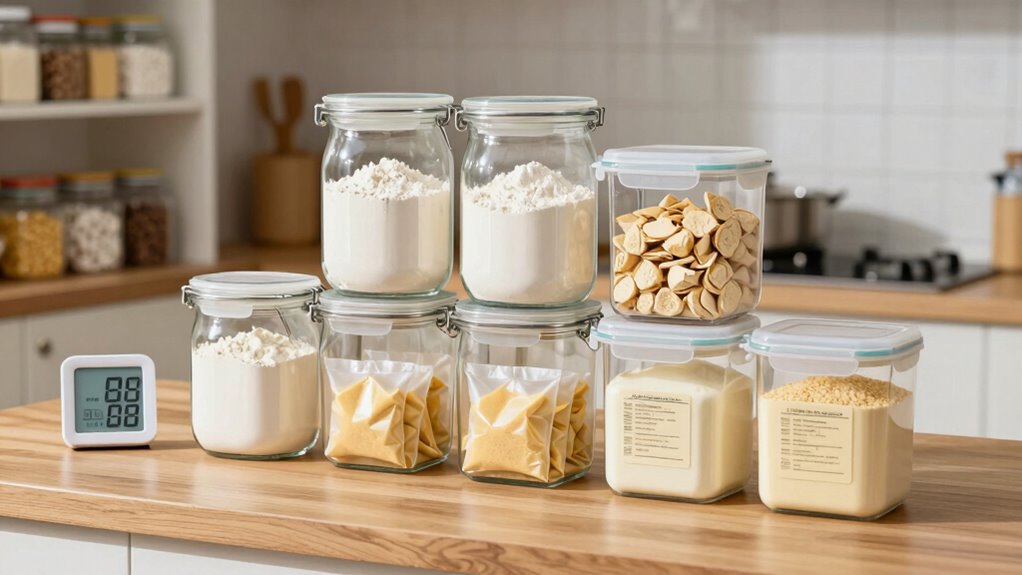
To extend the shelf life of your flour, yeast, and semolina, you should repack them before they near their expiration dates. Use airtight containers to prevent moisture and pests, and store them in cool, dark places for ideal preservation. Proper storage techniques can significantly slow down spoilage and maintain freshness. Ensuring consistent feedback during storage management can help identify early signs of spoilage or pest intrusion. Regularly monitoring body jewelry measurements and materials can also help you stay informed about best practices for long-term storage, especially if you are considering storing valuable or delicate items. Incorporating best storage practices from reliable sources can further optimize preservation. Don’t forget to label and date each container so you know exactly when to use or replace them.
Choose Airtight Containers
Choosing the right airtight containers is essential for preserving the freshness and quality of flour, yeast, and semolina. Look for containers that seal tightly to prevent air from entering and moisture from getting in. Airtight containers help maintain the product’s aroma, flavor, and texture while preventing clumping and spoilage. Select containers made of durable materials like glass or BPA-free plastic, which won’t absorb odors or stains. Ensure the lids fit snugly and are easy to open and close. Properly repacked, these containers provide an extra layer of moisture prevention, keeping your ingredients dry and fresh for longer. Regularly inspect the seals and replace damaged containers to keep your flour, yeast, and semolina in ideal condition.
Store in Cool Places
Ever wonder why storing flour, yeast, and semolina in cool places extends their shelf life? It’s because temperature control slows down spoilage and preserves freshness. Keep these items in a cool, dark spot away from heat sources, like your stove or direct sunlight. Humidity levels are equally important; high humidity can cause mold and clumping. Use airtight containers and store them in a pantry or cellar with stable, low humidity. Repacking your flour, yeast, and semolina into smaller portions helps reduce exposure to air and moisture each time you open them. Maintaining a cool environment minimizes the risk of rancidity and pests, ensuring your ingredients stay fresh longer. Proper storage in cool places is key to extending shelf life and keeping your baking ingredients in top condition.
Label and Date Properly
Repackaging flour, yeast, and semolina into smaller, airtight containers before storing them helps maintain freshness and prevents spoilage. Use clear labeling techniques to avoid confusion later. Write the contents, date of repacking, and expiration date on each container. Proper expiration dating guarantees you use your ingredients within their shelf life, reducing waste and preventing spoilage. Place labels on the lid or side for easy visibility. Check the expiration dates regularly and rotate stock so older items get used first. This practice keeps you aware of your ingredients’ freshness and helps you plan baking projects accordingly. Effective storage methods ensure your ingredients stay safe and extend their usability. Clear labels and accurate dates make it simple to track storage time, ensuring your flour, yeast, and semolina stay fresh and safe for months to come.
How to Recognize When Your Baking Ingredients Are Going Bad
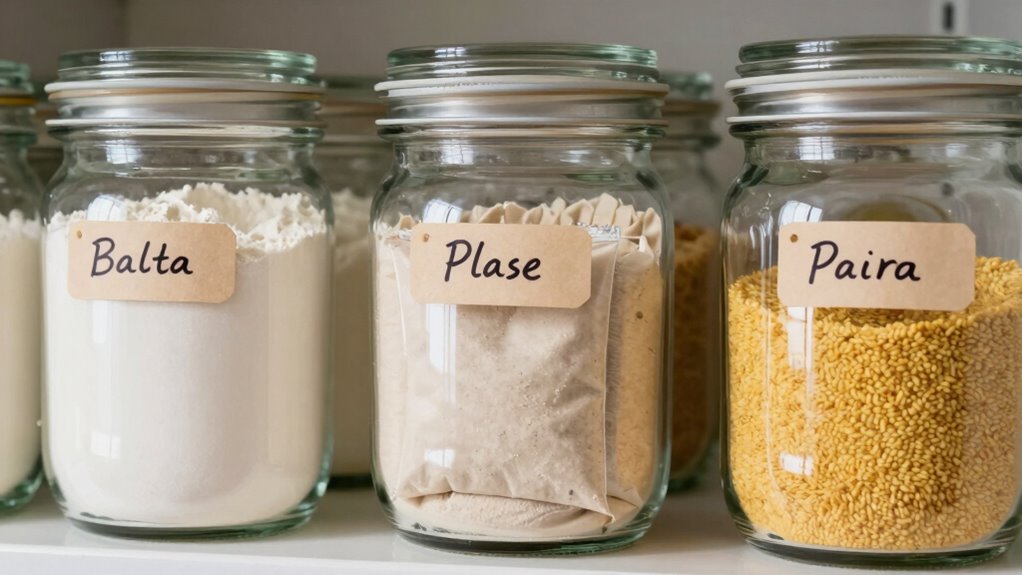
Knowing how to spot when your baking ingredients are going bad can save you from ruined recipes and wasted money. Pay attention to changes in smell, appearance, and texture. For example, if flour develops a sour odor or clumps, it might be past its ingredient shelf life. Mold detection is essential—look for fuzzy spots or discoloration on the surface. Remember, even sealed packages can harbor mold if stored improperly. Below is a quick guide to help you recognize the signs:
| Warning Signs | What to Do |
|---|---|
| Foul smell | Discard immediately |
| Visible mold | Do not use, throw away |
| Unusual texture | Replace with fresh ingredients |
Common Mistakes to Avoid When Storing Flour, Yeast, and Semolina
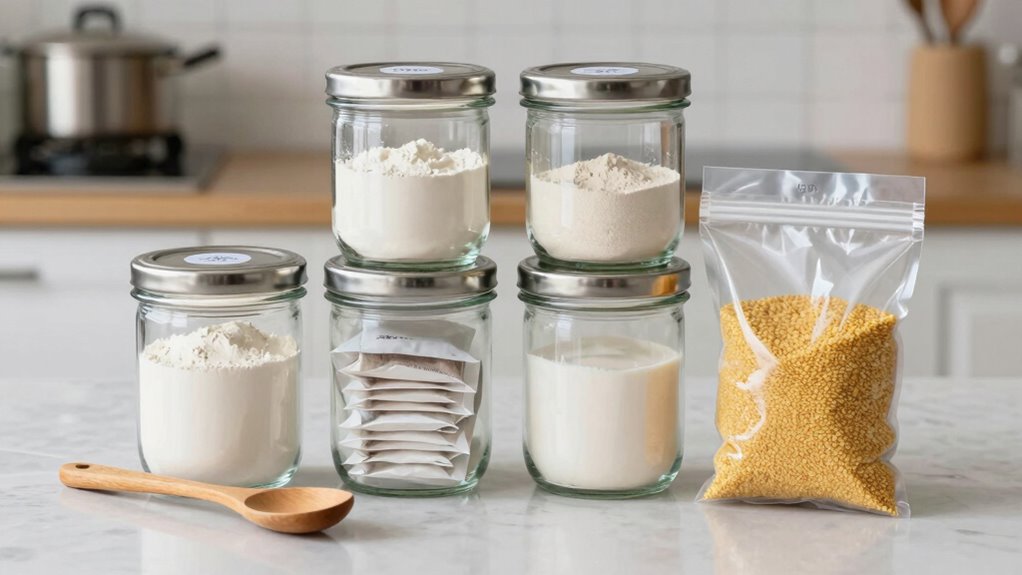
To keep your baking ingredients fresh, it’s important to avoid common storage mistakes that can compromise their quality. One mistake is neglecting proper measuring accuracy, which can lead to using incorrect amounts and wasting ingredients. Additionally, storing flour, yeast, and semolina in improper conditions can speed up spoilage and reduce ingredient freshness. Avoid keeping these items in areas exposed to heat, light, or humidity, as these factors accelerate deterioration. Another error is failing to seal containers tightly, allowing air and moisture to enter and cause clumping or mold growth. Properly labeled, airtight containers help maintain ingredient freshness and prevent cross-contamination. By being mindful of these mistakes, you ensure your ingredients stay effective, flavorful, and ready for your best baking results.
Easy Pantry Organization Tips to Keep Your Baking Ingredients Fresh
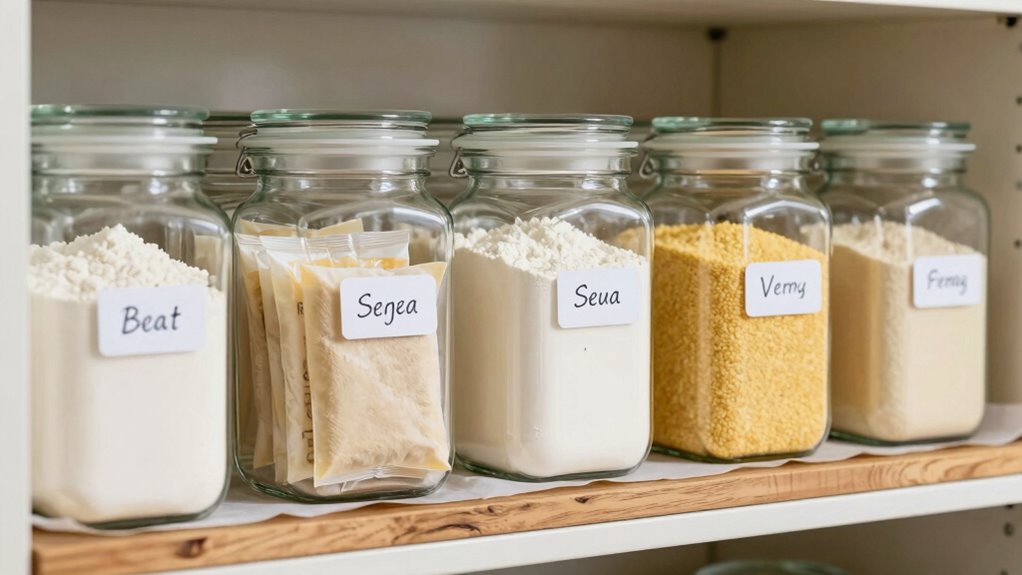
Organizing your pantry efficiently is key to keeping your baking ingredients fresh and easily accessible. Use clear, airtight containers to maximize shelf stability and prevent moisture or pests from compromising ingredient freshness. Label each container with the contents and date to track freshness and avoid confusion. Store items like flour, yeast, and semolina away from heat sources and direct sunlight, which can spoil ingredients faster. Group similar items together so you can quickly find what you need and prevent unnecessary exposure to air. Consider using stackable shelves or bins to optimize space and keep your pantry tidy. Regularly check your ingredients for signs of spoilage, and rotate stock so the oldest items get used first. These simple tips help maintain ingredient freshness and extend shelf stability.
Frequently Asked Questions
Can Freezing Extend the Shelf Life of Flour, Yeast, and Semolina?
Freezing benefits include extending the shelf life of flour, yeast, and semolina, helping prevent spoilage from moisture and pests. However, storage limitations mean you should store these items in airtight containers and avoid frequent temperature changes. When you freeze them, let them come to room temperature before use. This way, you preserve their freshness longer without compromising quality, making freezing a practical option for long-term storage.
How Do I Label Stored Baking Ingredients Effectively?
Think of labeling as the compass guiding your pantry ship. To keep it steady, use clear labels with accurate dates, ingredients, and storage info. Guarantee labels are legible and weather-resistant if needed. Organize your storage by grouping similar items, and update labels when you refill or rotate ingredients. This way, you’ll maintain labeling accuracy and storage organization, making your baking ingredients easy to find and always in prime condition.
Are There Specific Storage Tips for Gluten-Free Flours?
For gluten-free flour storage, keep it in an airtight container in a cool, dark place to extend its shelf life. You can also refrigerate or freeze it to prevent spoilage, especially if you buy in bulk. Always label the container with the purchase date to monitor its gluten free flour shelf life. Proper storage helps maintain freshness and prevents contamination, ensuring your baking stays delicious and safe.
How Often Should I Check for Signs of Spoilage?
You should check your stored flour, yeast, and semolina every few weeks to monitor their shelf life, ideally every 2-4 weeks. Look for spoilage indicators like off-odor, discoloration, mold, or a strange taste. Regular checks guarantee you catch signs of spoilage early, preventing use of spoiled ingredients that could affect your baking. Maintaining a routine helps keep your pantry fresh and your baked goods delicious.
What Are the Best Methods to Thaw Frozen Baking Ingredients?
To thaw frozen baking ingredients, you should use proper defrosting techniques like transferring them to the refrigerator and letting them slowly thaw overnight. Alternatively, you can use a microwave’s defrost setting for quick results, but monitor closely to prevent overheating. Avoid thawing at room temperature to prevent spoilage. Proper defrosting guarantees your ingredients maintain their quality, so always plan ahead and choose the safest thawing techniques for best baking results.
Conclusion
Properly storing flour, yeast, and semolina keeps your baking beautiful and bug-free. By choosing the right containers, sealing securely, and storing in a cool, consistent climate, you prevent pests, spoilage, and staleness. Stay savvy by spotting signs of spoilage and avoiding common mistakes. With these simple steps, your baking basics remain fresh, fabulous, and ready for your next flavorful feat. Keep your kitchen organized, and enjoy endless baking bliss without the bother!