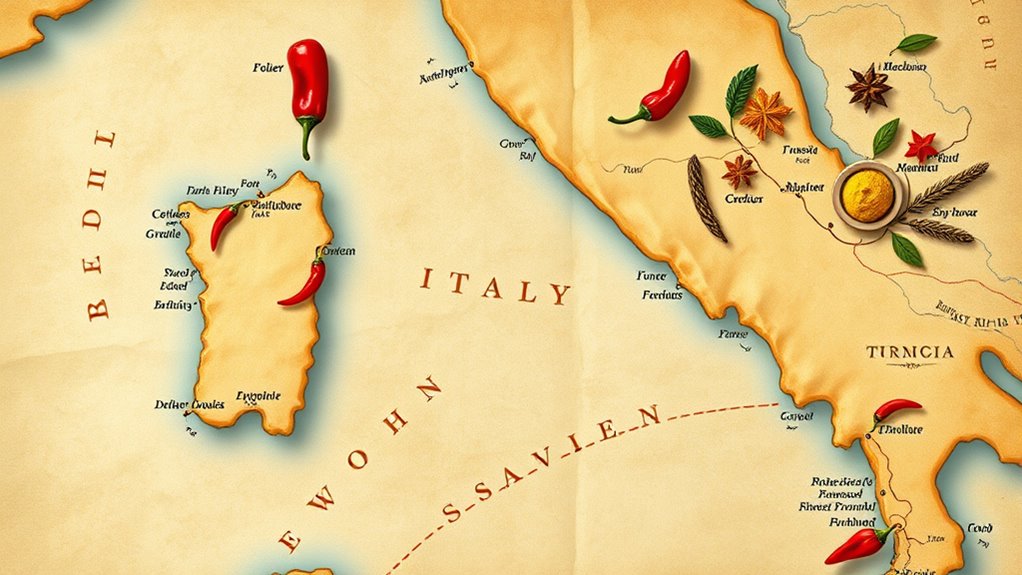

Italy’s regional spices have origins in ancient trade routes that connected Mediterranean ports with distant lands. Caravans carried spices like saffron, cinnamon, cloves, and nutmeg from Asia, North Africa, and the Middle East into Italy’s vibrant markets. These spices then shaped local cuisines, with northern regions favoring cloves and nutmeg, while southern areas embraced Middle Eastern influences. Exploring how these trade networks influenced Italian flavors reveals a fascinating culinary history worth uncovering further.

Get home appliances delivered free with Prime
- Fast, free delivery on millions of items
- Prime Video, Amazon Music and more included
- Member-only deals all year
Key Takeaways
- Italy’s strategic Mediterranean location facilitated the import of spices like saffron, cinnamon, and pepper via historic trade routes.
- Medieval spice markets in port cities connected Asian, North African, and European traders, influencing regional flavors.
- Caravans from the East transported spices across continents, reaching Italian ports after long, complex journeys.
- Northern Italy incorporated cloves and nutmeg from Middle Eastern trade, shaping regional culinary identities.
- Southern Italy embraced spices like cinnamon and saffron through Arab and Mediterranean trade connections.

Italy’s rich culinary heritage is deeply rooted in the spices that once traveled along its historic trade routes. These spices, often exotic and rare, found their way into Italian kitchens through bustling medieval spice markets that dotted port cities and trading hubs. During the Middle Ages, Italy’s strategic position along the Mediterranean trade networks made it a crucial crossroads for merchants bringing goods from the East and North Africa. When you taste a dish from Venice, Florence, or Naples, you’re experiencing centuries of trade and cultural exchange that shaped regional flavors. The medieval spice markets were lively centers where merchants haggled over precious commodities like pepper, cinnamon, and saffron. These markets weren’t just places to buy spices—they were hubs of information, innovation, and cultural interaction. Traders from the East would arrive with caravans carrying silks, perfumes, and spices, which then flowed through Mediterranean ports to reach Italian markets. This vibrant exchange was fueled by the Mediterranean trade networks, a complex web connecting Asia, North Africa, and Europe, allowing spices to travel thousands of miles before reaching your plate.
Furthermore, the development of these trade routes required high levels of Cultural Intelligence, as merchants and traders needed to understand and adapt to diverse cultures, languages, and customs to ensure successful exchanges and negotiations.
As these spices entered Italy, they gradually integrated into local cuisines, transforming simple ingredients into complex, aromatic dishes. For example, saffron became a cornerstone in Venetian risottos, while cinnamon added warmth to Sicilian sweets. You might not realize it, but the distinct flavors of Italian regional dishes owe much to these ancient trade routes. The spice trade also influenced the development of regional identities, with each area adopting certain flavors that became part of their culinary character. Northern Italy, with its proximity to central Europe, incorporated spices like cloves and nutmeg, while southern regions embraced the richer, more aromatic spices from the Middle East. Over time, these ingredients became indispensable, connecting Italian food to a larger global history of commerce and exploration.
Today, you can still trace these historic routes through the flavors and ingredients that define Italian regional cuisine. The legacy of medieval spice markets and Mediterranean trade networks is alive in the aromatic blends and traditional recipes passed down through generations. By understanding this history, you gain a deeper appreciation for the complexity behind Italy’s vibrant culinary landscape—an enduring testament to centuries of trade, adventure, and cultural fusion. Every dish becomes more than just food; it’s a living piece of history, carrying the stories of merchants, explorers, and civilizations that shaped Italy’s flavor profile long before you ever sat down to eat.
As an affiliate, we earn on qualifying purchases.
Frequently Asked Questions
How Did Regional Climates Influence Spice Cultivation in Italy?
Your understanding of how regional climates influence spice cultivation in Italy shows that climate-driven crop variations shape what spices grow best where. In warmer southern areas, you’ll find more Mediterranean herbs like oregano and basil, while cooler northern regions favor different crops. These climate-driven crop variations lead to distinct regional cultivation practices, allowing local farmers to optimize spice production based on their specific climate conditions, resulting in unique regional spice profiles.
Which Italian Cities Were Central to Spice Trade Networks?
You might think only big ports mattered, but Venetian merchants and Genoese traders were central hubs in spice networks. Venice and Genoa stood out, controlling vital trade routes that brought spices from distant lands into Italy. These cities thrived on their strategic locations, turning them into bustling centers for spice exchange, influencing Italian cuisine and commerce. Their prominence made Italy a key player in medieval spice trade, shaping cultural and economic connections across Europe.
What Indigenous Italian Herbs Are Often Mistaken for Imported Spices?
You might mistake native Italian herbs like basil, oregano, and rosemary for imported spices because of culinary misconceptions. These herbs are indigenous and play a vital role in Italian cooking, often mistaken for more exotic spices. Recognizing their true origins helps you appreciate authentic flavors and understand that Italy’s rich culinary tradition relies heavily on native herbs, not just imported spices, shaping its unique regional cuisine.
How Did Spice Trade Impact Italy’s Culinary Evolution?
The spice trade profoundly shaped Italy’s culinary evolution, fueling medieval culinary innovations and turning spices into symbols of wealth and prestige. As you explore Italian cuisine, you’ll notice how spices introduced through trade routes transformed traditional dishes, elevating flavors and creating cultural exchanges. This trade fueled a sense of sophistication and global connection, making spices key symbols of status and culinary artistry, enriching Italy’s gastronomic heritage across centuries.
Are There Any Modern Festivals Celebrating Historical Spice Routes?
Yes, you can experience modern festivals celebrating historical spice routes through medieval spice fairs and historical trade reenactments. These lively events let you immerse yourself in the past, showcasing authentic trade practices, traditional crafts, and culinary delights. Attending such festivals, you’ll enjoy a vibrant atmosphere that honors Italy’s rich spice trade history, connecting you with centuries-old traditions and the adventurous spirit of medieval merchants.
Conclusion
As you’ve seen, Italy’s regional spices are like threads woven through a vibrant tapestry, each telling its own story of ancient trade winds and distant lands. These flavors, once traveling along hidden routes, now dance on your palate, connecting you to centuries of history. So, next time you savor a pinch of spice, remember it’s a whisper from the past, a flavorful bridge that binds Italy’s rich heritage to your own table’s story.
Cold & flu season Picks
humidifiers
As an affiliate, we earn on qualifying purchases.