Japanese knife sets are stunning and incredibly sharp, making them a favorite for both professional chefs and home cooks. But be careful—it’s easy to misbuy if you’re not familiar with quality craftsmanship and proper maintenance. Look for sets with well-made blades, sturdy handles, and proper storage options to protect your investment. If you want to avoid common pitfalls and find the perfect set that combines beauty, precision, and longevity, there’s more to discover ahead.

Get home appliances delivered free with Prime
- Fast, free delivery on millions of items
- Prime Video, Amazon Music and more included
- Member-only deals all year
Key Takeaways
- Premium Japanese knife sets feature exceptional craftsmanship but can be costly and vary in quality; research before buying.
- Look for reputable brands and proper blade materials to ensure sharpness and durability.
- Avoid cheap sets with poor handles or low-quality steel that easily dull or break.
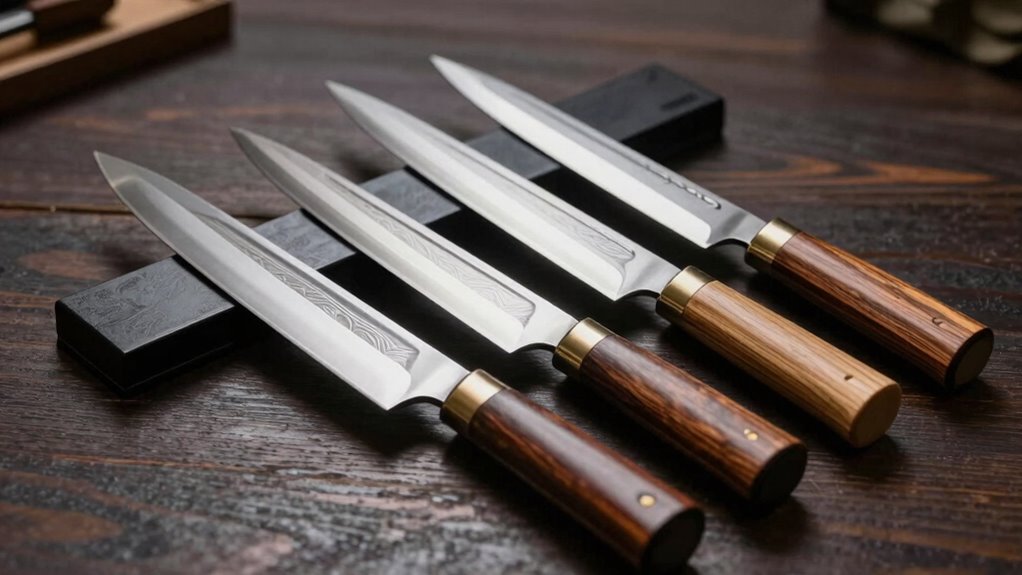
- Consider storage options like knife blocks or magnetic strips to maintain blade sharpness and safety.
- Proper maintenance, including regular honing and careful cleaning, is essential to preserve their beauty and performance.
Japanese knife sets are renowned for their precision, craftsmanship, and sharpness, making them essential tools for both professional chefs and home cooks. When you invest in a quality set, you’re not just buying knives—you’re acquiring precision instruments that can elevate your cooking. However, to keep these blades performing at their best, proper knife maintenance is vital. Regular honing with a ceramic rod helps realign the edge, while occasional sharpening with a whetstone restores its original sharpness. Avoid using electric sharpeners, which can be too aggressive and damage delicate Japanese blades. Keep your knives clean and dry after each use to prevent rust and corrosion, especially if they have carbon steel components. Storing them properly—preferably in a knife block, on a magnetic strip, or in a protective sheath—prevents unnecessary dulling and accidental damage. Additionally, understanding the proper care of Japanese knives can significantly extend their lifespan and maintain their performance over time. Proper storage solutions not only protect the blades but also help maintain their sharpness longer by reducing unnecessary contact and impact. Incorporating the right cleaning techniques can further preserve the integrity of your blades, ensuring they stay in optimal condition for years to come.
Mastering cutting techniques is equally significant to maximize the potential of your Japanese knives. These blades are designed for precise, controlled cuts, so understanding how to use them correctly makes a notable difference. Use a gentle, rocking motion when slicing, letting the sharp edge do the work rather than applying excessive force. This approach not only preserves the blade’s edge but also ensures cleaner cuts. When chopping vegetables or herbs, try the “push-cut” technique, which involves a forward motion that leverages the knife’s sharpness without sawing. For meats, a gentle, downward slicing motion with minimal pressure helps maintain the integrity of the cut and prevents tearing. As you become more confident, you’ll notice that your knife’s sharpness reduces the effort needed, making your prep work faster and safer. Developing proper cutting techniques enhances both safety and efficiency in your kitchen.
Understanding the importance of proper knife care and safe handling practices can significantly extend the lifespan of your Japanese knives and ensure optimal performance. Beware of buying a Japanese knife set without understanding these essentials. Some sets come with poorly made blades or cheap handles, which can be misleading and ultimately frustrating. The beauty of Japanese knives lies in their craftsmanship, but that craftsmanship demands proper care. When you understand knife maintenance, you protect your investment and extend the life of each blade. Furthermore, practicing safe handling reduces the risk of accidents in the kitchen, making your cooking environment safer and more enjoyable. Learning about safe handling practices can help you avoid common injuries and mishaps while working with sharp blades. Don’t rush into a purchase based solely on aesthetics or brand names; do your research, learn how to care for your knives, and practice proper cutting methods. Doing so transforms your cooking experience—making it safer, more enjoyable, and more efficient.
Japanese knife set with magnetic strip
As an affiliate, we earn on qualifying purchases.
As an affiliate, we earn on qualifying purchases.
Frequently Asked Questions
How Do Japanese Knives Compare to Western Knives in Durability?
Japanese knives generally offer comparable durability to western knives, but it depends on blade materials and handle ergonomics. High-quality Japanese knives use harder steels, making them resistant to chipping but potentially more brittle. Western knives often feature softer steels with sturdy handles, enhancing durability. Your choice should consider how blade materials and handle ergonomics suit your cutting style, ensuring you select a knife that’s both durable and comfortable for everyday use.
Are Japanese Knife Sets Suitable for Beginner Cooks?
Yes, Japanese knife sets are suitable for beginner cooks. They help you develop proper cooking techniques and improve your knife handling skills. Their sharpness and precision make slicing safer and more enjoyable, encouraging you to practice and learn. While they require careful maintenance, starting with a good set can boost your confidence in the kitchen. Just remember to handle them with respect and learn the correct techniques from the beginning.
What Maintenance Is Required to Keep Japanese Knives Sharp?
Think of your Japanese knives like a musician’s instrument—regular maintenance keeps them in tune. To keep your blades sharp, you need to regularly perform knife sharpening and blade honing. Use a whetstone or a honing rod weekly, depending on usage. Proper cleaning and drying after each use also prevent rust. With consistent care, your knives stay razor-sharp, making meal prep safer and more enjoyable.
Do Japanese Knives Require Special Storage?
Yes, Japanese knives require special storage to maintain their sharpness and blade protection. You should use a knife block, magnetic strip, or a dedicated knife guard to prevent dulling and damage. Avoid tossing them in a drawer, as this can nick the blades. Proper knife storage keeps your knives safe, preserves their edge, and guarantees they stay beautiful and sharp for longer.
How Do I Choose the Right Japanese Knife Set for My Needs?
Imagine a sleek, lightweight knife slicing effortlessly through vegetables—your perfect set balances knife ergonomics with blade materials. To choose the right Japanese knife set, consider your cooking style and comfort. Opt for ergonomic handles for prolonged use and high-quality blade materials like VG-10 or Damascus steel for sharpness and durability. Match the set to your needs, whether precision chopping or delicate filleting, ensuring a seamless cooking experience.
Conclusion
Choosing the right Japanese knife set can transform your cooking experience, but beware of the tempting options that might lead to a misbuy. Did you know that over 60% of home cooks have purchased knives they rarely use? By understanding what to look for and focusing on quality, you’ll avoid wasting money and end up with a collection that’s both beautiful and functional. Trust your instincts, and your new knives will serve you well for years to come.
Fall yard work Picks
leaf blowers
As an affiliate, we earn on qualifying purchases.