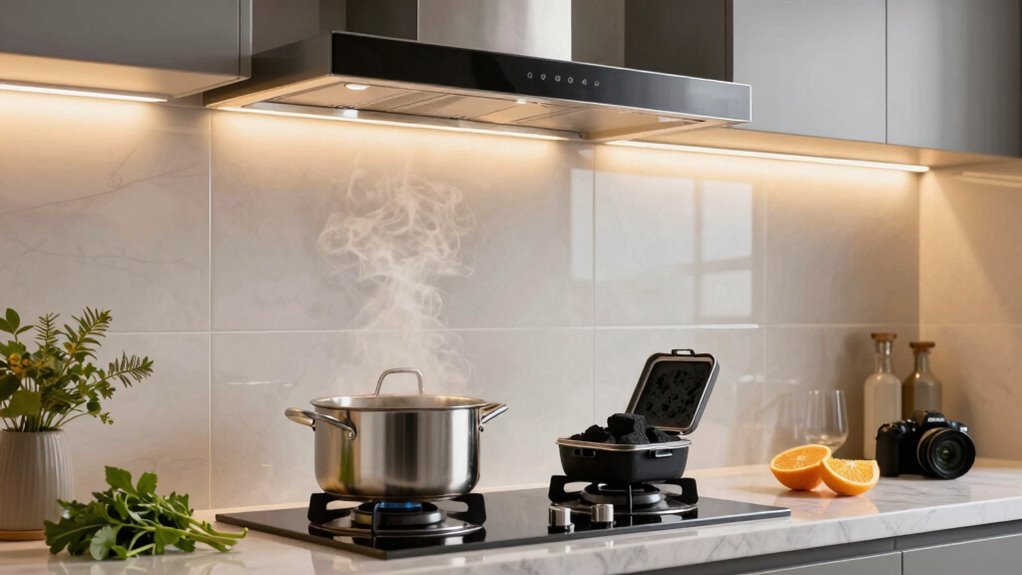

To eliminate cooking odors without opening windows, use a combination of natural absorbers like baking soda and activated charcoal placed in your kitchen. Turn on exhaust fans or ducted range hoods during cooking, and run air purifiers with activated carbon filters to trap airborne smells. simmer citrus peels or essential oils to freshen the air naturally. Keep surfaces clean, trash sealed, and airflow ideal—these simple steps can maintain a fresh kitchen environment. Discover more tips to keep odors at bay.
Key Takeaways
- Use activated charcoal or baking soda to naturally absorb and neutralize cooking odors in your kitchen.
- Turn on exhaust fans or install a range hood to vent odors outside without opening windows.
- Employ portable air purifiers with activated carbon filters to remove airborne smell particles effectively.
- Simmer natural odor neutralizers like citrus peels, herbs, or essential oils to mask and diminish cooking smells.
- Maintain regular cleaning of surfaces, trash bins, and appliances to prevent odor buildup and improve air quality.

Activated Charcoal Odor Absorber for Strong Odors in Car, Closet, Shoe, Basement. 10 Activated Charcoal Bags Odor Absorbers for Home. Bamboo Charcoals Air Purifying Bag Charcoals Deodorizer Eliminator
10 CHARCOAL DEODORIZER BAGS WITH HOOKS. Our 3.5oz bamboo charcoal bag musty smell eliminators are the perfect size…
As an affiliate, we earn on qualifying purchases.
As an affiliate, we earn on qualifying purchases.
Why Do Kitchen Odors Linger, and How Do They Affect Your Air Quality?
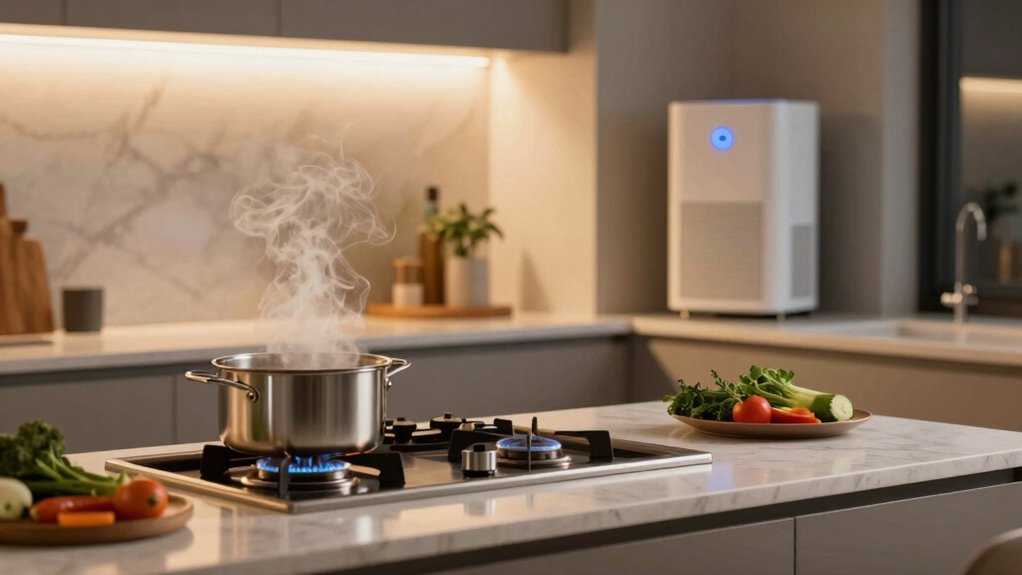
Kitchen odors tend to linger because they often settle into surfaces and fabrics, making them hard to eliminate completely. These odors are composed of airborne particles that drift through the air and cling to various surfaces. When you cook, smell molecules are released and absorbed into porous materials like curtains, upholstery, and even cabinets. This odor absorption causes smells to persist long after cooking ends. Additionally, airborne particles can circulate repeatedly, further trapping odors in your indoor environment. Over time, these particles accumulate, continuously affecting your air quality by making the air seem stuffy or unpleasant. Without proper ventilation or cleaning, the lingering odors can compromise your home’s air quality, creating an environment that’s not only uninviting but also potentially unhealthy. Understanding how odor absorption occurs can help in finding effective methods to improve indoor air quality. Regular cleaning and the use of air purifiers can significantly reduce the buildup of odor-causing particles and improve overall air freshness. Implementing ventilation strategies like exhaust fans can also help disperse lingering odors more quickly. Moreover, choosing materials with low porosity for surfaces and furniture can help prevent odors from settling in over time. Using natural odor absorbers, such as activated charcoal or baking soda, can further enhance odor elimination efforts.

Arm & Hammer Baking Soda Fresh-n-Natural Odor Eliminator, 12 oz (Pack of 3)
Effective Odor Elimination: Absorbs and destroys big odors in small spaces, keeping your home smelling fresh and clean.
As an affiliate, we earn on qualifying purchases.
As an affiliate, we earn on qualifying purchases.
Quick and Easy Ways to Freshen Your Kitchen Without Opening Windows
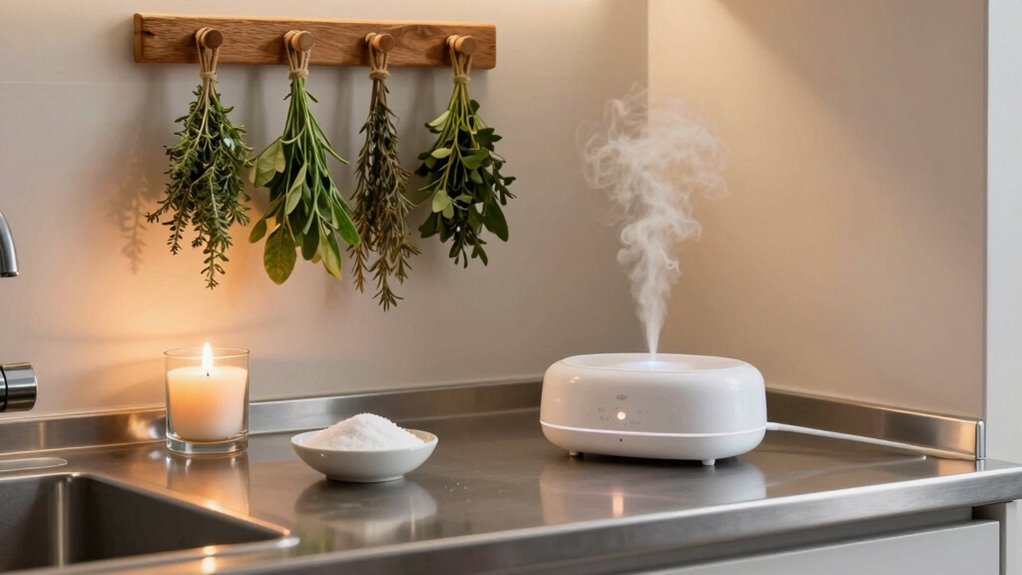
When opening windows isn’t an option, there are quick and simple ways to freshen your kitchen’s air. Many rely on air fresheners, but myths about their effectiveness persist; some think they eliminate odors completely, which isn’t true. Understanding cooking odor science shows that these products often just mask smells temporarily. Instead, focus on strategies like simmering citrus peels or using essential oils, which can neutralize odors naturally. You can also try turning on the exhaust fan or using a portable air purifier to improve air quality quickly. These methods don’t depend on opening windows and can efficiently reduce lingering cooking smells. Additionally, using air purification technology can significantly improve indoor air quality by removing airborne particles and odors. Incorporating proper ventilation techniques can further help to disperse and diminish cooking odors effectively. Remember, the goal is to combat odors at their source, not just cover them up, ensuring your kitchen smells fresh without relying solely on air fresheners. Understanding air quality management can help you choose the best methods to maintain a pleasant-smelling kitchen. Employing source control methods by managing moisture and grease can also prevent odors from lingering in the first place. Using natural odor neutralizers like baking soda or charcoal can further enhance odor absorption and keep your kitchen smelling fresh.
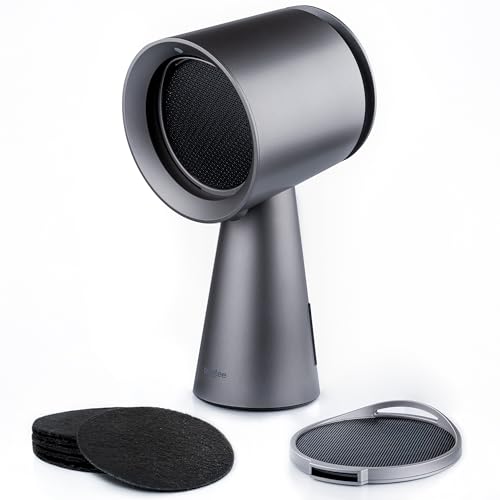
BREETEE Portable Range Hood Kitchen–5-Layer Filter Compact Desktop Exhaust Fan, Powerful 3-Speed Smoke Removal, Low Noise Countertop Range Hood, Oil Cup, for Apartments, Dorm, RV, Indoor BBQ – Grey
COMPACT GREY RANGE HOOD FOR SMALL SPACES: The Breetee grey portable kitchen exhaust fan offers strong performance in…
As an affiliate, we earn on qualifying purchases.
As an affiliate, we earn on qualifying purchases.
How to Absorb and Neutralize Cooking Smells Naturally (Using Baking Soda, Charcoal, and More)
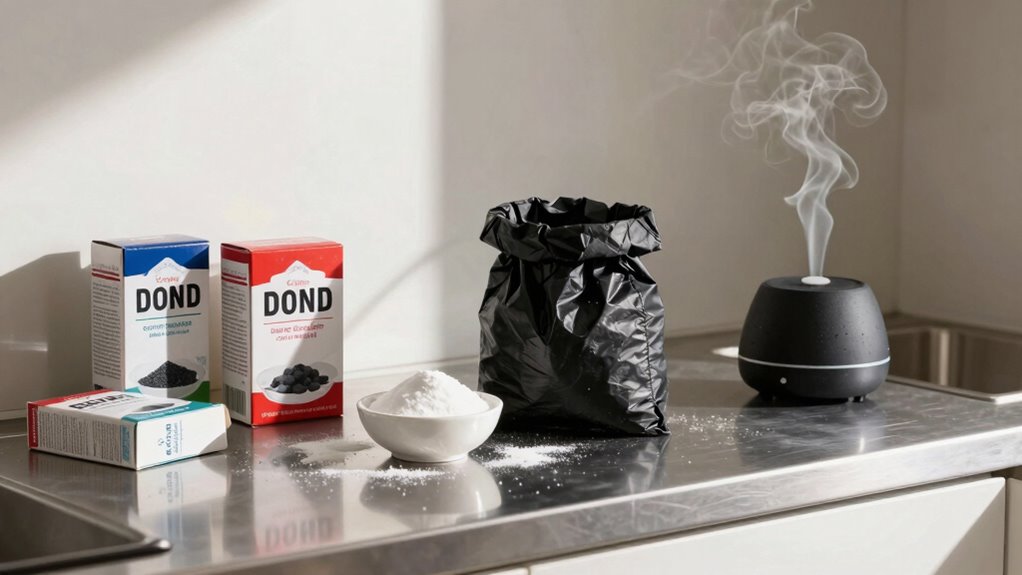
To naturally absorb and neutralize cooking smells, you can leverage simple, effective ingredients like baking soda and charcoal. Baking soda is a powerful natural deodorizer that absorbs odors through odor absorption, making it ideal for tackling lingering smells. Place an open box or small bowls of baking soda in your kitchen to continuously neutralize odors. Activated charcoal is another excellent option; its porous surface traps odor-causing molecules, offering superior natural deodorization. You can set out charcoal in bowls or use charcoal bags designed for odor control. Both baking soda and charcoal work silently and safely, providing ongoing odor absorption without artificial fragrances. Using these natural ingredients helps keep your kitchen smelling fresh without relying on chemical sprays or opening windows. Additionally, vacuum cleaners with HEPA filters can help remove dust and particles that contribute to lingering odors, further enhancing air quality. Proper air circulation techniques such as using fans or exhaust hoods can also improve overall air flow and reduce cooking smells, making your kitchen more comfortable. Incorporating natural deodorizing methods not only improves air quality but also avoids introducing potentially harmful chemicals into your environment. For added effectiveness, regular cleaning of surfaces and trash areas can significantly diminish odor buildup and maintain a fresher kitchen environment.

Diffuser Fragrance Oils, Aromtopia Essential Oils for Diffusers for Home, 6x10ml Fresh Home Set, Clean Scents for Candle Soap Making, Dryer Ball, Fresh Linen, Fresh Laundry, Crisp Breeze, Lemon
Fresh Home Set (10mlx6): Experience the clean and freshening scents of our Fresh Home Essential Oil Set- Fresh…
As an affiliate, we earn on qualifying purchases.
As an affiliate, we earn on qualifying purchases.
How to Ventilate Your Kitchen Without Opening Windows
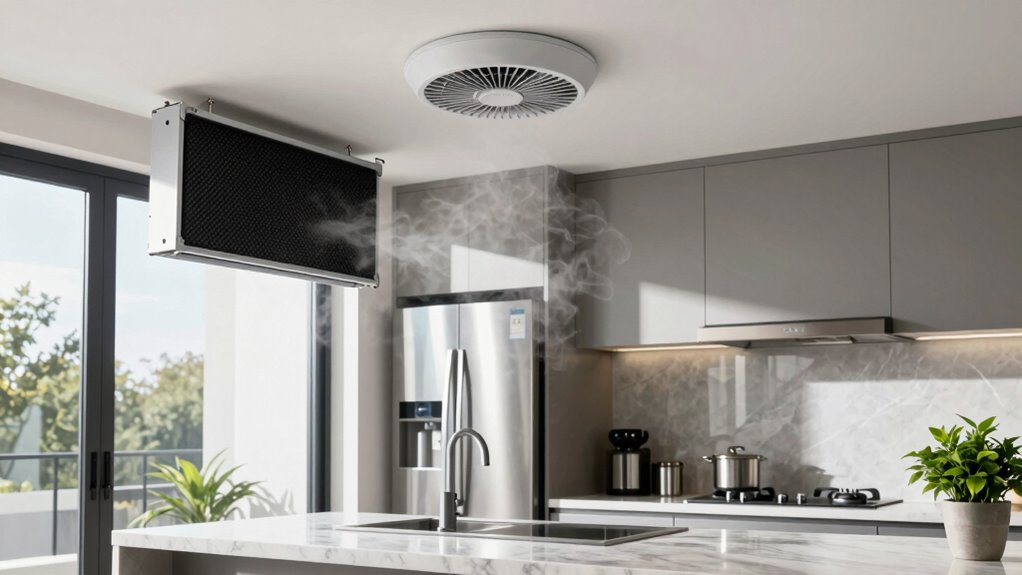
You can improve your kitchen’s air quality without opening windows by using exhaust fans effectively to remove smoke and odors. Portable air purifiers also help filter airborne particles and freshen the air quickly. Additionally, utilizing kitchen ventilation hoods guarantees continuous removal of cooking fumes, keeping your space cleaner and healthier. Incorporating air quality gear such as HEPA filters and UV-C sterilizers can further enhance indoor air safety and reduce pollutants. Proper ventilation methods are essential for maintaining a fresh and pollutant-free environment in your kitchen. Implementing effective airflow strategies ensures better circulation and minimizes lingering odors. Monitoring indoor air quality with appropriate measurement tools can help you assess and optimize your ventilation efforts.
Use Exhaust Fans Effectively
Exhaust fans are essential tools for maintaining good air quality in your kitchen without opening windows. To maximize their effectiveness, ensure your kitchen exhaust is properly installed above your stove or cooktop. Turn on the fan before you start cooking and leave it running until all odors and smoke clear. Regularly clean the fan’s filters to maintain ideal airflow and ventilation effectiveness. Adjust the fan speed based on the intensity of cooking; higher speeds remove odors more rapidly. Keep the exhaust vent unobstructed and free of debris to prevent airflow reduction. Proper ventilation techniques can help you use your exhaust fan more effectively and improve indoor air quality. Ensuring your ventilation system is well-maintained and correctly used can make a significant difference in odor control. Using air purifying devices in conjunction with exhaust fans can further enhance odor removal and air quality. Additionally, utilizing essential oils with air purifiers can help neutralize lingering cooking smells and create a fresh atmosphere. Incorporating effective ventilation methods can also prevent moisture buildup and reduce the risk of mold growth in your kitchen. By using your exhaust fan correctly, you’ll considerably reduce cooking smells and improve indoor air quality without the need for window ventilation.
Employ Portable Air Purifiers
Portable air purifiers offer an effective solution for maintaining fresh kitchen air without the need to open windows. These portable units can quickly reduce cooking smells, smoke, and airborne pollutants. To maximize their effectiveness, guarantee proper air purifier maintenance by regularly replacing filters and cleaning the units according to the manufacturer’s instructions. Choose a model with activated carbon filters to target odors specifically. Position the purifier near the cooking area for ideal results, and run it continuously during and after cooking. Keep in mind that the efficiency of portable units depends on their size and capacity, so select one suitable for your kitchen’s size. Regular maintenance ensures your air purifier performs at its best, helping you enjoy cleaner, fresher air without opening a window. Additionally, understanding air quality management techniques can further enhance your efforts to keep indoor air fresh, including proper ventilation strategies that complement the use of air purifiers. Incorporating natural ventilation methods when possible can also improve overall air exchange and odor removal. Ensuring that your air exchange rate is adequate can further optimize indoor air quality. Proper air circulation helps distribute purified air evenly throughout your kitchen space.
Utilize Kitchen Ventilation Hoods
Kitchen ventilation hoods are an efficient way to remove smoke, steam, and odors directly from your cooking area without needing to open windows. Proper appliance placement and thoughtful kitchen design guarantee your hood works effectively. Position the hood directly above your stove or cooktop to maximize airflow and capture fumes at the source. Choose a range hood suited to your cooking habits and kitchen layout, whether ducted or ductless. Make sure it’s powerful enough to handle your kitchen’s size and cooking frequency. Good appliance placement minimizes lingering smells and improves air quality. Incorporate a ventilation hood into your kitchen design early, so it seamlessly fits into your space. This setup keeps your kitchen fresh without sacrificing natural ventilation. To enhance air quality further, consider using air purifiers to reduce airborne odors and pollutants.
Best Essential Oils and DIY Sprays to Freshen Kitchen Air
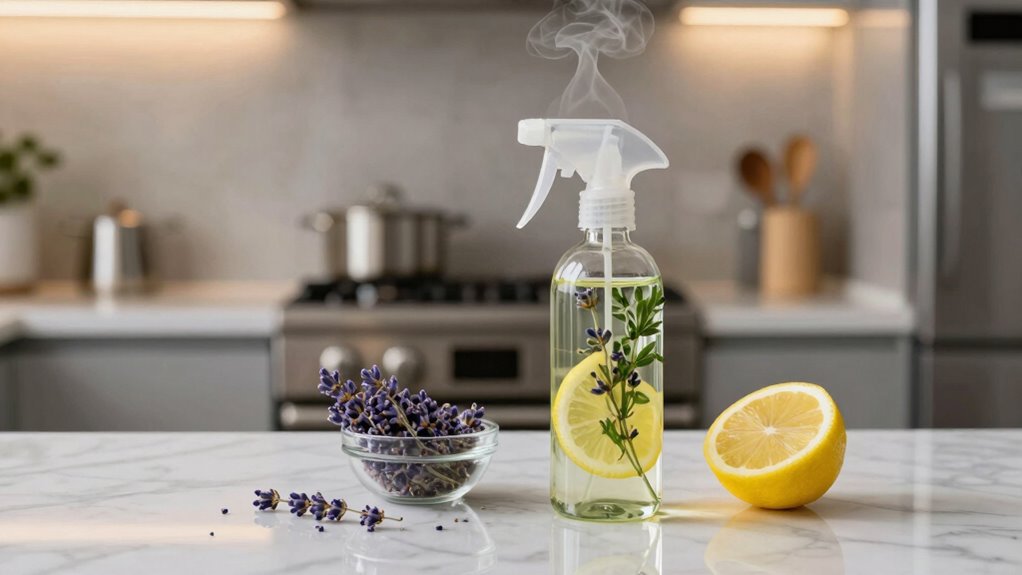
Using essential oils is a simple way to keep your kitchen smelling fresh. Combining scents like lemon and lavender or peppermint and eucalyptus creates effective air-freshening blends. You can also make your own DIY sprays with just a few ingredients to suit your preferred aroma.
Top Essential Oil Combos
Freshening up your kitchen air is easy with the right essential oil combinations. Some of the best essential oil blends include lemon and eucalyptus for a bright, clean scent, or peppermint and tea tree for a invigorating, antibacterial boost. To maximize their effect, use diffuser techniques like intermittent bursts or low, steady settings to distribute the aroma evenly. Citrus oils like orange or grapefruit combined with herbs such as rosemary or basil create a lively, inviting atmosphere. Avoid overpowering scents by mixing small amounts first, then adjusting to your preference. These diffuser blends not only mask cooking smells but also purify the air, making your kitchen feel fresher and more welcoming without opening windows.
DIY Air Freshener Recipes
Creating your own air freshener is an easy way to keep your kitchen smelling fresh without relying on store-bought sprays. Using natural ingredients allows you to craft DIY blends tailored to your scent preferences. Combine water, a bit of vodka or rubbing alcohol, and your favorite essential oils—such as lemon, eucalyptus, or tea tree—for a simple spray. For a more robust aroma, mix essential oils with a carrier like witch hazel or aloe vera. You can also create solid air fresheners with baking soda and essential oils in small jars or sachets. These DIY recipes are customizable, eco-friendly, and free of synthetic chemicals, making them perfect for maintaining a fresh, inviting kitchen atmosphere without opening windows or using artificial scents.
How to Use Fans and Exhaust Hoods to Improve Indoor Air Quality
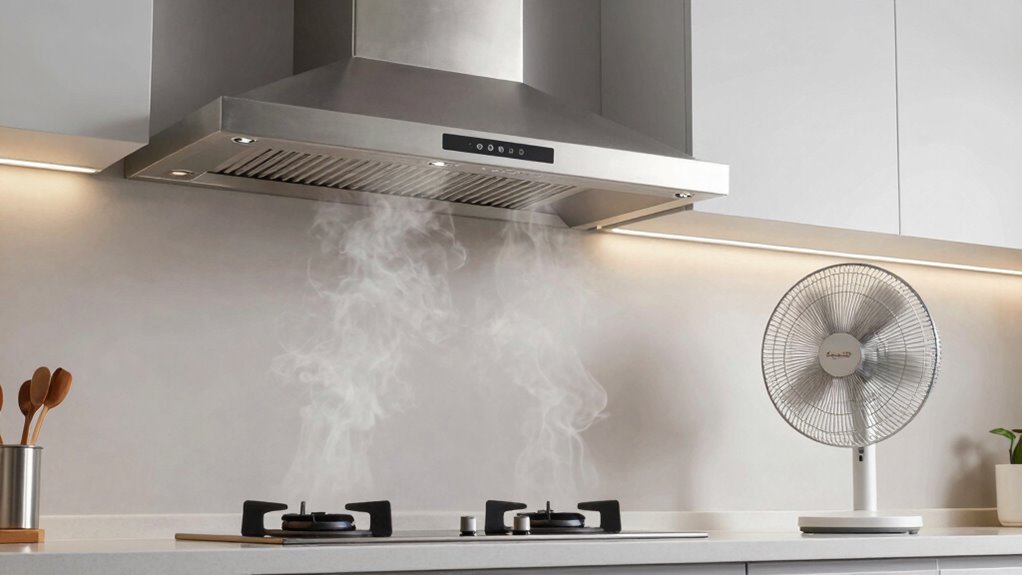
To effectively improve indoor air quality in your kitchen, it is vital to operate fans and exhaust hoods properly. Turn on your range hood or exhaust fan whenever cooking to vent smoke, steam, and odors outside. Keep filters clean and replace them regularly to maintain efficiency. Using indoor plants nearby can help absorb airborne pollutants, complementing your ventilation efforts. Consider installing air filters in your kitchen or adjacent rooms to trap airborne particles and improve overall air quality. Make sure your exhaust system is properly vented outside, not into your attic or garage, to prevent recirculating odors. Proper use of fans and exhaust hoods, along with indoor plants and air filters, creates a cleaner, fresher cooking environment, reducing lingering smells and airborne contaminants.
How to Manage Strong Odors From Frying, Grilling, and Spicy Dishes
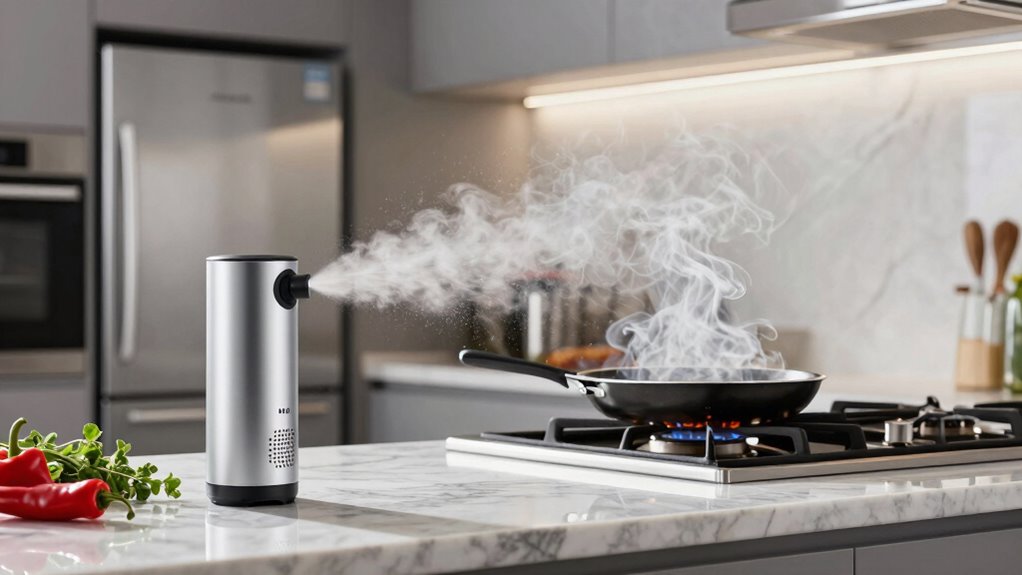
Strong odors from frying, grilling, and spicy dishes can quickly fill your kitchen and linger long after cooking ends. To manage these strong smells, start by ensuring stove safety—never leave high heat unattended, and use a vented hood if possible. Proper spice storage helps prevent lingering spicy scents; keep spices in airtight containers away from the stove. Additionally, consider using activated charcoal or odor-absorbing mats nearby to trap smells. Use a combination of these strategies to reduce odors effectively.
| Action | Tips | Benefits |
|---|---|---|
| Use proper ventilation | Turn on exhaust fans or range hoods | Removes smoke and strong odors |
| Store spices correctly | Airtight containers in a cool place | Prevents spicy smell from spreading |
| Practice stove safety | Never leave cooking unattended | Avoid accidents and excess smoke |
| Deploy odor absorbers | Activated charcoal or baking soda | Absorbs residual cooking smells |
Simple Tips for Regular Kitchen Cleaning to Prevent Odor Buildup
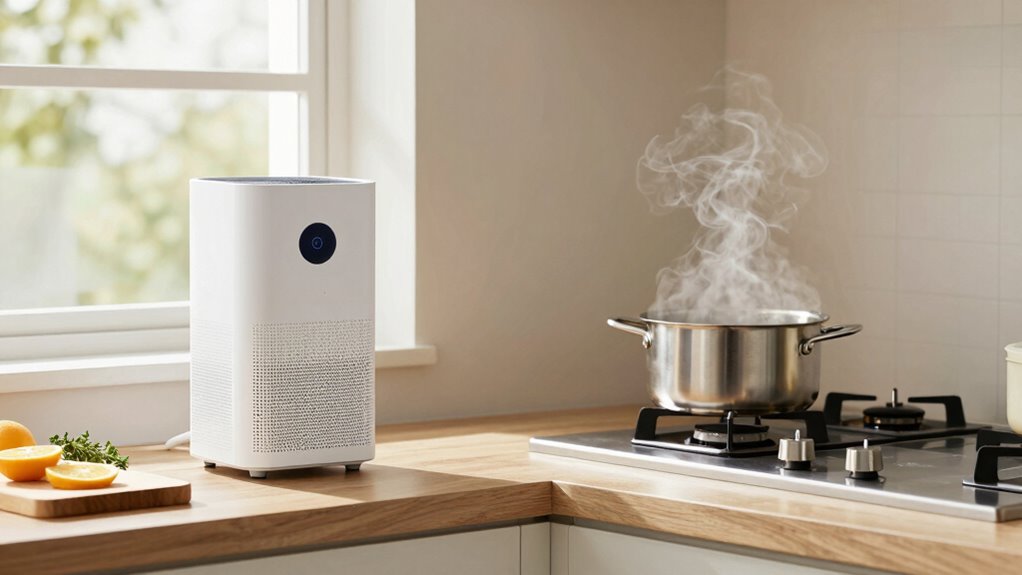
Regular kitchen cleaning is essential for preventing odor buildup and maintaining a fresh environment. Consistent cleaning routines help improve air quality and stop odors before they spread. To keep your kitchen smelling clean, focus on these habits:
- Wipe down countertops and stovetops daily to remove grease and food residues.
- Clean sinks and drains regularly to prevent mold and unpleasant smells.
- Empty trash and compost bins often, and wash them to eliminate lingering odors.
- Clean appliances like microwave and oven to prevent odor absorption.
Common Mistakes That Make Kitchen Odors Worse: and How to Avoid Them
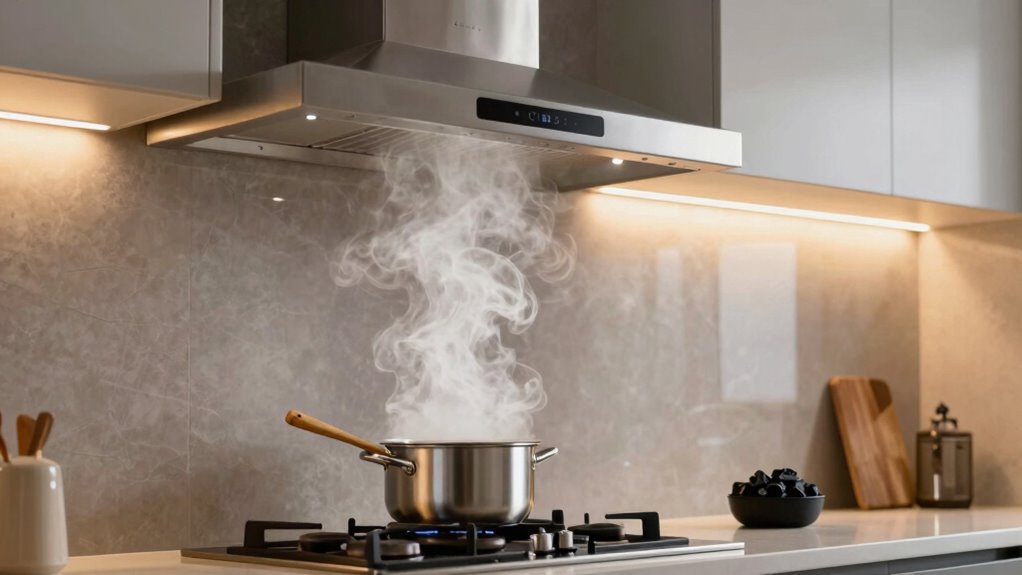
Ignoring proper ventilation can trap odors and make your kitchen smell worse over time. Overusing air fresheners might mask odors temporarily, but it can also worsen the problem if underlying issues aren’t addressed. To keep your kitchen smelling fresh, focus on good ventilation and use air fresheners sparingly.
Ignoring Ventilation Tips
Many homeowners overlook the importance of proper ventilation, which can cause kitchen odors to linger and worsen over time. Ignoring ventilation tips hampers your efforts to improve air quality. Poor ventilation means your air purifier maintenance becomes less effective, as pollutants and odors aren’t properly expelled. To boost odor absorption techniques, make sure your exhaust fans are working efficiently and use them consistently during cooking. Also, avoid blocking vents or leaving windows closed unnecessarily. Remember, sealing off airflow traps smells inside.
- Neglecting to turn on exhaust fans during cooking
- Blocking or covering vents and air intakes
- Relying solely on air purifiers without proper airflow
- Forgetting to clean or replace filters regularly
Overusing Air Fresheners
While air fresheners might seem like an easy fix for lingering kitchen odors, overusing them can actually make the problem worse. Air freshener overuse can lead to scent buildup that masks odors temporarily but doesn’t eliminate their source. Plus, many air fresheners contain synthetic fragrances that can irritate your respiratory system and cause allergic reactions. Relying heavily on these products can also create a confusing mix of scents, making odors harder to identify and address. Instead of constant sprays, opt for natural solutions like simmering citrus peels or using essential oils. Proper ventilation, regular cleaning, and avoiding synthetic fragrances will help you control kitchen odors more effectively without risking health or creating a scent overload.
Easy Hacks to Keep Your Kitchen Smelling Fresh All the Time
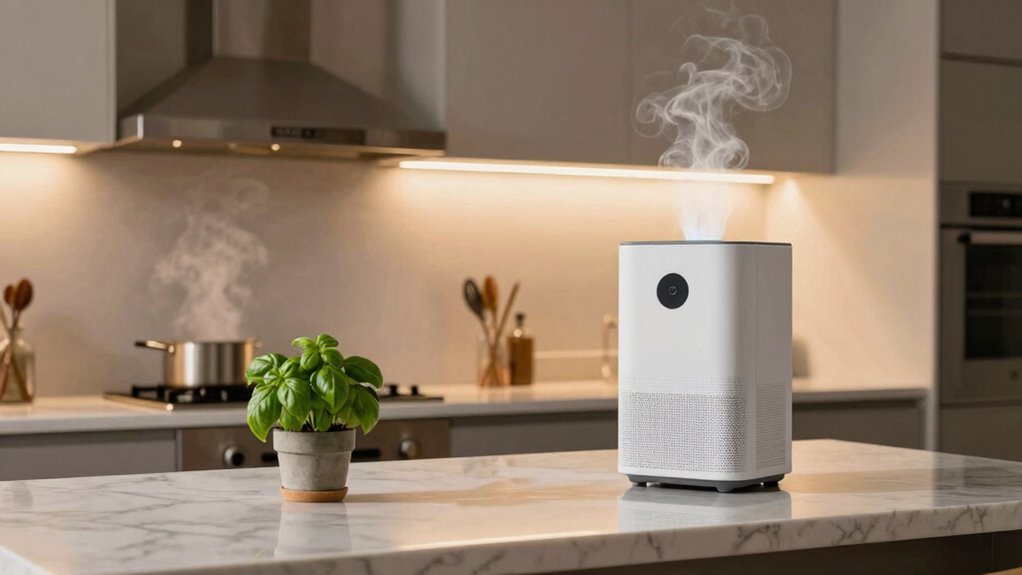
Keeping your kitchen smelling fresh can be simple with a few easy hacks. First, invest in an air purifier with good odor absorption. It continuously cleans the air, reducing lingering smells without opening windows. Second, use natural odor absorbers like baking soda or activated charcoal placed in strategic spots to soak up unwanted scents. Third, simmer a pot of water with citrus peels or herbs to create a pleasant, natural fragrance that masks any cooking odors. Finally, keep your trash closed and clean regularly to prevent odors from spreading. Combining these simple strategies helps maintain a fresh kitchen environment effortlessly, even when cooking strong-smelling dishes. You’ll enjoy a cleaner, more inviting space without relying on artificial air fresheners or airing out constantly.
Frequently Asked Questions
Can Plants Improve Indoor Kitchen Air Quality Effectively?
Yes, plants can improve your indoor kitchen air quality effectively. Indoor plant benefits include acting as natural air purifiers, filtering out toxins and odors caused by cooking. By adding popular options like snake plants or pothos, you create a natural barrier against unwanted smells. Keep in mind, while plants help, combining them with good ventilation enhances odor control. So, incorporate plants to enjoy cleaner, fresher kitchen air naturally.
How Long Do Natural Odor Absorbers Last Before Needing Replacement?
Natural odor absorbers typically last about 1 to 3 months before needing replacement, depending on the odor’s strength and the absorber’s size. You should monitor their effectiveness regularly; once you notice a decline in odor absorption, it’s time to swap them out. To extend their natural lifespan, keep them in well-ventilated areas and avoid exposing them to excessive moisture or heat.
Are There Specific Cooking Techniques That Minimize Odor Release?
To minimize odor release while cooking, you can use steaming techniques that produce less smoke and odors. Incorporate smoke control methods like using a range hood or exhaust fan, and keep lids on pots to contain smells. Avoid frying foods that release strong odors, and cook at lower temperatures to reduce smoke. These strategies help keep your kitchen smelling fresh without opening windows.
What Are the Best Non-Electrical Methods to Eliminate Strong Kitchen Smells?
Your kitchen smells so strong, it’s like a beast unbound! To tame it, try herbal remedies like simmering cinnamon sticks, cloves, or citrus peels on the stove. Scented candles also work wonders by masking odors with pleasant aromas. These non-electrical methods clear the air naturally, leaving your space fresh without the need for ventilation. Use herbs and candles together for a powerful, chemical-free odor-fighting duo!
How Often Should I Clean My Range Hood Filters for Optimal Air Quality?
You should clean your range hood filters every 1 to 3 months for ideal air quality. Regular filter maintenance prevents grease buildup and guarantees efficient removal of cooking odors. Follow the cleaning schedules recommended by your manufacturer, but if you cook frequently or notice reduced airflow, clean the filters more often. Use hot water and degreasing soap or a vinegar solution to keep your filters in top shape.
Conclusion
So, next time your kitchen smells like a science experiment gone wrong, remember you don’t need a window to fix it. With these clever tricks, you’ll keep your space smelling fresh and fabulous—no air-suckers required. Who knew battling odors could be so easy? Just don’t forget: a little effort now beats living in a perpetual spice shop nightmare later. Happy sniffing, and may your kitchen always stay gloriously odor-free!