

If your KitchenAid Artisan Series 5 Quart Tilt Head Stand Mixer is making a grinding noise, it can be concerning. Such sounds often indicate a mechanical issue or a need for maintenance. This guide provides practical, safe troubleshooting steps to identify and resolve common causes of grinding noises, helping you restore your mixer’s performance with confidence.

Get home appliances delivered free with Prime
- Fast, free delivery on millions of items
- Prime Video, Amazon Music and more included
- Member-only deals all year
Always prioritize safety and disconnect your mixer from power before performing any inspections or repairs.
Key Takeaways
| Identify common causes | Grinding noises can stem from worn gears, debris, or misalignment. |
| Regular maintenance helps | Cleaning and lubrication can prevent noise issues. |
| Inspect and replace parts | Worn gears or bearings often need replacing. |
| Safety first | Always unplug before troubleshooting or repairing. |
Check for Debris or Obstructions
- Unplug your mixer from the power outlet and wait for all moving parts to stop.
- Remove the mixing head by tilting it back and locking it in place if necessary.
- Inspect the area around the gears and the drive mechanism for any bits of food, flour, or other debris.
- Use a soft brush or cloth to carefully remove any obstructions.
Inspect the Gears and Drive Assembly
- Look closely at the internal gears (located inside the head and around the drive shaft).
- Check for visible wear, chips, or broken gear teeth.
- If you notice damage, contact KitchenAid customer service for replacement parts or professional repair.
Lubricate Moving Parts
If no visible damage is found, apply a small amount of food-grade silicone lubricant to the gears and drive shaft. Avoid using too much, as excess lubricant can attract dust and debris.
Reassemble the mixer, lock the head, and run it briefly at low speed to distribute the lubricant evenly.
Test the Mixer and Replace Worn Components
- Plug in the mixer and run it at low and medium speeds to check for noise reduction.
- If the grinding persists, it may indicate worn or damaged gears or bearings that require replacement.
- Order genuine replacement parts from KitchenAid or authorized service providers.
Prevent Future Noise Issues
- Regularly clean your mixer and inspect internal components.
- Lubricate gears periodically as recommended in your user manual.
- Use your mixer within its intended capacity to avoid undue stress on internal parts.
The Products in This Guide
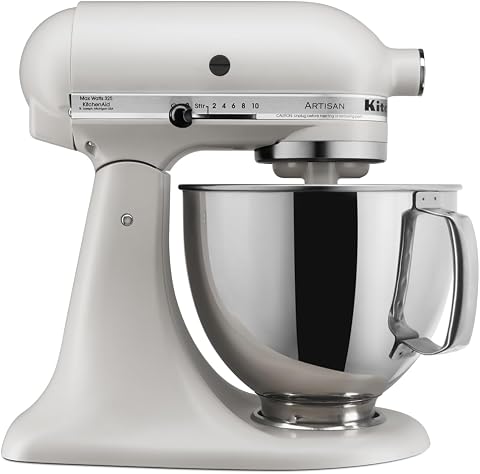
KitchenAid Artisan Series 5 Quart Tilt Head Stand Mixer
- ✔ Bowl Material: Stainless Steel
- ✔ Speed Settings: 10
- ✔ Color Options: Multiple

KitchenAid Stand Mixer Attachment
- ✔ Attachment Type: Food Grinder
- ✔ Material: Metal
- ✔ Includes: Various plates and sausage tubes
KitchenAid Artisan Series 5 Quart Tilt Head Stand Mixer
The KitchenAid Artisan Series 5 Quart Tilt Head Stand Mixer is built to last with a sturdy metal construction and 59 touchpoints for thorough mixing. It features a tilt-head design for easy access and 10 speeds to handle various tasks. While it’s generally quiet, grinding noises can occur due to internal wear or debris, which this guide helps you address.
Pros:
- Durable metal construction
- Easy tilt-head design
- Multiple speeds for versatility
- Large 5-quart bowl
Cons:
- Potential internal gear wear over time
- Requires regular maintenance
- May need professional repair for internal parts
Best for: Home bakers and cooks seeking a reliable, versatile mixer.
Not ideal for: Heavy users or commercial environments needing more robust machinery.
Bottom line: A durable and versatile mixer, but regular maintenance is key to avoiding noises.
KitchenAid Stand Mixer Attachment
The KitchenAid Metal Food Grinder attachment expands your mixer’s capabilities, making fresh ground meats, vegetables, and more. It connects seamlessly to your mixer’s power hub, providing a sturdy, efficient grinding process that can help reduce internal strain and noise by easing prep tasks.
Pros:
- Sturdy metal construction
- Multiple grinding plates included
- Easy to attach and use
- Creates fresh, high-quality ground foods
Cons:
- Additional cost for attachment
- Requires cleaning after use
- Needs pre-chilling for best results
Best for: Home cooks wanting to make fresh ground foods easily.
Not ideal for: If you’re only interested in mixing and not grinding.
Bottom line: A versatile attachment that adds grinding capabilities to your mixer.
Frequently Asked Questions
Why is my KitchenAid mixer making a grinding noise?
Grinding noises often indicate worn gears, debris inside the drive mechanism, or misalignment. Regular inspection and maintenance can help resolve these issues.
Can I fix the grinding noise myself?
Yes, with proper safety precautions. Unplug the mixer, inspect for debris, check internal gears for damage, and lubricate moving parts if needed. For damaged gears, professional replacement may be required.
How often should I lubricate the mixer’s gears?
Refer to your user manual for specific recommendations, but generally, lubricate every 1-2 years or if you notice increased noise or resistance during operation.
When should I replace internal components?
If you notice visible gear damage, persistent grinding after cleaning and lubrication, or abnormal operation, it’s best to replace worn parts or seek professional repair.
Keep Your KitchenAid Running Smoothly
Regular maintenance, inspection, and prompt troubleshooting are key to preventing grinding noises in your KitchenAid stand mixer. With careful care and timely repairs, your mixer can continue to be a reliable kitchen companion for years to come.
Affiliate disclosure: As an Amazon Associate we earn from qualifying purchases. Prices and availability are accurate as of the time of publishing.
Halloween Picks
halloween
As an affiliate, we earn on qualifying purchases.