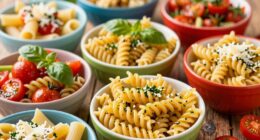
Modern Italian Christmas dishes blend tradition and innovation by incorporating regional ingredients, seasonal flavors, and sustainable practices. You’ll find classics like panettone and tortellini given modern twists with new spices, fresh herbs, or unexpected ingredients like dark chocolate or citrus zest. Chefs emphasize local sourcing and eco-friendly techniques, creating vibrant, contemporary takes on beloved recipes. If you’re curious about how these culinary evolutions celebrate Italy’s rich heritage while embracing current trends, there’s more to discover ahead.
Key Takeaways
- Chefs incorporate seasonal ingredients and local flavors to give traditional dishes a contemporary twist.
- Classic desserts like panettone feature unexpected elements such as dark chocolate or exotic spices.
- Regional recipes are reimagined with fresh herbs, artisanal oils, and innovative presentation styles.
- Modern dishes emphasize sustainability by using locally sourced, seasonal ingredients.
- Traditional recipes blend nostalgia with creativity, highlighting Italy’s diverse culinary heritage during the holidays.

Christmas in Italy is a time rich with culinary tradition, where each region boasts its own special dishes. These regional variations reflect local history, climate, and available seasonal ingredients, creating a diverse tapestry of flavors across the country. While many Italians stick to classic recipes, modern takes have emerged, blending tradition with innovation. You might find chefs and home cooks alike experimenting with new techniques or ingredients while respecting the essence of traditional dishes. This evolution keeps Italian Christmas cuisine vibrant and exciting, appealing to both nostalgic and adventurous palates.
Italy’s Christmas cuisine blends tradition with modern innovation, celebrating regional flavors and seasonal ingredients across the country.
In many regions, the focus remains on seasonal ingredients, which are at the heart of holiday dishes. For example, in northern Italy, you could see creative reinterpretations of dishes like the *tortellini* or *baccalà* (salt cod), incorporating locally available ingredients such as seasonal vegetables or unique cheeses. Chefs may add a modern twist by using fresh herbs, artisanal oils, or innovative presentation styles. Meanwhile, in the south, where ingredients like citrus, olives, and fresh seafood are abundant during winter, traditional recipes are often infused with contemporary flavors. You might find lemon zest or spicy chili added to classic seafood salads, elevating familiar dishes with a fresh perspective.
The use of seasonal ingredients also influences the dessert table. For instance, in Tuscany, traditional *panettone* or *pandoro* are sometimes infused with seasonal flavors like chestnuts or dried fruits, but modern versions might include unexpected elements such as exotic spices or even dark chocolate. In Sicily, the renowned *cassata* might be revamped with fresh, local fruits and innovative presentation styles, blending old and new seamlessly. These modifications not only celebrate regional ingredients but also showcase how tradition can evolve without losing its soul.
You’ll notice that modern takes on these festive dishes often emphasize sustainability and local sourcing, aligning with contemporary culinary values. Chefs are increasingly designing menus that highlight seasonal ingredients, reducing reliance on imported or out-of-season produce. This shift allows you to experience authentic flavors that honor regional variations while embracing the creativity of modern cuisine. Whether it’s a twist on a classic dish or a new interpretation inspired by local ingredients, these innovative approaches keep Italian Christmas food dynamic and relevant.
Additionally, understanding the regional differences in Italian cuisine can deepen your appreciation for how diverse and adaptable these dishes are across the country. Ultimately, exploring these modern adaptations offers a richer understanding of Italy’s culinary heritage. You get to enjoy familiar flavors with a fresh twist, making your holiday celebration both nostalgic and exciting. It’s a culinary journey that respects tradition but isn’t afraid to innovate—celebrating Italy’s diverse regional variations and seasonal ingredients in every bite.
Frequently Asked Questions
How Are Modern Italian Christmas Dishes Adapted for Gluten-Free Diets?
You can enjoy modern Italian Christmas dishes by swapping regular pasta for gluten-free pasta made from rice, corn, or chickpeas. Chefs also incorporate grain alternatives like quinoa or polenta to keep dishes authentic yet gluten-free. These adaptations let you indulge in festive flavors without gluten, making traditional recipes accessible and delicious for everyone. Just verify all ingredients are labeled gluten-free to avoid cross-contamination during preparation.
What Innovative Ingredients Are Used in Contemporary Twists on Classic Recipes?
You’ll find that contemporary Italian Christmas dishes incorporate fusion flavors and exotic spices, creating unexpected yet delightful twists. Chefs experiment with ingredients like turmeric, sumac, and saffron, blending them into classic recipes for a vibrant, modern touch. These innovative ingredients add depth and complexity, transforming traditional flavors into exciting new sensations. The use of such spices and fusion elements truly elevates holiday dishes, making them memorable and uniquely personalized.
Are There Regional Variations in Modern Italian Christmas Dishes?
Yes, regional flavors greatly influence modern Italian Christmas dishes. You’ll notice how holiday customs vary across Italy, with northern regions favoring richer, butter-based recipes, while southern areas incorporate more herbs and citrus. Chefs blend traditional ingredients with contemporary twists, respecting local traditions while adding new flavors. This regional diversity keeps each dish unique, celebrating Italy’s rich culinary heritage and holiday customs, creating a vibrant, varied festive table.
How Do Modern Chefs Incorporate Sustainability Into Traditional Recipes?
Did you know 65% of modern chefs prioritize sustainability? You can see this in how they incorporate sustainable farming and ingredient sourcing into traditional recipes. They choose local, seasonal ingredients to reduce carbon footprints and support eco-friendly practices. By adapting recipes with sustainable ingredients, you help preserve Italy’s culinary heritage while protecting the environment. This shift makes holiday dishes not only delicious but also environmentally responsible and forward-thinking.
What Are Some Vegan-Friendly Modern Takes on Italian Christmas Cuisine?
You can enjoy vegan-friendly Italian Christmas cuisine by trying plant-based ravioli filled with seasonal vegetables or vegan cheese, offering a modern twist on tradition. For dessert, indulge in nut-centered desserts like almond or hazelnut torts that capture the festive spirit. These dishes incorporate plant-based ingredients and innovative flavors, making your holiday celebration both delicious and sustainable while respecting Italian culinary roots.
Conclusion
As you embrace these modern twists on classic Italian Christmas dishes, remember that tradition is like a vintage vinyl—best enjoyed with a fresh spin. Don’t be afraid to experiment, just like adding a dash of sriracha to your grandma’s secret sauce. Whether you’re recreating the past or remixing it with a foodie’s flair, you’re keeping the holiday spirit alive—no time machine needed. Buon Natale!