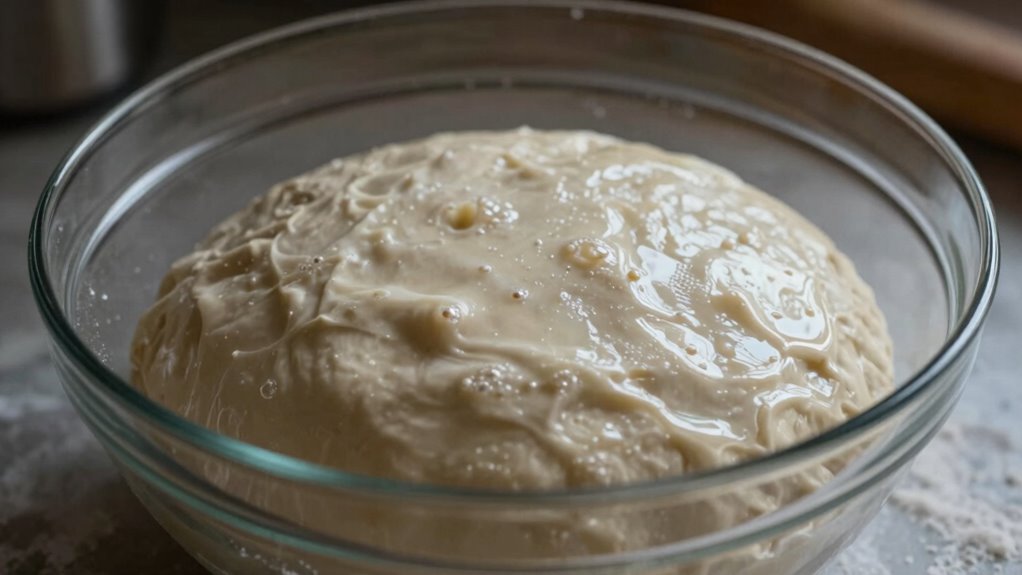

Cold fermentation slows down the yeast activity in your dough, allowing flavors to develop more deeply over time. By refrigerating your dough for 24 to 72 hours, you’ll notice a richer aroma, better texture, and a chewier crust. Maintaining consistent, cold temperatures is key for success. If you want to release the full potential of your pizza dough, understanding the process and tips can help you bake with more flavor and satisfaction—keep exploring to master it.
Key Takeaways
- Cold fermentation slows yeast activity, allowing enzymes to develop richer flavors and improve dough texture over time.
- Extending fermentation to 24-72 hours enhances flavor complexity and dough elasticity for a better crust.
- Maintaining consistent, cold temperatures (35-45°F) is crucial for optimal fermentation without over-proofing.
- Proper preparation and monitoring ensure dough develops flavor and texture without fermentation issues.
- Adjusting fermentation duration seasonally improves dough quality regardless of external environmental changes.

Vtopmart 2 Pack Pizza Dough Proofing Box, Pizza Dough Container with Snap-on Lids, BPA Free Food Storage Containers with Lids and Buckle-Up Latches, Bread Proofing Box Fits 4-6 Balls
- Size and Capacity: Fits 4-6 dough balls, fits most fridges
- Secure Snap-On Lid: Locks securely, durable for stacking and transport
- Food-Safe Material: BPA-free, safe for food contact, versatile storage
As an affiliate, we earn on qualifying purchases.
As an affiliate, we earn on qualifying purchases.
What Is Cold Fermentation and How Does It Work?
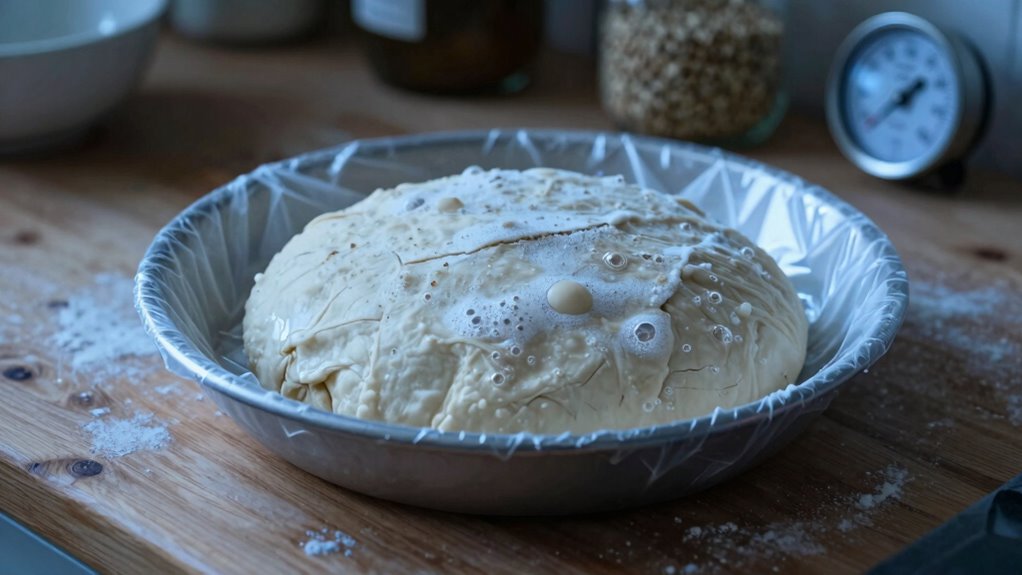
Have you ever wondered how cold fermentation transforms dough? It all comes down to controlling yeast activity through temperature. When you refrigerate the dough, you slow down the yeast’s metabolism, which means fermentation happens more gradually. This extended process allows enzymes to develop better flavor and texture. Temperature control is essential here; keeping the dough cold, typically between 35-45°F (2-7°C), guarantees the yeast doesn’t become overly active or die off. As a result, fermentation takes longer, often 24 hours or more, but produces a dough with improved taste and a more refined crumb. Additionally, fermentation duration influences the development of complex flavors during this process. By understanding how temperature influences yeast activity, you can master cold fermentation and elevate your pizza-making game. Proper fermentation is key to achieving optimal results and flavor complexity in your homemade pizza.
Why Does Cold Fermentation Improve Pizza Flavor and Texture?
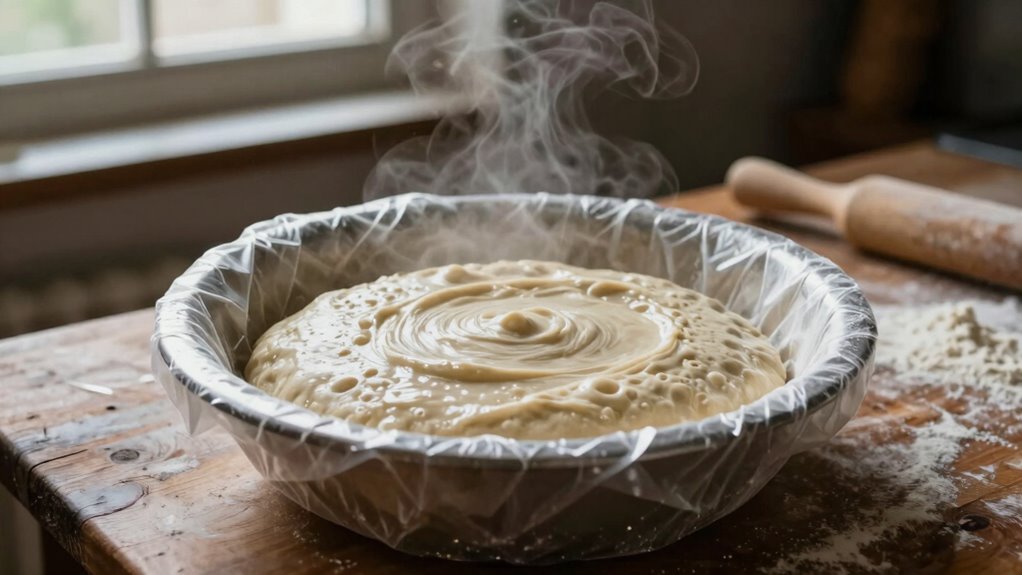
Cold fermentation enhances pizza flavor and texture by allowing the dough’s complex biochemical processes to develop more fully. During this slow fermentation, yeast activation occurs gradually, producing more subtle flavors and richer aromas. This extended process also improves dough elasticity, making it easier to shape and resulting in a chewier, more satisfying crust. The longer fermentation time allows enzymes to break down starches and proteins, developing deeper flavor profiles and enhancing the dough’s overall complexity. Additionally, the slow fermentation reduces the risk of over-proofing, leading to better oven spring and a lighter crumb. Proper dough preparation is key to achieving these benefits. Implementing controlled fermentation conditions can optimize fermentation efficiency and flavor development. Maintaining the right temperature and humidity levels can further enhance fermentation consistency, resulting in a more flavorful, textured pizza with a better crust structure, all thanks to the benefits of cold fermentation. For optimal results, it’s also important to consider storage techniques to preserve dough quality during extended fermentation periods. Utilizing precise temperature control can significantly improve fermentation outcomes and consistency.
How to Prepare Your Dough for Cold Fermentation

To prepare your dough for cold fermentation, start by mixing your ingredients thoroughly to guarantee even hydration and fermentation. Next, place the dough in a container that allows for some expansion and cover it loosely to prevent drying out. To prevent contamination and maximize hygiene, it’s important to handle the dough with clean hands and use sanitized utensils. Additionally, using the right DIY tools can make the process more efficient and safe. For optimal results, controlling the fermentation environment by setting a consistent temperature ensures your dough develops ideal flavor and texture overnight. Ensuring proper safety precautions such as avoiding exposure to open flames or heat sources can prevent accidents during the process. Incorporating body jewelry measurements during fermentation can also enhance cellular regeneration and improve dough quality.
Mixing Ingredients Properly
Before you start cold fermentation, making sure you blend your ingredients thoroughly to create a uniform dough is essential. Proper mixing techniques help distribute ingredients evenly, which impacts the dough’s texture and fermentation process. Pay attention to ingredient ratios to achieve the right balance of flour, water, yeast, and salt. Use a gentle folding or kneading method to combine everything without overworking the dough. This guarantees gluten development and consistency, making the dough easier to handle later. Avoid rushing the mixing process—taking your time ensures all ingredients are fully incorporated. A well-mixed dough with correct ingredient ratios will ferment evenly and develop better flavor during cold fermentation, resulting in a superior pizza crust.
Managing Fermentation Environment
Ensuring the right environment for fermentation is crucial to achieving the best flavor and texture in your dough. You need to manage yeast activity by controlling temperature carefully. Cooler temperatures slow yeast activity, allowing enzymes to develop complex flavors without overproofing. Aim for a consistent, cool environment—ideally around 39°F to 50°F (4°C to 10°C)—to optimize fermentation during cold storage. Use your refrigerator’s temperature controls or a dedicated fermentation fridge if possible. Avoid temperature fluctuations, as they can disrupt yeast activity and lead to uneven fermentation. Cover your dough tightly to prevent dryness and contamination. Proper temperature control guarantees that yeast works slowly and steadily, resulting in a dough that develops richer flavors and better texture after cold fermentation. Maintaining proper indoor air quality and humidity can also help ensure a stable environment for fermentation. Additionally, monitoring ambient temperature can help maintain consistent fermentation conditions over time. Being aware of temperature regulation practices is essential for consistent results and superior dough quality.
Best Tips for Successful Cold Fermentation: Timing and Temperature

Getting the timing and temperature right is essential for successful cold fermentation. To optimize yeast activity, keep your dough at a consistent temperature between 35°F and 45°F, which slows fermentation without stopping it entirely. This controlled environment extends the fermentation timeline, allowing flavors to develop more deeply. Generally, a 24 to 72-hour period works best, but longer periods often yield better taste and texture. Avoid rushing the process by keeping the temperature stable; fluctuations can disrupt fermentation. Remember, colder temperatures slow yeast activity, so patience is key. By monitoring both timing and temperature carefully, you’ll ensure your dough ferments properly, resulting in a more flavorful, airy crust. Proper temperature control is crucial for achieving optimal fermentation results. Maintaining a steady environment helps prevent temperature fluctuations, which can negatively impact yeast activity and dough quality. Additionally, understanding how cold sensing influences fermentation can help you fine-tune your process for even better results.
Troubleshooting Common Cold Fermentation Problems
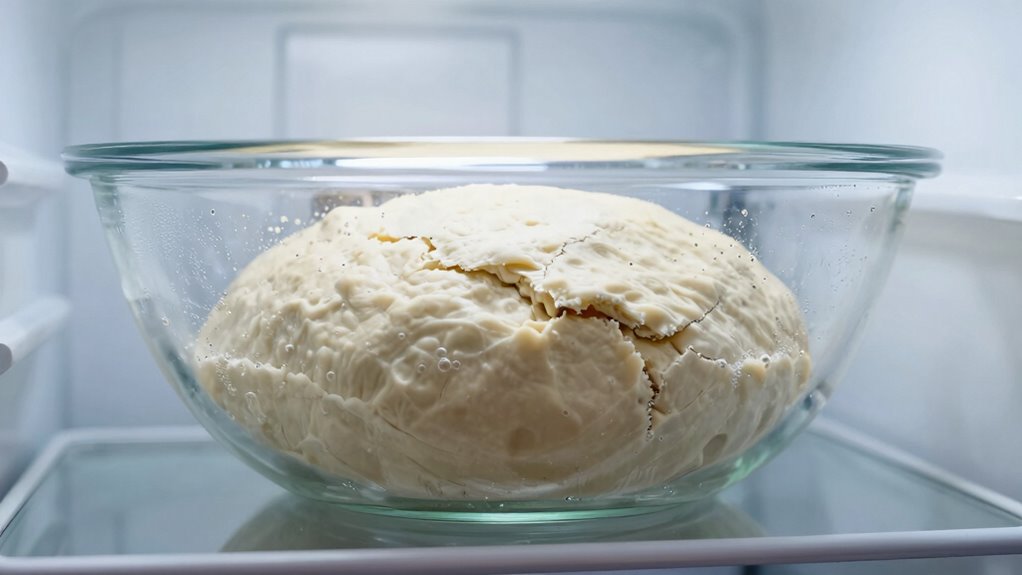
Cold fermentation can sometimes present challenges, but most issues stem from inconsistent conditions or overlooked details. Common problems include dough not rising enough, over-fermentation, or a sour smell. To troubleshoot:
- Check yeast activation—ensure your yeast is fresh and activated correctly before mixing.
- Adjust dough hydration—too dry or too wet dough can hinder fermentation; aim for proper hydration levels.
- Monitor temperature—if the fridge is too cold or fluctuates, fermentation slows or stalls.
- Observe fermentation time—too long can lead to over-fermentation, while too short may result in underdeveloped flavor.
- Maintain consistent fermentation conditions—fluctuations in temperature or humidity can negatively impact the fermentation process.
- Be aware of water temperature and its effect on yeast activity, as water that’s too cold can inhibit fermentation progress.
- Consider the quality of ingredients, since stale or low-quality flour and yeast can impair fermentation efficiency.
Easy Ways to Incorporate Cold Fermentation Into Your Pizza Routine

Incorporating cold fermentation into your pizza routine is simpler than you might think, and it can substantially enhance flavor and texture. Start by preparing your dough as usual, then let it rise at room temperature until it’s just begun to develop dough elasticity. Once this stage is reached, cover the dough tightly and transfer it to the refrigerator. Cold fermentation slows down yeast activity, allowing flavors to deepen over time. You can refrigerate the dough for 24 to 72 hours, which improves dough elasticity and creates a more complex taste. When ready to bake, let the dough come to room temperature for about 30 minutes. This easy method requires minimal effort and yields a superior crust that’s both flavorful and easy to stretch. Understanding seasonal effects on dough fermentation can help optimize your results based on the time of year.
Frequently Asked Questions
How Long Can I Cold Ferment My Pizza Dough Safely?
You can safely cold ferment your pizza dough for up to 72 hours, but many prefer 24 to 48 hours for ideal flavor. During fermentation duration, guarantee your dough is stored in an airtight container in the fridge to prevent drying and contamination. After this period, the dough develops better texture and flavor, making your pizza even more delicious. Just keep an eye on the dough’s condition during storage.
Can I Freeze Pizza Dough After Cold Fermentation?
Did you know freezing dough can extend its shelf life by up to three months? Yes, you can freeze pizza dough after cold fermentation using proper freezing techniques and dough storage methods. Just wrap it tightly in plastic or vacuum-seal, then place it in an airtight container. When you’re ready, thaw it in the fridge overnight, and you’ll have fresh-tasting dough ready for your next pizza night.
Does Cold Fermentation Affect Gluten Development?
Cold fermentation enhances gluten development by allowing the gluten structure to strengthen slowly over time. This process improves dough elasticity, making it easier to stretch and shape without tearing. As you refrigerate the dough, the gluten network becomes more refined, resulting in a chewier, more flavorful pizza crust. So, yes, cold fermentation positively affects gluten development, contributing to a better overall texture and structure in your finished pizza.
Is Cold Fermentation Suitable for All Types of Pizza Dough?
Cold fermentation is suitable for most types of pizza dough, especially when you want to enhance flavor and develop a strong gluten structure. It slows fermentation, allowing the dough to improve in taste and texture. However, delicate or quick-rise doughs may not benefit as much. You should experiment with your specific recipes to see how cold fermentation impacts gluten development and flavor, ensuring the best results for your preferred pizza style.
How Does Cold Fermentation Impact Dough Rise and Oven Spring?
When you cold ferment your dough, it slows enzyme activity, which might reduce immediate rise but enhances flavor development. As you bake, you’ll notice improved oven spring because the dough’s gluten structure becomes stronger overnight. This delayed fermentation creates a surprising balance—less initial rise, yet a more vigorous spring in the oven. Ready for that perfect crust? Cold fermentation reveals a secret that transforms your pizza’s texture and flavor.
Conclusion
Remember, patience is a virtue — especially in pizza making. By embracing cold fermentation, you give your dough the time it needs to develop rich flavor and perfect texture. It might require some planning, but the delicious results are worth the wait. So, don’t rush the process. As the saying goes, “Good things come to those who wait,” and with cold fermentation, your pizza will be the tastiest reward.