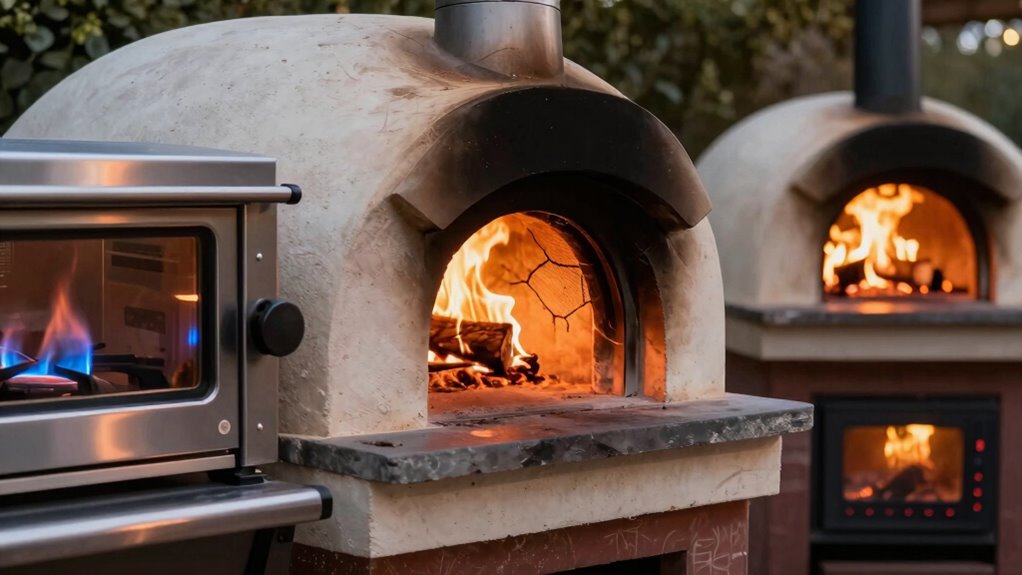

Choosing between gas, wood, and pellet pizza ovens depends on your flavor preferences, convenience needs, and environmental concerns. Gas ovens heat quickly, are easy to operate, and produce a clean taste, but lack smoky flavor. Wood offers an authentic, smoky aroma but requires more effort and management. Pellets strike a balance with consistent heat and convenience. Explore this guide further to find the perfect fuel for your pizza experience.
Open a free Amazon Business account
Business pricing, bulk buying and tax-exempt orders.
As an affiliate, we earn on qualifying purchases.
Key Takeaways
- Gas ovens offer quick, clean operation with precise temperature control, ideal for convenience and consistent results.
- Wood-fired ovens provide authentic smoky flavor and high heat, perfect for traditional pizza tastes.
- Pellet ovens balance convenience and flavor, featuring automated feed systems for steady, controllable heat.
- Wood and pellets deliver richer, smoky aromas, while gas emphasizes clean, neutral cooking without smoky notes.
- Cost, ease of use, and environmental impact vary: gas is cheapest upfront, wood is sustainable but effortful, and pellets offer a middle ground.
As an affiliate, we earn on qualifying purchases.
What Are the Main Differences Between Gas, Wood, and Pellet Pizza Ovens?

When choosing a pizza oven, understanding the key differences between gas, wood, and pellet models can help you make the right decision. Gas ovens often feature built-in fuel storage, making them convenient and easy to operate, with precise temperature control at the push of a button. Wood-fired ovens require you to manage fuel storage by stocking logs, which can be less consistent but offers a traditional cooking experience. Pellet ovens use stored compressed pellets and provide excellent temperature control through automated feed systems, maintaining steady heat. Each fuel type impacts ease of use and maintenance: gas is quick and clean, wood demands more effort but offers authentic flavor, and pellets strike a balance with convenience. Knowing these distinctions helps you choose the best fit for your cooking style. Free Floating
How Does Each Fuel Affect the Flavor and Authenticity of Your Pizza?

The type of fuel you choose profoundly influences the flavor and authenticity of your pizza. Wood fires impart a rich, smoky aroma that enhances flavor depth and creates a classic, rustic taste, closely mimicking traditional pizzerias. Pellet fuels also offer a subtle smoky undertone, providing consistent flavor without overwhelming the crust. Gas, on the other hand, delivers a clean heat source, which maintains the purity of ingredients but may lack the complex smoky notes that elevate authenticity. Each fuel affects the overall experience differently, with wood and pellets offering more authentic flavor profiles. Your choice directly impacts the depth of flavor and the degree of authenticity enhancement, shaping your pizza’s character and how true it feels to traditional styles. Additionally, contrast ratio plays a role in how vividly the colors and textures of your pizza appear, contributing to the overall visual appeal and perceived freshness. The fuel type can also influence the cooking environment, affecting how evenly the pizza cooks and the development of a perfect crust. Furthermore, understanding the fuel efficiency of each option can help optimize cooking times and fuel consumption, ensuring a more sustainable and cost-effective process. Considering the environmental impact of each fuel type can also guide you toward a more eco-friendly choice for your outdoor cooking.
Which Fuel Is Easiest and Most Convenient to Use?

When choosing a pizza oven fuel, you’ll want to contemplate how easy it is to get started. Some options ignite quickly and require minimal setup, while others need more effort to maintain. Comparing these factors helps you find the most convenient fuel for your cooking style. Additionally, considering safety tips can help prevent accidents and ensure a smooth cooking experience. Being aware of fuel handling procedures can further enhance safety and ease of use during your pizza-making sessions. Understanding fuel type characteristics can also guide you in selecting the most suitable option for consistent results. For example, recognizing the ignition process of each fuel type can significantly influence your overall convenience and satisfaction. Moreover, knowing how sound vibrations and thermal properties influence cooking can optimize your pizza oven performance.
Ease of Ignition
Choosing a pizza oven fuel that’s easy to ignite can make the entire cooking process more convenient. The ignition process and startup time vary considerably among fuels, affecting your overall experience. Here’s a quick comparison:
- Gas: Lights quickly with a match or electronic igniter, offering almost instant ignition and minimal startup time.
- Wood: Requires kindling and patience, with a longer ignition process and longer startup time.
- Pellets: Usually easy to ignite using a built-in igniter or starter cube, offering a moderate ignition process and quick startup.
- Charcoal: Needs careful lighting with lighter fluid or starter cubes, resulting in a longer ignition process and startup time.
Gas fuels are generally the easiest and fastest to ignite, making them the most convenient choice.
Setup and Maintenance
Gas fuels stand out as the easiest and most convenient option for setup and ongoing maintenance. You simply connect the gas line, ensuring proper fuel storage nearby, and you’re ready to go. Unlike wood or pellets, gas ovens don’t require stacking or storing fuel on-site, reducing clutter and cleanup. Venting requirements are minimal; most gas ovens need a straightforward venting setup to expel combustion gases safely, but they don’t demand extensive chimney systems. Maintenance involves periodic checks for gas leaks and cleaning the burners, which is quick and simple. You won’t have to deal with ash or wood residue, saving time and effort. Additionally, efficient fuel management can help in reducing operational costs and environmental impact, making the process even more hassle-free. Overall, gas fuels offer a hassle-free experience, making them ideal if you want a reliable, low-maintenance pizza oven setup. Additionally, emotional skills can help in managing the stresses associated with setup and maintenance, ensuring a smoother experience.
How Do Gas, Wood, and Pellet Fuels Compare in Cost?

Comparing the costs of gas, wood, and pellet fuels reveals notable differences that can impact your overall expenses. Gas is usually the cheapest upfront, thanks to easy fuel storage and consistent temperature control. Wood tends to be more affordable long-term but requires space for storage and more effort to maintain stable heat. Pellets fall in between, offering convenience with compact storage but slightly higher prices. To help you decide, consider these points: 1. Gas offers low initial costs and easy fuel storage. 2. Wood costs less but needs space and effort for storage. 3. Pellets are convenient, with predictable burns but slightly pricier. 4. Fuel costs can fluctuate based on local availability and quality, affecting your overall budget. Additionally, understanding the fuel affordability in your area can help you make a more informed choice.
What Is the Environmental Impact of Gas, Wood, and Pellet Pizza Ovens?

Ever wondered how your pizza oven’s fuel choices impact the environment? Your choice affects the carbon footprint you leave behind. Gas ovens produce fewer emissions than wood, but they rely on fossil fuels, which are non-renewable resources. Wood-fired ovens use renewable resources if sourced sustainably, making them more eco-friendly in that sense. Pellet ovens burn compressed wood or biomass pellets, which are also renewable and often sourced responsibly. However, all fuel types emit some greenhouse gases, contributing to climate change. Your selection influences not just your cooking experience but also the health of the environment. Opting for renewable resources and minimizing emissions can help reduce your overall environmental impact while still enjoying delicious pizza. Additionally, considering sustainable sourcing of your fuel can further lessen your ecological footprint. Choosing fuels that are locally available can also reduce transportation emissions and support local economies. Being mindful of fuel efficiency can further enhance your efforts to minimize environmental impact. It is also important to consider the lifecycle emissions of each fuel type to fully understand their environmental footprint.
What Are the Safety and Maintenance Tips for Different Fuel Types?

Maintaining safety and proper operation is vital when using different fuel types in your pizza oven. Proper fuel storage is essential, so keep wood, pellets, or gas cylinders away from heat sources and in a well-ventilated area. Follow safety precautions like wearing gloves and eye protection when handling fuels, and always guarantee your ventilation system is working effectively. Regularly clean your oven to prevent buildup that could cause fires or smoke issues. Here are four key tips:
- Store fuels securely, avoiding exposure to moisture and open flames.
- Keep a fire extinguisher nearby and know how to use it.
- Inspect fuel lines and connections regularly for leaks or damage.
- Follow manufacturer guidelines for maintenance and fueling procedures.
These steps help guarantee safety and extend your oven’s lifespan.
Which Pizza Oven Fuel Is Best for Your Cooking Style and Preferences?
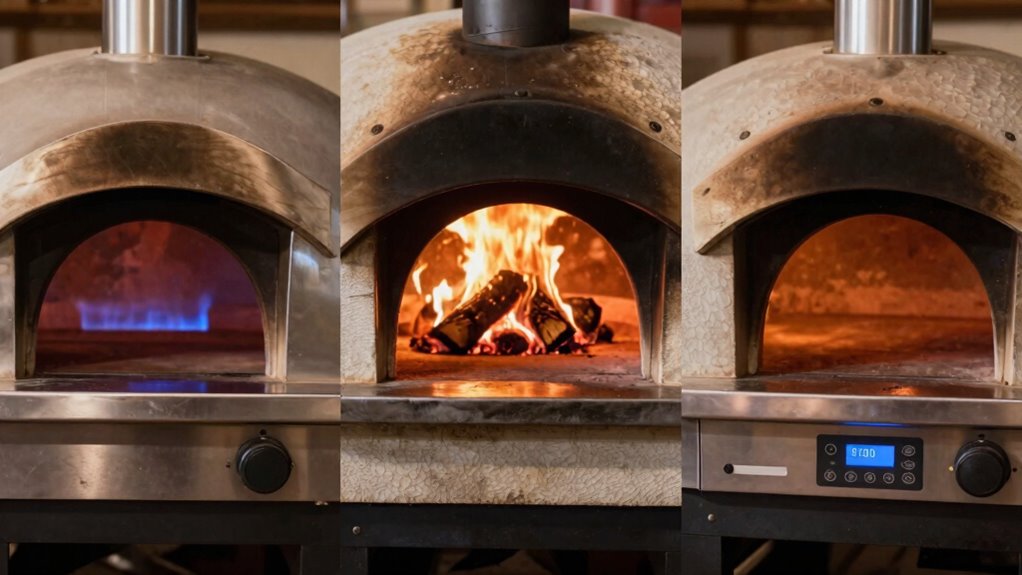
Choosing the right fuel for your pizza oven depends on your cooking style and personal preferences. If you prefer quick, consistent heat, gas might suit you best, especially with easy fuel storage and precise temperature control. Wood offers a traditional flavor and high heat, but requires more effort for fuel storage and managing temperature. Pellets provide a balance, with convenient storage and steady heat output, making temperature control simpler. Consider how much effort you’re willing to invest in fuel management; if you value convenience, gas or pellets are ideal. For those who enjoy the authentic experience and flavor, wood is unmatched. Your choice should align with your cooking habits, flavor preferences, and how much control you want over your oven’s temperature.
Frequently Asked Questions
Can I Switch Between Fuels in a Single Pizza Oven?
You can switch between fuels in a single pizza oven, but it depends on fuel compatibility and necessary oven modifications. Make certain your oven is designed or adapted for multiple fuel types to prevent damage or safety issues. Some ovens require specific attachments or vent adjustments for different fuels. Always check your manufacturer’s guidelines before switching fuels, and consider consulting a professional to make proper modifications for safe and efficient operation.
Which Fuel Type Heats up the Fastest?
Imagine you’re back in 1776, lighting a fire—gas heats up the fastest, making it ideal if you want quick ignition and rapid temperature rise. Gas ignites instantly, allowing your oven to reach cooking temps in minutes. Wood and pellets take longer, needing more time for ignition and temperature buildup. So, if speed’s your priority, gas is your best bet for fast heating.
Are There Any Health Concerns With Each Fuel?
You should consider health safety and emission levels when choosing your fuel. Gas produces lower emissions and is generally safer for indoor use, reducing health concerns. Wood and pellets, while natural, emit higher levels of particulate matter and volatile organic compounds, which can affect air quality and cause respiratory issues if not properly ventilated. Always guarantee proper ventilation and follow safety guidelines to minimize health risks with any fuel type.
How Long Does Each Fuel Typically Burn?
Think of each fuel as a different storyteller. Gas usually narrates a quick, efficient tale lasting about 1-2 hours, ideal for small gatherings. Wood whispers a longer story, burning around 3-4 hours, offering a rustic charm. Pellets strike a balance, burning for about 2-3 hours with good fuel efficiency. Considering environmental impact, wood and pellets are more eco-friendly, but gas provides quick, clean flames.
Can Outdoor Conditions Affect Fuel Performance?
Yes, outdoor conditions can influence your fuel’s performance. Weather impact, like wind and rain, can make it harder to maintain a steady flame or heat, especially for wood and pellets. Proper fuel storage is essential; keep wood dry and protected from moisture, and store gas cylinders in a cool, sheltered spot. By managing these factors, you’ll ensure consistent, reliable cooking regardless of outside weather.
Conclusion
Choosing the right pizza oven fuel is like selecting the perfect brush for a masterpiece—each offers a unique touch. Whether you crave the smoky authenticity of wood, the convenience of gas, or the eco-friendly pellets, your choice shapes your culinary adventure. Consider your taste, budget, and lifestyle. After all, the fuel you pick isn’t just a fire; it’s the heartbeat of your pizza masterpiece—making every slice a celebration of your style.
NFL season / tailgating Picks
team gear
As an affiliate, we earn on qualifying purchases.