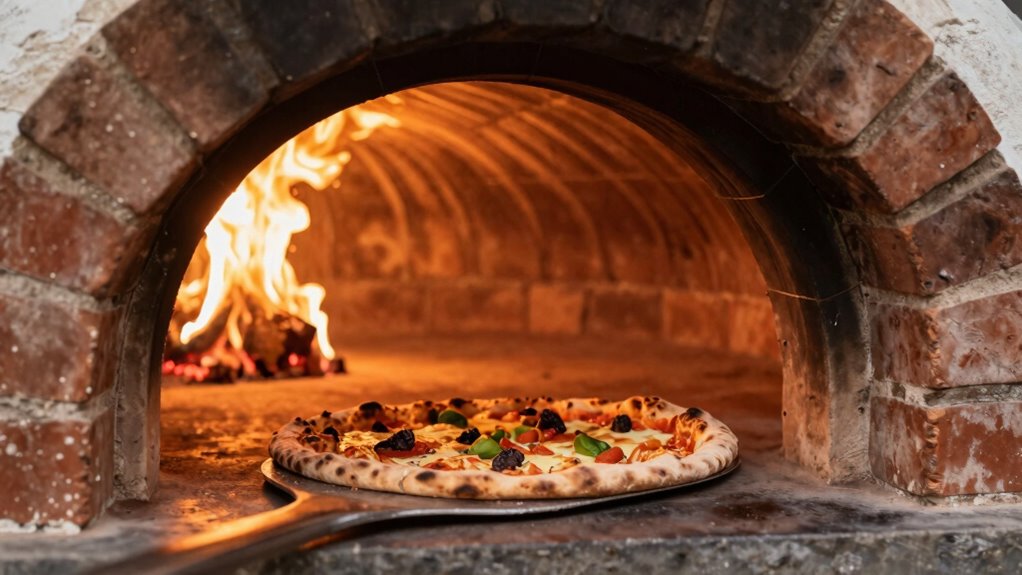
To avoid burnt tops and raw centers, guarantee your oven heats evenly by preheating for at least 30 minutes and positioning your pizza stone properly. Use an infrared thermometer to monitor surface temperatures and rotate your pizza halfway through baking. Manage hot spots by adjusting placement and airflow, and keep the oven door mostly closed. Proper heat distribution and ventilation make a big difference; keep exploring for more tips to perfect your pizza.

Get home appliances delivered free — and shop member deals
- Fast, free delivery on millions of items
- Access to Prime Big Deal Days deals on October 6–7
- Prime Video, Amazon Music and more included
Key Takeaways
- Preheat the oven thoroughly for at least 30 minutes to ensure even heat distribution.
- Use an infrared thermometer to identify hotspots and adjust pizza placement accordingly.
- Rotate the pizza periodically and shift its position to prevent uneven browning or raw spots.
- Place the pizza stone on the middle or lower rack for consistent heat transfer.
- Keep oven vents unobstructed and calibrated to maintain stable, balanced temperatures.
infrared thermometer for pizza oven
As an affiliate, we earn on qualifying purchases.
As an affiliate, we earn on qualifying purchases.
How Heat Distributes in Your Pizza Oven and Why It Matters
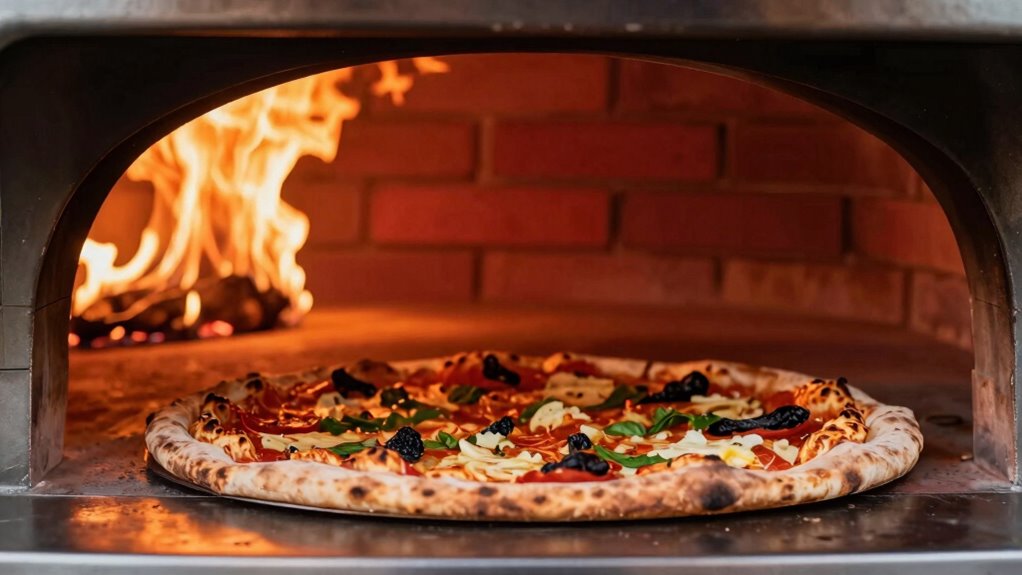
Understanding how heat distributes in your pizza oven is essential for achieving perfect pies. Heat doesn’t spread evenly; instead, thermal hotspots can form, creating areas of intense heat while others remain cooler. These hotspots happen because of uneven heat diffusion, often caused by the oven’s design or heat source placement. If you don’t comprehend this distribution, you risk burning the top of your pizza or leaving the center undercooked. Recognizing these thermal hotspots allows you to adjust your cooking technique or oven placement. Proper heat distribution ensures that all parts of your pizza cook evenly, resulting in a crispy crust, melted cheese, and perfectly cooked toppings. Mastering heat diffusion in your oven is the key to consistently excellent pizzas. Additionally, understanding how different oven types influence heat flow can help you choose the best setup for optimal cooking results. Being aware of heat retention can also assist in maintaining consistent temperatures during cooking.
How to Set Your Oven for Even, Crispy Pizzas
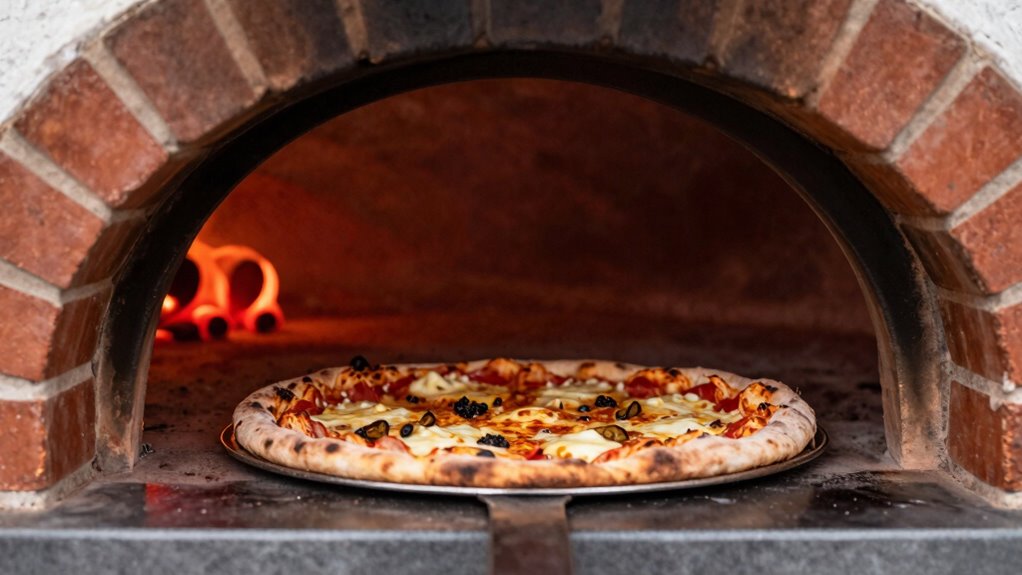
To achieve evenly cooked, crispy pizzas, you need to set your oven correctly based on its heat distribution. First, position your pizza stone properly—usually on the middle or lower rack—to ensure heat transfers evenly to the crust. Second, manage your oven door carefully; keep it mostly closed during baking to maintain consistent heat, opening only when you need to check or rotate the pizza. Third, preheat the oven thoroughly—at least 30 minutes—to stabilize temperature. Additionally, understanding seasonal heat variations can help you adjust your baking times and temperature settings for optimal results year-round. By placing the pizza stone correctly, controlling oven door management, preheating properly, and considering seasonal factors, you create a balanced environment that promotes crispy crusts and well-cooked toppings without burnt spots or raw centers. Proper heat distribution within your oven plays a crucial role in achieving consistent baking results. This setup maximizes your oven’s heat potential for perfect results. Incorporating temperature fluctuations awareness can further optimize your baking process for consistent, delicious pizzas. Moreover, being aware of oven calibration ensures your oven maintains accurate temperatures, leading to more reliable cooking outcomes. Additionally, utilizing tools like infrared thermometers can help you monitor temperature accuracy and make precise adjustments for better results.
Tools and Accessories That Help You Manage Oven Heat
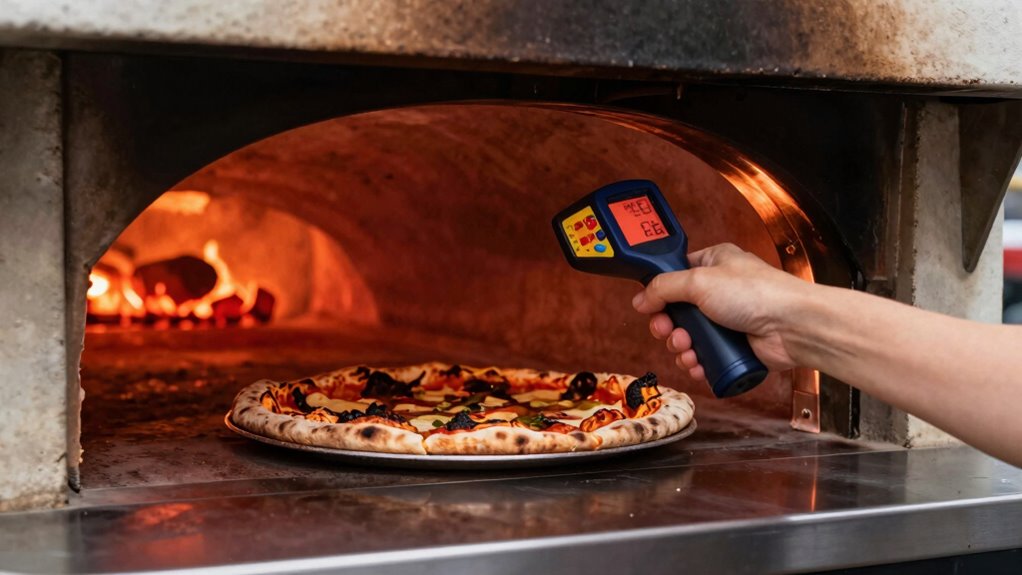
Using the right tools and accessories can make managing your oven heat much easier and more precise. Infrared thermometers allow you to quickly and accurately measure the oven’s surface temperature without opening the door, helping you identify hot spots or uneven heat distribution. Proper temperature measurement is essential for consistent cooking results and avoiding burnt tops or raw centers. Heat resistant gloves protect your hands when handling hot pizza stones, racks, or adjusting oven components, keeping you safe while maintaining control. These gloves also allow you to move pizzas and tools with confidence, reducing the risk of burns. Together, infrared thermometers and heat resistant gloves give you better control over your oven environment, enabling you to fine-tune heat levels and ensure your pizza cooks evenly. Oven heat zones can be adjusted more effectively when you understand the heat distribution within your oven, leading to better cooking outcomes. Developing an understanding of heat distribution patterns can further enhance your ability to manage oven temperatures accurately. Juice extraction techniques can be used to prepare healthy drinks that support your overall well-being, indirectly contributing to your cooking endurance and energy levels. Investing in these accessories simplifies heat management and improves your pizza-making results.
Placing and Rotating Your Pizza for Perfect Results
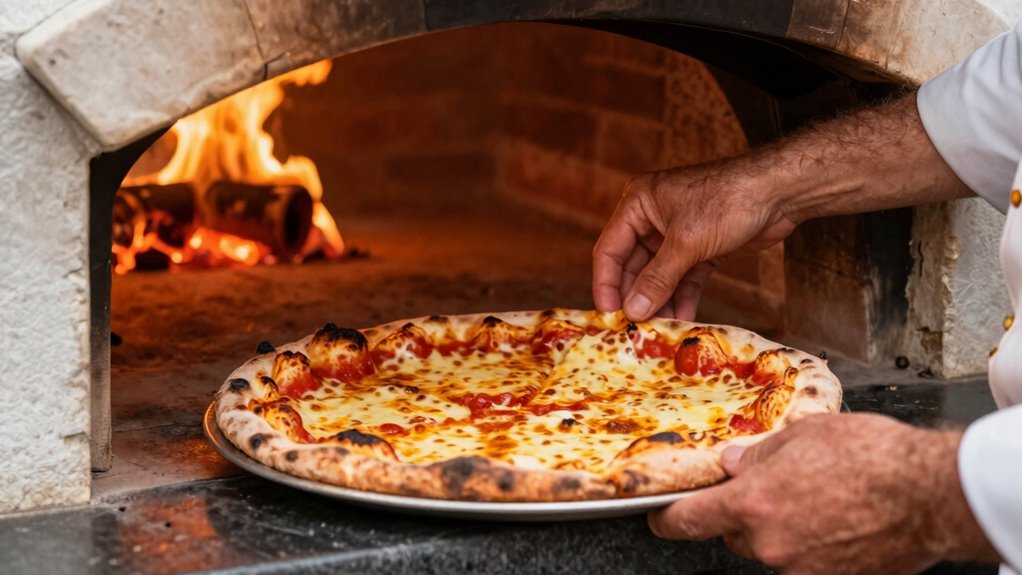
Achieving perfectly cooked pizza often depends on how you place and rotate it during baking. Start with proper pizza stone placement: position your stone so it heats evenly and isn’t too close to the oven’s sides. When placing your pizza, ensure it sits flat and centered on the stone for consistent heat transfer. Use these pizza rotation techniques for even cooking:
- Rotate the pizza 180 degrees halfway through baking to avoid hot spots.
- Turn the pizza clockwise or counterclockwise every few minutes to promote uniform crust and topping doneness.
- Adjust the pizza’s position if you notice one side browning faster than the other.
- Regularly monitor your bike’s gear maintenance and ensure it is well-oiled for optimal performance during long rides.
These simple steps help prevent burnt tops and raw centers, ensuring your pizza cooks evenly and beautifully.
Common Heat-Related Pizza Problems and How to Fix Them
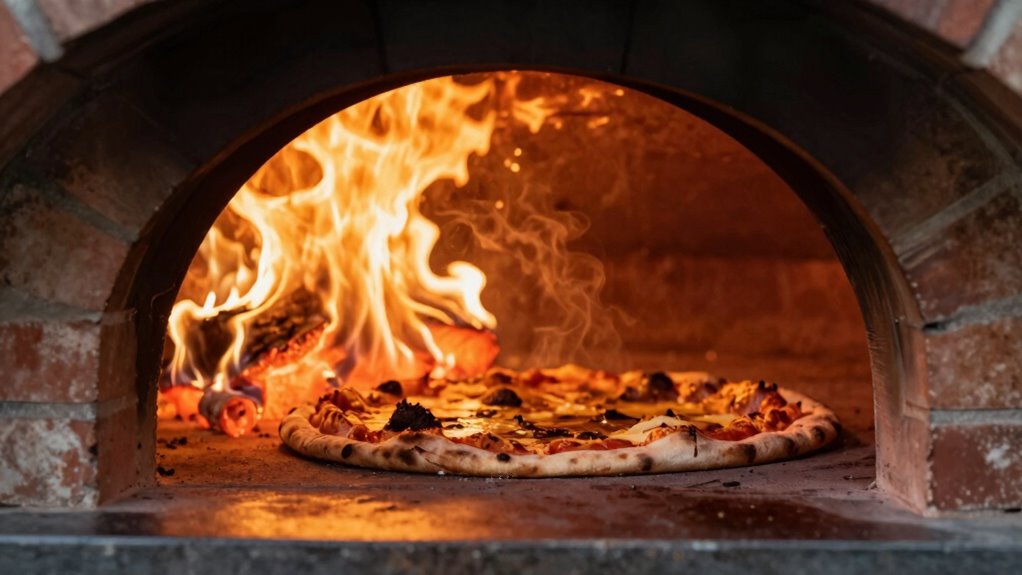
When your pizza isn’t turning out right, heat issues are often to blame. You might notice uneven cooking, undercooked spots, or a crust that’s too burnt, which can stem from uneven heat distribution or poor ventilation. Addressing these common problems can help you achieve perfectly cooked pizzas every time. Understanding heat management techniques can make a significant difference in the final result.
Uneven Heat Distribution
Uneven heat distribution is a common challenge when baking pizza, often resulting in burned edges or undercooked centers. This happens when the heat isn’t evenly spread across the oven, creating distinct heat zones and disrupting thermal layering. To fix this, you should:
- Identify heat zones by observing which areas cook faster or slower, then adjust your positioning accordingly.
- Use a pizza stone or steel to promote even heat transfer, helping to stabilize thermal layering.
- Rotate your pizza during baking to ensure all parts are exposed to consistent heat, minimizing hot spots.
Insufficient Cooking Time
Insufficient cooking time often occurs when the oven’s heat isn’t evenly distributed or the temperature isn’t high enough, causing your pizza to remain undercooked. If your pizza’s bake time is too short, the crust may be pale, and toppings won’t be fully cooked. To fix this, check your oven’s temperature and ensure it’s set correctly, aiming for a high heat—around 450-500°F (230-260°C). Adjust the baking duration to give your pizza enough time to cook through evenly. Remember, a longer cook time at the right temperature improves the crust’s crispness and toppings’ doneness. Monitoring the baking duration closely helps prevent raw centers while avoiding burnt tops. Proper heat and time management are key to achieving a perfectly cooked pizza.
Proper Oven Ventilation
Proper oven ventilation plays a vital role in maintaining consistent heat during pizza baking. Without proper airflow optimization, hot spots and uneven cooking can occur. To improve vent placement, consider these steps:
- Position vents near the top of the oven to allow hot air to escape efficiently, preventing overheating.
- Ensure vents are unobstructed, promoting steady airflow and temperature regulation.
- Adjust vent openings to control airflow, balancing heat distribution across the oven chamber.
- For even better results, incorporate smart ventilation systems that can dynamically adjust airflow based on real-time temperature data. Utilizing feedback mechanisms can further optimize heat distribution and prevent temperature fluctuations. Additionally, understanding thermal dynamics within the oven helps in designing more effective ventilation setups. Good vent placement helps eliminate trapped heat and moisture, reducing the risk of burnt tops or raw centers. Proper ventilation creates a stable environment, guaranteeing your pizza cooks evenly from crust to toppings. Implementing accurate temperature control techniques ensures consistent heat levels throughout the baking process. Correct airflow optimization is key to consistent, high-quality pizza results.
Tips for Monitoring and Maintaining Oven Temperature
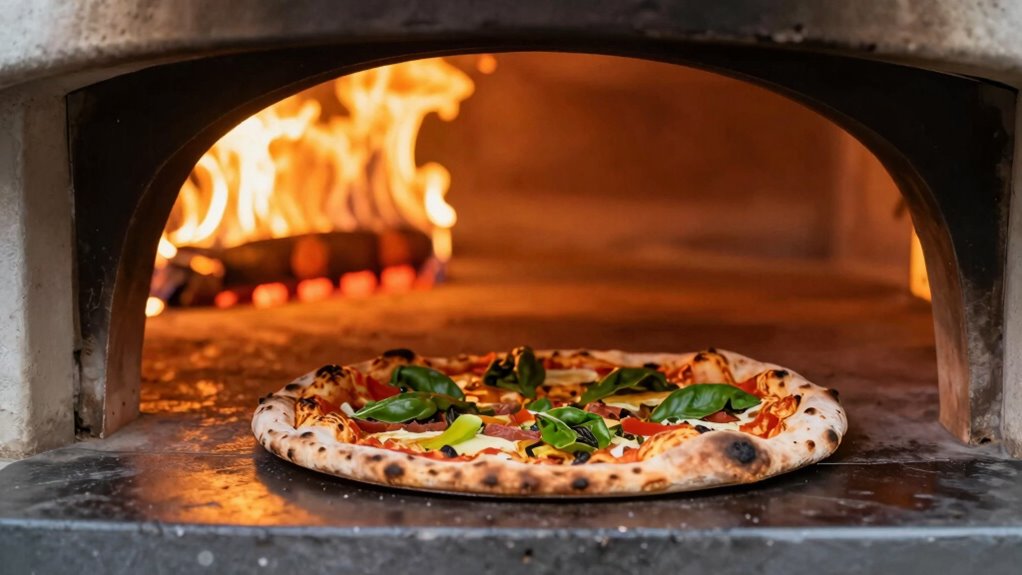
To keep your pizza perfect, you should regularly check the oven temperature with a reliable thermometer. If the heat is off, adjusting the flue vent can help fine-tune the airflow and temperature. Staying attentive to these details guarantees consistent, well-cooked pies every time. Implementing proper temperature monitoring techniques can significantly improve your oven’s performance and prevent common issues like burnt tops or raw centers. Additionally, understanding temperature regulation methods can help you maintain optimal heat levels during extended baking sessions. Properly managing your oven’s security measures, such as ensuring vents and alarms are functioning, can also prevent unexpected heat fluctuations that might affect your baking. Being aware of oven safety protocols can further enhance your control and prevent accidents during operation.
Use a Thermometer
Using a thermometer is one of the most reliable ways to keep your pizza oven at the ideal temperature. Proper thermometer placement ensures accurate readings; place it near the oven’s center or where the pizza will cook most evenly. Regular temperature calibration is essential to maintain accuracy, especially if your thermometer isn’t digital. To effectively monitor your oven, consider these steps:
- Position the thermometer at the oven’s core for a true reading.
- Check the calibration periodically by comparing it to a known temperature source.
- Adjust your oven’s settings if the thermometer shows inconsistent or inaccurate readings.
Adjust Flue Ventilation
Since flue ventilation directly affects how heat escapes or stays within your oven, monitoring and adjusting it is essential for maintaining consistent temperatures. Start by checking your flue positioning; raising or lowering it can influence the chimney draft, which controls airflow. A stronger draft pulls more heat out, so if your oven gets too hot, slightly close the flue to reduce heat loss. Conversely, if the temperature drops, open the flue to increase airflow and promote heat retention. Regularly observe the smoke and temperature, making gradual adjustments to keep your oven steady. Proper flue management prevents hot spots and uneven cooking, helping you avoid burnt tops or raw centers. With attentive control of chimney draft, you’ll achieve more consistent, perfectly cooked pizzas.
Frequently Asked Questions
How Do Ambient Room Conditions Affect Oven Heat Distribution?
Ambient room conditions considerably impact oven heat distribution. You should guarantee good air circulation, which helps maintain even heat across the oven. Poor airflow can create hot spots, leading to burnt tops or raw centers. Additionally, controlling humidity levels prevents temperature fluctuations that can affect baking consistency. Keep the room well-ventilated and manage humidity to maintain a stable environment, ensuring your pizza cooks evenly every time.
Can Different Types of Pizza Dough Influence Heat Management Needs?
Different types of pizza dough can definitely influence your heat management needs. Higher dough hydration levels create a wetter, more delicate crust that requires gentler heat to prevent burning the top while ensuring the center cooks through. Proper gluten development strengthens the dough, helping it hold up to high temperatures. Adjust your oven settings based on these factors, so you get a perfectly cooked pizza without burnt tops or raw centers.
What Role Does Oven Insulation Play in Preventing Uneven Cooking?
Oven insulation is like a cozy blanket, keeping heat exactly where you want it. When insulation effectiveness is high, it traps heat, ensuring even heat retention throughout the oven. This prevents hot spots that can burn pizza tops or leave the centers raw. By investing in good insulation, you maintain consistent temperatures, so the heat distributes evenly, giving you perfectly cooked pizzas every time without worrying about uneven cooking.
How Often Should I Calibrate My Oven’s Temperature Settings?
You should calibrate your oven’s temperature settings at least once every three to six months to guarantee ideal temperature accuracy. Regular calibration helps you maintain consistent heat, preventing burnt tops and raw centers. If you notice uneven cooking or temperature fluctuations, calibrate more frequently. Keep a calibration schedule and follow the manufacturer’s instructions to keep your oven functioning properly, so you can produce perfectly cooked pizzas every time.
Are There Specific Techniques for Managing Heat in Outdoor vs. Indoor Ovens?
You should adapt your heat management techniques depending on whether you’re using an outdoor or indoor oven. For outdoor wood-fired ovens, rely on wood-firing techniques like controlling fire size and placement to manage heat distribution. In indoor gas ovens, make precise adjustments to the gas settings and airflow to maintain consistent heat. Both environments benefit from monitoring temperatures closely and adjusting heat sources accordingly to prevent burnt tops and raw centers.
Conclusion
Mastering your pizza oven’s heat is like conducting a symphony—each element must work in harmony. When you understand how heat flows and how to control it, you’ll craft pies with golden crusts and perfectly cooked toppings every time. Imagine pulling a steaming, blistered crust from a glowing chamber, knowing you’ve balanced fire and airflow with finesse. With practice, your oven becomes an extension of your culinary artistry, turning simple ingredients into a masterpiece.
NFL season / tailgating Picks
team gear
As an affiliate, we earn on qualifying purchases.