
Understanding the science behind pizza dough helps you make perfect crusts every time. Fermentation, driven by yeast, creates bubbles that give the crust lightness and flavor, while gluten development provides elasticity and structure. Proper hydration and kneading ensure the dough is easy to shape and stretch without tearing. Temperature and environment also play vital roles in controlling fermentation speed and dough quality. Keep exploring these principles, and you’ll master every step for a great pizza crust.
Key Takeaways
- Yeast fermentation produces gases that create bubbles, giving pizza crust its light and airy texture.
- Proper kneading develops gluten strands, providing elasticity and strength for shaping and rising.
- Hydration levels influence gluten formation and dough elasticity, affecting the crust’s texture and handling.
- Environmental factors like temperature regulate fermentation speed, essential for consistent crust quality.
- Balancing fermentation time, kneading, and hydration results in optimal dough structure and a perfect crust.

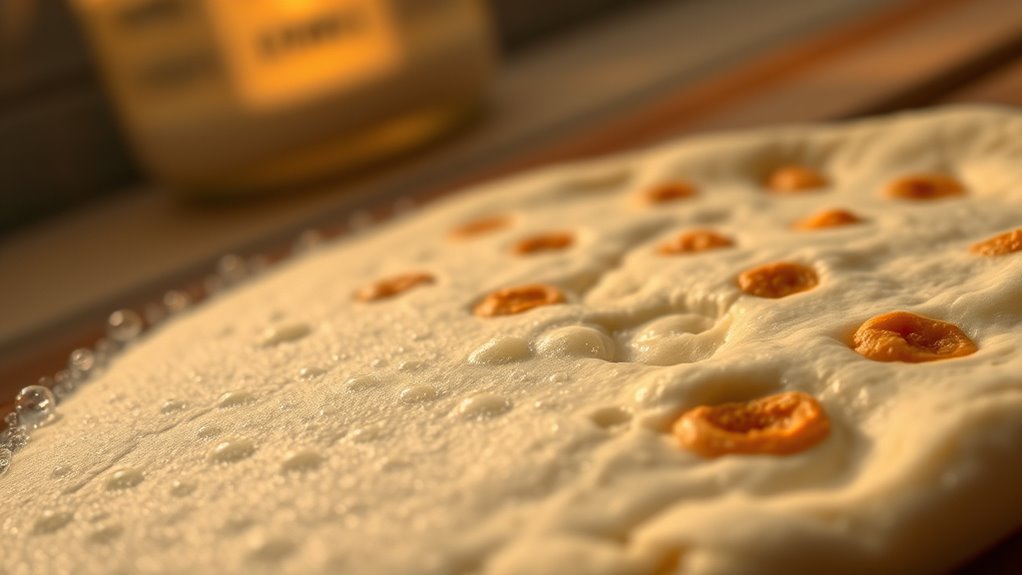
Making great pizza dough involves more than just mixing ingredients; it’s a science that relies on understanding how each component interacts. One of the most vital processes is yeast fermentation, where yeast consumes sugars in the dough and produces carbon dioxide and alcohol. This fermentation creates the bubbles that give your crust its light, airy texture, so controlling it matters. If you allow the yeast to ferment too slowly or too quickly, your crust can turn out dense or overly puffy. Proper fermentation time ensures the dough rises adequately, developing flavor and structure. The key is to find the right balance—warm enough to activate the yeast but not so hot that it kills it or speeds up fermentation too rapidly. As the yeast ferments, it also interacts with the gluten network, encouraging gluten development. Gluten is the protein that gives dough its elasticity and strength, allowing it to stretch without tearing. When you knead the dough, you’re helping the gluten strands form and align, which results in a smooth, cohesive dough that can hold gases produced during fermentation. This gluten development is essential for creating that perfect chewy crust with a tender interior. If you don’t knead long enough, the gluten network remains weak, and the dough won’t rise well, leading to a dense crust. Conversely, over-kneading can make the dough tough and difficult to shape. The process of gluten development is also influenced by hydration; higher water content helps gluten strands form more effectively. As fermentation progresses, the gluten network becomes more elastic, making it easier to shape the dough and stretch it thin without tearing. Understanding the science behind gluten formation is crucial for troubleshooting issues like flat or tough crusts and guides you toward consistently delicious results. It’s also important to note that fermentation is affected by environmental factors, such as ambient temperature, which can speed up or slow down the process. Achieving the perfect balance between yeast fermentation and gluten development requires patience and attention. By controlling the fermentation time, temperature, and kneading process, you guarantee your dough rises properly and develops the structural integrity needed for a crispy yet tender crust. Understanding these scientific principles helps you troubleshoot issues like flat or tough crusts and guides you toward consistently delicious results. Mastering the science behind pizza dough empowers you to craft homemade pizza with professional quality, where every bite reflects the precise interplay of fermentation and gluten development.

DoughMate® Artisan Kit – 2 Pizza Dough Proofing Trays, 1 Lid, and Dough Scraper – Food Contact Certified, Stackable, Made in USA
🍕Complete Pizza Dough Proofing Box (2 Trays + 1 Cover + Scraper) – Includes 2 DoughMate dough trays,…
As an affiliate, we earn on qualifying purchases.
As an affiliate, we earn on qualifying purchases.
Frequently Asked Questions
How Does Ambient Temperature Affect Dough Fermentation?
Ambient temperature considerably influences dough fermentation. When the temperature is warmer, your fermentation rate accelerates, causing the dough to rise faster, which can affect texture and flavor. Conversely, cooler temperatures decelerate fermentation, requiring more time for proper development. To guarantee consistent results, you need temperature control, maintaining ideal conditions so your dough ferments at the right pace, giving you a perfect crust every time.
Can Gluten Development Be Sped up Without Compromising Dough Quality?
You can speed up gluten development without sacrificing quality by using additive effects like enzyme treatments, which enhance gluten formation quickly. While some believe additives compromise dough integrity, research shows enzyme treatments actually improve dough extensibility and strength. Investigate this theory, and you’ll find that carefully applied enzymes optimize gluten development, saving time while maintaining the desired texture and elasticity of your crust.
What Are the Best Hydration Levels for Different Pizza Styles?
For different pizza styles, ideal hydration levels vary to achieve the best crust. Neapolitan pizzas usually need around 60-65% hydration, giving a light, airy texture. New York-style benefits from 65-70% hydration, creating a sturdier, chewy crust. For thick, pan-style pizzas, aim for 70-80% hydration to guarantee a moist dough that develops a tender crumb. Adjust dough moisture levels based on your desired crust texture and handling preferences.
How Does Kneading Influence Dough Elasticity and Texture?
When you knead your dough, you actively develop dough elasticity and improve texture. Kneading aligns gluten strands, making the dough more elastic and easier to shape. It also helps distribute ingredients evenly, enhancing texture development. Proper kneading guarantees your crust is chewy yet tender, giving it the perfect bite. Be patient and knead enough to activate the gluten network, but avoid overworking it, which can lead to tough, dense crusts.
Are There Alternative Flours That Mimic Traditional Wheat Gluten?
Did you know that some alternative flours can mimic wheat gluten’s elasticity? Gluten-free alternatives like xanthan gum, guar gum, and psyllium husk help replicate that stretch and chewy texture. Using these, you can create doughs with similar elasticity and structure to traditional wheat flour. So, if you’re exploring alternative flours, try blending these additives—they’re your best bet for achieving a perfect, gluten-free pizza crust.

Orblue Pizza Dough Docker Pastry Roller with Spikes, Pizza Docking Tool for Home & Commercial Kitchen – Pizza Making Accessories that Prevent Dough from Blistering, Black
Perfect Dough, Perfect Pizza – Even first-time bakers can use this pizza dough roller. Press and roll over…
As an affiliate, we earn on qualifying purchases.
As an affiliate, we earn on qualifying purchases.
Conclusion
Think of making pizza dough like tending a garden: with patience and care, your efforts bloom into a perfect crust. Just as a gardener nurtures seeds into vibrant flowers, your understanding of fermentation and gluten transforms simple ingredients into a delicious masterpiece. Every rise and stretch is part of this dance, guiding you toward pizza perfection. So, keep experimenting and nurturing your dough—soon, you’ll harvest the most satisfying, mouthwatering pizza every time.

Ooni Dual Platform Digital Scales – Digital Baking Cooking Scales – Digital Kitchen Food Scales – LCD Display with Batteries – Ooni Pizza Oven Accessories
DIGITAL: Using the brushed stainless steel platforms, our kitchen scale featuring a dual LCD display allows you to…
As an affiliate, we earn on qualifying purchases.
As an affiliate, we earn on qualifying purchases.

Old Stone Round Pizza Stone, 16-Inch
Makes restaurant quality pizzas, bread, pastries and vegetables
As an affiliate, we earn on qualifying purchases.
As an affiliate, we earn on qualifying purchases.