The science behind pasta shapes and sauce pairings shows how each design influences flavor and texture. Thin shapes like spaghetti work best with light, smooth sauces, while ridged or hollow pasta like penne traps thicker, chunkier, or creamy sauces more effectively. Proper pairing guarantees the sauce clings well, enhancing taste and mouthfeel. When you understand this, you can create perfectly balanced dishes. Continue exploring to discover how to make your pasta dishes even more delicious.

Get home appliances delivered free — and shop member deals
- Fast, free delivery on millions of items
- Access to Prime Big Deal Days deals on October 6–7
- Prime Video, Amazon Music and more included
Key Takeaways
- Pasta shapes with ridges or grooves better trap thicker, chunkier sauces, enhancing flavor and sauce adherence.
- Thin, smooth pasta pairs optimally with delicate sauces to maintain balance and prevent overwhelming textures.
- Hollow or ridged pasta provides increased surface area, improving the retention of creamy or thick sauces.
- Proper cooking to al dente preserves pasta’s structure, maximizing its ability to hold and complement sauces.
- Matching pasta shape and sauce based on texture and consistency creates a harmonious and satisfying culinary experience.
When it comes to enjoying pasta, understanding the science behind shapes and sauce pairings can elevate your dish from good to great. The way pasta is shaped influences how it interacts with different sauces, affecting both pasta texture and sauce consistency. Recognizing these relationships allows you to choose the right type of pasta for each dish, guaranteeing every bite delivers the perfect balance of flavors and mouthfeel.
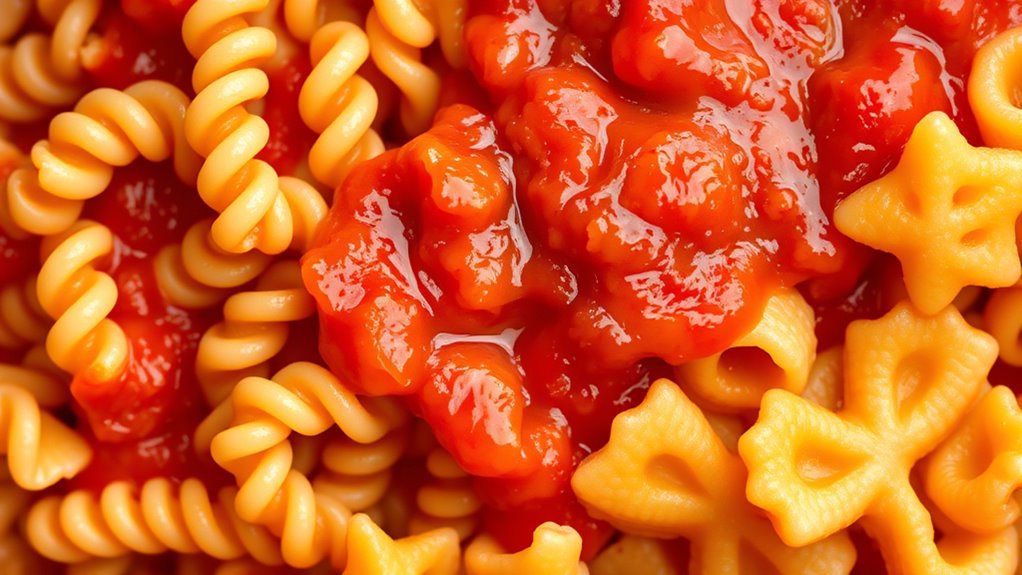
Different pasta shapes are designed to hold sauces in specific ways. For example, long, thin strands like spaghetti or linguine have a smooth surface that works best with thinner, oil-based sauces. These sauces cling lightly, allowing the pasta’s texture to shine through without overwhelming it. Conversely, pasta with ridges or grooves, such as rigatoni or penne, are better suited for thicker, chunkier sauces. The ridges catch and hold onto the sauce, preventing it from slipping off and creating a more layered flavor experience. In this way, the shape directly impacts how well the sauce adheres and the overall dish’s texture.
Pasta with ridges holds chunkier sauces better, enhancing flavor and texture.
The relationship between pasta shape and sauce consistency is vital. If you pair a delicate, smooth pasta with a heavy, chunky sauce, you risk overwhelming the pasta’s subtle texture and creating a dish that feels unbalanced. On the other hand, using a shape with enough surface area and texture can help the sauce cling better, giving each bite a more harmonious blend. For instance, a creamy, thick sauce like Alfredo pairs well with short, tube-shaped pasta like penne or rigatoni because their hollow centers and ridges trap the richness inside. Meanwhile, lighter sauces, such as aglio e olio, are best paired with thin spaghetti, which complements the sauce’s consistency without overpowering it.
Understanding the science behind pasta shapes and sauce pairings also involves recognizing how cooking affects pasta texture. Properly cooked pasta should be al dente—firm to the bite—so it maintains its structure when mixed with the sauce. Overcooking can make pasta too soft, causing it to lose its ability to hold onto the sauce effectively. When you select the right shape based on sauce consistency and cook it properly, you create a harmonious texture that enhances the overall eating experience.
Ultimately, the key is to match the pasta shape with the sauce’s thickness and texture. This scientific approach transforms a simple meal into a culinary delight, where every element works together for maximum flavor and satisfying mouthfeel. By paying attention to these details, you guarantee your pasta dishes are not only delicious but also thoughtfully crafted for the best possible taste and texture.
As an affiliate, we earn on qualifying purchases.
Frequently Asked Questions
How Do Regional Pasta Shapes Influence Traditional Sauce Pairings?
Regional traditions and shape symbolism play a big role in how you pair pasta shapes with sauces. In some areas, specific shapes like ridged or tube pasta are designed to hold rich, chunky sauces, reflecting local culinary customs. You’ll notice that traditional pairings often stick to these regional shapes, enhancing flavor and texture. So, embracing regional variations helps you enjoy authentic pasta dishes that respect local culinary history and enhance your dining experience.
Can Pasta Shape Affect Digestion and Nutrient Absorption?
Imagine you’re a time traveler landing in the pasta universe—you’ll find that pasta shape does matter for digestion and nutrient absorption. Thicker, denser shapes like rigatoni slow down pasta digestion, giving your body more time to absorb nutrients. Conversely, thinner shapes like angel hair digest quickly, potentially leading to less nutrient uptake. So, choosing the right shape can optimize how well your body absorbs nutrients from your meal.
Are There Cultural Preferences for Specific Pasta and Sauce Combinations?
Yes, cultural traditions and culinary preferences strongly influence pasta and sauce combinations. You’ll notice Italians often prefer regional pasta shapes with traditional sauces, like penne with arrabbiata or tagliatelle with Bolognese. In other countries, different pasta types and sauces reflect local tastes and ingredients. Your choices are shaped by these cultural influences, making pasta meals a delicious expression of regional heritage and culinary preferences.
How Do Modern Culinary Trends Impact Pasta Shape and Sauce Choices?
Modern culinary trends, like fusion cuisine and dietary adaptations, influence your pasta shape and sauce choices by encouraging experimentation. You might combine unexpected flavors or opt for gluten-free or plant-based options, selecting pasta shapes that better hold innovative sauces. These trends push you to explore new textures and dietary needs, making your pasta dishes more personalized and exciting while embracing global influences and healthier ingredients.
Do Pasta Shapes Influence the Overall Flavor Perception of a Dish?
Yes, pasta shapes influence how you perceive flavor, mainly through texture contrast and flavor retention. When you choose the right shape, you enhance the dish’s overall experience. For instance, ridged or hollow shapes trap sauce better, intensifying flavor with each bite. Meanwhile, shapes that provide a pleasing texture contrast keep your palate engaged, making the flavors more memorable and satisfying.
Conclusion
Now that you understand how pasta shapes and sauces dance together like partners in a well-choreographed routine, you can confidently choose the perfect match for any dish. Think of your plate as a canvas, and the pasta as your brush—each shape designed to capture and hold the sauce’s flavor. So, get creative, experiment boldly, and let your pasta become the star of your culinary masterpiece, turning every meal into a delicious work of art.
Fall yard work Picks
leaf blowers
As an affiliate, we earn on qualifying purchases.