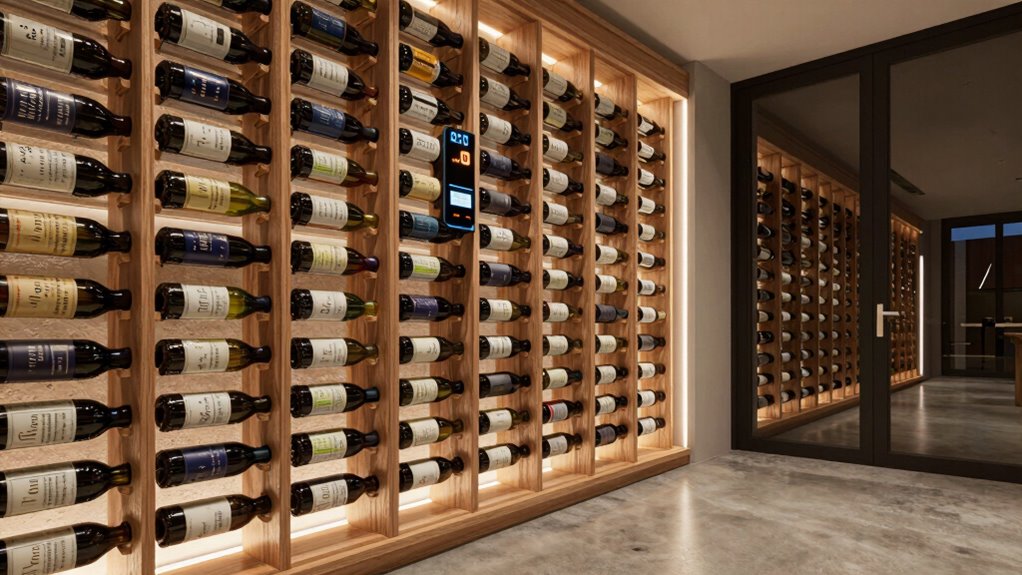

To preserve your wine’s flavor and quality, aim for a storage temperature between 45°F and 65°F, with 55°F often ideal. Keep humidity around 60-70% to protect corks and prevent spoilage. Consistently monitor these levels using reliable devices and adjust as needed. Proper setup, avoiding temperature swings, and maintaining stable conditions are key. If you want to learn how to fine-tune your wine storage environment, keep exploring these simple targets.
Key Takeaways
- Store wine between 45°F and 65°F to maintain optimal flavor and aging potential.
- Aim for humidity levels of 60-70% to keep corks sealed and prevent spoilage.
- Maintain a consistent temperature to avoid fluctuations that can harm wine quality.
- Use monitoring tools like hygrometers and thermometers for precise environmental control.
- Avoid direct sunlight, vibrations, and temperature swings to preserve wine flavor and integrity.
wine refrigerator with temperature control
As an affiliate, we earn on qualifying purchases.
As an affiliate, we earn on qualifying purchases.
Why Temperature and Humidity Are Critical for Wine Storage

Temperature and humidity levels directly affect the quality and aging process of your wine. Your wine’s environment is shaped by vineyard microclimates, which influence grape ripening and quality before storage. Once bottled, maintaining stable conditions is essential. Proper cellar insulation helps regulate temperature fluctuations and prevents rapid changes that can spoil wine. If the temperature swings too much, wine can age prematurely or develop off-flavors. Maintaining consistent environmental conditions is also crucial for preventing stress on the wine’s chemical structure. Additionally, understanding microclimate effects within your storage area can help you better control these factors. Proper ventilation can also reduce excess humidity and prevent mold growth, further protecting your wine. Likewise, humidity levels prevent corks from drying out or mold from forming, both of which compromise your wine’s integrity. Controlling environmental factors such as airflow and insulation is crucial for optimal storage. Understanding how vineyard microclimates impact your wine and leveraging good cellar insulation guarantees consistency. Monitoring environmental factors and maintaining optimal conditions is key to preserving your wine’s flavor profile. This careful control creates a stable environment, allowing your wine to mature gracefully and preserve its flavor profile over time.
What’s the Ideal Temperature Range to Keep Your Wine Perfect

You want to keep your wine at the perfect temperature to enjoy it at its best. Generally, ideal serving temperatures range between 45°F and 65°F, depending on the type. Even minor temperature fluctuations can harm your wine’s flavor and aging process, so maintaining a consistent environment is key. Additionally, temperature control is vital for preserving the wine’s color accuracy and overall quality over time. Proper climate regulation ensures that your wine remains in optimal condition, preventing spoilage and ensuring longevity. Implementing consistent storage conditions can significantly enhance your wine’s preservation and tasting experience. Maintaining a stable environment also helps prevent thermal shock, which can cause unwanted chemical reactions within the wine. To achieve optimal storage, investing in a wine refrigerator or a dedicated wine cellar can help maintain these ideal conditions effectively.
Ideal Serving Temperatures
Finding the perfect serving temperature is essential to enjoying wine at its best. For most wines, a range of 45-65°F (7-18°C) works well, with reds generally served slightly warmer than whites. Lighter reds like Pinot Noir are best at about 55°F, while fuller-bodied reds like Cabernet benefit from around 60-65°F. Whites, including Chardonnay and Sauvignon Blanc, are ideal between 45-50°F. Serving wine at the right temperature enhances your wine pairing, revealing flavors and aromas that might otherwise stay hidden. When selecting a vintage, consider its age—older wines often need slightly warmer temperatures to soften tannins and access complexity. Properly serving your wine within these ranges guarantees full flavor expression and a richer tasting experience. Temperature control can significantly improve the overall wine experience by maintaining consistent serving conditions.
Temperature Fluctuation Effects
Maintaining a consistent temperature range is vital for preserving wine’s integrity and flavor profile. Temperature fluctuation can cause the wine to expand and contract, which may lead to cork shrinkage and oxidation, harming its quality. Sudden changes in temperature also accelerate chemical reactions, degrading flavors over time. Humidity variability plays a role too—if humidity drops too low, corks can dry out, letting air in and spoiling the wine. Conversely, high humidity can promote mold and label damage. To prevent these issues, keep your storage environment stable and avoid temperature swings. Aim for a temperature range of 55-59°F (13-15°C) and maintain consistent humidity levels. This helps protect your wine from fluctuations that could compromise its taste and longevity. Proper storage conditions are essential for maintaining your wine’s quality over the long term. Additionally, understanding climate control techniques can help you better manage environmental factors and ensure optimal storage conditions. Implementing monitoring devices can also assist in maintaining stable temperature and humidity levels within your wine storage area. Regularly checking these conditions with environmental sensors allows for early detection of potential issues before they impact your collection. The use of precise temperature regulation systems can further optimize storage conditions and safeguard your wine investment.
How Humidity Levels Affect Corks and Bottle Safety

Humidity levels play a crucial role in guaranteeing the integrity of wine bottles, particularly through their effect on corks. Proper humidity prevents corks from drying out and shrinking, which can compromise cork integrity. When corks dry, they lose their elasticity and become more porous, increasing the risk of air leakage. This can break the bottle seal, allowing oxygen to enter and spoil your wine. Conversely, excessive humidity can encourage mold growth on corks, potentially contaminating the wine. Maintaining humidity levels between 60-70% creates an ideal environment for corks, preserving their flexibility and sealing properties. Understanding wine storage and the importance of humidity levels helps in maintaining optimal conditions. This balance ensures your wine remains protected from spoilage and oxidation, safeguarding both flavor and bottle safety over time. Proper humidity control is essential for wine preservation and maintaining the quality of your collection. Additionally, monitoring humidity helps prevent the development of mold and mildew that can damage wine labels and storage areas.
Common Mistakes That Can Ruin Your Wine Storage

One of the biggest mistakes you can make when storing wine is exposing it to temperature fluctuations. Sudden changes can spoil the wine’s flavor and ruin your wine tasting experience. Avoid storing bottles in places with direct sunlight or near heat sources. Improper temperature and humidity levels can also damage corks, risking oxidation. To help, here’s a quick guide:
| Mistake | Consequence | Solution |
|---|---|---|
| Storing in sunlight | Spoiled wine, off-flavors | Keep in a dark, cool spot |
| Ignoring temperature range | Fluctuations ruin aging | Maintain 55-58°F consistently |
| Excessive humidity | Mold, cork deterioration | Control humidity at 60-70% |
| Poor bottle placement | Vibration affects quality | Store bottles horizontally |
Additionally, monitoring storage conditions regularly can prevent these issues from arising. Being aware of regional climate influences can help you adjust your storage environment accordingly. Understanding proper humidity levels is crucial for preserving cork integrity and avoiding spoilage. Regularly checking temperature stability can further safeguard your wine’s quality. Incorporating a climate-controlled storage environment is highly recommended for optimal preservation. Avoid these mistakes to preserve your wine’s flavor and enhance your wine pairing and tasting experiences.
How to Set Up Your Wine Storage Environment the Right Way

To set up your wine storage environment effectively, start by choosing a dedicated space that offers stability in temperature and humidity. Consistent conditions help support proper wine aging and prevent fluctuations that can harm cork integrity. Keep the storage area away from direct sunlight, heat sources, or drafty spots that could cause temperature swings. Use a cool, dark, and humid environment—around 55°F (13°C) and 60-70% humidity is ideal. Ensure bottles are stored horizontally to keep the corks moist, which helps maintain their seal and prevents spoilage. Proper setup not only preserves your wine’s flavor but also ensures it ages gracefully over time. Monitoring environmental conditions with Workspace and tech gear can be helpful for maintaining optimal storage parameters. Maintaining consistent temperature and humidity is essential for protecting your investment and enjoying wine at its best. Regularly checking air quality can also prevent mold and odors that might affect your stored wine.
What Tools and Devices Help You Monitor Wine Storage Conditions

To keep your wine in perfect condition, you need reliable tools to monitor storage conditions. Digital hygrometers and thermometers provide instant readings, while smartphone apps make tracking easy and accessible. Climate control systems help maintain consistent temperature and humidity levels automatically, ensuring your wine stays safe. Free Floating techniques can also be employed to optimize the natural environment of your wine storage area.
Digital Hygrometers and Thermometers
Ever wonder how to keep your wine cellar at the perfect conditions? Digital hygrometers and thermometers are essential tools for monitoring humidity and temperature accurately. These devices often combine both functions, making it easy to track storage conditions at a glance. Modern digital hygrometers feature precise humidity readings, while temperature sensors ensure your wine stays within the ideal range. Here’s a quick comparison:
| Device Type | Key Feature |
|---|---|
| Digital Hygrometers | Measure humidity accurately |
| Thermometers | Monitor temperature precisely |
| Combo Devices | Track both humidity and temperature simultaneously |
Using these tools helps you maintain stable conditions, preventing spoilage and preserving flavor. They’re simple, reliable, and crucial for any serious wine collector.
Smartphone Monitoring Apps
Smartphone monitoring apps have made it easier than ever to keep an eye on your wine storage conditions from anywhere. These apps connect seamlessly with digital hygrometers and thermometers, allowing you to monitor temperature and humidity levels in real time. With simple alerts and notifications, you can be immediately informed if conditions drift outside *best* ranges for wine preservation. Many apps also offer wine tracking features, helping you record storage data and track how conditions change over time. This technology gives you the flexibility to manage your wine cellar remotely, ensuring your wine stays in perfect condition without constantly checking manual gauges. Overall, smartphone apps provide a convenient, reliable way to maintain *ideal* storage environments effortlessly.
Climate Control Systems
What tools and devices are essential for effectively monitoring your wine storage conditions? Climate control systems are crucial for maintaining the ideal environment, especially when you’re curating a vintage selection or aiming for proper wine aging. Advanced thermostats and hygrometers help you keep temperature and humidity levels stable, preventing fluctuations that can harm your wine. Some systems feature remote monitoring, allowing you to check conditions via smartphone apps, ensuring your storage stays perfect even when you’re away. Consistent climate control preserves the delicate balance needed for aging wine gracefully. Investing in reliable devices means you’re actively protecting your collection’s flavor and value. With the right tools in place, you can confidently manage your wine storage environment and enjoy your vintage selection at its best.
How to Adjust Storage Settings for Different Types of Wine

Adjusting storage settings for different types of wine is essential to preserve their unique flavors and qualities. For example, reds thrive at 55°F with higher humidity, enhancing their wine tasting experience. Whites and sparkling wines prefer slightly cooler temperatures around 45-50°F, maintaining freshness. Use the table below to help tailor your storage:
| Wine Type | Ideal Temperature | Humidity Level | Notes |
|---|---|---|---|
| Red Wines | 55°F | 70% | Best for aging and wine pairing |
| White Wines | 45-50°F | 50-60% | Keeps crisp and flavorful |
| Sparkling Wines | 45-50°F | 50-60% | Maintains bubbles |
| Rosé | 50°F | 50-60% | Preserves delicate flavors |
| Dessert Wines | 55°F | 70% | Protects sweetness and aroma |
Adjust settings based on your wine collection and tasting goals.
Troubleshooting Temperature and Humidity Issues in Your Wine Cellar

Maintaining proper temperature and humidity levels is essential for preserving your wine’s quality and preventing spoilage. If issues arise, start by checking your thermostat and hygrometer to guarantee accurate readings. Common problems include fluctuations in temperature, excessive humidity, or dry conditions that can lead to wine cellar pests or label preservation damage. To troubleshoot:
- Adjust your cooling system or humidifier to stabilize conditions.
- Seal any gaps or cracks to prevent pests from entering and damaging bottles or labels.
- Use a dehumidifier or humidifier to fine-tune moisture levels, keeping them within ideal ranges.
Consistent conditions safeguard your wines and maintain label preservation, ensuring your collection remains in top shape over time. Regular monitoring helps catch problems early and keeps your cellar perfect.
Tips for Maintaining Consistent Conditions Over Time

To guarantee your wine cellar stays at a consistent condition over time, regular monitoring and proactive adjustments are key. Use a reliable thermometer and hygrometer to track temperature and humidity daily. Small fluctuations can considerably impact your wine’s vintage complexity and aging potential. If you notice changes, adjust your environment immediately—seal drafts, add a humidifier, or modify cooling systems as needed. Consistent conditions help preserve delicate flavors and prevent premature aging or spoilage. Keep a record of readings to identify patterns and anticipate adjustments. Proper insulation and airflow also contribute to stability. By staying vigilant and maintaining steady temperature and humidity, you ensure each bottle ages gracefully, maximizing its vintage complexity and overall aging potential.
Frequently Asked Questions
Can Temperature Fluctuations Harm Wine Even if the Range Stays Within Ideal Levels?
Yes, temperature fluctuations can harm your wine even if the range stays within ideal levels. Sudden changes disrupt temperature stability, causing the wine to expand and contract, which can damage the cork and lead to oxidation. Humidity impact also matters; inconsistent levels can dry out corks, risking spoilage. To preserve flavor, keep your wine storage environment stable, with consistent temperature and humidity levels.
How Quickly Should I Adjust Humidity if It Drops Below Recommended Levels?
When humidity dips below your desired level, don’t delay. You should promptly perform a humidity adjustment to restore your storage environment. Aim for a quick fix within a few hours to prevent corks from drying out and wine from spoiling. Regularly monitor your storage environment, so you catch decreases early. Maintaining consistent humidity helps keep your wine’s quality intact, ensuring your collection remains in perfect condition.
Is It Better to Store Wine Upright or on Its Side for Preservation?
You should store wine bottles on their side to maintain cork integrity and prevent drying out. This wine bottle orientation keeps the cork moist, ensuring a proper seal and preserving flavor. Upright storage can lead to cork shrinkage over time, risking oxidation. For long-term preservation, always keep your wine on its side, especially if it has a natural cork, to protect its quality and taste.
What Are the Signs of Damage Caused by Improper Storage Conditions?
If your wine shows sediment formation or a musty smell, it’s a sign of damage from improper storage. You might notice the cork deteriorating, which can lead to oxidation and spoilage. Poor temperature control causes these issues, so always check for sediment or changes in aroma. Proper storage keeps your wine healthy and flavorful, preventing cork deterioration and sediment buildup that signal compromised quality.
How Often Should I Check and Recalibrate My Wine Storage Monitoring Devices?
Did you know that over 60% of wine enthusiasts experience spoilage due to improper storage? You should check your monitoring devices monthly to guarantee accuracy. Regular monitoring frequency helps catch temperature or humidity fluctuations early. Follow calibration tips like using a reliable thermometer or hygrometer, and recalibrate your devices at least every three to six months. This keeps your wine in perfect condition and preserves its flavor.
Conclusion
Maintaining the right temperature and humidity isn’t just about following rules—it’s about trusting your wine to age gracefully. Some say wine’s flavor develops only under perfect conditions, but it’s really about creating a stable environment that allows your wine to evolve naturally. When you prioritize consistent storage, you’re respecting the wine’s potential, letting it tell its story over time. Trust the science, stay vigilant, and your wine will reward your care with every sip.