To make travel less disruptive, focus on staying well-hydrated before, during, and after your trip by drinking plenty of water and electrolyte drinks. Manage your sleep by adjusting to local time quickly and getting natural light exposure. Practice light activity and eat balanced, light meals to support your body’s adjustment. Create a cozy sleep environment and stay mindful of your routines. Keep these tips in mind, and you’ll discover even more ways to ease your travel stresses.

Get home appliances delivered free with Prime
- Fast, free delivery on millions of items
- Prime Video, Amazon Music and more included
- Member-only deals all year
Key Takeaways
- Stay well-hydrated before, during, and after travel, avoiding alcohol and caffeine.
- Expose yourself to natural light upon arrival to reset your circadian rhythm.
- Eat light, balanced meals aligned with local mealtimes to support digestion and energy.
- Create a sleep-friendly environment with darkness, coolness, and quiet to promote restorative rest.
- Incorporate light activity like walking or stretching to improve circulation and reduce fatigue.
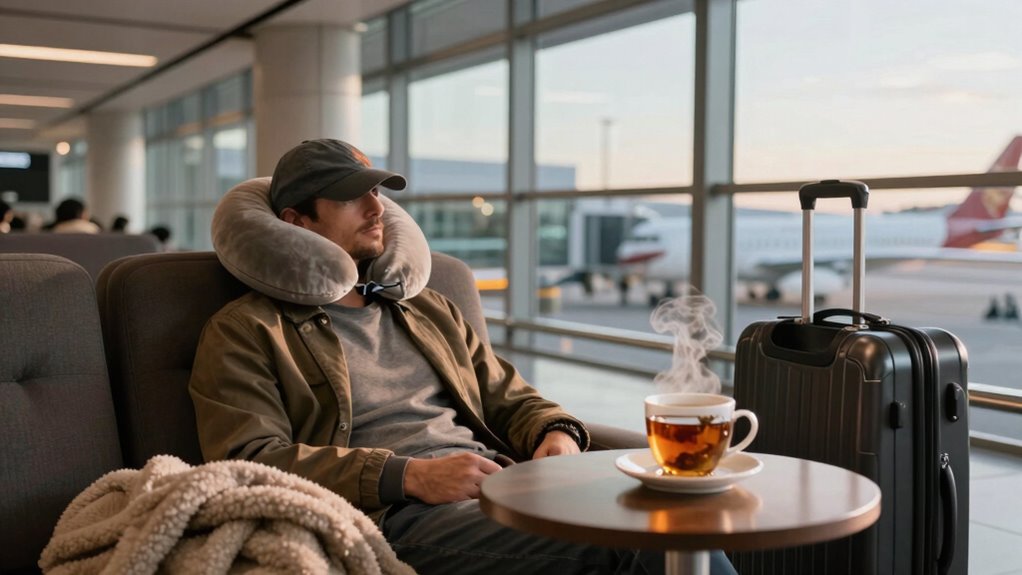
Travel can throw off your body’s natural rhythm, leaving you tired, sluggish, or jet-lagged. When you cross multiple time zones, your internal clock struggles to keep pace with the local schedule, leading to disrupted sleep, decreased alertness, and a general sense of exhaustion. To minimize these effects, you need to be proactive with your hydration strategies. Staying well-hydrated before, during, and after your flight is one of the simplest yet most effective ways to combat jet lag and keep your body functioning smoothly. Airplane cabins tend to be dry, which can dehydrate you quickly, so drink plenty of water throughout your journey. Avoid alcohol and caffeine, as they can further dehydrate you and interfere with your sleep quality. Instead, opt for water or electrolyte-rich drinks, which help replenish lost fluids and minerals, making it easier for your body to adjust to new time zones.
Stay hydrated with water and electrolyte drinks to combat dehydration and reduce jet lag effects.
Once you arrive, it’s tempting to crash into sleep immediately, but adjusting your schedule to the local time as soon as possible can help reset your internal clock. Expose yourself to natural light during the day—sunlight is a powerful cue for your circadian rhythm. This helps your body recognize when it’s time to be awake and active, reducing the severity of jet lag. If you’re feeling sleepy, take short naps rather than oversleeping, which can throw off your schedule further. Keep yourself hydrated during these times, as dehydration can intensify fatigue and disorientation.
In addition to hydration, consider your diet and activity levels. Eating light, balanced meals at local mealtimes can reinforce your body’s adaptation to the new environment. Avoid heavy, greasy foods that might make you sluggish or upset your stomach. Staying active, even with light stretching or walking, encourages circulation and helps you stay alert. Proper hydration combined with movement can considerably lessen the feeling of being out of sync.
Lastly, pay attention to your sleep environment. Once you’re ready to sleep, create a dark, cool, and quiet space to help your body rest. Use eye masks or earplugs if needed. Maintaining these hydration and sleep strategies will help your body recover faster from travel fatigue, making your trip more enjoyable and less disruptive. Remember, a little preparation and mindful habits go a long way in helping your body adapt quickly to new surroundings and time zones.
Products Worth Considering

Sonos Era 100 SL Compact Microphone-Free Speaker, White

Philips Hue Festavia 130-Foot Indoor/Outdoor Smart String Lights, 500 LEDs

LEVOIT Vital 200S-P Smart Air Purifier for Large Rooms
As an affiliate, we earn on qualifying purchases.
Frequently Asked Questions
How Can I Adjust My Sleep Schedule Before Traveling?
You can adjust your sleep schedule by gradually shifting your sleep routines a few days before travel, aligning them closer to your destination’s time zone. Expose yourself to natural light during the day to aid circadian adjustment, and avoid screens before bedtime. Going to bed and waking up 1-2 hours earlier or later each day helps your body adapt smoothly, reducing jet lag and making your trip feel less disruptive.
What Foods Help Reduce Travel-Related Stomach Issues?
To reduce travel-related stomach issues, focus on supporting your gastrointestinal health with easy-to-digest foods like bananas, rice, applesauce, and toast. Incorporate digestive aids such as ginger or probiotic-rich yogurt to soothe your stomach. Avoid heavy, greasy, or spicy foods that can upset your digestion. Staying hydrated and eating small, frequent meals also help keep your stomach calm during travel. This approach minimizes discomfort and promotes overall gastrointestinal health while on the go.
Are There Specific Exercises to Prevent Stiffness During Long Flights?
You’ll feel like a new person with simple exercises during long flights. Do seated stretches, like shoulder rolls and neck tilts, to keep muscles from tightening up. Practice in-flight yoga, such as seated twists and ankle circles, to boost circulation and prevent stiffness. These quick movements break up hours of sitting, making your body feel more flexible and refreshed, even after the longest flights.
How Does Hydration Impact Jet Lag Recovery?
Hydration plays a vital role in jet lag recovery because it helps maintain your body’s electrolyte balance, which is fundamental for proper cellular function and energy levels. By following hydration strategies like drinking plenty of water and electrolyte-rich fluids, you support your body’s natural adjustment process. Staying well-hydrated reduces fatigue and headaches, making it easier to adapt to new time zones and recover faster from travel-induced fatigue.
What Accessories Can Improve Comfort During Travel?
Imagine wrapping yourself in a cozy cocoon during your journey. Travel pillows cradle your neck, turning restless naps into restful escapes, while compression socks hug your legs, boosting circulation and fighting swelling. These accessories act like your personal comfort crew, transforming a long trip into a smoother voyage. With these simple tools, you’ll arrive refreshed, ready to embrace new adventures without feeling drained or uncomfortable.
Conclusion
Travel can be disruptive, but with a few mindful strategies, you can minimize its impact on your body. Don’t let worries about inconvenience hold you back—small adjustments like staying hydrated, stretching, and maintaining routines make a big difference. Remember, the goal isn’t perfection, but balance. By taking care of yourself, you’ll enjoy your journey more and return feeling refreshed. After all, travel is about discovery—inside and out.