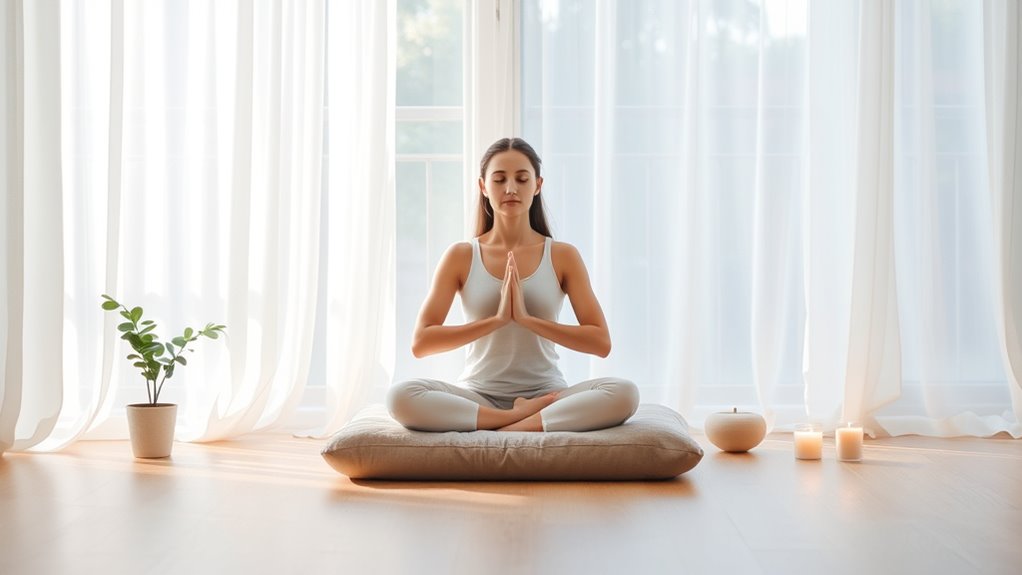

To start with mindfulness meditation, focus on simple techniques like deep breathing, where you inhale and exhale slowly to ground yourself, or do a body scan, paying close attention to physical sensations from head to toe without judgment. Incorporate these practices into your daily routine, even for a few minutes, and create a peaceful environment to enhance your experience. As you continue exploring, you’ll discover how these techniques can gradually bring more calm and focus into your life.

Get home appliances delivered free — and shop member deals
- Fast, free delivery on millions of items
- Access to Prime Big Deal Days deals on October 6–7
- Prime Video, Amazon Music and more included
Key Takeaways
- Start with simple breathing exercises focusing on inhaling and exhaling to anchor your attention.
- Practice body scan techniques by systematically observing physical sensations from toes to head.
- Incorporate mindfulness into daily routines with brief, consistent sessions to build habit and skill.
- Create a calming environment with minimal distractions to enhance focus and relaxation.
- Use gentle reminders to redirect attention when your mind wanders, fostering sustained present-moment awareness.

Have you ever wondered how to cultivate a sense of calm and focus amidst a busy life? One effective way is through mindfulness meditation, which centers on bringing your attention to the present moment. As a beginner, starting with simple techniques can make a big difference. Two foundational practices to consider are breathing exercises and the body scan. These methods help you anchor your awareness and develop a calmer, more focused mind.
Breathing exercises are a straightforward yet powerful way to ground yourself. Find a comfortable seat and close your eyes if you prefer. Begin by taking slow, deep breaths. Inhale gently through your nose, feeling the air fill your lungs. Then exhale slowly through your mouth or nose, releasing tension with each breath. Focus solely on your breath, noticing its natural rhythm without trying to control it. If your mind wanders, gently redirect your attention back to your breathing. Regular practice helps lower stress levels and increases your capacity for concentration. Over time, you’ll notice a sense of steadiness and clarity that carries into your daily activities.
Another essential technique is the body scan, which encourages you to systematically observe physical sensations throughout your body. To do this, close your eyes and take a few deep breaths to settle in. Begin by focusing on your toes, noticing any sensations—warmth, tingling, or tension. Move your attention gradually upward, scanning each part of your body: feet, legs, hips, abdomen, chest, arms, shoulders, neck, and finally your face and head. As you do this, acknowledge any areas of discomfort or relaxation without judgment. If your mind drifts to thoughts or worries, gently bring it back to your body. The body scan enhances your awareness of physical sensations, helping you stay present and grounded. It also promotes relaxation by releasing tension stored in your muscles.
Both breathing exercises and the body scan are flexible practices that you can incorporate into your daily routine. They don’t require special equipment or a lot of time—just a few minutes can make a noticeable difference. Consistency is key; with regular practice, you’ll develop greater mindfulness and resilience. These techniques serve as tools to quiet a busy mind, reduce stress, and cultivate a sense of calm. Additionally, understanding the importance of color accuracy in your meditation environment can help create a more soothing atmosphere, enhancing your overall experience. As you become more familiar with them, you’ll find it easier to stay centered amidst daily chaos, making mindfulness meditation a natural part of your life.
As an affiliate, we earn on qualifying purchases.
Frequently Asked Questions
How Long Should Beginners Meditate Daily?
You should aim for about 5 to 10 minutes of meditation daily as a beginner. Starting with shorter meditation duration helps you build a consistent daily practice without feeling overwhelmed. As you become more comfortable, gradually extend your sessions to 15 or 20 minutes. Consistency matters more than length, so focus on making meditation a regular part of your daily routine to experience the benefits over time.
What if My Mind Keeps Wandering During Meditation?
If your mind keeps wandering during meditation, don’t worry—it’s normal. Use distraction management techniques by gently guiding your attention back to your breath or mantra. Focus strategies like counting breaths or using a visual cue can help improve your concentration. Remember, the goal isn’t perfect focus but awareness. With consistent practice, you’ll find it easier to manage distractions, strengthening your mindfulness and deepening your meditation experience over time.
Can Mindfulness Meditation Improve Mental Health Issues?
Surprisingly, mindfulness meditation can help with mental health issues. It’s a powerful tool for stress reduction and emotional regulation, often making therapy a bit more bearable. You might think it’s just sitting quietly, but it actively trains your mind to manage anxiety, depression, and overwhelm. While it’s not a cure-all, consistent practice helps you gain clarity and resilience, turning your mind’s chaos into calm.
Is It Necessary to Meditate in Silence?
No, it’s not necessary to meditate in silence. Your meditation environment can include background noise, and many find it helpful to incorporate ambient sounds or music to stay focused. What matters most is creating a space where you feel comfortable and free from distractions. You can experiment with different environments to see what helps you relax and stay present, whether that’s silence or gentle background noise.
What Are Common Mistakes to Avoid When Starting?
When starting mindfulness meditation, avoid common mistakes like letting distractions take over and neglecting posture correction. You might get easily distracted, so gently bring your focus back instead of getting frustrated. Sit comfortably with a straight spine to prevent discomfort and maintain focus. Don’t rush through your practice—practice patience and consistency. By preventing distractions and maintaining proper posture, you’ll create a more effective and calming meditation experience.
Conclusion
Practicing mindfulness meditation can considerably reduce stress, with studies showing a 30% decrease in anxiety levels among beginners. As you incorporate these techniques into your daily routine, remember that consistency is key. Even just a few minutes each day can make a big difference in your mental clarity and overall well-being. Keep an open mind, stay patient, and you’ll start noticing the positive effects soon. Your journey to mindfulness is well worth it!
Fall Picks
fall essentials
As an affiliate, we earn on qualifying purchases.