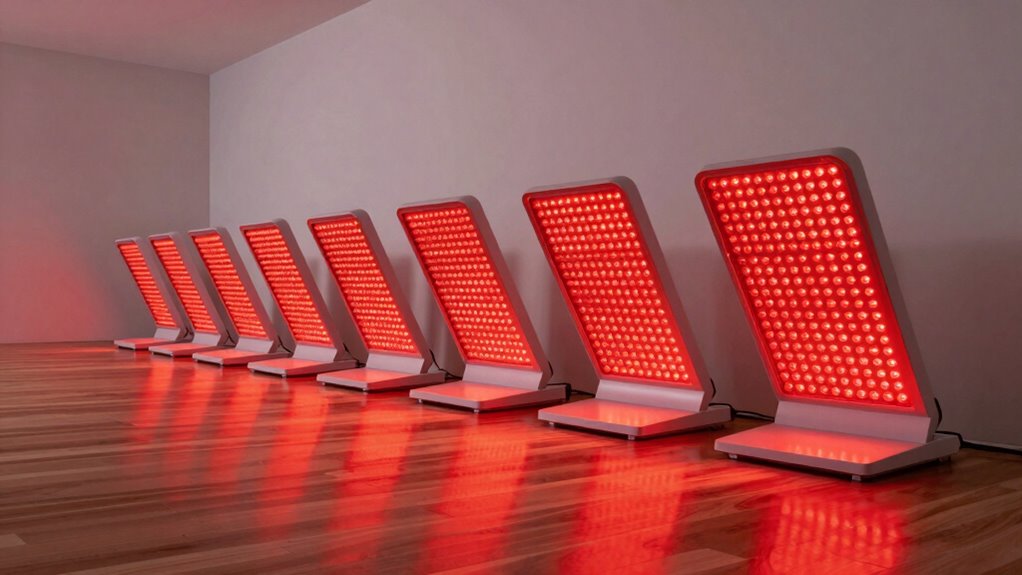

When choosing a red light therapy panel, look for devices with ideal wavelengths around 630-670 nm for skin benefits and near-infrared options from 810-880 nm for deeper tissues. Check the power density to make sure enough light reaches your target areas, and verify the coverage area suits your needs. Prioritize safety features and quality certifications like FDA clearance. Understanding these factors helps you pick an effective panel, and more tips to evaluate them await you ahead.

Get home appliances delivered free with Prime
- Fast, free delivery on millions of items
- Prime Video, Amazon Music and more included
- Member-only deals all year
Key Takeaways
- Check the device’s wavelength range (630-670 nm or near-infrared 810-880 nm) for targeted skin and tissue benefits.
- Ensure adequate power density (mW/cm²) and coverage area for effective, uniform treatment sessions.
- Verify safety features, certifications, and build quality to ensure secure, long-term use.
- Consider adjustable settings and timers for personalized treatment optimization.
- Review user feedback and clinical evidence to assess real-world effectiveness and skin rejuvenation results.
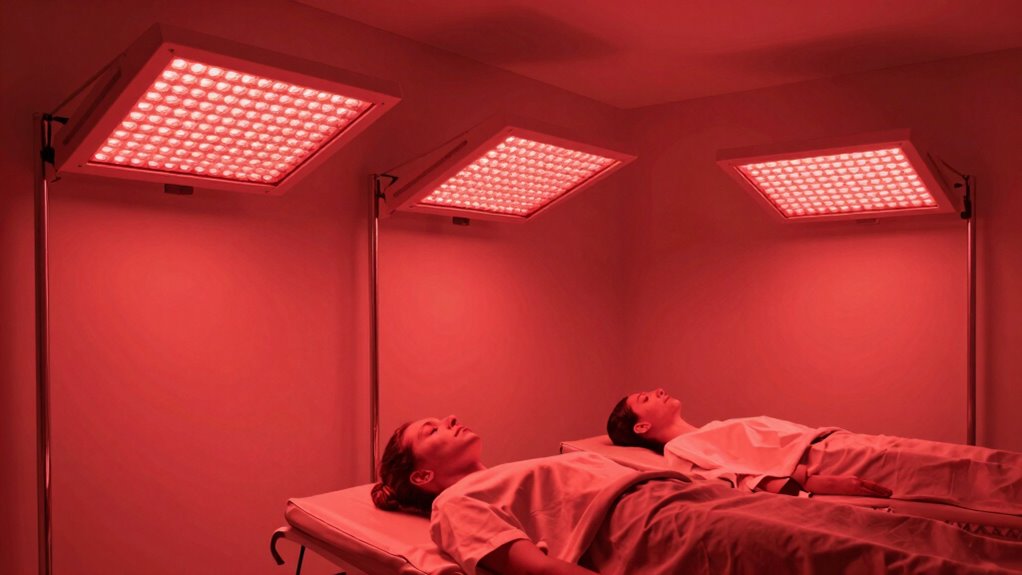
Red light therapy panels are gaining popularity as a non-invasive way to enhance your health and wellness. When you’re shopping for one, it’s essential to understand how they work, especially regarding light penetration and skin rejuvenation. The effectiveness of these panels hinges on their ability to deliver the right amount of light to targeted tissues. Light penetration refers to how deeply the red and near-infrared wavelengths can reach beneath your skin’s surface. Deeper penetration often means more significant benefits, especially for conditions like inflammation, pain, or skin issues. Different panels vary in how well they penetrate, so it’s crucial to look for devices that emit wavelengths around 630-670 nm for visible red light and 810-880 nm for near-infrared light, as these are known for their ideal skin and tissue effects.
Choose panels with wavelengths around 630-670 nm and 810-880 nm for optimal skin and tissue benefits.
When evaluating a panel, pay attention to its irradiance or power density—measured in milliwatts per square centimeter (mW/cm²). Higher irradiance generally results in more effective treatment sessions because it guarantees sufficient light reaches your skin and underlying tissues. You also want to confirm the panel’s coverage area and whether it delivers consistent light intensity across the entire surface. A larger, well-designed panel can cover more skin in less time, making treatments more convenient and effective. Additionally, the light penetration depth of the wavelengths used determines how effectively the therapy can reach deeper tissues for various health benefits. Understanding the biological effects of specific wavelengths can also help you choose a device optimized for your individual health goals. Moreover, assessing the safety features of a panel ensures that your treatments are both effective and secure. An understanding of the light-tissue interaction can help you better grasp how the therapy impacts cellular processes and overall health. It’s also important to consider the quality and durability of the device to ensure it remains effective over time.
Skin rejuvenation is a popular reason people turn to red light therapy, and it’s closely tied to how well the device can stimulate cellular activity. The light promotes increased blood flow, boosts collagen production, and accelerates cell repair—all factors contributing to healthier, more youthful skin. When judging panels for skin rejuvenation, find out if they use wavelengths proven to stimulate collagen synthesis and improve skin elasticity. Many reputable panels incorporate features like adjustable timers and multiple wavelengths to tailor treatments to your specific needs, whether it’s reducing wrinkles, scars, or sun damage.
Additionally, consider the panel’s safety features and certifications. Look for FDA clearance or approval, which indicates the device has undergone safety testing. Ease of use matters too; a user-friendly design with clear instructions can make your treatments more effective and enjoyable. Remember, not all panels are created equal, and a device that boasts high power but poor light penetration or weak skin rejuvenation effects won’t deliver the results you want. By understanding these factors—light penetration, power density, wavelength, and skin benefits—you can better judge which red light therapy panel will truly support your health goals.
red light therapy panel 630-670nm
As an affiliate, we earn on qualifying purchases.
As an affiliate, we earn on qualifying purchases.
Frequently Asked Questions
Are Red Light Therapy Panels Safe for All Skin Types?
Red light therapy panels are generally safe for most skin types, but if you have skin sensitivity or conditions like rosacea, you should proceed cautiously. Always follow safety precautions, such as starting with shorter sessions and maintaining proper distance from the panel. If you notice irritation or discomfort, stop use and consult a dermatologist. Doing so helps make certain the therapy remains safe and effective for your specific skin needs.
How Long Does It Take to See Results From Red Light Therapy?
You might start noticing improvements in skin pigmentation and overall skin tone after about 2 to 4 weeks of consistent treatment. It’s no coincidence that regular treatment frequency—around 3 times a week—accelerates results. While some see changes sooner, patience is key. Stick with your routine, and you’ll likely observe brighter, more even skin over time, as your body responds to the therapy’s healing effects.
Can Red Light Therapy Panels Be Used at Home?
Yes, you can use red light therapy panels at home. Many panels are designed for DIY installation, making setup straightforward. When choosing a panel, consider the cost comparison—some options are more affordable with effective results, while others may be pricier but offer additional features. Make sure you follow safety guidelines and manufacturer instructions for maximum results and safety during your at-home red light therapy sessions.
Are There Any Side Effects of Red Light Therapy?
Like Icarus flying too close to the sun, you might face potential skin irritation or eye safety concerns with red light therapy. While generally safe, some people experience redness or minor discomfort on their skin. Protect your eyes by wearing goggles, and start with shorter sessions. If you notice persistent irritation or discomfort, it’s best to consult a healthcare professional. Usually, these side effects are mild and temporary.
What Is the Ideal Distance to Use the Panels?
You should position the panel about 6 to 12 inches away from your skin for ideal results. Make certain the panel is properly calibrated to deliver the right light intensity, which can vary by device. Keep a consistent distance to maximize benefits and avoid overexposure. Adjust your position based on the manufacturer’s recommendations and your comfort level, always prioritizing safety and effective light delivery during your red light therapy sessions.
Conclusion
So, next time you’re dazzled by those shiny red light panels, remember—they might just be the skincare superstar you’ve been dreaming of, or simply a well-lit piece of decor. It’s amusing how something so high-tech can seem so simple, isn’t it? Just be sure to do your research and don’t fall for the brightest, loudest claims. After all, in the world of red lights, it’s not always about how bright they shine, but how wisely you use them.
Columbus Day / Indigenous Peoples' Day Picks
long weekend sales
As an affiliate, we earn on qualifying purchases.