

To manage stress effectively as a busy professional, focus on strong time management and mindfulness practices. Prioritize tasks to concentrate on what truly matters and set realistic goals to avoid feeling overwhelmed. Incorporate mindfulness exercises, like deep breathing or brief pauses, to boost focus and reduce stress. Using digital calendars and breaking large projects into smaller steps helps maintain control and motivation. Keep exploring these strategies to discover even more ways to stay balanced and productive.
Key Takeaways
- Incorporate mindfulness exercises like deep breathing and meditation into daily routines to reduce stress and improve focus.
- Prioritize tasks using digital calendars and to-do lists to manage workload efficiently and prevent feeling overwhelmed.
- Break large projects into smaller, manageable steps to create small wins and maintain motivation.
- Set realistic goals and learn to say no to avoid overcommitment and unnecessary stress.
- Practice regular pauses for mindfulness to enhance mental clarity, reduce stress, and sustain energy throughout busy days.
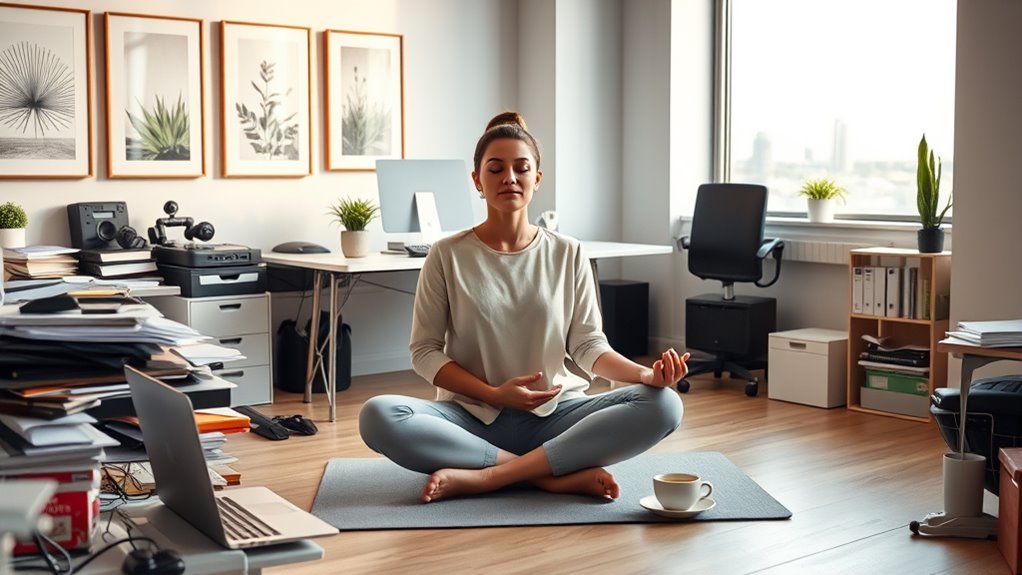
Alongside mindfulness, mastering time management is vital. When your schedule feels out of control, stress naturally follows. By prioritizing your tasks and setting realistic goals, you regain a sense of control and lessen feelings of being overwhelmed. Use tools like to-do lists or digital calendars to organize your day, and break larger projects into smaller, manageable steps. This prevents you from feeling buried under a mountain of work and allows you to celebrate small wins along the way. Remember, effective time management isn’t about doing everything at once; it’s about doing what matters most efficiently. Incorporating practical tools like mindfulness exercises into your daily routine can also improve your overall productivity. For example, before diving into complex tasks, take a moment to pause and practice deep breathing. This helps clear your mind and reduces stress levels, enabling you to focus more deeply. When combined with good time management, mindfulness becomes a valuable tool to sustain your energy and mental clarity throughout the day. It’s not about eliminating stress entirely—rather, it’s about managing your response to it and maintaining a balanced perspective.
Frequently Asked Questions
How Can I Maintain Motivation to Practice Stress Management Daily?
To stay motivated to practice stress management daily, set mindfulness reminders on your phone or calendar to prompt you. Find accountability partners who encourage you and check in regularly. Celebrate small wins to stay inspired, and remind yourself of the benefits, like reduced stress and increased focus. Make it a non-negotiable part of your routine, so it becomes a habit you look forward to rather than a chore.
Are There Specific Techniques for Managing Stress During High-Pressure Meetings?
During high-pressure meetings, think of yourself as a calm captain steering through stormy seas. Use breathing exercises to steady your nerves—inhale slowly, exhale fully. Visualization techniques can help you picture a peaceful harbor, grounding your focus. These tools act like a compass, guiding you through tension and helping you stay composed, confident, and in control amid the turbulence of urgent discussions.
What Are Quick Stress Relief Methods I Can Do at My Desk?
You can quickly relieve stress at your desk by doing simple desk stretches like shoulder rolls or neck tilts to release tension. Pair these with breathing exercises—inhale deeply through your nose, hold for a few seconds, then exhale slowly through your mouth. These quick techniques help calm your mind, reduce physical tension, and improve focus, making it easier to handle your workload efficiently and stay centered throughout the day.
How Do I Balance Stress Management With Urgent Work Deadlines?
Ironically, you can manage stress and meet urgent deadlines by multitasking mindfulness exercises with time blocking. Dedicate short breaks for deep breaths or quick mindfulness practices, even during tight schedules. Use time blocking to schedule focused work periods and brief pauses, ensuring you stay present and centered. This way, you’ll handle pressure more effectively while staying on top of your workload, transforming chaos into calm amid your busy day.
Can Technology Tools Effectively Support My Stress Management Routine?
Yes, technology tools can effectively support your stress management routine. Wearable devices monitor your stress levels and encourage mindfulness breaks, while apps promote relaxation techniques like meditation. A digital detox helps you disconnect from work emails and social media, reducing stress. Using these tools consistently, you can better manage stress, stay focused, and improve your overall well-being even during busy days.
Conclusion
By incorporating simple techniques like deep breathing or quick walks into your day, you can effectively manage stress even on busy schedules. For example, imagine Sarah, a manager who starts her mornings with a five-minute meditation; she finds herself more focused and less overwhelmed during hectic meetings. Small changes like these can make a big difference, helping you stay resilient and productive. Prioritize your well-being—you’ll handle stress better and enjoy a healthier, more balanced life.