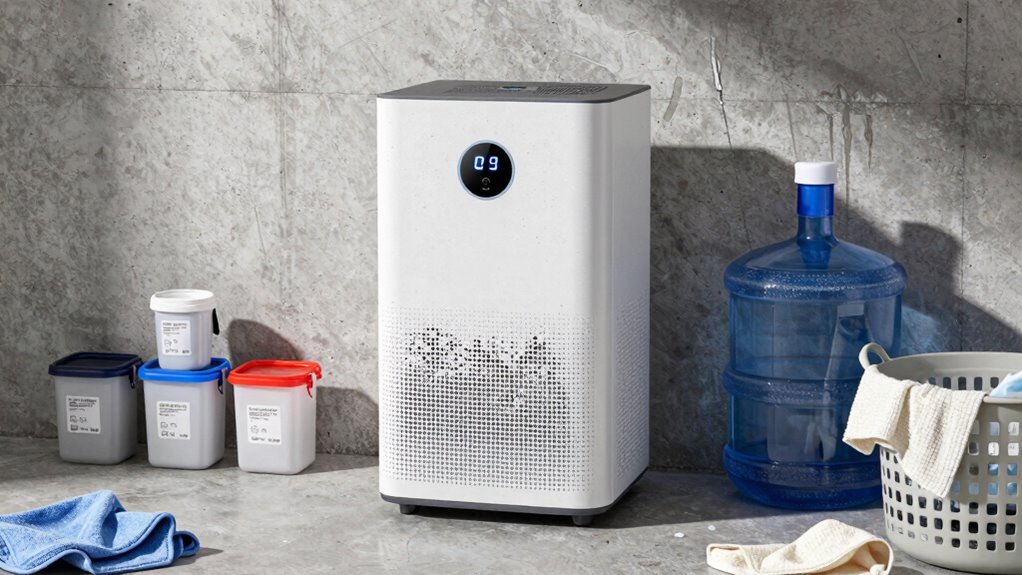

Pint ratings on dehumidifiers often overstate their actual moisture removal capacity because they’re measured under ideal, controlled conditions that don’t reflect real-world use. Factors like room size, humidity levels, airflow, and environment can make your unit perform less than its label suggests. If you want reliable results, it’s important to understand how these ratings work and consider other factors. Keep going to learn how to match your dehumidifier to your space effectively.
Key Takeaways
- Pint ratings are based on standardized tests in controlled environments and often don’t reflect real-world room conditions.
- Factors like room size, humidity fluctuations, and airflow significantly affect a dehumidifier’s actual moisture removal.
- Higher pint ratings do not necessarily mean better performance; they can be misleading without considering environment and usage.
- Proper testing involves measuring real water removal over time, as rated capacities can overstate effective moisture extraction.
- Selecting a dehumidifier requires matching capacity to room needs rather than relying solely on advertised pint ratings.

2500 Sq.Ft Dehumidifier for Basement with Drain Hose Max 34 Pints, VEAGASO Dehumidifiers for Home, Large Room, Bathroom, Bedroom, Three Modes, Intelligent Humidity Control, Dry Clothes, 24HR Timer
Three Smart Modes Dehumidifiers – Our dehumidifier for basements come with 3 smart modes that make choosing between…
As an affiliate, we earn on qualifying purchases.
As an affiliate, we earn on qualifying purchases.
What Are Pint Ratings, and Why Do They Matter?
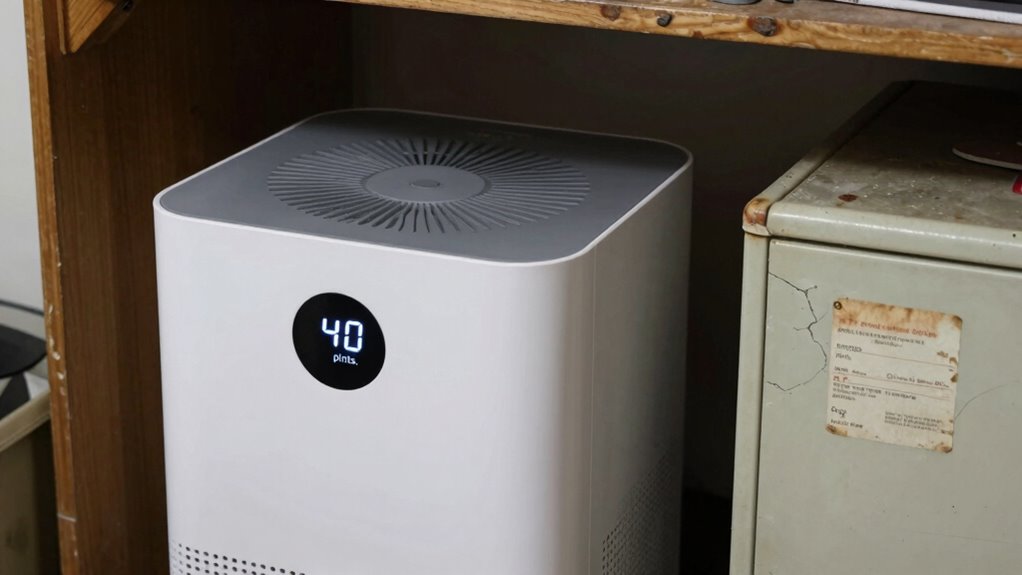
Have you ever wondered what the pint rating on a dehumidifier actually means? Many people believe it directly indicates how much moisture the unit can remove daily, but that’s a pint rating myth. It’s easy to fall into capacity misconceptions, assuming a higher pint rating always means better performance. In reality, the pint rating measures how much water the dehumidifier can extract from the air in a 24-hour period under ideal conditions, not real-life performance. Factors like room size, humidity levels, and airflow can considerably influence actual results. Understanding this helps you avoid overestimating a unit’s capacity based solely on pint ratings. Additionally, performance metrics can vary significantly depending on environmental factors, so it’s important to consider real-world conditions rather than just rated capacity. Recognizing the difference between myth and fact ensures you choose a dehumidifier suited to your needs, rather than relying on misleading numbers. Being aware of operating conditions can help you select the right size for your space, ensuring optimal dehumidification. Furthermore, understanding how environmental factors impact dehumidifier efficiency and longevity can help you maintain the device and optimize its lifespan.

Waykar 2000 Sq. Ft 34 Pints 2025 Most Efficient Energy Star Dehumidifier for Home and Basement with Auto or Manual Drainage, Quiet 33dB Operation, 0.62 Gallon Water Tank Capacity
【Compact Size, Big Efficiency】 The upgraded 2025 Waykar dehumidifier features cutting-edge rotary compressor technology. It’s more compact but…
As an affiliate, we earn on qualifying purchases.
As an affiliate, we earn on qualifying purchases.
How Do Manufacturers Calculate Dehumidifier Capacity?
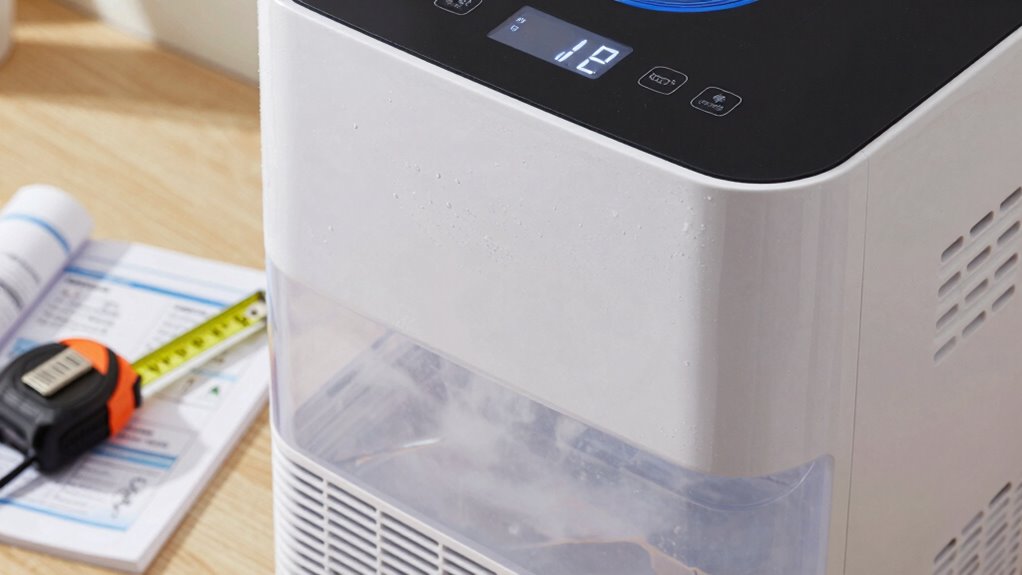
Manufacturers determine dehumidifier capacity by measuring how much moisture the unit removes over a specific period. They consider factors like standard testing conditions and the device’s design to guarantee consistent ratings. Understanding these measurement methods helps you compare models accurately and choose the right one for your space. Additionally, proper ventilation plays a crucial role in ensuring optimal dehumidifier performance and maintaining indoor air quality. Recognizing the testing procedures used in capacity ratings can further aid consumers in making informed decisions about their dehumidifier purchases. Since capacity ratings are based on controlled environments, real-world performance may vary depending on room conditions and usage.
Measurement Methodology Explained
To determine a dehumidifier’s pint rating, companies measure how much moisture it can remove from the air within a specific period, usually 24 hours. This process involves controlled testing conditions, but the actual humidity measurement can vary depending on factors like room size and initial moisture levels. As a result, rating discrepancies often occur, making real-world performance differ from advertised figures. Here’s how they do it:
- The device runs in a sealed environment with a set humidity level.
- The humidity is monitored continuously.
- The amount of moisture removed is measured over 24 hours.
- The final pint rating reflects this moisture removal, which might not match real-life conditions.
Factors Influencing Ratings
The capacity of a dehumidifier is influenced by several key factors that manufacturers consider when calculating its pint rating. One major factor is the accuracy of humidity sensors, which detect moisture levels and help optimize performance. Better sensors lead to more precise dehumidification, but their effectiveness can vary, affecting the rated capacity. Additionally, filter maintenance plays a pivotal role; a clogged or dirty filter reduces airflow and dehumidification efficiency, lowering the actual capacity. Manufacturers also account for the unit’s design, fan strength, and compressor performance under standard conditions. However, real-world performance often diverges from these calculations, especially if humidity sensors aren’t calibrated or filters aren’t maintained regularly. Proper sensor calibration and routine filter cleaning are essential for maintaining optimal performance. These factors collectively influence the pint rating and how well a dehumidifier performs in your space. Understanding how performance metrics are determined can help you better interpret rating discrepancies and choose the right unit for your needs.
Standard Testing Conditions
Standard testing conditions set the benchmark for how dehumidifiers are evaluated and rated. Manufacturers measure capacity under specific, controlled environments to keep things consistent. But beware of humidity myths—these tests don’t reflect real-world conditions, so your unit might perform differently at home. Here’s what typically happens:
- The tests are done at a fixed humidity level, often around 80°F and 60% RH.
- The space used is a sealed, controlled environment, not your typical room.
- The dehumidifier runs continuously without interruption.
- These ratings ignore variations in humidity, temperature, and airflow, fueling capacity myths.
- Relying solely on these standard test results can lead to overestimating a dehumidifier’s effectiveness in your actual space.
- Real-world factors such as air circulation and fluctuating humidity levels can significantly impact performance, making actual results differ from lab ratings.
Understanding these standard testing conditions helps you see why ratings can be misleading and why real-world performance often doesn’t match the advertised pint ratings.
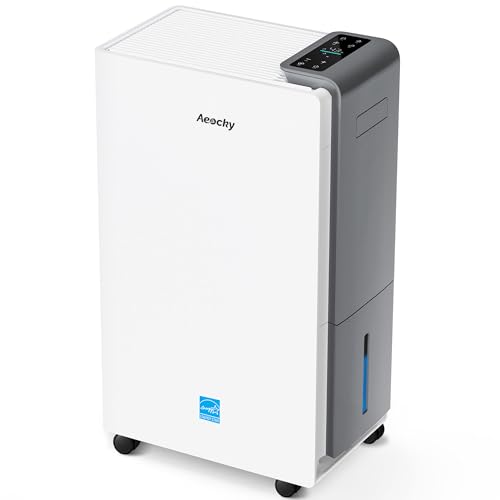
4500 Sq.Ft Energy Star Most Efficient 2025 Dehumidifier,AEOCKY Max 80 Pint/Day Smart Compressor Dehumidifier with Drain Hose, Intelligent Humidistat,for Basement,Bedroom,Home,Bathroom
【ENERGY STAR 25 ≠ ENERGY STAR Most Efficient 2025】Don't fall for competitors' word games. With only 2.6% of…
As an affiliate, we earn on qualifying purchases.
As an affiliate, we earn on qualifying purchases.
Why Your Dehumidifier Might Not Live Up to Its Ratings
Even though dehumidifiers are rated based on their capacity to remove moisture, they often don’t perform as expected in real-world situations. One reason is that energy efficiency varies depending on how you use the unit and the environment. If your space is larger or more humid than the dehumidifier’s rating, it might struggle to keep up, reducing its effectiveness. Additionally, noise levels can be higher than advertised, especially if the unit runs continuously or under heavy load. This can lead you to believe it’s underperforming, even if it’s working as intended. Factors like insulation, airflow, and room size all influence performance, making it common for real-world results to fall short of the rated pint capacity.

PSOS Dehumidifier, Dehumidifiers for Home, 98 OZ Water Tank, (1000 sq.ft) Quiet Dehumidifier for Basement Bedroom Bathroom with Humidity Display, Auto Shut Off, Relaxing 7 Color Ambient Light(Gray)
【Upgrade High Efficient Home Dehumidifier】PSOS dehumidifier utilize dual semiconductor condensation technology, ensuring quiet operation while effectively extracting moisture…
As an affiliate, we earn on qualifying purchases.
As an affiliate, we earn on qualifying purchases.
Environmental and Usage Factors That Impact Performance
Your dehumidifier’s performance depends on several environmental and usage factors. If the room isn’t the right size or has poor air circulation, it won’t work as efficiently. Additionally, fluctuating humidity levels can affect how well it maintains comfort. Proper installation and understanding the specific needs of your space are essential for optimal operation. Being aware of load calculations can help ensure your dehumidifier is appropriately matched to your room’s conditions. Furthermore, air circulation can influence the efficiency of moisture removal, so ensuring good airflow can enhance performance. Incorporating smart home automation systems can help monitor and optimize humidity levels automatically, leading to better overall efficiency. To maximize efficiency, consider regular maintenance to keep components functioning properly.
Room Size Compatibility
Choosing the right dehumidifier for your space depends heavily on understanding how environmental and usage factors affect its performance. Room size compatibility is essential, as pint ratings and capacity claims can be misleading if you ignore these factors. To guarantee your dehumidifier works effectively, consider these:
- Larger rooms require higher capacity models, even if the pint rating seems sufficient.
- Excess humidity levels demand more capacity than the label suggests.
- Poor insulation can make a smaller unit less effective.
- Frequent door openings or high moisture sources increase the needed capacity.
- Environmental factors like climate and room conditions significantly influence dehumidifier efficiency and capacity needs. Additionally, the humidity level within a space can drastically alter the performance of your unit, making it crucial to monitor and adjust accordingly. Understanding the air circulation within a room can also impact how effectively a dehumidifier removes moisture, ensuring optimal operation. Proper airflow patterns are key to achieving uniform dehumidification throughout the space. Recognizing the importance of room layout can further optimize dehumidification by promoting better air movement and moisture removal.
Matching your dehumidifier’s pint ratings to your room size is indispensable; otherwise, capacity claims won’t reflect real-world performance, leading to frustration and inefficiency.
Humidity Levels Variability
Variations in humidity levels due to environmental conditions and daily activities can substantially impact your dehumidifier’s performance. Humidity fluctuations caused by weather changes, ventilation, and indoor activities like cooking or showering can make it difficult for your unit to maintain consistent moisture levels. When humidity rises unexpectedly, your dehumidifier may struggle to keep up, reducing its effectiveness in mold prevention. Conversely, if humidity drops too low, it can lead to dry air issues. To optimize performance, monitor these fluctuations and adjust your dehumidifier’s settings accordingly. Recognizing how environmental and usage factors influence humidity helps guarantee your space stays comfortably dry and mold-free, even when conditions change unpredictably. Being aware of humidity variability can help you better manage your space and prevent issues such as mold growth or overly dry air. Regularly monitoring indoor humidity can further enhance your ability to respond to these fluctuations effectively. Additionally, understanding the dehumidifier’s pint rating and its limitations can prevent misjudging its capacity under changing conditions.
Air Circulation Efficiency
Air circulation plays a crucial role in a dehumidifier’s ability to perform effectively, especially since environmental and usage factors can either enhance or hinder airflow. Poor airflow reduces moisture extraction and can cause the unit to work harder, increasing noise levels. To optimize performance, consider these factors:
- Regularly clean or replace the air filter to prevent blockages that impair airflow.
- Keep vents unobstructed and place the dehumidifier in an open area for better circulation.
- Avoid placing the unit near walls or furniture that restricts airflow.
- Be aware that higher noise levels may indicate airflow issues or a dirty air filter, affecting efficiency.
- Understanding airflow optimization can help you select the best dehumidifier options suited for different environments and usage needs.
Understanding these factors helps ensure your dehumidifier runs smoothly and efficiently.
Understanding the Difference Between Room Size and Capacity Needs
Understanding the difference between room size and dehumidifier capacity is key to selecting the right unit for your needs. A dehumidifier’s capacity, measured in pints per day, indicates how much moisture it can remove, but it doesn’t directly reflect the ideal room size. You need a unit that matches your space to avoid under- or overperformance. Consider the room’s size, layout, and humidity level—bigger spaces require higher capacity models. Also, keep in mind that dehumidifier aesthetics can influence your choice if you want it to blend seamlessly into your decor. Finally, choosing a reputable brand ensures reliability and better customer support, which helps you avoid the pitfalls of pint ratings that don’t match reality. Proper matching guarantees effective and efficient humidity control.
How Climate and Humidity Levels Affect Dehumidifier Effectiveness
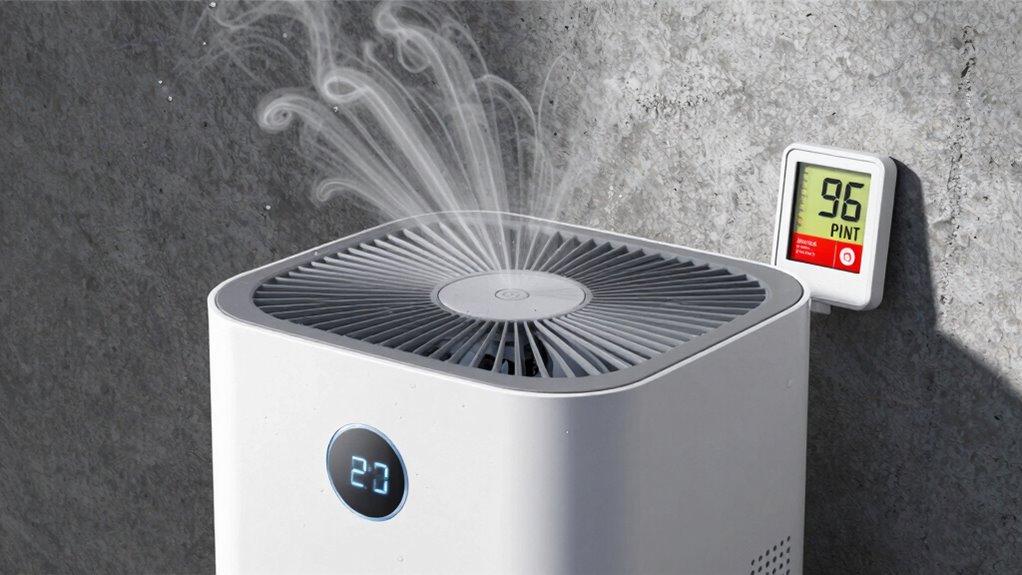
Your climate and local humidity levels directly affect how well a dehumidifier works. Variations in humidity can make it harder or easier for your unit to maintain a comfortable environment. Additionally, cold temperatures can reduce its effectiveness, especially in colder climate zones.
Humidity Variability Impacts
Climate and humidity levels can considerably influence how well a dehumidifier performs, especially since different environments present varying moisture challenges. When humidity fluctuates, your dehumidifier works harder or less efficiently, impacting energy efficiency and noise levels. You might notice:
- In consistently humid spaces, your unit runs longer, raising energy use.
- Rapid humidity swings cause frequent on-off cycles, increasing noise and wear.
- In low-humidity environments, dehumidifiers may cycle less, conserving energy but reducing effectiveness.
- Sudden changes can lead to uneven moisture removal, so you may need a more powerful or adaptive unit.
Understanding these impacts helps you choose the right device and optimize its operation, ensuring better performance and quieter operation even with humidity variability.
Climate Zone Differences
Different climate zones present unique challenges for dehumidifier performance due to varying temperature and humidity levels. In humid regions, high humidity measurement demands a more powerful unit and frequent dehumidifier maintenance to keep moisture levels in check. Conversely, dry climates require less effort, but improper sizing can lead to ineffective drying. Consider how your environment affects your dehumidifier’s ability to maintain ideal humidity.
| Climate Zone | Typical Humidity Level | Recommended Dehumidifier Power | Maintenance Tips |
|---|---|---|---|
| Tropical | 70-90% | Higher capacity | Regular filter cleaning |
| Arid | 20-40% | Lower capacity | Check for dust buildup |
| Temperate | 40-60% | Moderate capacity | Monitor for mold growth |
| Cold | 30-50% | Special cold-weather models | Adjust settings seasonally |
Effectiveness in Cold Conditions
In cold conditions, dehumidifiers must operate efficiently despite low temperatures that can hinder their performance. Cold environments challenge typical units, especially for industrial applications where consistent humidity control is vital. Your choices should consider:
- Type of dehumidifier – refrigerant-based units struggle below freezing, so look for desiccant models.
- Aesthetic considerations – compact, unobtrusive designs suit colder, visible spaces.
- Climate suitability – confirm the unit is rated for low temperatures to avoid inefficiency.
- Humidity levels – in colder climates, moisture removal is less effective if the unit isn’t designed for such conditions.
Ultimately, understanding these factors helps you select a dehumidifier that maintains performance despite cold, guaranteeing both industrial needs and aesthetic appeal are met.
Signs Your Dehumidifier Isn’t Performing as Rated
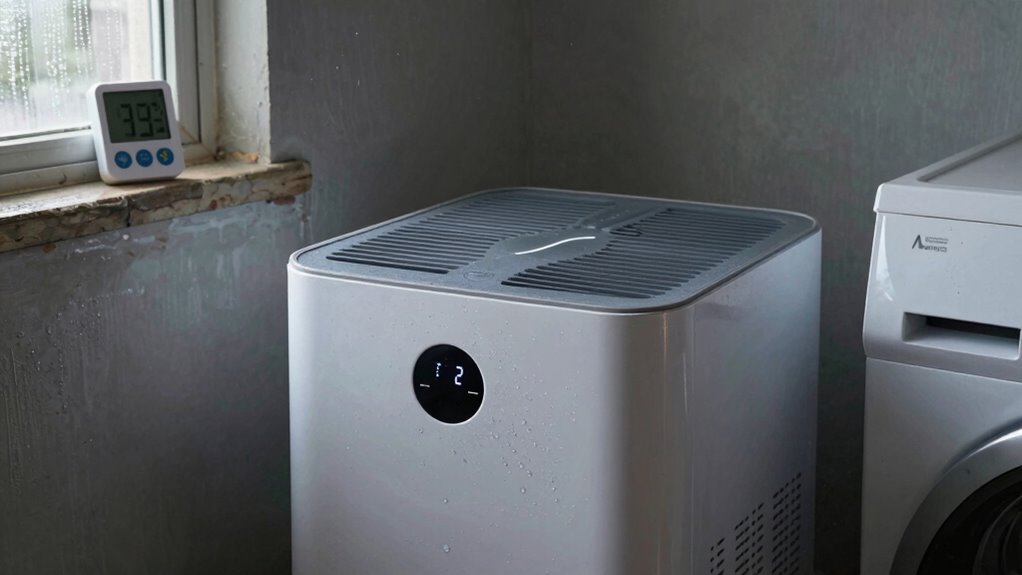
If your dehumidifier isn’t removing moisture as it should, it’s likely not performing at its rated capacity. You might notice it runs constantly without lowering humidity effectively. Reduced energy efficiency is a clear sign; if the unit consumes more power but doesn’t improve indoor air quality, it’s a red flag. Additionally, pay attention to noise levels—if your dehumidifier suddenly becomes louder or produces unusual sounds, it could indicate a malfunction. You might also see water collecting faster than the unit can handle or notice persistent dampness despite running regularly. These signs suggest the dehumidifier isn’t meeting its advertised pint rating, meaning it’s not delivering the expected performance. Addressing these issues early can prevent further energy waste and ensure a healthier, more comfortable space.
Tips for Choosing a Dehumidifier That Fits Your Space
Choosing the right dehumidifier for your space starts with accurately evaluating the area’s size and moisture levels. This helps you select a unit with the appropriate pint ratings and dehumidifier capacity, preventing over- or under-performance.
Selecting the right dehumidifier depends on accurate size and moisture assessments for optimal performance.
Here are some tips:
- Measure your room’s square footage to determine needed capacity.
- Consider the humidity level; higher moisture requires a larger pint rating.
- Think about the room’s use—basements need more capacity than bedrooms.
- Check the dehumidifier’s specifications to match your space’s needs, not just its pint ratings, as these can be misleading.
How to Test Your Dehumidifier’s Actual Capacity at Home
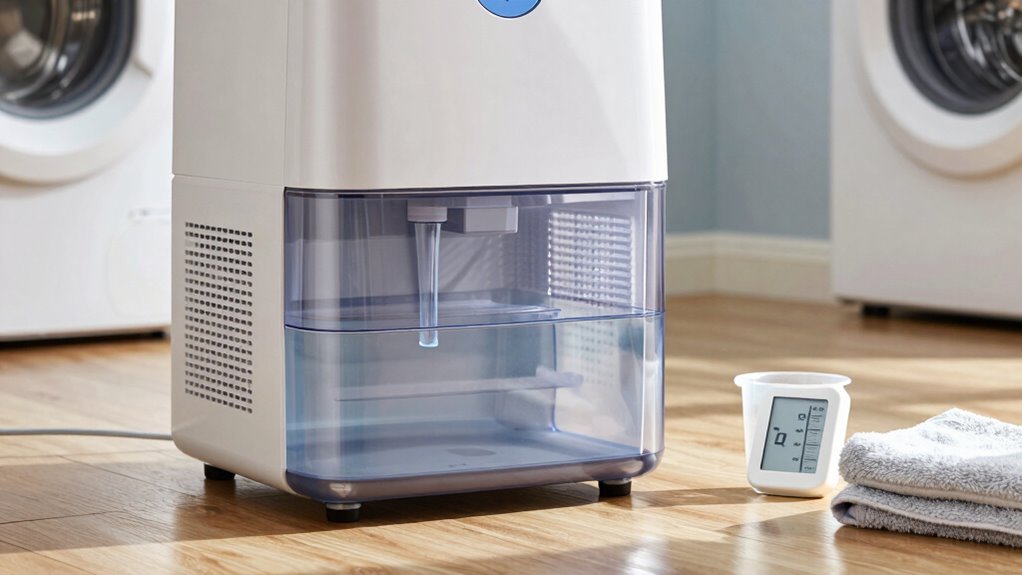
Testing your dehumidifier’s actual capacity at home makes certain it performs as expected and helps you determine if it’s suitable for your space. Many humidifier myths suggest that pint ratings always match real-world performance, but that’s often not the case. To test your dehumidifier’s capacity, run it for a set period, like 24 hours, in a controlled environment. Measure the amount of water collected or removed from the air during this time. Keep in mind that a higher pint rating doesn’t always mean better energy efficiency; some units may use more power for marginal gains. Knowing your unit’s true capacity helps you optimize its use, avoid overworking it, and dispel misconceptions about humidifier myths that can mislead your expectations.
Common Mistakes to Avoid When Relying on Pint Ratings

Relying solely on pint ratings without understanding their limitations can lead to misconceptions about your dehumidifier’s performance. Many assume higher pint ratings mean better efficiency, but this isn’t always true. To avoid mistakes:
- Don’t ignore energy efficiency—pint ratings don’t reflect power consumption, which impacts your utility bills.
- Avoid overlooking noise levels—dehumidifiers with high ratings can still be loud, affecting your comfort.
- Don’t assume ratings are consistent across brands—manufacturers may use different testing methods.
- Don’t forget to consider room size—pint ratings are often exaggerated, so choose one suitable for your space to ensure proper moisture control.
Understanding these pitfalls helps you select a dehumidifier that’s efficient and quiet, matching your needs accurately.
Frequently Asked Questions
Can Dehumidifier Ratings Vary Between Different Brands?
Yes, dehumidifier ratings can vary between brands. You’ll notice differences based on brand reputation and customer reviews, which often highlight real-world performance. Some brands may overstate their pint ratings, so checking reviews helps you gauge actual moisture removal. You should compare models carefully, considering how each brand’s ratings translate to real-life use, ensuring you pick a dehumidifier that meets your needs effectively.
How Often Should I Clean or Maintain My Dehumidifier?
You should clean your dehumidifier at least once a month to maintain ideal performance. Follow a regular maintenance schedule by emptying the water tank and cleaning the filters every 2-4 weeks, especially in humid environments. If you notice reduced efficiency or musty odors, increase your cleaning frequency. Regular upkeep prevents mold buildup and ensures your dehumidifier effectively controls moisture levels in your space.
Do Portable Dehumidifiers Perform Differently Than Built-In Units?
Did you know that portable dehumidifiers often perform at about 80% of their rated capacity? You’ll find that portable units generally offer better flexibility and ease of use, making them ideal for temporary needs. In contrast, built-in units tend to provide higher efficiency and continuous operation, especially in larger spaces. Your choice depends on whether you prioritize portability or long-term, integrated performance for your space.
What Is the Typical Lifespan of a Dehumidifier?
You can expect a typical dehumidifier to last around 5 to 10 years, depending on factors like usage, maintenance, and build quality. Proper dehumidifier durability depends on regular cleaning, avoiding overworking it, and choosing a reliable brand. The lifespan factors also include the environment’s humidity levels and how often you service the unit. Investing in a high-quality model and maintaining it properly helps extend its effective lifespan.
Are Energy-Efficient Dehumidifiers More Effective?
Energy-efficient dehumidifiers often perform just as well as traditional models, with many boasting eco-friendly operation features. Did you know they can reduce energy use by up to 30%? They typically have lower noise levels, making them more comfortable to run continuously. So, if you’re aiming for effectiveness without high energy costs, choosing an energy-efficient dehumidifier is a smart move that balances performance and environmental impact.
Conclusion
Now that you know the truth behind pint ratings, you’ll see why your dehumidifier might not meet expectations. But there’s more to uncover—hidden factors could be affecting performance in ways you never imagined. Before you make your next purchase or trust your current unit, stay alert. The key to truly mastering dehumidifier performance isn’t just in the specs—it’s in understanding what they don’t tell you. Ready to discover the secrets? The next step might surprise you.