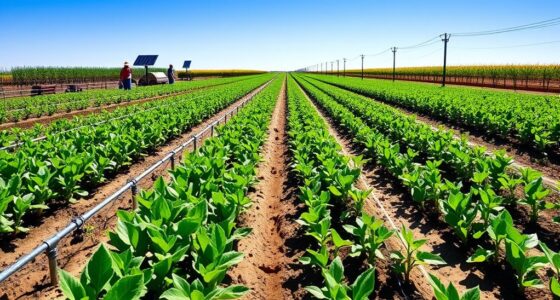
Choosing local produce helps reduce food miles, which are the distances your food travels before reaching you. Shorter transportation routes lower fossil fuel consumption and greenhouse gas emissions, making your food greener. Local farms often use sustainable practices and less packaging, further benefiting the environment. By selecting local options, you support your community and minimize your carbon footprint. To discover more about how food miles impact the environment, keep exploring this eco-friendly choice.
Key Takeaways
- Food miles measure the distance food travels, with longer distances increasing fossil fuel use and greenhouse gas emissions.
- Buying local produce reduces transportation distances, lowering carbon footprint and environmental impact.
- Local transportation methods are typically cleaner and more energy-efficient than long-distance logistics.
- Supporting local farms promotes sustainable practices, seasonal eating, and less reliance on energy-intensive storage.
- Choosing local foods benefits the community, reduces packaging waste, and contributes to a greener, more sustainable diet.
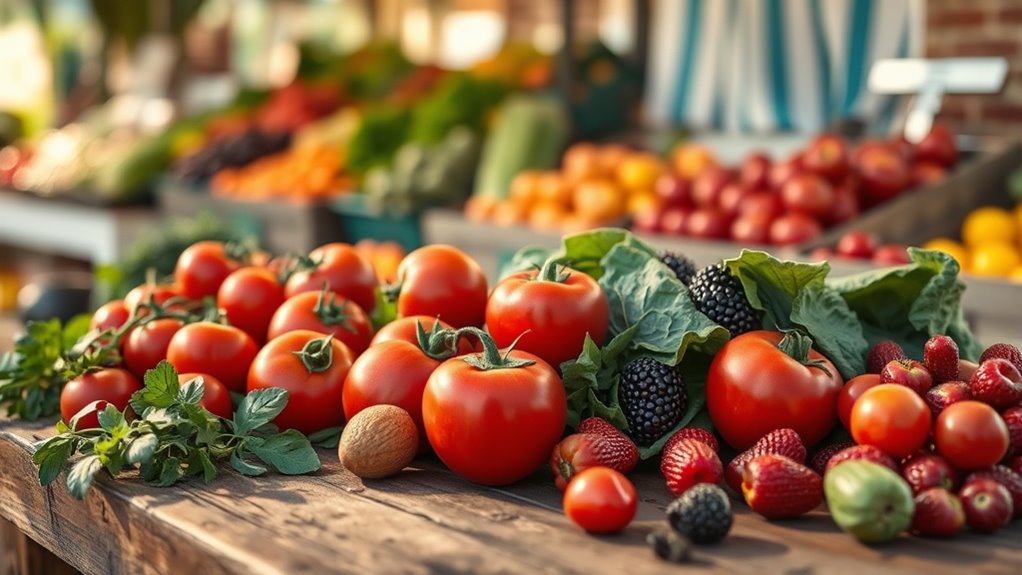
Ever wondered how far your food travels before reaching your plate? It’s a question worth asking, especially if you care about the environment. The distance food travels, often called food miles, impacts your overall carbon footprint. When food is transported over long distances, it generally involves more fossil fuels, which contribute to greenhouse gas emissions. That’s where sustainable transportation comes into play. Choosing local produce means your food is often transported via methods that are less harmful to the environment, such as trucks powered by cleaner energy or even bicycles in some cases. By opting for locally grown fruits and vegetables, you help reduce the need for extensive transportation routes, which considerably cuts down on emissions and minimizes your carbon footprint.
Transporting food over thousands of miles requires complex logistics involving planes, ships, trucks, and trains. These modes of transportation, especially air freight, are energy-intensive and heavily reliant on fossil fuels. The farther your food travels, the more emissions are released into the atmosphere, exacerbating climate change. When you buy local, you’re supporting a more sustainable transportation network that prioritizes reducing environmental impact. Local farms often deliver directly to markets or nearby stores, shortening the supply chain and decreasing the amount of fuel used. This not only benefits the environment but also ensures fresher produce, as it spends less time in transit.
Additionally, food packaging waste can be significantly reduced when purchasing local produce, further lessening environmental impact. In addition to environmental benefits, choosing local foods often means supporting your community’s economy. Local farmers and producers typically use sustainable farming practices, which can further lessen environmental damage. These practices often involve less reliance on chemical fertilizers and pesticides, resulting in healthier soil and water systems. Plus, eating locally encourages seasonal eating, which aligns with natural growing cycles and reduces the need for energy-intensive greenhouse production or storage methods. It’s a simple way to make your diet more sustainable and reduce your overall carbon footprint.
Frequently Asked Questions
How Do Food Miles Impact Overall Carbon Footprints?
Food miles directly impact your overall carbon footprint by increasing transport emissions, which happen when food is shipped over long distances. When you choose local produce, you’re reducing these emissions because it involves less transportation and improves supply chain efficiency. This means fewer fossil fuels are burned, helping lower your environmental impact. So, by eating locally, you support a greener lifestyle and reduce the carbon footprint associated with your food choices.
Are Local Foods Always More Sustainable Than Imported Options?
Think of your plate as a map where each choice influences the environment. Local foods aren’t always more sustainable because seasonal eating and transportation methods matter. If imported produce travels by ship or train, it might have a lower carbon footprint than locally grown foods requiring energy-intensive greenhouses. So, weigh these factors instead of assuming local always wins—sometimes, the most sustainable option depends on how it gets to you.
What Are the Best Ways to Reduce Food Miles at Home?
To cut food miles at home, start urban gardening to grow your own herbs and vegetables, reducing reliance on store-bought produce. Practice seasonal eating by choosing foods that are in season locally, which minimizes transportation. Buy from farmers’ markets or join community-supported agriculture programs. These steps help you reduce your carbon footprint, support local farmers, and enjoy fresher, tastier produce while making a positive environmental impact.
How Do Food Miles Vary Between Different Types of Produce?
Food miles vary widely among produce types due to seasonal variation and transport methods. You’ll find that fruits like berries and tropical fruits often travel farther, increasing their food miles, while seasonal vegetables stay local, reducing theirs. Transport methods also matter—air freight boosts food miles considerably, whereas shipping or local delivery keeps them lower. By choosing seasonal, locally-sourced produce and considering how it’s transported, you can help minimize your carbon footprint.
Can Food Miles Influence the Nutritional Value of Food?
Food miles can impact the nutritional value of your food because longer travel times may cause nutrient degradation and reduce freshness preservation. When produce spends more time in transit, it often loses vitamins and minerals, meaning you get fewer health benefits. By choosing local, you help guarantee your food arrives fresher, with better nutrient retention, and minimizes the negative effects of extended transportation on its nutritional quality.
Conclusion
By choosing local produce, you’re channeling the wisdom of ancient gardeners who knew that nurturing your community and the Earth leads to a more sustainable future. Think of it as planting your own small victory in the battle against climate change. Every local bite you take is like a ripple in a pond, spreading positive change and honoring the timeless dance between nature and nourishment. So, pick local—your plate and the planet will thank you.