
TL;DR

Get home appliances delivered free — and shop member deals
- Fast, free delivery on millions of items
- Access to Prime Big Deal Days deals on October 6–7
- Prime Video, Amazon Music and more included
Livingetc reports renewed interest among British designers in centuries-old Swedish ceramic stoves, known as kakelugnar, and related European tiled heaters. Designers and a stove-company director describe their heat retention and decorative appeal, but the report does not provide independent efficiency or emissions comparisons. Installation can cost several thousand pounds and may require site preparation.
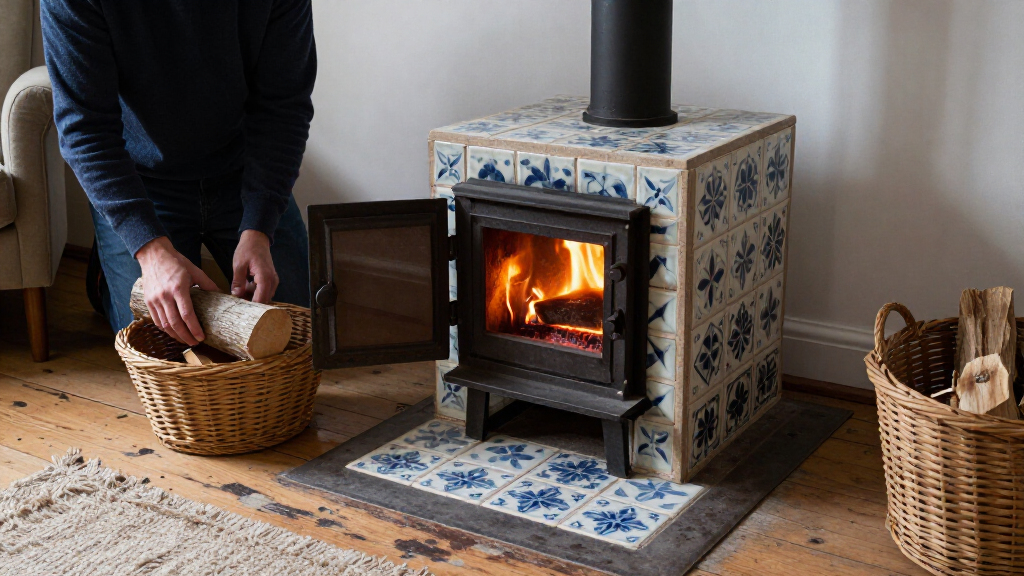
British interior designers are using Swedish ceramic stoves—known as kakelugnar—as sculptural alternatives to conventional fireplaces, according to a Livingetc report. The centuries-old tiled heaters are promoted for retaining warmth after a fire has gone out, though the report offers no independent data comparing their efficiency or emissions with other heating systems.
Livingetc describes ceramic stoves as tall, often tile-covered heaters found historically across northern Europe. Alan Hills, director of The Ceramic Stove Company, says one hot burn can provide 12 to 24 hours of heat while using fewer logs than a conventional wood burner. He also says the fire burns hotter, allowing more particulates to combust inside the firebox. Those performance and emissions statements are attributed to Hills; the report does not cite test results or specify how the comparison was measured.
The report features installations ranging from a custom pink stove in a Finnish home by AOR Architects to a gas-fitted ceramic model in an East London terrace designed by Olivia Outred. Outred said her clients wanted both a heat source and a sculptural object that would not block the windows. She said the stove was fitted with gas to comply with London’s air-quality rules.
Installation depends on the property and model. Hills says some stoves are modular and can be assembled in a few days, while a reinforced base may be needed. Outred described building a brick tower before applying the ceramic tiles. Livingetc says prices start at several thousand pounds, without giving a model-by-model price range or installation costs.
Heat Storage Meets Interior Design
The appeal described in the report combines practical heating with a prominent architectural feature. Unlike an open fire that sends much of its heat up a chimney, a ceramic stove is designed to store heat in its mass and release it over time. That could suit households seeking a slower, longer-lasting source of warmth, but the article does not quantify fuel savings or show that the appliances lower winter bills.
The examples also show the stoves being adapted to different interiors, from traditional patterned tiles to contemporary colors and forms. For readers considering one, the distinction matters: the stove is not simply a plug-in replacement for a fireplace. Cost, fuel type, building structure and local air-quality rules all affect whether a particular installation is feasible.
As an affiliate, we earn on qualifying purchases.
A Northern European Heating Tradition
Kakelugn is the Swedish term for a tiled ceramic stove; kachelofen is the German term used for a related type. Livingetc presents these heaters as a long-standing northern European tradition that is now attracting more attention in British interior design. Its report includes work by designers and studios including AOR Architects, Olivia Outred and AIYA Bureau.
The article contrasts these enclosed, heat-storing appliances with open hearths and conventional wood burners, but does not offer a technical survey of either category. It also refers to clean-air rules as a reason some households are reconsidering solid-fuel fires. The East London example used gas, illustrating that ceramic-clad stoves are not necessarily wood-fired; the permitted fuel and requirements depend on the specific appliance and location.
““One hot burn” can provide heat for “12 to 24 hours.””
— Alan Hills, director of The Ceramic Stove Company
Efficiency Claims Need Comparisons
The Livingetc report does not provide independent measurements for the stated 12-to-24-hour heat duration, log use or particulate emissions. It gives no comparison baseline, test conditions, stove models or details on how much fuel a household would save. The claims should therefore be treated as statements from a stove-company director, not as verified performance figures for every ceramic stove.
It is also unclear how total costs vary by design, fuel, construction work and location. The article gives a starting price of several thousand pounds but no full quotes. Rules for installation and emissions differ by place and appliance, and the report does not set out a general approval process or confirm that any specific model is suitable for every home.
Check Suitability Before Installation
The report identifies no announced industry rollout, policy decision or scheduled next event. For homeowners interested in a ceramic stove, the practical next step is to obtain a model-specific assessment from a qualified installer. That assessment should cover the appliance’s fuel, flue and ventilation requirements, the floor or base, building work, local clean-air rules and the full installed price.
Prospective buyers should also request documented performance and emissions information for the exact model they are considering, rather than relying on general claims about the stove category. Whether these heaters become more common in British homes will depend in part on their cost, installation constraints and how their performance compares with alternatives under real household conditions.
Key Questions
What is a Swedish ceramic stove?
A kakelugn is a Swedish tiled ceramic stove designed to store heat and release it over time. Related European stoves are also known by names such as kachelofen.
How long do ceramic stoves stay warm?
Alan Hills of The Ceramic Stove Company says a single hot burn can provide 12 to 24 hours of heat. The supplied report does not include independent testing or conditions for that estimate.
Are ceramic stoves more efficient than wood burners?
The report says Hills considers them more efficient and says they use fewer logs than a conventional wood burner. It does not provide a measured comparison, so performance will depend on the specific appliance, fuel and installation.
How much does a ceramic stove cost?
Livingetc says prices start at several thousand pounds. It does not give exact prices or include a detailed breakdown of installation and building costs.
Can a ceramic stove be installed in any home?
Not necessarily. The report says a reinforced base may be needed and describes a project using a gas-fitted model under London air-quality rules. Suitability depends on the property, appliance, fuel and local requirements, so an installer should assess the site.
Source: rss
Fall yard work Picks
leaf blowers
As an affiliate, we earn on qualifying purchases.