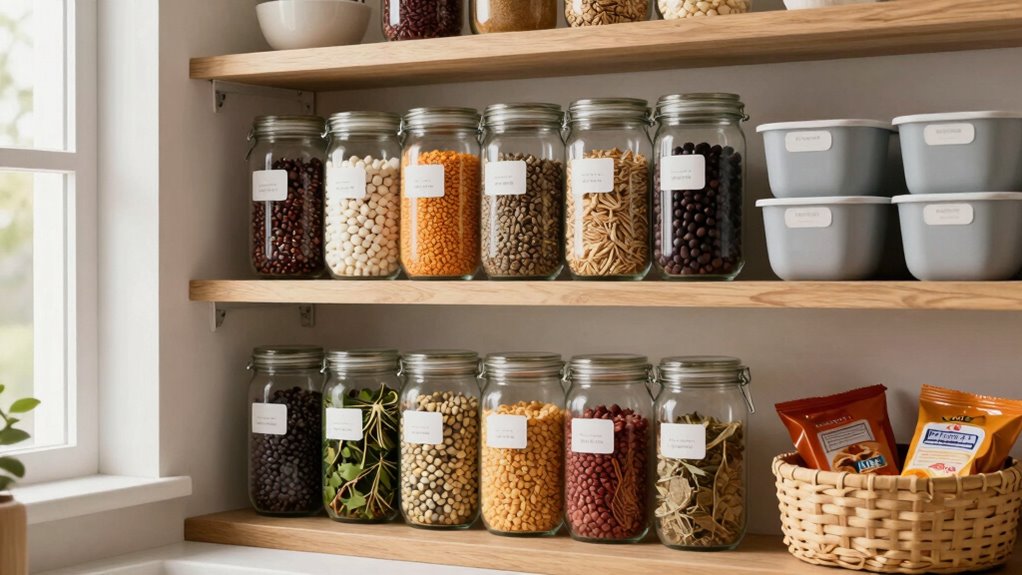

To keep a low-waste pantry manageable, focus on organized, reusable containers with clear labels and visible inventories to monitor supplies easily. Practice mindful shopping by buying only what you’ll use, and portion bulk items into smaller containers for daily use. Regularly check for expired items and keep clutter to a minimum by embracing minimalism. Consistent routines and sustainable packaging support long-term simplicity. If you want practical tips to create this balance, keep exploring ways to improve your pantry system.

Get home appliances delivered free with Prime
- Fast, free delivery on millions of items
- Prime Video, Amazon Music and more included
- Member-only deals all year
Key Takeaways
- Use uniform, labeled containers to simplify organization and quick ingredient identification.
- Maintain a visible inventory to track supplies and prevent over-purchasing.
- Portion bulk items into smaller, daily-use containers to reduce clutter and waste.
- Regularly check for expired or unused items to keep the pantry fresh and manageable.
- Plan meals and buy only necessary quantities aligned with storage capacity and routines.

Creating a low-waste pantry system is an effective way to reduce your environmental impact while making your kitchen more organized. The key lies in designing a setup that’s sustainable, practical, and easy to maintain. When you focus on sustainable packaging, you cut down on single-use plastics and unnecessary waste. Opt for reusable containers, jars, and bags that you can refill repeatedly. This not only minimizes waste but also keeps your pantry tidy and visually appealing. Incorporate bulk shopping into your routine, which allows you to purchase larger quantities of dry goods without packaging waste. Bring your own containers to stores that support bulk shopping, and you’ll find it easier to buy exactly what you need, reducing leftover waste and spoilage.
Create an eco-friendly, organized pantry with reusable containers, bulk shopping, and mindful, sustainable packaging choices.
To keep your pantry manageable, start with a clear organization system. Use uniform containers with labels so you can quickly identify ingredients and track quantities. This prevents overbuying and helps you avoid clutter. When you buy in bulk, portion out what you need into smaller containers for everyday use, leaving the larger bulk items intact. This approach encourages mindful shopping and helps you avoid waste from expired or unused products. It also makes it easier to restock without creating extra packaging waste. Additionally, practicing biodiversity-friendly shopping habits can support local ecosystems and promote sustainable resource use. Incorporating sustainable packaging options is an important step in reducing overall waste and supporting eco-friendly practices. Being mindful of the environmental impact of your choices can further enhance your efforts toward sustainability. Developing a habit of conscious consumption reinforces your commitment to eco-friendly living.
Furthermore, engaging in community-supported agriculture can help you access fresh, locally produced goods with less packaging. Maintaining a low-waste pantry isn’t just about the initial setup; it’s about creating habits that stick. Develop a routine of checking your supplies regularly so you can use items before they go bad. Keep an inventory list on the door or somewhere visible, which reminds you of what’s available and what needs to be replenished. When shopping, bring your own containers, and opt for stores that offer sustainable packaging options, like paper or compostable bags. This way, you minimize your reliance on wasteful packaging that ends up in landfills.
Another way to stay on top of your low-waste pantry is to embrace minimalism. Only buy what you truly need and use, which prevents excess accumulation. When you do buy in bulk, do so intentionally—consider your meal plans and storage capacity. This keeps your pantry from becoming overwhelming or cluttered. Overall, a manageable low-waste pantry system combines thoughtful organization, sustainable packaging, and conscious shopping habits. It’s about making small, consistent choices that add up over time to create a more eco-friendly and efficient kitchen. By sticking with these principles, you’ll find that maintaining your low-waste pantry becomes second nature, supporting both your environmental values and your daily convenience.
reusable pantry storage containers with labels
As an affiliate, we earn on qualifying purchases.
As an affiliate, we earn on qualifying purchases.
Frequently Asked Questions
How Do I Start Transitioning to a Low-Waste Pantry?
Start by replacing single-use items with reusable shopping bags and containers to cut waste. Shop in bulk to reduce packaging, and choose products with minimal or compostable packaging. Incorporate composting tips by composting food scraps and packaging when possible, which keeps your pantry sustainable. Gradually swap out old items for eco-friendly alternatives, making the shift manageable. Consistency is key, so take small steps to build a low-waste pantry you can maintain easily.
What Are the Best Materials for Sustainable Storage Containers?
You should choose sustainable storage containers made from biodegradable plastics or stainless steel options. Biodegradable plastics break down naturally, reducing waste, while stainless steel options are durable, reusable, and free from harmful chemicals. Both materials help minimize your environmental impact and keep your pantry organized. Opt for containers with airtight lids to preserve freshness, and prioritize those that are easy to clean and fit your storage needs.
How Often Should I Declutter My Low-Waste Pantry?
Think back to your trusty rotary phone—timely decluttering keeps your low-waste pantry manageable. You should review and refresh your supplies every 4 to 6 weeks, especially after using reusable shopping bags or trying new composting techniques. Regular checks help prevent clutter from piling up and guarantee everything stays fresh. Plus, it’s easier to maintain sustainable habits when you keep your pantry organized and intentional, just like a vintage device still in use.
Are Refill Stations More Eco-Friendly Than Bulk Bins?
Refill stations are generally more eco-friendly than bulk bins because they often use reusable packaging, reducing single-use plastics. Plus, many refill stations incorporate compostable labels, which help minimize waste even further. When you choose refill stations, you’re actively cutting down on packaging waste, especially if you bring your own containers. This approach encourages sustainable habits and makes your low-waste pantry more manageable and environmentally friendly.
How Can I Track Pantry Expiration Dates Effectively?
Think of your pantry as a well-tended garden—you need to know when each plant (or item) is ripe or past its prime. To keep track of expiration dates, set up a simple system for expiration tracking, like marking dates on labels or a digital inventory management app. Regularly check your stock, rotate older items forward, and stay organized to prevent waste and keep your pantry thriving.
Conclusion
So, here’s the truth: adopting a low-waste pantry isn’t just about saving the environment—it also keeps your space clutter-free and your mind clear. The theory that small, consistent changes can create big impacts holds true. By simplifying your storage and choosing sustainable options, you’ll find managing your pantry actually becomes easier over time. Believe it or not, these tiny shifts could be the key to a more mindful, manageable, and eco-friendly kitchen.
Fall yard work Picks
leaf blowers
As an affiliate, we earn on qualifying purchases.