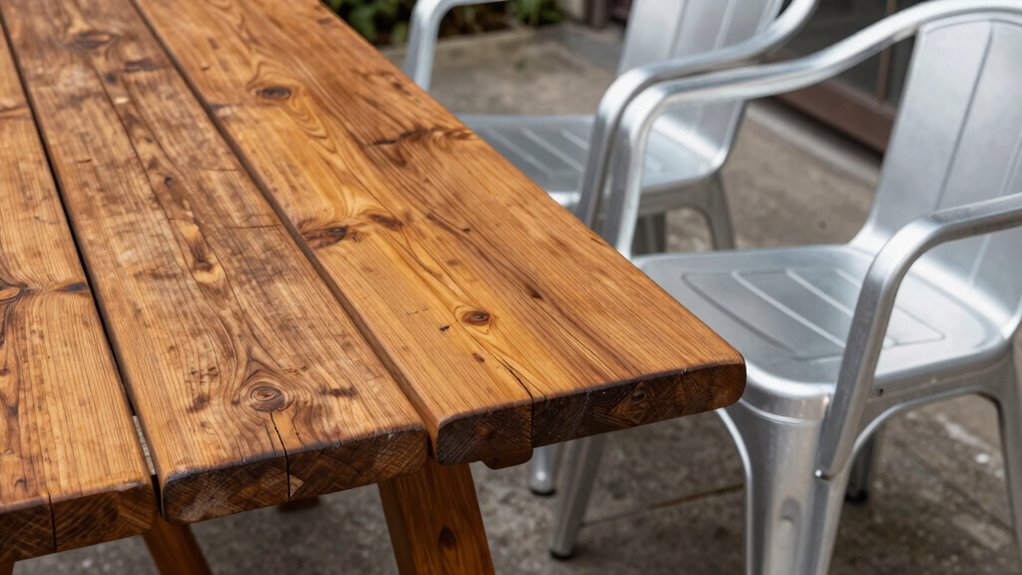

When choosing between teak and aluminum outdoor furniture, maintenance is the key factor influencing longevity and look. Teak naturally resists pests and decay but needs periodic oiling to maintain its warm hue, while aluminum is low-maintenance—just soap and water—and resists warping or cracking. If you keep up with proper upkeep, both can last for years, but understanding their specific care needs will help you make the best investment. Keep exploring to discover which suits your lifestyle best.

Get home appliances delivered free with Prime
- Fast, free delivery on millions of items
- Prime Video, Amazon Music and more included
- Member-only deals all year
Key Takeaways
- Teak requires regular oiling to maintain its warm color, while aluminum needs only occasional cleaning with soap and water.
- Teak develops a natural silvery patina over time if left untreated, reducing maintenance needs but altering appearance.
- Aluminum is highly resistant to warping, cracking, and rot, demanding minimal ongoing maintenance.
- Proper coating is essential for aluminum to prevent corrosion, especially in harsh weather conditions.
- Both materials’ long-term upkeep depends on climate, with teak needing care to preserve its appearance and aluminum requiring protection against corrosion.
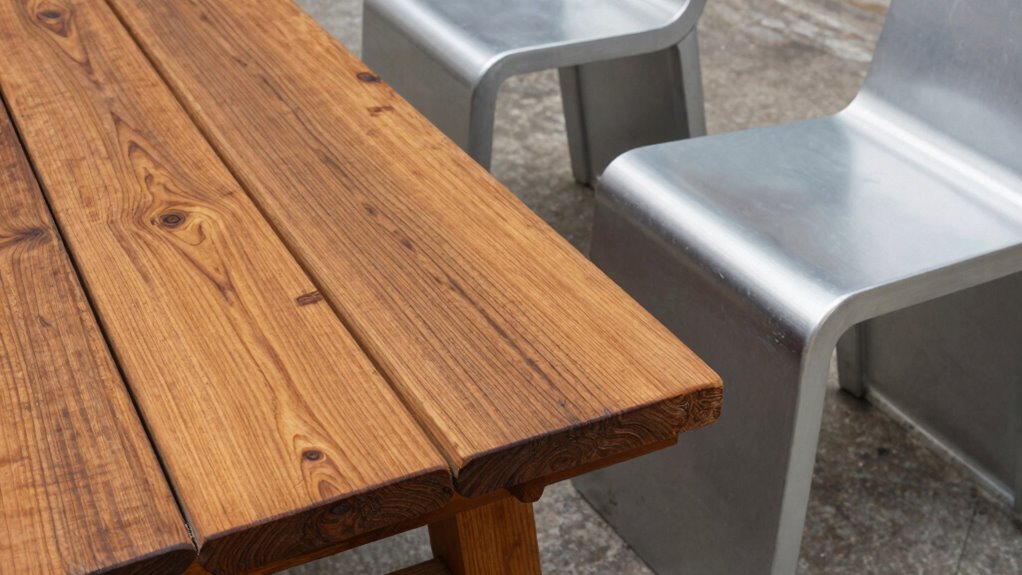
When choosing outdoor furniture, the decision often boils down to selecting between teak and aluminum, both popular options known for their durability and style. As you weigh your choices, it’s important to consider the maintenance story behind each material, because that’s where the real differences often lie. Teak has long been praised for its natural beauty and strength, but it requires regular upkeep to keep its appearance. Aluminum, on the other hand, is lightweight and low-maintenance, making it an appealing choice for many homeowners. Eco-friendly options are increasingly important in outdoor furniture decisions. Teak is a renewable resource when sourced responsibly, especially if you choose teak that’s certified sustainable. It’s biodegradable and naturally resistant to pests and decay, reducing the need for chemical treatments. Aluminum, although highly recyclable, involves an energy-intensive manufacturing process. However, once produced, aluminum furniture can last for decades with minimal maintenance, and many manufacturers use recycled aluminum, which helps lessen its environmental impact. Cost comparison plays a significant role in your decision. Generally, teak furniture has a higher upfront price due to the quality of the wood and its craftsmanship. However, because it ages beautifully and can last for generations if properly maintained, some see it as a worthwhile investment. Aluminum furniture usually costs less initially and is more budget-friendly for those looking to furnish their outdoor space without breaking the bank. Still, keep in mind that aluminum may require replacement sooner if exposed to harsh weather or if it’s not properly coated to prevent corrosion. The maintenance story is where teak and aluminum diverge sharply. Teak’s natural oils make it highly resistant to moisture, but over time, it develops a silvery-gray patina if left untreated, which many find desirable. To preserve its warm honey tone, you’ll need to oil it periodically, which involves cleaning and reapplying finish. Aluminum furniture requires almost no maintenance beyond cleaning with soap and water. It won’t warp, crack, or rot, and unlike teak, it doesn’t need oiling or staining. This ease of care makes aluminum a popular choice if you prefer low-effort solutions. Additionally, maintenance considerations can significantly influence long-term satisfaction with your outdoor furniture. Understanding the environmental impact of each material can help you make a more eco-conscious decision, especially as sustainable practices become more accessible. Both options are affected by climate factors, which can impact their longevity and appearance over time. In the end, your choice depends on your priorities: if you value natural aesthetics and are willing to invest time in maintenance, teak might be your best bet. If you prefer affordability, durability with minimal effort, and eco-conscious recycling, aluminum could be the way to go. Both options offer longevity and style, but understanding their maintenance demands is key to making an informed decision that suits your outdoor lifestyle.
As an affiliate, we earn on qualifying purchases.
Frequently Asked Questions
How Do Teak and Aluminum Furniture Compare in Environmental Impact?
You’ll find that aluminum furniture is more eco-friendly overall, thanks to its high recycling potential—most aluminum is recyclable endlessly without losing quality. Teak, while natural and biodegradable, involves harvesting from forests, raising sustainability concerns. In an eco-friendliness comparison, aluminum’s recyclability gives it an edge, but sourcing responsibly grown teak can also be environmentally mindful. Your choice depends on prioritizing recyclability versus sustainable harvesting practices.
Can Both Materials Be Repainted or Refinished Easily?
Both materials can be repainted or refinished, but each presents its own repainting challenges. Teak, with its oily surface, can be tricky to prep for repainting, requiring thorough cleaning and sanding. Aluminum, on the other hand, needs proper surface preparation and an appropriate primer for good adhesion. Refinishing techniques vary; for teak, sanding and sealing work best, while aluminum benefits from priming and applying durable paint designed for metal.
Are There Specific Climates Where One Material Outperforms the Other?
You’ll find that climate considerations and weather resilience play a big role in choosing between teak and aluminum outdoor furniture. In humid, rainy climates, aluminum outperforms teak because it resists moisture and doesn’t warp or crack. Conversely, in dry, sunny environments, teak’s natural oils provide excellent weather resilience. So, pick aluminum for wetter climates, and go with teak where dry heat and sun are more common.
How Do Initial Costs Differ Between Teak and Aluminum Furniture?
Back in the day, a silver spoon cost more than a simple wooden one. Today, your initial costs vary: teak furniture tends to be pricier upfront due to its material durability and quality, while aluminum offers a more budget-friendly option. The cost comparison shows aluminum usually costs less initially, but teak’s long-term durability can justify its higher price. So, consider your budget and how much maintenance you’re willing to invest.
What Are the Best Storage Practices During Harsh Weather?
During harsh weather, you should follow weatherproofing tips and seasonal storage solutions to protect your furniture. Cover teak and aluminum pieces with weather-resistant covers or store them indoors during storms or winter. For added protection, use breathable covers to prevent mold and rust. If space allows, store furniture in a shed or garage to keep it safe from extreme elements, ensuring longevity and maintaining its appearance.
Conclusion
In the end, choosing between teak and aluminum really comes down to your lifestyle and preferences. Sure, teak needs regular oiling to stay beautiful, but many love its natural charm. Aluminum, on the other hand, offers low maintenance and durability. If you’re worried about the upkeep, aluminum might be your best bet. But if you enjoy a bit of routine and the timeless look of teak, then the extra care is well worth it.
Halloween Picks
halloween
As an affiliate, we earn on qualifying purchases.