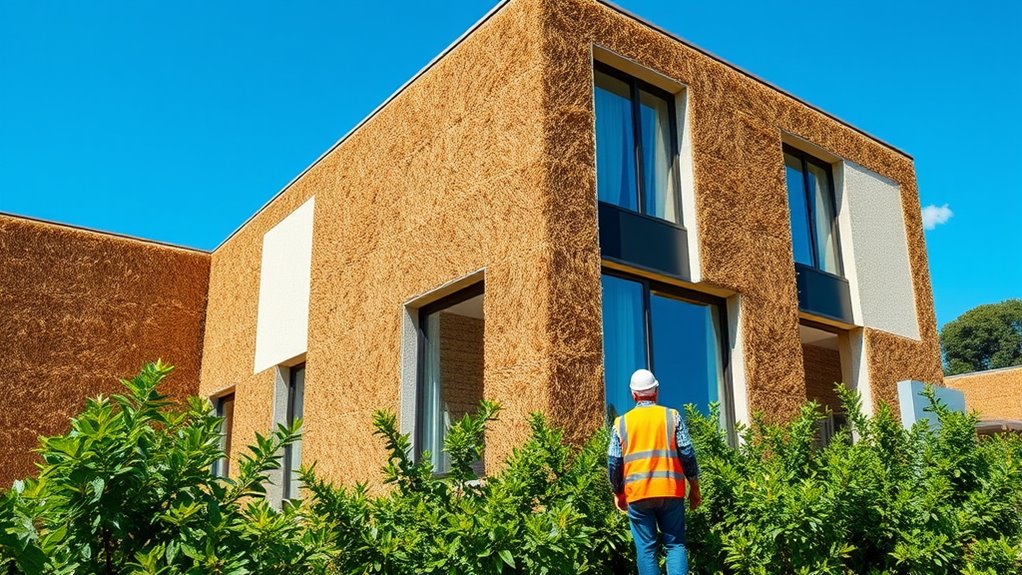

By choosing sustainable building materials like straw bale and hempcrete, you can markedly lower your environmental impact, enhance energy efficiency, and create healthier indoor spaces. Straw bale offers affordability, durability, and soundproofing, while hempcrete provides excellent insulation and carbon-negative benefits. Both materials come from renewable resources and have minimal chemical use, supporting eco-friendly construction. To discover how these innovative options can transform your projects and contribute to a greener future, explore further.
Key Takeaways
- Sustainable building materials like straw bale and hempcrete reduce environmental impact and enhance energy efficiency.
- Straw bale insulation utilizes agricultural byproducts, offering affordability, durability, and soundproofing benefits.
- Hempcrete, made from hemp fibers and lime, is a carbon-negative material that provides excellent thermal and moisture regulation.
- Both materials are renewable, biodegradable, and require less energy to produce compared to traditional construction options.
- Incorporating these eco-friendly materials supports responsible construction practices and biodiversity preservation.
Have you ever wondered how buildings can be both durable and eco-friendly? The answer lies in the innovative use of sustainable building materials that harness renewable resources and prioritize environmental impact. These materials not only reduce your carbon footprint but also enhance energy efficiency, making them a smart choice for the modern builder. One of the key elements in this movement is eco-friendly insulation, which is often derived from renewable resources like sheep’s wool, straw, or hemp. Unlike traditional insulations that depend on synthetic chemicals, these natural options provide excellent thermal performance without harming the environment. They are renewable, biodegradable, and often require less energy to produce, helping you create a healthier, more sustainable home.
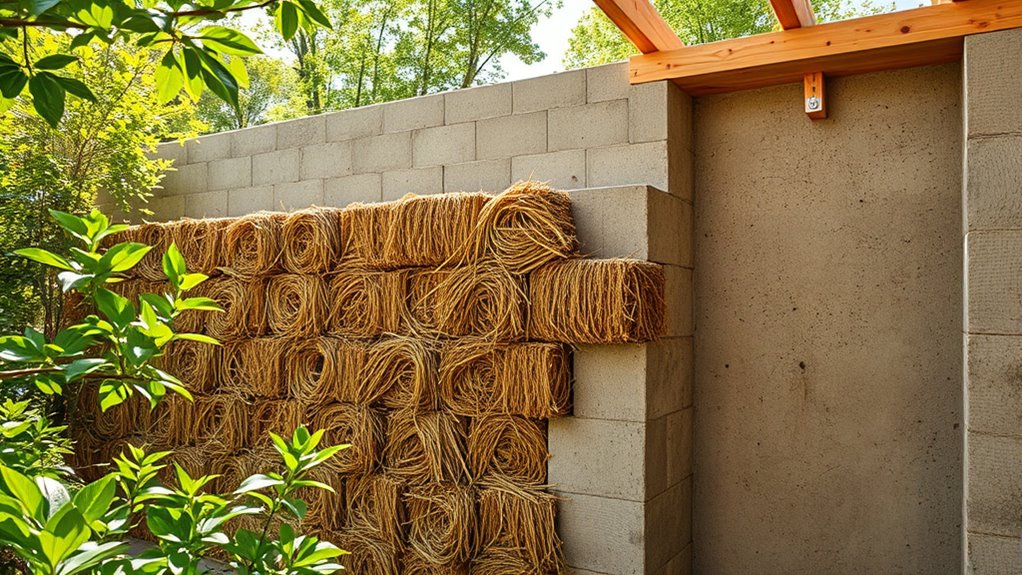
When you opt for eco-friendly insulation made from renewable resources, you’re making a conscious decision to support the planet. For instance, straw bale insulation is a classic example that combines affordability, durability, and sustainability. Straw is a byproduct of grain harvests, so it’s abundantly available and wouldn’t otherwise go to waste. Using straw bales in walls provides natural insulation, regulating indoor temperatures and reducing your reliance on heating and cooling systems. Besides its thermal benefits, straw bale walls also offer excellent soundproofing and are fire resistant when properly maintained. It’s a perfect example of how renewable resources can be turned into high-performance building materials that are eco-friendly and cost-effective. Additionally, incorporating biodiversity-friendly practices in construction can help preserve local ecosystems and promote habitat diversity alongside sustainable building efforts.
Similarly, hempcrete—made from hemp fibers mixed with lime—has gained popularity as a sustainable building material. Hemp is a fast-growing plant that absorbs carbon dioxide as it grows, making it a carbon-negative resource. Hempcrete acts as both a structural material and an insulator, offering excellent thermal regulation and moisture control. Its insulating properties make it a natural choice for eco-conscious builders seeking to reduce energy consumption. Because hemp grows quickly and requires minimal pesticides or fertilizers, it’s a highly renewable resource that aligns with eco-friendly construction principles.

BIG HORN OUTDOORS 12" Multi-Fuel Outdoor Pizza Oven – 3-in-1 Wood-Fired, Gas & Electric Compatible (Burners Sold Separately), Pellet Pizza Oven Portable Pizza Maker for Backyard, Camping & Tailgating
【Premium & Safe Stainless Steel】Outdoor pizza oven is constructed with high-quality stainless steel. This sturdy and compact oven...
As an affiliate, we earn on qualifying purchases.
Frequently Asked Questions
Are Sustainable Materials Cost-Effective Long-Term?
Yes, sustainable materials are often cost-effective long-term. You should do a thorough cost analysis to compare initial costs and savings on energy and maintenance. Market availability has improved, making materials like hempcrete and straw bale more accessible and affordable. Over time, the reduced utility bills and lower environmental impact can outweigh the upfront investment, making sustainable building materials a smart financial choice for your project.
How Do Insulation Properties Compare Among Eco-Friendly Options?
Think of eco-friendly insulation like a modern-day Icarus; soaring high with thermal performance and insulation efficiency. Hempcrete often outperforms traditional materials with better thermal performance and moisture regulation. Straw bale also provides excellent insulation efficiency, especially in colder climates. While each option varies, both are sustainable choices that enhance energy efficiency and reduce environmental impact, making your building not only greener but more comfortable and cost-effective long-term.
Can These Materials Meet Building Codes and Standards?
You can meet building codes and standards with eco-friendly materials like straw bale and hempcrete by guaranteeing they have proper code compliance and material certification. Check that these materials are tested and certified according to local regulations. When you select certified, code-compliant options, you’ll ensure your project adheres to safety, durability, and environmental standards, making your sustainable building both legal and reliable.
What Are the Environmental Impacts of Harvesting Hemp and Straw?
You’ll find that hemp cultivation and straw harvesting have notable environmental impacts. Hemp cultivation requires less water and pesticides, making it relatively sustainable, but large-scale farming can still lead to soil depletion if not managed properly. Straw harvesting, when done responsibly, helps clear fields efficiently, but improper techniques can cause crop waste and impact soil health. Overall, both practices can be eco-friendly if managed sustainably, reducing environmental footprints.
How Do Maintenance Requirements Differ From Traditional Materials?
You’ll find that sustainable materials like hempcrete and straw bale often require less maintenance durability over time compared to traditional options. They’re naturally resistant to pests and mold, reducing repair complexity. However, when repairs are needed, they can sometimes be more delicate or specialized, which might increase repair complexity. Overall, these materials tend to need less frequent upkeep, making them a practical, eco-friendly choice for long-term building maintenance.

aidpiza Pizza Oven Outdoor 12" Wood Fired Pizza Ovens Pellet Pizza Stove for outside, Portable Stainless Steel Pizza Oven for Backyard Pizza Ovens
Wood pellet pizza oven can cook 12 inch pizza for multiple people to share, suitable for family party...
As an affiliate, we earn on qualifying purchases.
Conclusion
By choosing sustainable building materials like straw bale and hempcrete, you’re planting seeds for a greener future. These eco-friendly options act as the roots that stabilize our environment, while their innovative nature breathes new life into construction. Just as a sturdy tree stands tall through storms, your commitment to sustainable materials helps build a resilient, vibrant world—one that flourishes long after the last brick is laid. Together, you’re shaping a future as bright and enduring as nature itself.

Ooni Karu 12 Multi-Fuel Outdoor Pizza Oven – Reaches 950°F and Cooks 12 Inch Pizzas and More in 60 Seconds - Portable Wood and Gas Grill with Pizza Stone, Dual Fuel Ooni Pizza Oven
HOT NEW FEATURES – A custom designed fuel tray that maximises airflow and delivers a powerful blast of...
As an affiliate, we earn on qualifying purchases.

Ninja Artisan Outdoor Pizza Oven, 12-inch, 3-minute Pizza, Neapolitan, Thin Crust, New York Chicago, Custom, 700F Max Temperature, Electric Heat, Bake, Broil, Proof, Warm, MO201
5-IN-1 FUNCTIONALITY: The ultimate outdoor sidekick for all your backyard entertainment; pizza, bake, broil, warm & proof.
As an affiliate, we earn on qualifying purchases.