Before flying your drone abroad, it’s crucial to understand local laws and restrictions. Check official government websites and consult local drone clubs for up-to-date rules. Identify no-fly zones, restricted areas, and regional regulations to avoid fines or confiscation. Follow responsible flying practices, respect privacy, and prepare your gear thoroughly. If you keep these tips in mind, you’ll gain the confidence to fly legally and safely. Stick around to learn more essential tips for smooth drone adventures.

Get home appliances delivered free — and shop member deals
- Fast, free delivery on millions of items
- Access to Prime Big Deal Days deals on October 6–7
- Prime Video, Amazon Music and more included
Key Takeaways
- Research and understand local drone laws before traveling using official government sources and drone clubs.
- Identify no-fly zones and restricted areas with official maps and reliable apps to avoid violations.
- Check country-specific regulations, permits, and insurance requirements for legal drone operation abroad.
- Follow safe flying practices, respect privacy, and cooperate with authorities if approached.
- Pack essential accessories, secure your gear with security protocols, and stay updated on regional regulations.
As an affiliate, we earn on qualifying purchases.
How to Find Out About Drone Laws Before You Travel
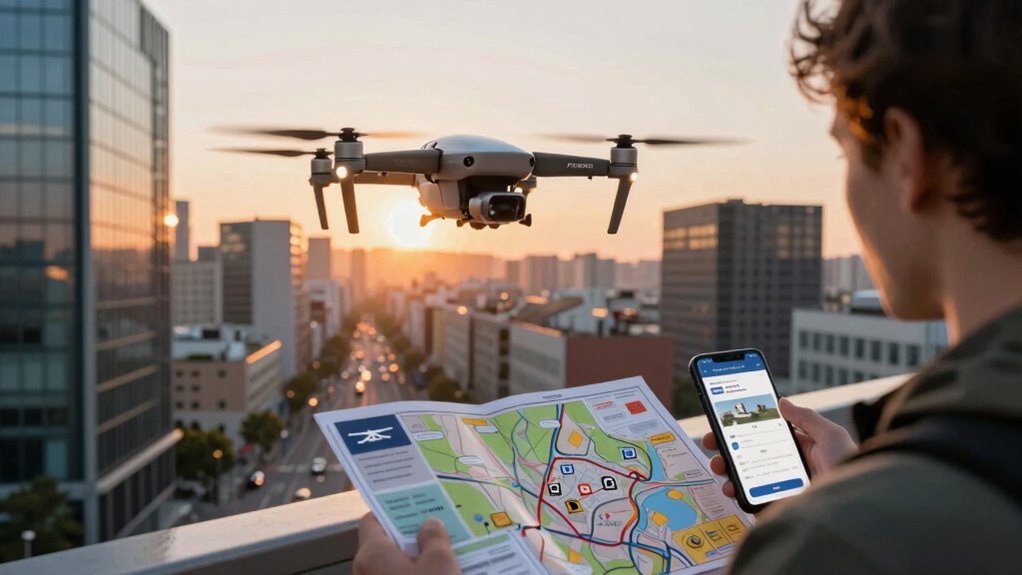
Wondering how to stay compliant with drone regulations when you travel? Start by tapping into online regulation resources, such as official government websites, to understand the drone laws of your destination. These sites often provide detailed, up-to-date information about licensing, registration, and flying restrictions. Additionally, local drone clubs are a fantastic resource; members often have firsthand knowledge about specific local rules and best practices. Joining a club or reaching out can give you insights that official guidelines might not cover. Combining these resources ensures you’re well-informed before you pack your drone. Proper research helps you avoid fines, confiscation, or worse, disrupting local privacy or safety. Staying updated on drone regulations and local laws helps you operate legally and responsibly during your trip. Proper research keeps your flying enjoyable and hassle-free, no matter where your travels take you.
Identifying No-Fly Zones and Restricted Areas Abroad

Before you take off with your drone abroad, it’s crucial to identify no-fly zones and restricted areas to avoid legal issues or safety hazards. Proper airspace navigation ensures you stay compliant and safe during your flight. Use reliable resources like local aviation authorities or apps to pinpoint restricted zones. Be aware that some areas, such as airports, government buildings, and military sites, are off-limits. Ignoring these zones can lead to fines or confiscation, and may impact your drone insurance coverage. Additionally, understanding energetic alignment can help you maintain a positive and stress-free experience while flying in unfamiliar environments. Familiarizing yourself with the contrast ratio of the local environment can also assist in choosing optimal lighting conditions for flying safely. – Check official maps and notices for no-fly zones – Look out for temporary restrictions or events – Avoid flying near airports or military bases – Stay informed about local regulations to prevent violations
Understanding International Drone Regulations Every Traveler Should Know
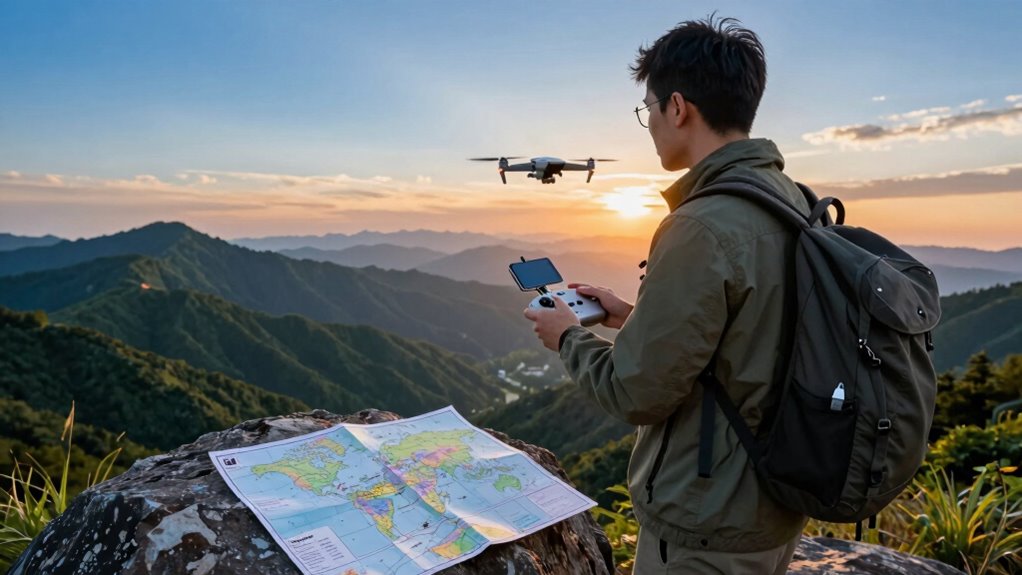
When you travel with a drone, it’s essential to understand the international laws that apply in each destination. Different countries have their own rules and restrictions, so what’s allowed elsewhere might not be permitted locally. Knowing these regulations helps you fly safely and avoid fines or confiscation. Additionally, awareness of Free Floating regulations can help you navigate the legal landscape more effectively. For example, utilizing effective scrubber techniques can be analogous to understanding proper drone operation, emphasizing the importance of preparation and adherence to guidelines. Familiarizing yourself with Victorian Steampunk fashion and etiquette can also ensure respectful interactions with local communities, especially in themed or culturally distinct areas. Staying updated on crypto pump and dump schemes can serve as a reminder to stay vigilant about sudden changes and potential market manipulation, much like sudden changes in drone regulations.
International Drone Laws
Managing international drone laws can be complex, as each country has its own regulations to guarantee safety and privacy. Before flying abroad, you must understand local rules, including drone registration and insurance requirements. Some countries require you to register your drone with authorities, even if it’s for recreational use. Insurance might also be mandatory to cover potential damages or liabilities. Failing to comply could lead to fines or confiscation. Always research before your trip to avoid surprises. Be aware that regulations can change frequently, so check for updates close to your departure date. Staying informed ensures you enjoy your trip without legal issues. Remember, respecting local rules protects both your drone and others around you. Additionally, understanding international drone regulations helps prevent inadvertent violations that could impact your travel plans. Keeping up with regulatory updates ensures you remain compliant during your travels. To further safeguard your drone activities, familiarizing yourself with privacy laws in each country is highly recommended. Being aware of cultural sensitivities related to drone usage can also help you avoid unintended offenses in unfamiliar territories. Moreover, consulting local authorities or drone clubs can provide valuable insights into specific regional restrictions that may not be widely published.
Country-Specific Restrictions
Understanding the specific restrictions in each country is essential to flying your drone legally and safely abroad. Many countries require you to obtain local drone permits before any flight and have strict rules about where you can fly. Some places ban drones altogether, while others limit flying heights or proximity to airports and crowds. Check if your destination has specific drone insurance policies, which might be mandatory for legal operation. Failing to adhere to local regulations can lead to hefty fines or confiscation of your drone. Always research country-specific restrictions ahead of time, including permit processes and insurance requirements. Being informed ensures you stay within legal boundaries and avoid unnecessary trouble, making your drone experience smooth and enjoyable while traveling abroad. Additionally, understanding international drone regulations can help you navigate complex legal environments and ensure compliance across different regions. Knowing about regional enforcement practices can also prevent unexpected legal issues during your trip. To further protect yourself, familiarize yourself with support resources for travelers, which can provide guidance if you encounter legal challenges while abroad. Moreover, consulting official government sources can give you the most accurate and up-to-date information on drone laws for your destination. It’s also helpful to stay informed about local law enforcement attitudes toward drone use, which can vary significantly between countries.
Best Practices for Flying Responsibly and Avoiding Fines
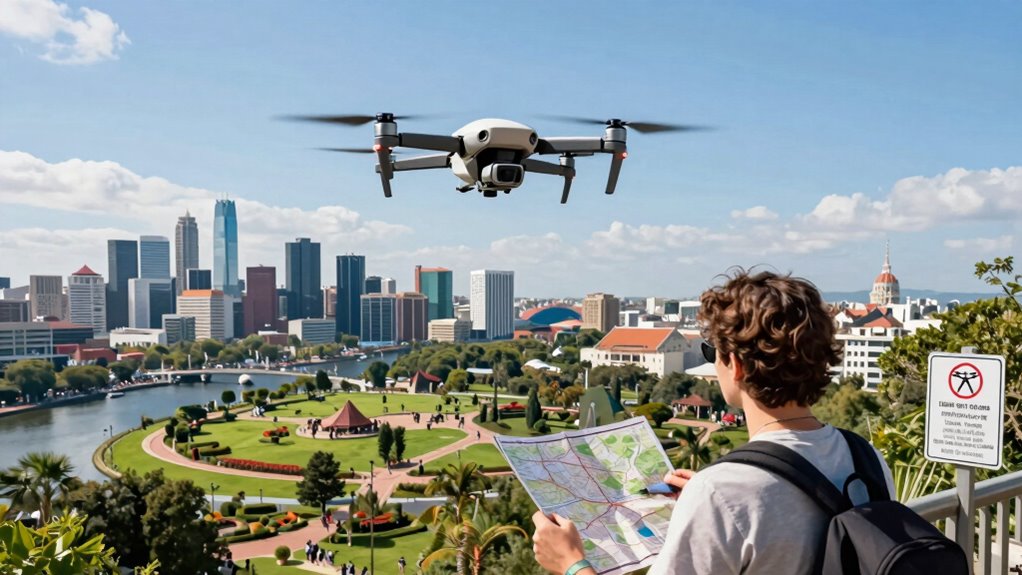
Flying responsibly is essential to avoid fines and guarantee a positive experience. To do this, always perform proper drone maintenance before each flight to ensure safe operation. Follow local regulations, including altitude and no-fly zones, to stay compliant. Use photography tips like avoiding crowded areas and respecting privacy to prevent disturbances. Remember, responsible flying also means checking your drone’s firmware and batteries to prevent malfunctions. Staying informed about tax law changes can help you understand the legal landscape surrounding drone regulations and avoid inadvertent violations. Additionally, being aware of privacy laws ensures you respect others’ rights and avoid potential legal issues. Being familiar with safe flying practices is crucial for maintaining safety and legality during your flights. Moreover, understanding airspace classifications helps you navigate complex flying environments and stay within legal boundaries. Being aware of support and boundaries in drone use can also help you balance responsible flying with enjoyment and skill development.
Essential Gear and Safety Tips When Traveling With Your Drone
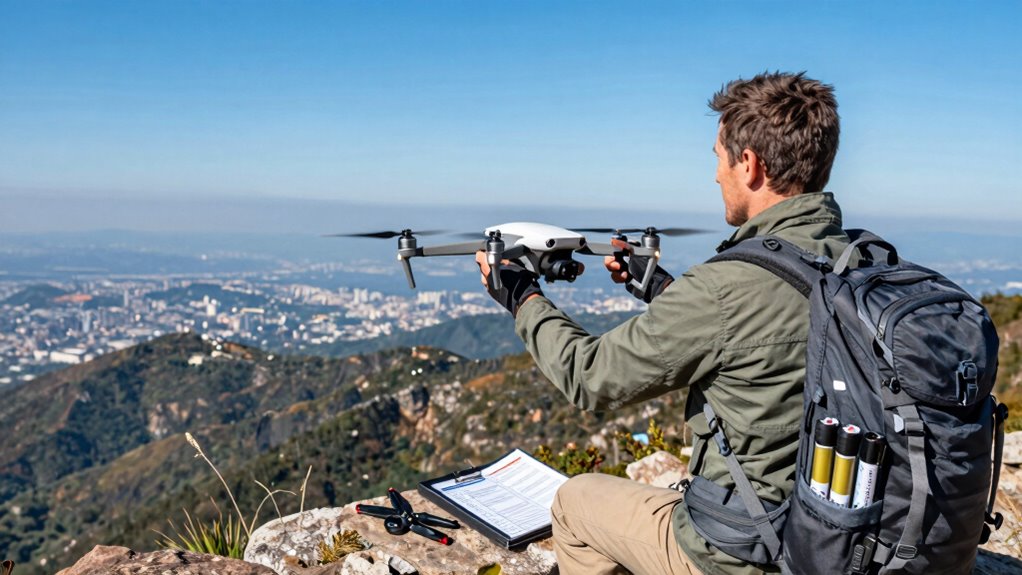
When traveling with your drone, packing the right gear is crucial to guarantee safety and compliance. Essential drone accessories like spare propellers, a carrying case, and a toolkit help you be prepared for any situation. Always bring extra batteries, but prioritize battery safety by storing them in fireproof containers and avoiding overcharging. Ensure your batteries are cool and fully charged before flights, and never leave them unattended. A high-quality GPS tracker or drone finder can save you time if your drone gets misplaced. Additionally, consider carrying a first aid kit and a power bank to keep your devices charged. Durable survival gear like a tactical backpack and weather-resistant shelter can be invaluable if you encounter challenging conditions. Proper gear not only enhances safety but also guarantees you’re ready for unforeseen issues, making your travel experience smoother and more secure. Being aware of regulations and restrictions in different regions helps prevent legal complications during your trip. Also, familiarize yourself with smart lock technology if you plan to secure your gear or accommodations during travel. Incorporating outdoor gear designed for rugged conditions can further ensure your equipment withstands various environments. Additionally, understanding security protocols related to drone operation can help you avoid potential cybersecurity threats during your travels.
What to Do If You’re Caught Flying Your Drone Abroad
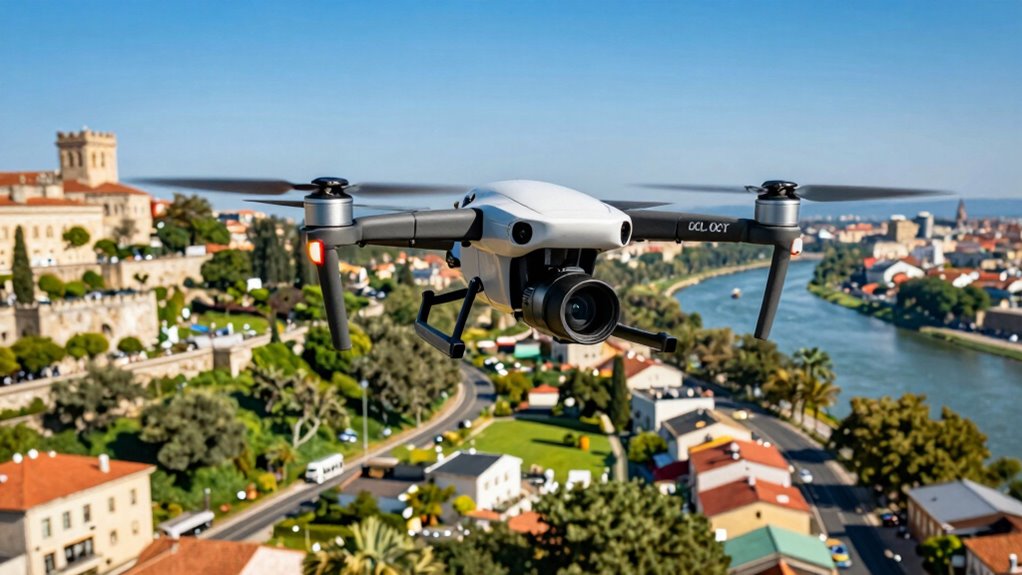
If you get caught flying your drone abroad, staying calm and understanding the local laws is your first priority. Don’t argue or attempt to hide your drone; instead, listen politely and gather information. Remember, having drone insurance and proper pilot licensing can sometimes help explain your situation and demonstrate responsibility. Additionally, being aware of Essential Oils for Respiratory Health may help you stay relaxed and breathe easier during stressful encounters.
- Know the local drone regulations and ask for specific violations.
- Present proof of drone insurance and pilot licensing if available.
- Cooperate fully with authorities and avoid making sudden movements.
- Consider consulting your country’s embassy for guidance.
Being aware of these steps can help mitigate penalties and ensure you handle the situation responsibly. Always research the rules beforehand to prevent such situations from happening.
Frequently Asked Questions
Can I Fly My Drone in National Parks Abroad?
You generally cannot fly your drone in national parks abroad due to international drone regulations and drone park restrictions. Many countries have strict rules that prohibit drone use in protected areas to preserve wildlife and ensure safety. Before you travel, check local laws and park-specific rules. Ignoring these regulations can lead to hefty fines or confiscation. Always research the destination’s drone policies to avoid legal issues and respect the environment.
Are There Age Restrictions for Drone Pilots Internationally?
Think you’re ready to rule the skies? Well, international regulations often set age restrictions for drone pilots, typically requiring you to be at least 16 or 18. They want responsible pilots—not minions with tiny thumbs. So, before you pack your drone and start your airborne adventures, check the specific country’s rules. Ignoring age restrictions could land you in trouble, and nobody wants to be that reckless newbie!
How Do I Register My Drone in Foreign Countries?
You need to research each country’s international regulations to register your drone properly. Usually, you’ll visit their official aviation authority websites to find specific drone registration procedures. Some countries require online registration, while others might ask you to complete paperwork upon arrival. Make sure to carry proof of registration and follow local rules. Staying informed helps you avoid fines or confiscation and guarantees safe, legal drone flying abroad.
What Insurance Coverage Do I Need for International Drone Flights?
Imagine your drone as a knight on a foreign battlefield—are you protected? For international flights, you need liability coverage to guard against damage or injuries, and equipment insurance to cover repairs or loss. Don’t overlook these essentials; they’re your shield in unfamiliar skies. confirm your policy meets local regulations, providing peace of mind and legal protection while you explore new horizons with confidence.
Are There Specific Customs Procedures for Bringing Drones Into Other Countries?
You need to check if customs declarations are required when bringing your drone into a country, as some places ask for specific forms or documentation. Additionally, be aware of import restrictions, such as bans or limits on drone types or batteries. Always research each country’s customs procedures beforehand, pack your drone carefully, and declare it if necessary. This way, you avoid delays or confiscation at the border.
Conclusion
Before you take off, remember that over 80% of countries have specific drone regulations. Ignoring these rules can lead to hefty fines or confiscation. So, always research local laws, identify no-fly zones, and fly responsibly. Staying informed guarantees your travel experience remains enjoyable and hassle-free. With proper preparation, you can capture amazing moments without risking legal trouble—making your adventures safer and more memorable.
NFL season / tailgating Picks
team gear
As an affiliate, we earn on qualifying purchases.