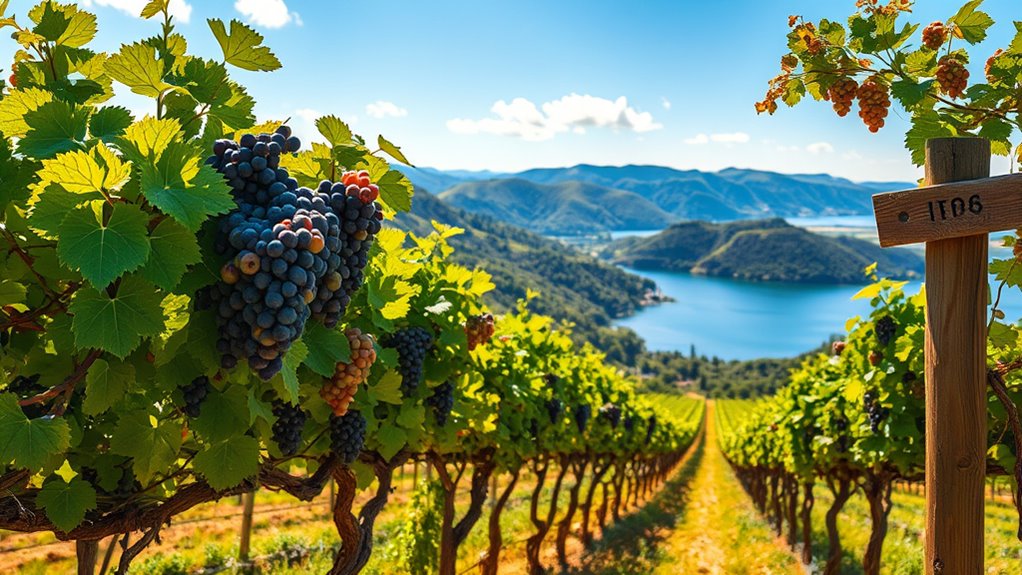

Begin a flavor-filled journey through Italy’s diverse wine regions, where indigenous grapes thrive under unique cultivation methods. From Sardinia’s vibrant wines to Northern Italy’s innovative blends and Southern hillsides’ organic practices, each route showcases local terroirs and traditions. Traveling along these paths lets you experience authentic wines with distinctive characters and aging potential. Keep exploring to discover how these ancient grapes and expert techniques shape Italy’s rich oenological landscape.
Key Takeaways
- Explore vineyards in Sardinia using low-impact, traditional practices that highlight the island’s vibrant indigenous grapes like Cannonau and Vermentino.
- Follow wine routes in Veneto and Friuli, combining modern techniques with historic cultivation to discover unique local varieties such as Corvina and Friulano.
- Travel through Southern Italy’s hill countries, visiting terraced vineyards cultivating native grapes like Aglianico and Negroamaro with age-worthy potential.
- Visit regional wineries focusing on sustainable practices that preserve indigenous grapes’ character and enhance wine aging and storage qualities.
- Combine cultural and wine tours across Italy’s diverse terroirs to experience the traditional and innovative cultivation methods shaping indigenous wines.

Italy’s diverse climate and rich history have nurtured a remarkable variety of indigenous grape varieties that you might not find elsewhere. As you explore Italy’s wine regions, you’ll discover that each area has developed unique techniques for grape cultivation, tailored to their specific terroirs. These techniques are crucial for guaranteeing proper wine preservation, allowing the distinct flavors of each indigenous grape to shine through and age gracefully. Understanding how local growers cultivate their grapes gives you insight into the character and longevity of their wines. Additionally, traditional grape cultivation often involves pruning and canopy management**** that optimize sunlight exposure and airflow, further supporting the aging potential of wines from these regions.
In regions like Sardinia, traditional grape cultivation techniques emphasize low-impact practices that respect the land’s natural balance. Vines are often trained using pergola systems or bush vines, which help protect grapes from the intense Mediterranean sun and maintain ideal ripening conditions. These methods contribute to better wine preservation by reducing the risk of mold and disease, especially in the humid coastal climates. When you taste wines from these areas, you’ll notice a freshness and vibrancy that come from meticulous care during grape growing and harvesting.
Moving to the northern regions, such as Veneto or Friuli, you’ll find that modern and traditional methods blend seamlessly. Winemakers here focus on precise canopy management and sustainable practices that maximize grape quality. Techniques like green harvesting—removing excess bunches—allow for concentrated flavors and better control over sugar levels, aiding in wine preservation. These practices ensure that the wines maintain their structure and aging potential, allowing you to enjoy their evolving complexity over time.
Northern Italy’s winemakers blend tradition and innovation for optimal grape quality and aging potential.
In the south, especially in Sicily and Calabria, the warm climate demands specific grape cultivation techniques. Growers often use terracing on hillsides to prevent soil erosion and manage water efficiently. They also employ techniques like minimal irrigation and organic farming to conserve the natural characteristics of indigenous grapes. These practices not only support the health of the vines but also help in producing wines with distinct profiles that age well, thanks to their balanced acidity and tannins.
Across Italy, the careful application of grape cultivation techniques directly influences how well wines will age and how they should be stored. Proper wine preservation depends on understanding the delicate balance of temperature, humidity, and light—factors that are heavily affected by the way grapes are cultivated and harvested. As you travel through Italy’s wine routes, paying attention to these practices will deepen your appreciation for each glass, revealing the craftsmanship behind Italy’s indigenous grapes and their enduring appeal.
As an affiliate, we earn on qualifying purchases.
Frequently Asked Questions
Which Italian Indigenous Grape Varieties Are Best for Beginners?
If you’re starting your wine journey, choose Italian indigenous grapes like Sangiovese, Dolcetto, or Barbera. These varieties are friendly for beginners because they produce approachable, flavorful wines. During grape tasting and beginner vineyard tours, you’ll appreciate their unique characteristics without feeling overwhelmed. These grapes are perfect for learning about Italian wine traditions and expanding your palate, making your first wine adventures both enjoyable and educational.
How Do Climate Changes Affect Indigenous Italian Grape Cultivation?
Imagine the vineyard as a delicate dance partner, swaying with changing winds. Climate impact shifts this rhythm, causing unpredictable weather patterns that challenge indigenous Italian grape cultivation. You’ll see vineyard adaptation become essential, with growers adjusting practices to preserve flavors and acidity. These changes test the resilience of native varieties, demanding innovation to maintain Italy’s rich wine heritage amid a warming world.
Are There Any Indigenous Grapes Suitable for Organic Farming?
You’ll find that many indigenous Italian grapes are suitable for organic farming, especially as they thrive in native soils and climates. Embracing sustainable viticulture, you can pursue organic certification processes that highlight their natural qualities. These grapes often require fewer chemical inputs, making them ideal for eco-friendly practices. By choosing indigenous varieties, you support the environment and preserve Italy’s rich wine heritage, creating authentic, sustainable wines that appeal to conscious consumers.
What Traditional Techniques Are Used in Processing Indigenous Italian Grapes?
Ever wonder how traditional techniques preserve the unique flavors of Italian indigenous grapes? You’ll find that winemakers often use traditional fermentation methods like natural, spontaneous fermentation, which allow the grapes’ native yeasts to develop complex profiles. Indigenous grape drying techniques, such as appassimento, concentrate sugars and flavors. These methods honor the heritage and authenticity of the grapes, creating wines with distinctive character and depth that modern processes can’t replicate.
How Can Travelers Participate in Indigenous Grape Harvest Festivals?
You can participate in indigenous grape harvest festivals by planning your trip around local event dates. Join in harvest festival traditions like grape picking, traditional dances, and folk music. These festivals often feature wine tasting experiences, allowing you to savor authentic regional wines. Engage with local winemakers, learn about their crafting methods, and immerse yourself in Italy’s rich winemaking culture, creating unforgettable memories of your oenophile journey.
Conclusion
Imagine discovering that Italy’s hidden indigenous grapes hold the secret to capturing the true essence of its landscapes. Some believe these unique varieties’ve been preserved by nature’s own hand, making each sip a journey through history and terroir. By exploring these native grapes, you connect deeply with Italy’s soul, feeling a timeless bond that transcends mere wine. So, trust the theory—your next wine adventure might just uncover an ancient tradition waiting to be savored.