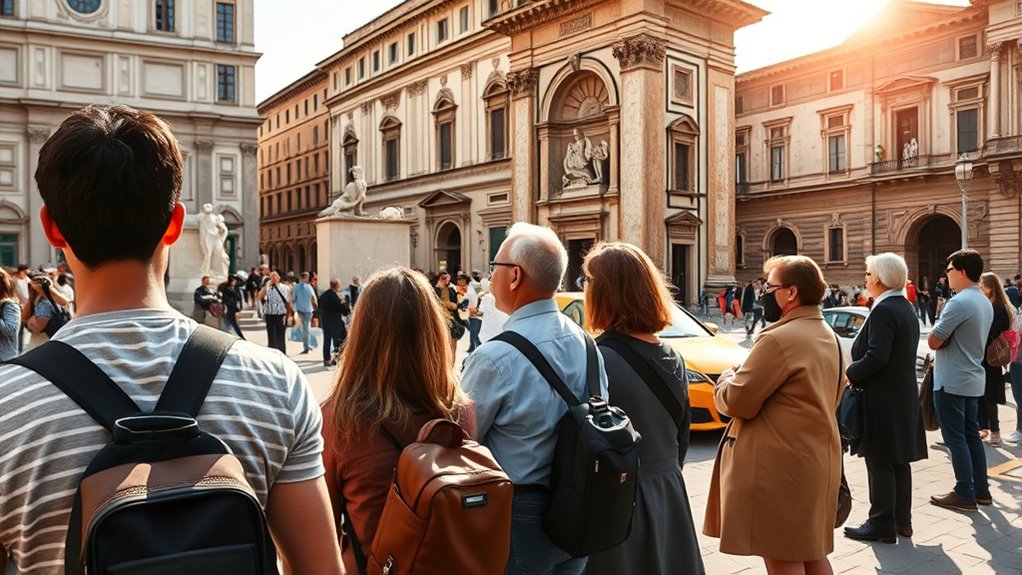

When photographing in Italian cities and museums, respect local customs and site rules to preserve Italy’s rich heritage. Avoid flash, tripods, and selfie sticks unless permitted, and be discreet to guarantee others can enjoy the environment. Always ask permission before photographing locals and follow signs or staff instructions. Be mindful around religious spaces and cultural sites, maintaining quiet and respectful behavior. Want to learn more about capturing Italy’s beauty responsibly? Keep exploring to discover additional tips.
Key Takeaways
- Respect site-specific photography restrictions, such as no flash or tripods, and follow posted signs and staff instructions.
- Be discreet and avoid disruptive movements to preserve the atmosphere and safety of artworks and visitors.
- Recognize cultural and religious sensitivities, asking permission before photographing locals or in sacred spaces.
- Use respectful techniques to create meaningful memories without blocking views or disturbing others.
- Always adhere to rules when capturing images or creating souvenirs to help preserve Italy’s cultural heritage.

When exploring Italy’s historic cities and world-renowned museums, it’s essential to be mindful of photography etiquette. Italy is rich in cultural heritage, and respecting local customs shows your appreciation for its history and artistry. Cultural sensitivities vary from place to place, so it’s important to pay attention to signs, instructions, or staff guidance regarding photography. Many sites take pride in preserving their cultural significance, and understanding their policies helps you avoid unintentional disrespect or inconvenience.
Photography restrictions are common in Italy’s museums and historic sites. You might find areas where flash photography is not allowed to protect delicate artworks or artifacts from light damage. Tripods and selfie sticks could be prohibited in certain locations to prevent congestion and ensure the safety of visitors and exhibits. Always look out for posted signs or ask staff if you’re unsure about what’s permitted. Respecting these restrictions isn’t just about following rules; it’s about safeguarding Italy’s treasures for future generations and maintaining the integrity of the site.
Respect photo restrictions to protect Italy’s treasures and preserve their integrity for future generations.
In some locations, photography might be permitted but only without the use of a flash or tripod. For example, in churches or chapels, flash photography can cause damage to paintings or frescoes, so you should switch off your camera’s flash and avoid disruptive movements. When photographing art or architecture, be discreet and avoid blocking the view of others. Remember, some sites may allow photography for personal use but prohibit commercial or professional shoots, which often require special permits. Always clarify these policies beforehand to avoid misunderstandings.
Additionally, be sensitive to the people around you. Many cultural sites are places of worship or reflection, and flash photography or loud clicking can be disrespectful. If you’re taking photos of locals or visitors, ask for permission when possible, especially if they’re the focus of your shot. Maintaining a respectful attitude not only aligns with local customs but also ensures a positive experience for everyone. Moreover, textile line techniques can be helpful if you want to create personalized souvenirs or clothing inspired by your travels, but always ensure your photography doesn’t infringe on the site’s rules or cultural sensitivities.
Frequently Asked Questions
Are There Specific Times When Photography Is More Acceptable?
You should consider timing considerations and cultural sensitivities when taking photos in Italy. Early mornings or late afternoons are best, as crowds are smaller and lighting is ideal. Always look for signage indicating restrictions, and respect local customs—some sites may prohibit photography altogether. By being mindful of these factors, you’ll find more acceptable moments to capture beautiful shots without causing offense or disruption.
Can I Use a Tripod Inside Historical Sites?
You can usually use a tripod inside historical sites, but you need to verify the specific regulations first. Many places have tripod regulations to prevent damage or disruption, especially in religious sites. Always look for signage or ask staff about rules regarding tripods. Respect religious site rules and avoid disturbing the atmosphere. If tripods are prohibited, consider handheld shots or seek permission beforehand to ensure you’re following proper etiquette.
Is Flash Photography Allowed in Religious Buildings?
In most religious buildings, flash photography is not permitted due to flash restrictions that can damage delicate artworks and disturb worshippers. You should always check for specific rules before taking photos, as religious photography often requires respecting the sacred space. To avoid issues, consider using natural light or a camera without flash. Being mindful of these restrictions helps preserve the integrity of the site and ensures a respectful visit.
Are There Restrictions on Photographing Local Residents?
You should approach photographing local residents with respect and awareness of privacy concerns. Always seek permission before capturing personal moments, as each individual’s comfort is like a delicate bloom needing care. Respectful photography acts as a bridge of trust, ensuring you honor their dignity. By being considerate, you preserve authentic connections and avoid intruding on their space, turning your images into respectful stories rather than mere pictures.
How Should I Handle Photography During Guided Tours?
During guided tours, always seek the tour guide’s cooperation before taking photos. Respectful photography means asking for permission, especially when people or delicate settings are involved. Follow the guide’s instructions to avoid disruptions, and be mindful of other tour participants. Keep your camera ready but discreet, and avoid blocking views or causing distractions. Your respectful approach guarantees a smooth experience for everyone and helps preserve the tour’s enjoyment.
Conclusion
Remember, respecting photography etiquette in Italy’s cities and museums is like weaving a beautiful tapestry—you want your images to enhance the scene, not unravel it. I once snapped a photo in a crowded museum, only to be gently reminded by a guard that some moments are meant to be experienced, not captured. By honoring local rules, you become part of the story, preserving Italy’s charm for everyone to enjoy. Happy travels and mindful shooting!