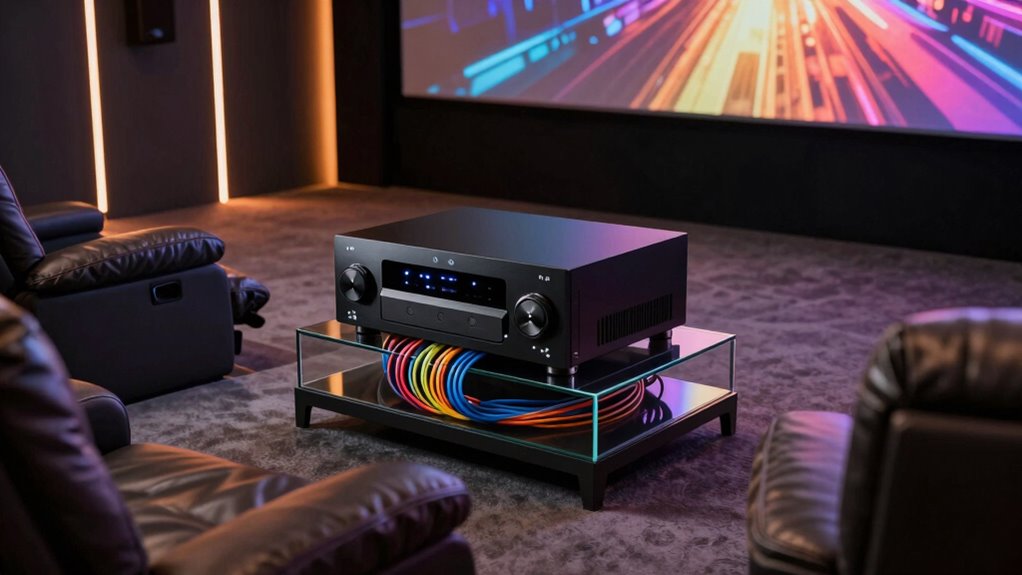

Choosing the right AV receiver for your home theater can significantly impact your entertainment experience. The best options balance power, features, and ease of use, but they vary widely in price and capabilities. The Onkyo TX-RZ50 stands out as the overall best for its robust 9.2 channels and THX certification, ensuring top audio quality. For those on a budget, the Sony STRDH590 offers solid 4K HDR support with Bluetooth at a lower price point, though it sacrifices some advanced features. Meanwhile, the Denon AVR-S970H provides excellent 8K support and smart home integrations for a premium experience. Tradeoffs typically involve balancing power versus simplicity or features versus cost. Continue reading for a detailed breakdown of each option and help narrowing down your perfect match.

Get home appliances delivered free — and shop member deals
- Fast, free delivery on millions of items
- Access to Prime Big Deal Days deals on October 6–7
- Prime Video, Amazon Music and more included
Complete the kit



Key Takeaways
- Top-tier models like the Onkyo RZ50 deliver power and certification but come at a higher price.
- Entry-level options like the Sony STRDH590 offer good basic features but lack advanced room calibration and future-proofing.
- 8K support is becoming standard, with models like Denon AVR-S970H and AVR-S670H leading in high-resolution compatibility.
- Smart home integration and streaming features vary significantly; choose a receiver that aligns with your ecosystem.
- Size and connectivity options, such as HDMI inputs and Bluetooth, are often overlooked but crucial for seamless setup.
| Onkyo TX-RZ50 9.2-Channel THX Certified AV Receiver |  | Best Overall for High-End Home Theater Enthusiasts | Channels: 9.2 | Certification: THX | Technology: Dirac Live Room Correction | VIEW ON AMAZON | See Our Full Breakdown |
| Sony STRDH590 5.2 Channel Surround Sound Home Theater Receiver: 4K HDR AV Receiver with Bluetooth,Black |  | Best for Budget-Conscious Beginners | Channels: 5.2 | Power: 725W | HDMI Support: 4K HDR pass-through | VIEW ON AMAZON | See Our Full Breakdown |
| Yamaha RX300A 5.2-Channel Home Theater AV Receiver with Dolby Atmos, 4K120/8K HDMI, Bluetooth Multipoint |  | Best for Clear, Immersive Dolby Atmos Sound | Channels: 5.2 | Power Output: 70W per channel | HDMI Support: 4K120/8K HDMI | VIEW ON AMAZON | See Our Full Breakdown |
| Yamaha RX-V4A 5.2-Channel AV Receiver with MusicCast |  | Best for Multi-Room Streaming and Versatile Connectivity | Connectivity Technology: Wi-Fi, Bluetooth, AirPlay 2 | Number of HDMI Ports: 5 | Output Power: 80 Watts | VIEW ON AMAZON | See Our Full Breakdown |
| Onkyo TX-NR6100 7.2 Channel THX Certified Network AV Receiver – Black |  | Best for Gaming and High-Performance Home Theater | Channels: 7.2 | Certification: THX | HDMI Support: 8K, 4K/120Hz, VRR, ALLM | VIEW ON AMAZON | See Our Full Breakdown |
| Denon AVR-S970H 8K Ultra HD 7.2 Channel AV Home Audio Receiver, Bluetooth, Alexa, HEOS, Black |  | Best Overall for Future-Proof Home Theater | Channel Count: 7.2 | Power Output: 90W per channel | Video Resolution Support: 8K/60Hz | VIEW ON AMAZON | See Our Full Breakdown |
| YAMAHA RX-V6A 7.2-Channel AV Receiver with MusicCast |  | Best for Beginners and Multi-Room Integration | HDMI with HDCP 2.3 and eARC: Yes | Number of Channels: 7.2 | Video Support: 8K/60Hz, HDR, Dolby Vision | VIEW ON AMAZON | See Our Full Breakdown |
| Denon AVR-S670H 5.2 Ch Home Theater Receiver, 8K UHD HDMI Receiver (75W x 5), Streaming via Built-in HEOS Bluetooth & Wi-Fi, Dolby TrueHD, Dolby Pro Logic II DTS HD Surround Sound System for TV |  | Best for Balanced Performance with 8K Support | Channels: 5.2 | Video Support: 8K/60Hz, HDR | Power: 75W per channel | VIEW ON AMAZON | See Our Full Breakdown |
| Pyle 9.1 Channel AV Receiver with HDMI 2.1, Bluetooth, and Subwoofer Output |  | Best for Immersive 9.1 Surround Sound in Large Rooms | Channels: 9.1 | Video Support: 8K/4K HDMI 2.1 | Connectivity: Bluetooth, HDMI, optical | VIEW ON AMAZON | See Our Full Breakdown |
More Details on Our Top Picks
Onkyo TX-RZ50 9.2-Channel THX Certified AV Receiver
The Onkyo TX-RZ50 stands out for its 9.2-channel configuration and THX certification, delivering immersive, premium sound quality that surpasses many 5.2 or 7.2 options like the Yamaha RX300A. Its integration of Dirac Live room correction ensures precise audio calibration, ideal for dedicated home theater setups. However, its setup can be complex for beginners, and detailed specifications are scarce, making it less suited for those seeking plug-and-play simplicity. Compared to the Denon AVR-S970H, the TX-RZ50 offers more channels and certification, but at the expense of easier setup. Tradeoffs include complexity versus top-tier audio. This model is perfect for audiophiles who want the best sound and room calibration tech, despite the learning curve.
Pros:- High-quality 9.2-channel audio output
- THX certification guarantees premium sound fidelity
- Includes advanced Dirac Live room correction technology
Cons:- Setup can be complex for beginners
- Limited detailed specifications may cause uncertainty for some buyers
Best for: Home theater aficionados who prioritize sound quality and advanced room correction technology.
Not ideal for: Casual users or those new to AV receivers who prefer straightforward installation and fewer configuration hassles.
- Channels:9.2
- Certification:THX
- Technology:Dirac Live Room Correction
Our verdict“This receiver is best suited for serious audiophiles seeking top-tier sound and calibration features, even if setup requires effort.”
Sony STRDH590 5.2 Channel Surround Sound Home Theater Receiver: 4K HDR AV Receiver with Bluetooth,Black
The Sony STRDH590 offers a simple 5.2 channel setup with 4K HDR pass-through and built-in Bluetooth, making it a solid choice for newcomers or casual viewers. Its Virtual Front Surround via S Force PRO provides decent surround sound without complex wiring, and it supports standard streaming apps. Compared to the Yamaha RX-V4A, it lacks advanced HDMI 2.1 features like 8K support, but its straightforward interface makes it easier for first-time users. Its power output of 725W is sufficient for small to medium rooms but may fall short for larger spaces or high-volume listening. Tradeoffs include fewer channels and features for affordability and ease of use. This is ideal for users who want decent sound with minimal setup effort and budget constraints.
Pros:- Affordable price point for entry-level setups
- Supports 4K HDR and Bluetooth streaming
- Virtual surround sound enhances experience with minimal wiring
Cons:- Limited to 5.2 channels, fewer expansion options
- Lacks HDMI 2.1 features for future-proofing
Best for: Beginners or budget shoppers looking for reliable surround sound without advanced features.
Not ideal for: Home theater enthusiasts requiring 7.2 channels or 8K video support, who will find this model limiting.
- Channels:5.2
- Power:725W
- HDMI Support:4K HDR pass-through
Our verdict“This receiver makes the most sense for beginners or those on a tight budget who want decent sound and simple setup.”
Yamaha RX300A 5.2-Channel Home Theater AV Receiver with Dolby Atmos, 4K120/8K HDMI, Bluetooth Multipoint
The Yamaha RX300A shines with its Dolby Atmos and DTS Virtual:X support, providing immersive 3D sound that elevates home theater experiences. Its support for 4K/8K HDMI features and automatic room calibration makes setup easier than many high-end models like the Onkyo TX-RZ50. However, with only 5.2 channels and a maximum of 70W per channel, it may not deliver enough power for large or high-volume rooms. Compared to the Yamaha RX-V4A, it emphasizes Atmos and audio clarity over multi-room features, which could be a limitation for those wanting multi-zone audio. The power output and channel count are tradeoffs for its superior surround sound quality. This receiver is well-suited for users wanting immersive sound without needing higher channel counts or extensive features.
Pros:- Supports Dolby Atmos and DTS Virtual:X for immersive sound
- Supports high-resolution 4K and 8K HDMI with advanced features
- Simple setup with automatic room calibration
Cons:- Limited to 5.2 channels, not suitable for larger setups
- Power output may be insufficient for big rooms or high-volume listening
Best for: Homeowners wanting immersive Dolby Atmos sound with straightforward setup in small to medium rooms.
Not ideal for: Large rooms or users seeking multi-zone audio or higher power output, who may find this underpowered.
- Channels:5.2
- Power Output:70W per channel
- HDMI Support:4K120/8K HDMI
Our verdict“Best suited for users focused on immersive Dolby Atmos sound in smaller spaces without needing extensive channels or power.”
Yamaha RX-V4A 5.2-Channel AV Receiver with MusicCast
The Yamaha RX-V4A is a versatile 5.2-channel receiver with MusicCast and HDMI 2.1 support, enabling seamless multi-room audio and high-quality video pass-through. Its support for Wi-Fi, AirPlay 2, and voice control makes it a flexible choice for tech-savvy users who want integrated streaming options. Compared with the Sony STRDH590, the RX-V4A offers more connectivity options and future-proof HDMI 2.1 features, but its complexity can be overwhelming for less experienced users. The 80W per channel power output is suitable for most small to medium rooms. The main tradeoff involves setup complexity versus multi-room capabilities. This pick makes the most sense for users who value multi-room streaming and modern connectivity over simplicity.
Pros:- Supports HDMI 2.1 and 8K video pass-through
- Includes MusicCast for multi-room audio streaming
- Supports voice control via Alexa, Google Assistant, and Siri
Cons:- Setup can be complex for beginners
- No built-in Bluetooth audio input, requiring pairing for wireless audio
Best for: Tech-savvy homeowners seeking multi-room audio and the latest HDMI features for versatile entertainment.
Not ideal for: Casual users or those preferring straightforward, plug-and-play AV receivers without extensive features.
- Connectivity Technology:Wi-Fi, Bluetooth, AirPlay 2
- Number of HDMI Ports:5
- Output Power:80 Watts
Our verdict“Ideal for users who need multi-room streaming and modern HDMI support, accepting a more involved setup process.”
Onkyo TX-NR6100 7.2 Channel THX Certified Network AV Receiver – Black
The Onkyo TX-NR6100 offers a robust 7.2-channel configuration with THX certification and 8K HDMI support, making it an excellent choice for gamers and serious home theater users. Features like 4K/120Hz HDR pass-through, VRR, and ALLM ensure smooth gameplay and high-quality video. Its 100W per channel power output supports larger rooms and louder volumes, outperforming models like the Yamaha RX300A in raw power. Compared to the Denon AVR-S970H, the TX-NR6100 emphasizes gaming enhancements and certification, but it may be more complex to set up for casual users. The main tradeoff is the higher complexity versus professional-grade performance. This receiver is perfect for those wanting top gaming and cinematic experience in larger spaces.
Pros:- 7.2 channels with THX certification for premium sound
- Supports 8K HDMI with 4K/120Hz, VRR, and ALLM for gamers
- High 100W per channel power output suitable for large rooms
Cons:- Setup complexity may be daunting for non-technical users
- Higher price point reflecting advanced features
Best for: Gamer-focused users or home theater enthusiasts requiring high power and 8K support.
Not ideal for: Casual viewers or users preferring simpler, less feature-rich models, who may find setup and features overwhelming.
- Channels:7.2
- Certification:THX
- HDMI Support:8K, 4K/120Hz, VRR, ALLM
Our verdict“Best suited for gamers and large-room users demanding high performance and advanced HDMI features, despite more complex setup.”
Denon AVR-S970H 8K Ultra HD 7.2 Channel AV Home Audio Receiver, Bluetooth, Alexa, HEOS, Black
This Denon AVR-S970H stands out for supporting 8K/60Hz pass-through and Dolby Atmos, offering a highly immersive audio and visual experience. Compared with the Yamaha RX-V6A, it provides more channels and higher power output, making it better suited for larger setups, though its complexity can challenge beginners. Its multi-room HEOS streaming enhances versatility, but the setup process may be daunting for those unfamiliar with AV receivers. The 8 HDMI ports (6 in, 2 out) and 90W per channel ensure robust performance, while the support for multiple streaming services adds convenience. The premium price reflects its advanced features, which may be overkill for basic home theaters. Overall, this model is ideal for serious home theater enthusiasts seeking future-proof capability.
Pros:- Supports 8K/60Hz pass-through for high-resolution content
- Immersive Dolby Atmos surround sound
- Multi-room audio streaming with HEOS
Cons:- Setup can be complex and intimidating for beginners
- Relatively high power consumption and premium price
Best for: Homeowners wanting a high-end, scalable system with 8K support and immersive sound.
Not ideal for: Casual users or those with small spaces who prefer simpler, less expensive setups.
- Channel Count:7.2
- Power Output:90W per channel
- Video Resolution Support:8K/60Hz
- HDMI Ports:8 (6 In/2 Out)
- Inputs:USB, Analog, Digital, Phono
- Wireless Connectivity:Bluetooth, Wi-Fi
Our verdict“This receiver makes the most sense for those planning a premium, future-ready home theater setup with advanced features.”
YAMAHA RX-V6A 7.2-Channel AV Receiver with MusicCast
The Yamaha RX-V6A offers a compelling mix of 7.2 channels and advanced HDMI 2.1 support, including eARC and 8K/60Hz pass-through, making it suitable for users new to home theater or those with multi-room ambitions. Unlike the Denon AVR-S970H, it simplifies setup with Yamaha’s intuitive interface and MusicCast multi-room streaming. Its 100W per channel ensures ample power for most environments, though it may fall short in larger, more demanding spaces. The inclusion of voice control options with Alexa and Google Assistant makes everyday operation easier, but full control might still require a compatible app or remote. The broad compatibility with streaming services and high-quality audio formats makes it a versatile choice for those looking to upgrade gradually.
Pros:- Supports HDMI 2.1 with eARC and 8K/60Hz pass-through
- MusicCast multi-room streaming
- Voice control compatibility with Alexa and Google Assistant
Cons:- Limited to 100W per channel, less suited for large rooms
- Some advanced features may require a learning curve
Best for: Entry-level home theater enthusiasts seeking multi-room flexibility and straightforward setup.
Not ideal for: Large, demanding rooms or those requiring the highest possible power output and advanced audio features.
- HDMI with HDCP 2.3 and eARC:Yes
- Number of Channels:7.2
- Video Support:8K/60Hz, HDR, Dolby Vision
- Wireless Connectivity:Wi-Fi, Bluetooth, AirPlay 2
- Supports:Spotify Connect, Pandora, TIDAL
- Power Output:100W per channel
Our verdict“Ideal for beginners who want straightforward installation and multi-room streaming without sacrificing high-quality video support.”
Denon AVR-S670H 5.2 Ch Home Theater Receiver, 8K UHD HDMI Receiver (75W x 5), Streaming via Built-in HEOS Bluetooth & Wi-Fi, Dolby TrueHD, Dolby Pro Logic II DTS HD Surround Sound System for TV
The Denon AVR-S670H is a solid choice for those wanting 8K support and Dolby TrueHD audio, delivering 75W per channel across 5.2 channels. Compared to the Yamaha RX-V6A, it offers a slightly more traditional setup with a focus on high-quality surround sound, making it ideal for medium-sized rooms. Its built-in HEOS allows multi-room streaming, but it doesn’t have as many channels or as high a power output, which could limit its impact in larger spaces. The user-friendly interface and support for latest video formats make it accessible for casual users upgrading from basic systems. However, its fewer channels and lower power may not satisfy users with large, demanding home theaters.
Pros:- Supports 8K/60Hz and HDR formats
- Built-in HEOS for multi-room streaming
- Dolby TrueHD and DTS HD support for quality audio
Cons:- Lower power output at 75W per channel
- Limited to 5.2 channels, less expansion potential
Best for: Mid-sized households seeking a reliable, multi-format receiver with good audio quality without complex features.
Not ideal for: Large rooms or users needing extensive channels or maximum power for demanding setups.
- Channels:5.2
- Video Support:8K/60Hz, HDR
- Power:75W per channel
- Connectivity:Bluetooth, Wi-Fi, HEOS
- Supports:Dolby TrueHD, DTS HD
- HDMI Inputs:4
Our verdict“Great for balanced performance in medium-sized rooms, especially where ease of use and multi-room streaming are priorities.”
Pyle 9.1 Channel AV Receiver with HDMI 2.1, Bluetooth, and Subwoofer Output
This Pyle 9.1 channel receiver emphasizes immersive sound with its 9.1 configuration and deep bass, making it ideal for large home theaters. Its support for 8K HDMI 2.1 pass-through aligns with the latest video standards, similar to the Denon AVR-S970H but with a broader channel array. Its Bluetooth streaming and multiple input options add convenience, but it lacks mention of voice control features, which could be a drawback for some users. Its complexity might pose challenges for beginners, especially when managing numerous inputs and calibration settings. Nevertheless, for those prioritizing surround sound depth and high-resolution video, this model offers a compelling package, especially in larger spaces.
Pros:- Immersive 9.1 surround sound with deep bass
- Supports 8K HDMI 2.1 for high-quality pass-through
- Multiple input options including Bluetooth
Cons:- No clear mention of voice control features
- Setup complexity may be high for beginners
Best for: Large home theaters or users wanting a true 9.1 surround experience with high video quality support.
Not ideal for: Small rooms or beginners unfamiliar with multi-channel setups who prefer simple plug-and-play options.
- Channels:9.1
- Video Support:8K/4K HDMI 2.1
- Connectivity:Bluetooth, HDMI, optical
- Built-in DSP:Yes
- Supports:8K HDMI pass-through
- Subwoofer Output:Yes
Our verdict“Perfect for large spaces needing expansive surround sound paired with the latest HDMI standards, provided users are comfortable with complex setups.”
How We Picked
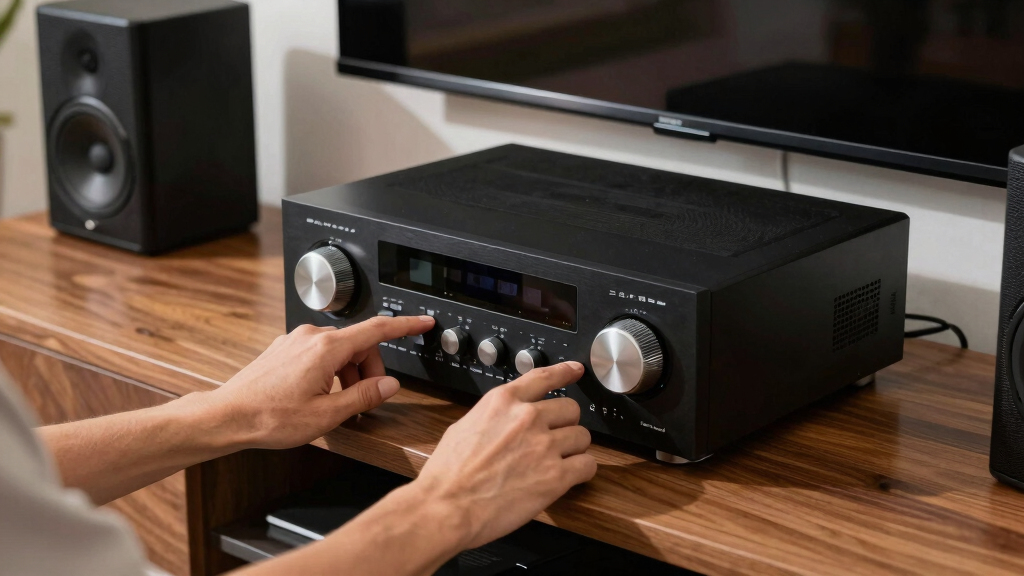
These AV receivers were selected based on performance, build quality, feature set, usability, and value. Priority was given to models that offer reliable audio and video processing, compatibility with current and future technologies like 8K and HDMI 2.1, and intuitive user interfaces. We also considered customer reviews and industry certifications to gauge durability and support. The ranking reflects a balance between premium features and affordability, making sure each pick serves a distinct segment of home theater enthusiasts. Overall, the list aims to cover different budgets and use cases, helping buyers match their needs with the right product.Factors to Consider When Choosing Av Receiver For Home Theater
When choosing an AV receiver for home theater, several factors influence how well it will serve your setup. Beyond basic specs, understanding what each feature translates to in real-world use can prevent costly mistakes. Consider your room size, existing devices, future upgrade plans, and how much you want to spend. A well-chosen receiver enhances sound clarity, supports your preferred formats, and integrates smoothly into your smart home ecosystem. Here are key factors to weigh before making your decision.Power and Channel Count
Power output and the number of channels determine how loud and immersive your system can get. Larger rooms benefit from higher wattage and more channels, like 9.2 or 11.2 configurations, which support multiple speakers and complex surround setups. However, excess power isn’t always necessary for smaller spaces; overpaying for raw wattage can be wasted if your room is modest. Balance your room size with the receiver’s capacity to get clear, room-filling sound without overspending.
Video Pass-Through and HDMI Support
Modern home theaters demand support for 4K, 8K, HDR, and HDMI 2.1 standards. While many affordable models now include these, verify the number of HDMI inputs and outputs to accommodate all your devices—game consoles, Blu-ray players, streaming boxes, etc. A receiver with HDMI 2.1 ensures compatibility with the latest gaming and streaming tech, future-proofing your setup. Skipping this can mean needing an upgrade sooner, which adds cost down the line.
Room Calibration and Ease of Use
Automatic room calibration features can significantly improve sound quality with minimal effort, especially in irregularly shaped rooms. Look for models with built-in microphones and calibration software that adjust speaker levels and delays. Additionally, intuitive interfaces, mobile app controls, and clear labeling save time and frustration during setup. A receiver that’s difficult to operate may discourage regular use or lead to subpar sound performance.
Smart Features and Ecosystem Compatibility
Many buyers now prioritize smart home compatibility, including Alexa, Google Assistant, or Apple HomeKit. The right receiver can integrate seamlessly with your existing system, enabling voice control and automation. However, not all smart features are equally reliable or easy to use—look for well-supported platforms and updates. Overlooking this can leave you with a device that’s incompatible with your preferred smart ecosystem, limiting convenience.
Price and Future Expandability
While it’s tempting to focus on the lowest price, investing a bit more often pays off in features, build quality, and longevity. Consider your long-term plans: if you anticipate adding more speakers, a receiver with extra channels and robust power supply is wise. Conversely, if you’re building a basic setup now, a more affordable model might suffice, but keep in mind potential upgrade costs down the line. Balancing initial budget against future needs prevents frustration and repeated purchases.
Frequently Asked Questions
Do I need an 8K-compatible AV receiver if I only have 4K devices?
Not necessarily. An 8K-compatible receiver provides future-proofing as 8K content becomes more common, but if your current devices are all 4K and you don’t plan to upgrade soon, a 4K model can serve you well. Keep in mind that many 8K receivers are backward compatible with 4K and HDR content, so choosing one now can save a future upgrade. It’s a balance between immediate needs and potential future-proofing investments.Is THX certification worth paying extra for?
THX certification signifies that a receiver meets certain standards for sound quality, calibration, and performance. If you prioritize cinematic realism and precise audio reproduction, a THX-certified model like the Onkyo TX-RZ50 can be a worthwhile investment. However, many non-certified models also deliver excellent sound, often at a lower cost. Consider your audiophile needs and budget before deciding if the certification justifies the premium.How important is smart home integration in an AV receiver?
Smart home features add convenience, allowing voice control and automation across your devices. If you already have a smart ecosystem like Alexa or Google Assistant, choosing a compatible receiver simplifies control and enhances your setup. However, not all models offer seamless integration, and some may require additional apps or setup steps. If smart features aren’t a priority, focusing on audio quality and connectivity may be more beneficial.Should I prioritize more HDMI inputs or higher audio formats?
It depends on your device lineup. If you have multiple gaming consoles, streaming boxes, and players, more HDMI inputs are essential. Conversely, if you want the best possible sound quality and support for formats like Dolby Atmos or DTS:X, prioritize models with advanced audio processing and support for these formats. A balanced approach considers both, ensuring you don’t need to upgrade soon due to limited inputs or outdated audio support.Is it better to buy a more powerful receiver than I need?
Generally, more power isn’t always better if your room is small or your speakers are efficient. Excess power can lead to distortion at high volumes or unnecessary energy consumption. It’s smarter to select a receiver that provides enough headroom for your space and speaker setup. Overpaying for excessive wattage often results in wasted investment, while underspending can compromise sound quality. Aim for a model that comfortably supports your room size and usage patterns.Conclusion
For those seeking the best overall experience, the Onkyo TX-RZ50 offers powerful performance and premium features suitable for serious home theater setups. Buyers on a tighter budget should consider the Sony STRDH590, which covers essential needs without breaking the bank. If you want a future-proof, high-end system, the Denon AVR-S970H provides 8K support and smart integrations for a premium price. Beginners or those upgrading an existing setup will find models like the Yamaha RX-V4A easy to use and set up, while audiophiles or large rooms may prefer the power and expandability of higher-channel models like the Onkyo RZ50. Matching your specific needs with these options will help you build a satisfying home theater system.Fall yard work Picks
leaf blowers
As an affiliate, we earn on qualifying purchases.