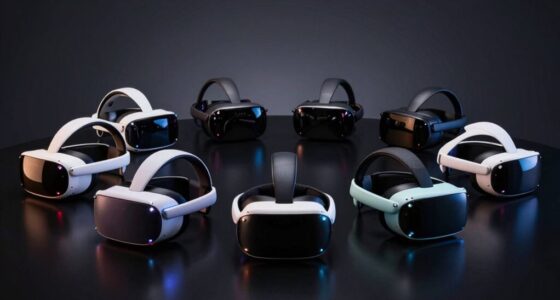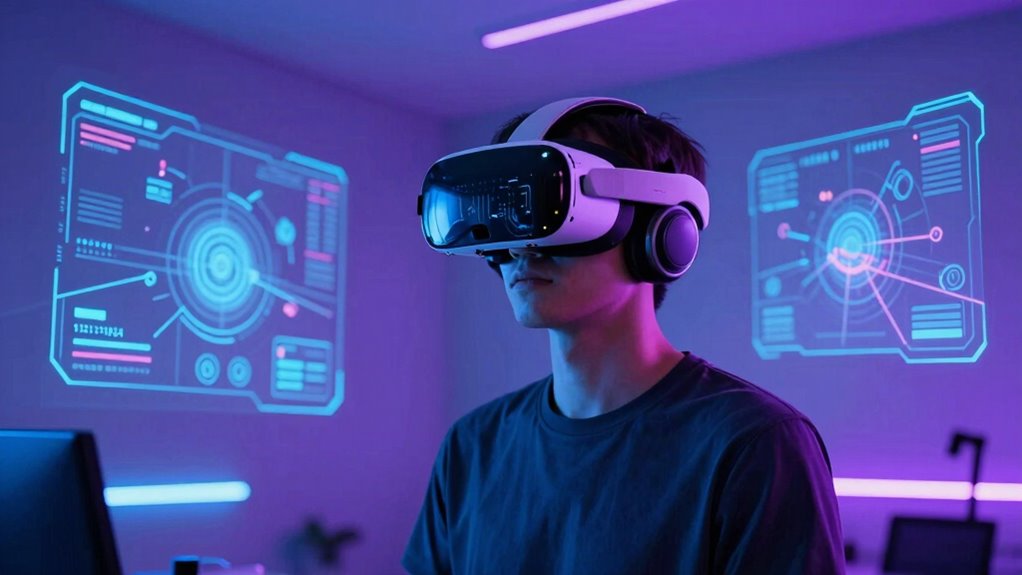

Choosing a VR headset optimized for standing play in 2026 means balancing immersion, comfort, and setup flexibility. The Oculus Rift S stands out for its room-scale tracking and high-resolution display, making it ideal for immersive standing experiences on PC. The PlayStation VR Bundle offers a straightforward plug-and-play option for PS4 owners who want an accessible setup, though it’s limited to that console and has a somewhat older design. Meanwhile, the Meta Quest 2 provides incredible portability and a broad library, perfect for those who want to move freely in their space without wires. Each has distinct tradeoffs in ease of use, compatibility, and tracking capabilities, so understanding your priorities will help narrow down the best fit.

Get home appliances delivered free — and shop member deals
- Fast, free delivery on millions of items
- Access to Prime Big Deal Days deals on October 6–7
- Prime Video, Amazon Music and more included
Complete the kit

Key Takeaways
- The Oculus Rift S offers superior room-scale tracking and high-resolution visuals for immersive standing play on PC.
- PlayStation VR provides an easy, console-based option but is limited by its older design and discontinued status.
- Meta Quest 2 excels in portability and wireless freedom, though it offers less precise tracking compared to PC-based systems.
- System requirements and setup complexity vary significantly, influencing suitability for different users.
- Choosing the right headset depends heavily on your existing hardware and preferred gaming ecosystem.
| Oculus Rift S PC-Powered VR Gaming Headset |  | Best Overall for Immersive Standing Play | Display Resolution: 2560 x 1440 | Display Type: LCD | Field Of View: 110 degrees | VIEW ON AMAZON | See Our Full Breakdown |
| PlayStation VR Headset + Camera Bundle (Renewed) | 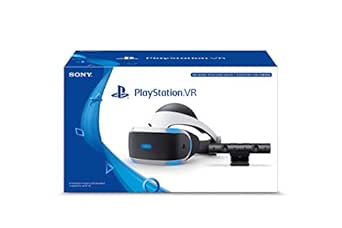 | Best Value for PlayStation Fans | Compatibility: PlayStation 4 | Includes: VR Headset, Camera | Design: Lightweight | VIEW ON AMAZON | See Our Full Breakdown |
| Meta Quest 2 — Advanced All-In-One Virtual Reality Headset — 128 GB |  | Best for Wireless Freedom and Versatility | Storage: 128 GB | Wireless: Yes | Built-in Battery: Yes | VIEW ON AMAZON | See Our Full Breakdown |
More Details on Our Top Picks
Oculus Rift S PC-Powered VR Gaming Headset
The Oculus Rift S is a compelling choice for those seeking room-scale VR with high visual fidelity. Its improved optics and Oculus Insight tracking enable a more natural standing experience without external sensors, making it easier to set up and move around. Compared to the other options, it delivers superior positional tracking and a broader library of compatible VR titles. However, it requires a capable PC and a Facebook account, which could be hurdles for some users. The Rift S is best suited for dedicated gamers who want the most immersive standing VR experience on PC, but it isn’t ideal for those who prefer console gaming or need a wireless setup.
Pros:- High-resolution display with vivid colors
- Room-scale tracking without external sensors
- Comfortable ergonomic design with adjustable fit
Cons:- Requires a powerful PC with high system requirements
- Must log in with Facebook, raising privacy concerns
- Limited to PC VR library, excluding console users
Best for: Dedicated PC gamers who prioritize immersive tracking and high-quality visuals
Not ideal for: Casual users or those without a powerful PC, and gamers preferring wireless or console-based VR
- Display Resolution:2560 x 1440
- Display Type:LCD
- Field Of View:110 degrees
- Platform:Meta
- Connectivity Technology:USB 3.0
- Sensor Technology:Proximity, Magnetometer, Gyroscope, Accelerometer
Our verdict“The Oculus Rift S offers excellent tracking and visuals for PC-based standing VR but demands a strong system and setup familiarity.”
PlayStation VR Headset + Camera Bundle (Renewed)
The PlayStation VR Bundle is an appealing pick for PlayStation 4 owners seeking an affordable, straightforward VR experience suitable for standing play. Its lightweight design and plug-and-play setup make it accessible, especially for those new to VR. While it provides a decent library of titles and good tracking within the PS4 ecosystem, it’s an older device that has been discontinued, and the renewal may carry some risks regarding hardware longevity. This headset is best for casual players or families already invested in PlayStation, but it doesn’t match the tracking precision or comfort of newer PC-based systems.
Pros:- Easy setup with plug-and-play compatibility
- Lightweight and comfortable design
- Access to a growing library of VR titles
Cons:- Discontinued and refurbished models may have reliability issues
- Limited to PlayStation 4, not compatible with PC or PC VR games
- Older technology with less advanced tracking
Best for: Casual gamers with a PS4 looking for an affordable and easy VR option
Not ideal for: Serious VR enthusiasts or those seeking the most precise room-scale tracking
- Compatibility:PlayStation 4
- Includes:VR Headset, Camera
- Design:Lightweight
Our verdict“The PlayStation VR bundle is a budget-friendly choice for PS4 owners, but it’s less suited for demanding standing VR experiences or long-term use.”
Meta Quest 2 — Advanced All-In-One Virtual Reality Headset — 128 GB
The Meta Quest 2 excels in portability and ease of setup, making it a top pick for standing play without cords tethering you to a PC or console. Its wireless design and built-in battery allow for movement across a room with minimal fuss, and its library of over 500 titles covers a broad spectrum of genres and activities. While its tracking isn’t quite as precise as PC-based systems, it’s more than sufficient for most standing experiences, especially in casual or social settings. The main tradeoff is limited storage for some users and the need for space to play safely, but it’s a flexible, all-in-one solution for those who value mobility and simplicity.
Pros:- Wireless and portable, no external sensors needed
- Large library of over 500 titles
- Intuitive hand tracking and immersive 3D audio
Cons:- Limited storage capacity for some users
- Tracking less precise than PC-based systems
- Requires ample space for safe standing gameplay
Best for: Users wanting a portable, wireless VR experience for standing and casual play
Not ideal for: Hardcore VR users requiring the most precise tracking or extensive content libraries
- Storage:128 GB
- Wireless:Yes
- Built-in Battery:Yes
- Number of Titles:Over 500
Our verdict“The Meta Quest 2 balances ease of use and mobility, making it ideal for casual standing play, though with some compromises on tracking precision.”

How We Picked
Our selection process focused on headsets that are well-suited for standing play, emphasizing tracking accuracy, ease of setup, comfort, and overall immersion. We prioritized devices with reliable sensors capable of supporting room-scale movement, and considered compatibility with various platforms. We also looked at user accessibility—whether the setup is straightforward or requires technical know-how—and balanced these factors against tradeoffs like system requirements, cost, and content library size. Our goal was to identify options that maximize standing VR experiences while catering to different types of users, from casual gamers to enthusiasts.
Factors to Consider When Choosing Vr Headset For Standing Play
When selecting a VR headset for standing play, your main considerations should include tracking accuracy, ease of setup, and comfort. The ideal device needs to support natural movement without restrictions, which means reliable sensors and room-scale capabilities are essential. Compatibility with your existing hardware—whether PC, PlayStation, or standalone—is also important, as is the overall experience quality. Budget and space constraints can further influence your choice, so understanding what each headset offers relative to your needs will help you make an informed decision.Tracking and Room-Scale Support
For standing play, the most critical factor is how well the headset tracks your movement across space. PC-based headsets like the Oculus Rift S generally provide superior room-scale tracking through multiple sensors, enabling more natural standing experiences. The Quest 2 uses inside-out tracking with cameras on the headset, offering decent accuracy but less precision than external sensor setups. PlayStation VR relies on a single camera and accelerometers, which can limit tracking fidelity, especially during extensive standing movement. Consider your space and desired fidelity when evaluating these options.
Ease of Setup and Compatibility
Setup complexity varies greatly. The Rift S and Quest 2 are straightforward, with the Rift S requiring connection to a capable PC and the Quest 2 being entirely wireless and standalone. PlayStation VR’s plug-and-play nature makes it accessible for PS4 owners but limits flexibility. If you want a hassle-free experience with minimal wiring, the Quest 2 is attractive, but if you already own a gaming PC or console, your choice should reflect that ecosystem. Also, consider whether your hardware can handle the system requirements of PC VR headsets.
Comfort and Fit
Comfort is vital for extended standing sessions. The Rift S and Quest 2 are both designed with adjustable straps and balanced weight distribution, though the Rift S’s heavier build might cause fatigue over time. PlayStation VR’s lightweight design can be more comfortable for casual use, but its limited adjustment options may not suit all head sizes. Trying on a headset or reading user reviews about fit can prevent discomfort during longer sessions.
Content Library and Ecosystem
The range of available games and experiences varies. PC VR systems like Rift S offer the largest libraries with high-fidelity titles, ideal for serious gaming. Quest 2’s library is vast and growing, including many casual and social experiences, with some requiring a link to a PC for more advanced titles. PlayStation VR has a more curated selection, focusing on titles available on PS4, which may limit options but offers a familiar environment for PlayStation users. Match your preferred content ecosystem to your gaming habits.
Frequently Asked Questions
Can I use these headsets for standing play without a dedicated space?
Yes, all three options can be used without a dedicated room, but the experience varies. The Quest 2’s wireless design makes it easiest to move freely within the available space, making it ideal for flexible standing play. The Rift S requires a clear space for room-scale tracking, which might be challenging if your room is small. PlayStation VR relies on camera placement and can be used in more constrained spaces, but its tracking may be less precise during extensive movement. The key is to have enough room to move safely without hitting objects.
Which headset offers the best tracking for standing experiences?
The Oculus Rift S provides the most accurate and reliable room-scale tracking among these options, thanks to its sensors and Oculus Insight technology. The Quest 2 offers decent tracking but is less precise, especially in larger or cluttered rooms. PlayStation VR’s single camera system limits its tracking fidelity, making it less suitable for very active standing play. For maximum accuracy, the Rift S is generally the best choice for immersive, active standing VR.
Are wired headsets better for standing VR than wireless ones?
Wired headsets like the Rift S typically provide more precise tracking and lower latency, which benefits active standing experiences. However, wires can restrict movement and may cause inconvenience during gameplay. Wireless options like the Quest 2 offer greater freedom of movement, making them more comfortable for casual standing play, but at the expense of some tracking accuracy. Your choice depends on whether you prioritize mobility or tracking precision.
Is a high-end PC necessary for these VR headsets?
The Rift S relies on a powerful PC with specific hardware requirements to deliver smooth, immersive experiences. The Quest 2 is standalone but can also connect to a PC for more demanding titles, requiring a compatible system. PlayStation VR does not need a PC but requires a PlayStation 4 console. If you want the best possible experience with the Rift S, ensure your PC meets or exceeds the recommended specs, otherwise, the Quest 2 or PSVR might be better suited for casual or less demanding use.
What safety considerations should I keep in mind for standing VR?
Safety is essential when engaging in standing VR. Make sure you have enough clear space around you to move freely without hitting furniture or objects. Using boundary setup features within the headset can help define safe zones. It’s also wise to wear comfortable footwear and consider a soft surface or mats to prevent slipping. Taking regular breaks and ensuring good lighting will help maintain awareness of your environment, reducing the risk of accidents during active VR sessions.
Conclusion
For users who prioritize immersive, room-scale tracking and have a powerful PC, the Oculus Rift S offers the best experience for standing play. Those who already own a PlayStation 4 and prefer a straightforward setup should consider the PlayStation VR, though it’s less suited for intense movement. Finally, for anyone valuing portability and wireless freedom, the Meta Quest 2 delivers a versatile, easy-to-use solution that supports a broad range of casual standing activities. Your ideal choice hinges on your existing hardware, desired experience quality, and how much mobility you want during play.
Cold & flu season Picks
humidifiers
As an affiliate, we earn on qualifying purchases.