Setting up a kegerator at home requires managing CO2 levels carefully to keep your beer properly carbonated and fresh. Regular cleaning of lines and taps prevents buildup and off-flavors, but many beginners overlook this important step. Proper maintenance and correct pressure adjustments prevent issues like flat beer and leaks. If you want to avoid common pitfalls and make the most of your setup, there’s a lot more to explore that can help you serve perfect draft beer every time.
Key Takeaways
- Regularly clean beer lines and faucets every 2-4 weeks to prevent buildup and off-flavors.
- Properly set CO2 pressure (usually 10-12 PSI) to ensure steady carbonation and prevent foaming.
- Keep the kegerator at a consistent 38°F (3°C) and avoid light exposure to maintain beer freshness.
- Check for leaks and secure all fittings to prevent CO2 loss and ensure proper pressure.
- Many beginners overlook the importance of sanitizing all contact surfaces, risking contamination and spoilage.
As an affiliate, we earn on qualifying purchases.
What Is a Kegerator and Why Do Home Brewers Love It?
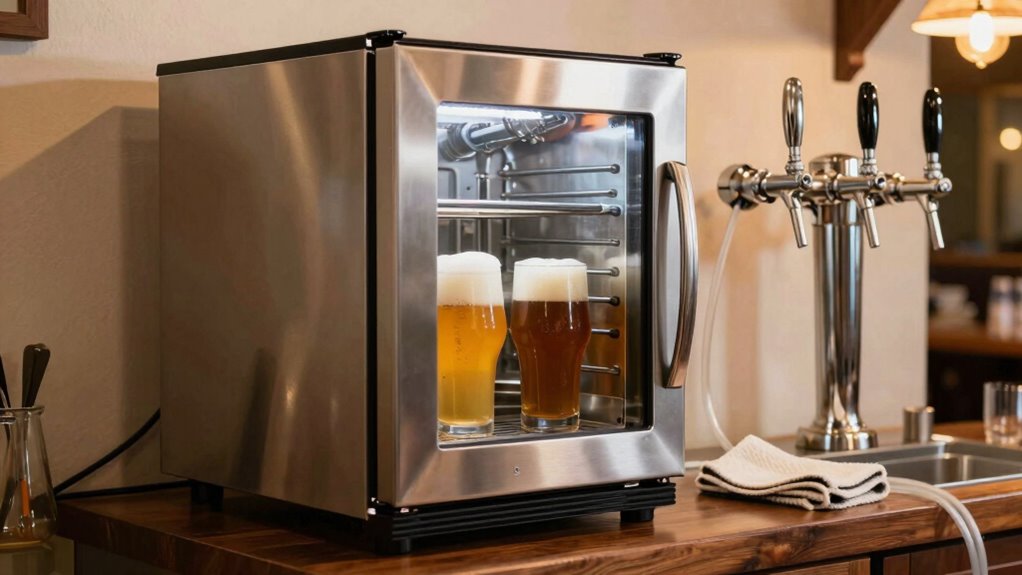
A kegerator is a specialized refrigerator designed to store and serve draft beer directly from a keg. It provides ideal beer storage, keeping your brew fresh and carbonated for longer periods. Home brewers love it because it allows easy access to their favorite beers without the hassle of bottles or cans. Plus, it simplifies tap maintenance, ensuring your tap lines stay clean and free of stale flavors. With a kegerator, you can enjoy fresh, draft beer anytime, right at home. It’s perfect for hosting gatherings or enjoying a quiet evening. The convenience of having a dedicated space for beer storage and a well-maintained tap line makes your brewing experience more enjoyable and efficient. Additionally, CO2 systems help maintain proper carbonation levels, ensuring consistent quality in every pour. Modern energy-efficient appliances like kegerators also contribute to sustainable home brewing by reducing energy consumption and waste. Proper CO2 management is essential for maintaining ideal carbonation and avoiding flat or overly fizzy beer, enhancing your overall brewing experience.
How to Set Up Your Kegerator for Fresh Draft Beer
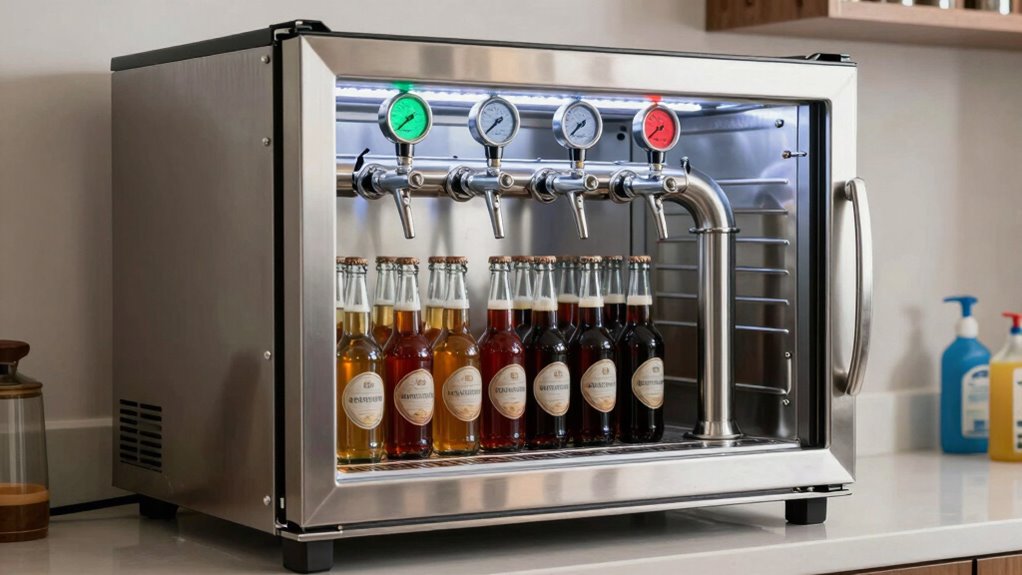
Setting up your kegerator properly is key to enjoying fresh, great-tasting draft beer whenever you want. Start by ensuring your beer tap maintenance is up to date; clean the tap and lines regularly to prevent buildup and flavor issues. When installing the draft line, make sure it’s free of kinks and securely connected to avoid leaks. Set your CO2 pressure according to your beer type—usually between 10-12 PSI—to maintain carbonation without foaming. Before pouring, flush the draft line by opening the tap for a few seconds to clear any residual cleaning solution. Proper draft line cleaning is essential for keeping your beer tasting fresh and preventing contaminants. Regularly checking your kegerator temperature will also help preserve the ideal serving conditions. With these steps, your kegerator will deliver quality drafts every time.
Troubleshooting Common Kegerator Issues (Leaks, Flat Beer, and More)
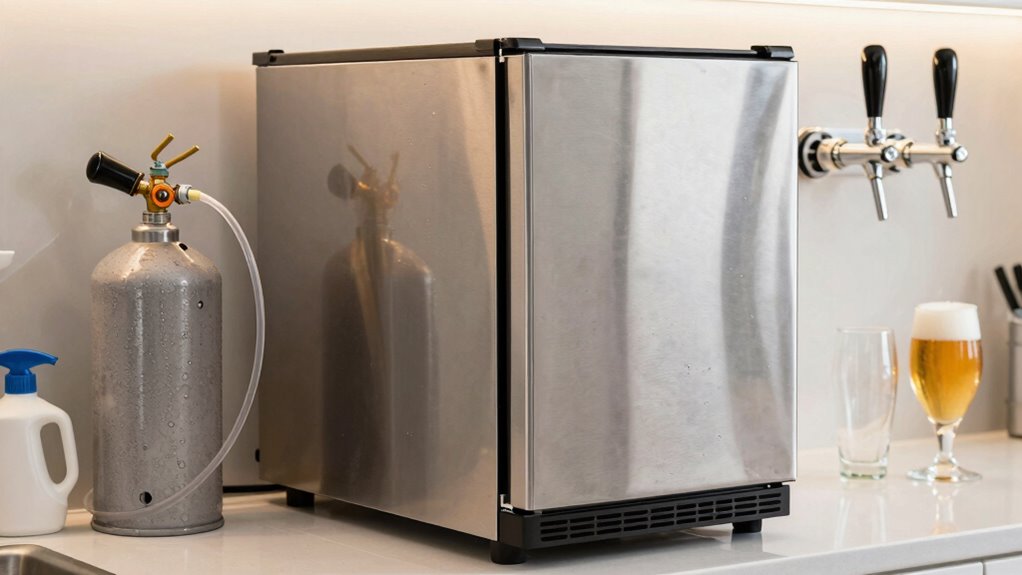
Leaking kegerators can waste beer and create messes, but you can often fix the issue by checking for loose connections or damaged seals. If your beer tastes flat, it might be time to troubleshoot pressure settings or clean the lines. Addressing these common problems promptly maintains your setup running smoothly and ensures you enjoy fresh, flavorful drafts. Additionally, verifying the CO2 pressure can help prevent issues related to carbonation and pouring. Properly seasonal maintenance of your kegerator, such as cleaning and inspecting seals, can also extend its lifespan and improve performance. Regularly sizing and load‑planning tools can assist in ensuring your setup is properly configured for your usage, avoiding over- or under-pressurization that leads to problems. Understanding net worth and how it influences a person’s resources can also be useful when investing in quality equipment for your home bar. Being aware of cultural symbols for strength can inspire resilience and patience during troubleshooting and maintenance routines.
Fixing Leakage Problems
Leakage issues can be frustrating, but many are easy to fix with some troubleshooting. If you notice CO2 leaks, start by checking the gasket sealing around your keg coupler and connections. A worn or misaligned gasket can cause gas to escape, leading to pressure drops and inconsistent carbonation. Tighten fittings carefully without over-tightening, which can damage the gasket. Inspect the gasket for cracks or tears and replace it if needed. Ensure all connections are secure and airtight. Sometimes, the source of the leak isn’t obvious, so spray soapy water on fittings and watch for bubbles indicating escaping gas. Regular maintenance and replacing worn gaskets help prevent leaks and keep your kegerator running smoothly. Additionally, using high-quality gaskets and fittings can improve the overall integrity of your setup and reduce the likelihood of future leaks. Properly maintaining your CO2 system and checking for compatibility issues can also help prevent unexpected leaks and ensure consistent carbonation. Being aware of art care principles can help you handle your equipment more precisely and avoid damage during maintenance. Practicing preventative maintenance can further prolong the lifespan of your components and improve your troubleshooting efficiency. Incorporating proper cleaning techniques into your routine can also prevent buildup that might contribute to leaks or malfunctions.
Restoring Flat Beer
When your beer loses its fizziness and becomes flat, it’s often a sign that something’s off with the pressure or the line setup. To restore the carbonation, first check that your CO2 tank pressure is correct and that the regulator isn’t leaking. Next, examine your lines for any blockages or kinks that could restrict flow. Poor tap cleanliness can also cause flat beer, as residue can inhibit proper foam formation. Clean your tap thoroughly, ensuring no beer residue or mold remains, since dirty taps can affect beer foam and overall quality. If these steps don’t work, consider slightly increasing the pressure, but do so gradually. Proper pressure, clean lines, and a clean tap are key to maintaining lively, bubbly beer at home. Regular aeration and maintenance ensure optimal carbonation, and incorporating proper line setup can significantly improve your beer’s fizz. Additionally, using appropriate glycol-based solutions can help prevent temperature fluctuations that lead to flat beer. Regularly checking your system components can also prevent issues before they affect your beer quality. Implementing consistent temperature control measures can further support beer carbonation stability and overall system performance.
Managing CO2: How to Carbonate and Keep Your Beer Perfect
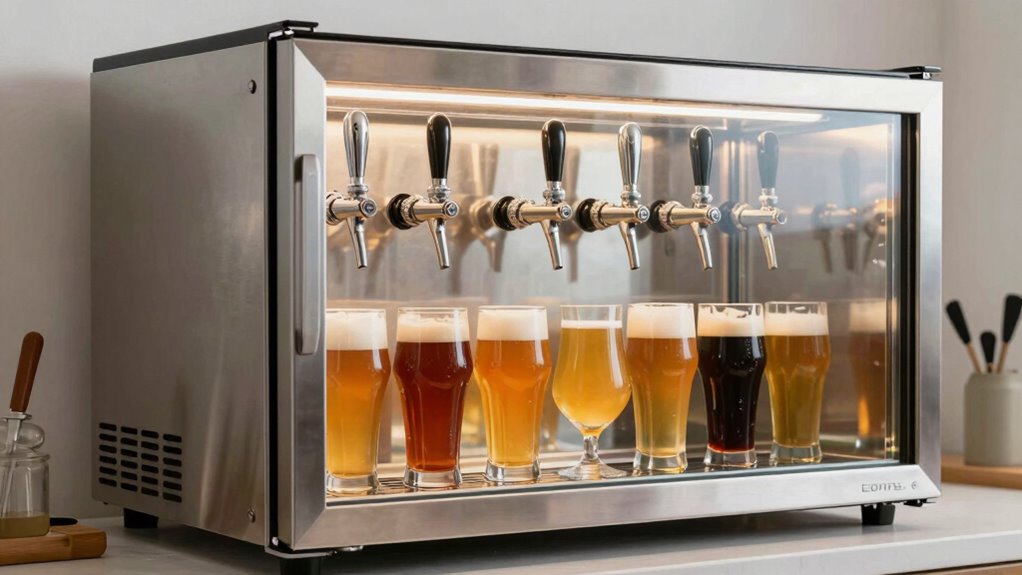
To keep your beer perfectly carbonated, you need to adjust your CO2 pressure correctly. Monitoring your carbonation levels guarantees your beer isn’t too flat or overly fizzy. Staying on top of these settings helps you serve consistently great-tasting brews at home. Regularly reviewing your CO2 management ensures optimal carbonation and prevents over-pressurization.
Adjusting CO2 Pressure
Ever wondered how to get the perfect level of carbonation for your home-brewed beer? Adjusting CO2 pressure is key. Start by regulating the pressure on your regulator to match the desired carbonation level, typically between 12-14 PSI for most beers. A proper pressure regulation guarantees your gas mixture stays consistent, preventing over- or under-carbonation. If your beer is too flat, gradually increase the pressure; if it’s overly fizzy, reduce it. Remember, different styles of beer may require different pressure settings. Always check the regulator’s gauge to keep the pressure steady. Making small adjustments helps you fine-tune your system for the best pour and flavor. Proper pressure regulation is essential for maintaining the perfect carbonation and ensuring your beer stays fresh and enjoyable. Transfer‑switch fundamentals can also help you safely manage your home backup power systems in case of outages. Additionally, understanding how to manage gas mixtures is crucial for consistent results and safety.
Monitoring Carbonation Levels
Monitoring carbonation levels is essential to guarantee your beer remains perfectly carbonated and fresh. To do this effectively, regularly check the pressure on your CO2 tank and ensure your tap maintenance is up to date. Keep an eye on your fermentation temperature, as it affects how well your beer retains carbonation. If the temperature is too high, your beer may become over-carbonated or flat; too low, and it might lose its fizz. Use a carbonation tester or simply pour a small sample to assess the bubbles and foam. Adjust the CO2 pressure as needed, and clean your tap lines periodically to prevent buildup that can affect carbonation. Staying diligent with these checks ensures your beer stays crisp, flavorful, and perfectly carbonated every time. Additionally, understanding the different style options for your kegerator setup can help you optimize your beer preservation and carbonation control. Being aware of AI discoveries in related fields can also inspire innovative solutions for monitoring and maintaining your kegerator system. Regularly inspecting your system components can prevent leaks and ensure consistent carbonation levels, leading to a better homebrewing experience.
Tips for Cleaning and Maintaining Your Kegerator
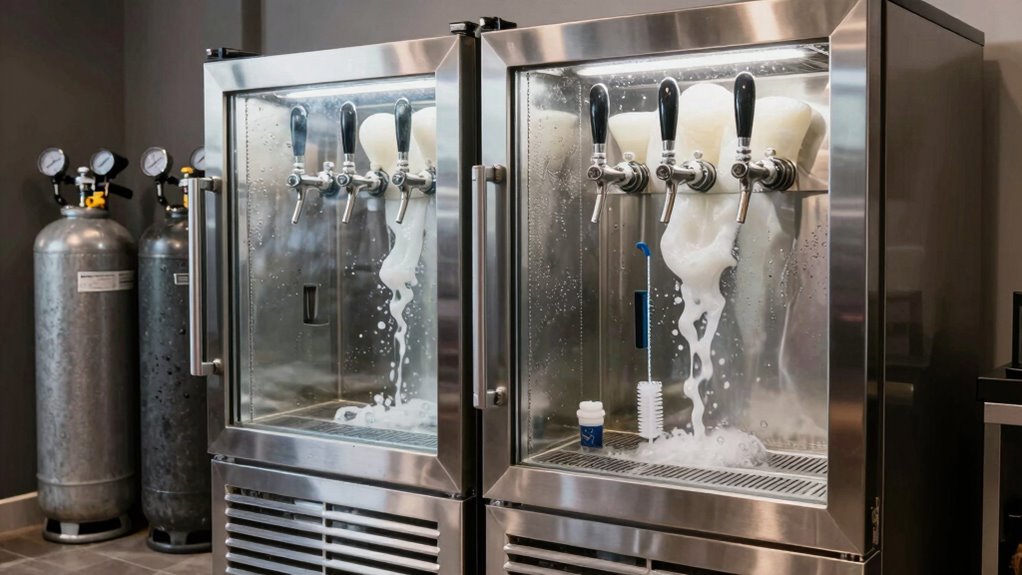
Regular cleaning and maintenance are essential to keep your kegerator functioning properly and guarantee your beer stays fresh. Establishing a regular cleaning schedule helps prevent buildup and ensures ideal performance. Use sanitizing solutions to disinfect all contact surfaces, including beer lines and faucets, to avoid bacterial growth. For best results, clean your kegerator every 2-4 weeks, depending on usage. When cleaning, focus on the interior, beer lines, and drip tray. Here’s a quick guide:
| Task | Frequency |
|---|---|
| Clean beer lines & faucets | Every 2-4 weeks |
| Wipe down interior & exterior | Monthly |
| Sanitize all contact surfaces | After cleaning or every 2 weeks |
Additionally, inspecting CO2 levels regularly can help maintain proper carbonation and prevent issues with dispensing. Proper maintenance practices also extend the lifespan of your kegerator components and ensure consistent beer quality.
Avoiding the Top Mistakes Beginners Make With Kegerators
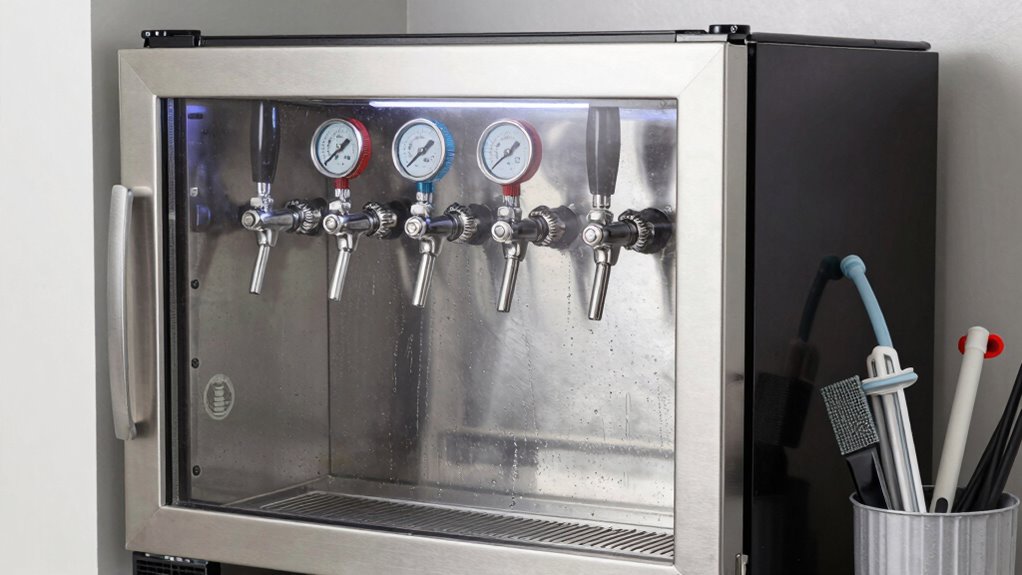
Many beginners overlook common pitfalls that can impact their kegerator’s performance and beer quality. One mistake is neglecting proper temperature control, which affects beer tasting and freshness. Another is inconsistent cleaning, leading to off-flavors and contamination. Skipping regular checks on CO2 pressure can cause over-carbonation or flat beer. Many new owners also fail to follow homebrewing tips for sanitizing lines and connectors, risking spoilage. Additionally, rushing the setup process or moving the kegerator without proper adjustments can cause leaks or inconsistent pours. To avoid these mistakes, stay attentive to temperature, pressure, and cleanliness. Proper maintenance ensures your homebrewing efforts are preserved and your beer tasting experience remains enjoyable. Being mindful of these common errors helps you maximize your kegerator’s potential from the start.
How to Choose the Right Kegerator Size and Features for Your Home

Choosing the right kegerator size and features begins with evaluating how much beer you plan to serve regularly and the space available in your home. If you entertain often or have a big family, a larger kegerator with multiple taps might be ideal. For occasional use, a compact model suffices. Consider your space constraints and how much room you have for installation. Feature selection is also key—look for models with adjustable shelves, temperature control, and easy-to-clean surfaces. Here’s a quick comparison:
| Kegerator Size | Suitable For |
|---|---|
| Compact | Small spaces, occasional use |
| Mid-Size | Regular entertainment, moderate volume |
| Large | Frequent parties, multiple taps |
| Commercial | Heavy-duty, high-volume serving |
Keeping Your Beer Fresh: Storage Tips and Best Practices
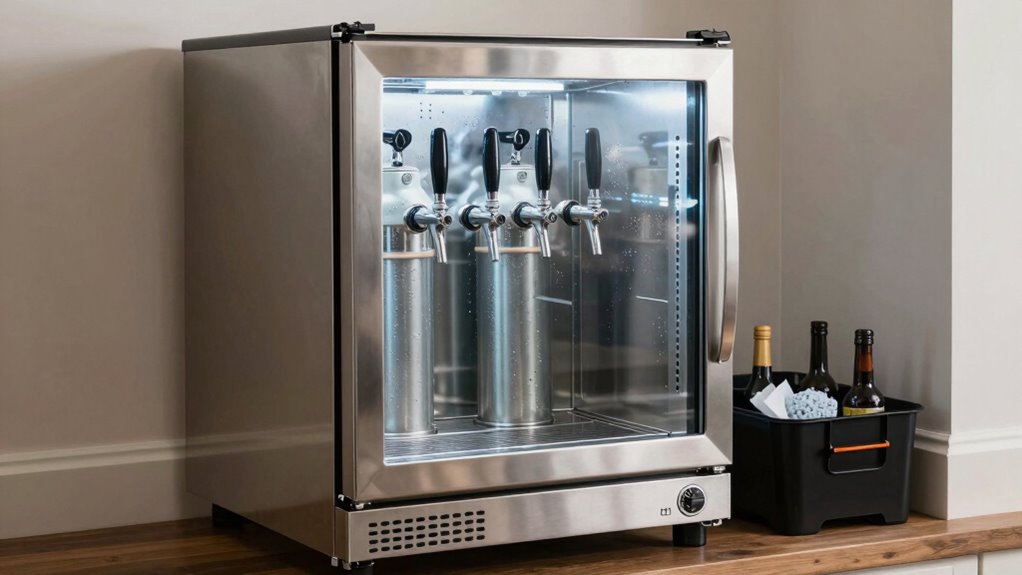
Once you’ve selected the right kegerator to suit your needs, keeping your beer fresh becomes the next priority. Proper beer storage is essential for maintaining freshness preservation and ensuring each pour tastes great. Keep your kegerator at a consistent, cold temperature—around 38°F (3°C)—to slow down spoilage. Always keep the tap sealed when not in use, and avoid exposing your keg to excessive light or heat, which can degrade the beer. Store your kegerator in a cool, draft-free spot to prevent temperature fluctuations. Regularly check and maintain the CO2 pressure to keep carbonation levels steady. By following these storage tips and best practices, you’ll enjoy fresh, flavorful beer from your kegerator every time.
Frequently Asked Questions
How Long Can I Store Beer in a Kegerator Before It Spoils?
You can store beer in your kegerator for about 2 to 6 weeks before it starts to lose freshness. To maintain ideal beer freshness and taste, keep the kegerator at a consistent temperature and guarantee proper CO2 levels. After this period, the beer may still be drinkable but could develop off-flavors or become flat. Regularly check your keg and enjoy your brew within this recommended storage duration for the best experience.
What Are the Best Types of CO2 Tanks for Home Use?
You should choose versatile CO2 cylinder types like standard 5- and 10-pound tanks for home use, as they offer durability, affordability, and easy refilling. Confirm regulator compatibility by checking that your regulator fits your CO2 cylinder type, whether it’s a pin valve or a threaded valve. Opt for high-quality, corrosion-resistant tanks, and consider portability for convenience. This way, you get reliable carbonation, simple maintenance, and long-lasting performance.
How Often Should I Sanitize My Kegerator’s Internal Parts?
You should sanitize your kegerator’s internal parts every 2 to 4 weeks to maintain ideal cleanliness and beer quality. Following a consistent sanitization schedule helps prevent bacteria buildup and flavor contamination. When cleaning, focus on the beer lines, tap, and couplers. Regular cleaning not only extends the life of your equipment but also ensures every pour tastes fresh. Adjust the cleaning frequency based on usage and your specific setup.
Can I Convert a Standard Fridge Into a Kegerator?
Yes, you can convert a standard fridge into a kegerator with some DIY conversion and fridge modifications. Start by removing shelves and installing a tap tower, ensuring there’s enough space for the CO2 tank and keg. You’ll need to drill a hole for the tap and possibly add insulation. Keep in mind, some fridges may struggle to maintain temperature, so choose one with a reliable cooling system for the best results.
What Safety Precautions Should I Follow When Handling CO2?
You should always handle CO2 with caution because leakage can cause serious injuries or suffocation. Confirm that your CO2 tank is secure and free of leaks before use. Always wear protective gear like gloves and safety goggles to prevent frostbite and eye injury. Never expose yourself to high-pressure CO2, and ensure proper ventilation in the area. Following these safety precautions keeps you safe while managing CO2 in your kegerator setup.
Conclusion
With a kegerator in your home, you’re opening the door to draft beer bliss, like having your own personal pub. Just remember, proper setup, maintenance, and managing CO2 are your keys to pouring perfect pints every time. Keep it clean and avoid rookie mistakes, and your beer will stay fresh and flavorful, turning your home into a cozy brewery. Cheers to enjoying great beer right at your fingertips!