Many creators misinterpret LED video light brightness specs because they focus solely on lumens or wattage, ignoring important factors like lux, candela, and color temperature. This can lead to choosing lights that don’t suit your filming environment or scene needs. Understanding these different measurements and how they impact your lighting setup is essential. Keep exploring, and you’ll discover how to select the perfect light for any shoot more effectively.
Key Takeaways
- Creators often focus solely on lumen ratings, ignoring color temperature and light quality factors.
- Misreading brightness specs by confusing lux, candela, and lumens leads to inaccurate expectations.
- High wattage does not guarantee brighter output; efficiency and beam angle are crucial.
- Overlooking the importance of light distribution and uniformity can result in poor scene illumination.
- Failing to compare multiple specs and measurement units increases the risk of choosing unsuitable lighting.

2-Pack Photography Lighting Kit, NiceVeedi 25W LED Video Light Kit, 2900-7000K Dimmable Studio Light with Tripod Stand, 73" Stream Light for Video Recording
【MULTIPLE COLOR TEMPERATURE & ADJUSTABLE BRIGHTNESS】Provide 3 Color temperatures (2900K, 4800K & 7000K)to create various lighting atmosphere; This…
As an affiliate, we earn on qualifying purchases.
As an affiliate, we earn on qualifying purchases.
What Do Brightness Specs Really Mean for LED Video Lights?
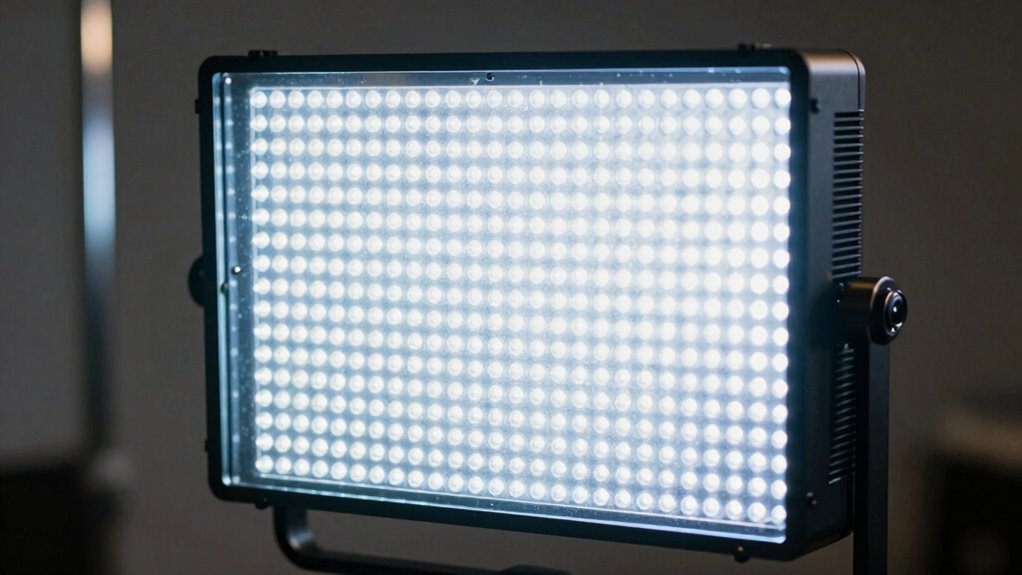
Understanding what brightness specs really mean for LED video lights is essential when choosing the right equipment. Brightness is often measured in lumens, which indicates the total light output, but it doesn’t tell you everything. For example, a light’s color temperature affects the perceived brightness and how it renders colors on camera. A higher color temperature (more blue) can make a light seem harsher, while lower temperatures (more orange) appear softer. Power consumption also plays a role; more powerful lights usually produce higher brightness, but they can drain batteries faster and generate more heat. Knowing how these factors interact helps you select a light that offers the ideal brightness level for your shoot, without wasting energy or sacrificing color quality. Additionally, understanding the contrast ratio of a light source can influence how well it performs in different environments, especially when controlling for ambient light. Recognizing how light distribution impacts coverage ensures your lighting is both effective and efficient in various shooting scenarios, and considering the beam angle can further refine your lighting setup for specific scenes. Moreover, being aware of brightness uniformity can help you achieve more consistent lighting across your subject, preventing hotspots or dim areas. A clear understanding of these lighting specifications can ultimately save you time and improve your overall production quality.

Torjim Softbox Photography Lighting Kit, 16'' x 16'' Professional Softbox Lighting Kit with 85W 3000-7500K LED Bulbs, Studio Lights for Photography/Video Recording/Live Streaming/Portraits Shooting
【Illuminate Your Creativity】 Torjim softbox lighting kit is made of high-quality PET fabric and a foldable nylon cover,…
As an affiliate, we earn on qualifying purchases.
As an affiliate, we earn on qualifying purchases.
How Do Different Brightness Measurements Differ?
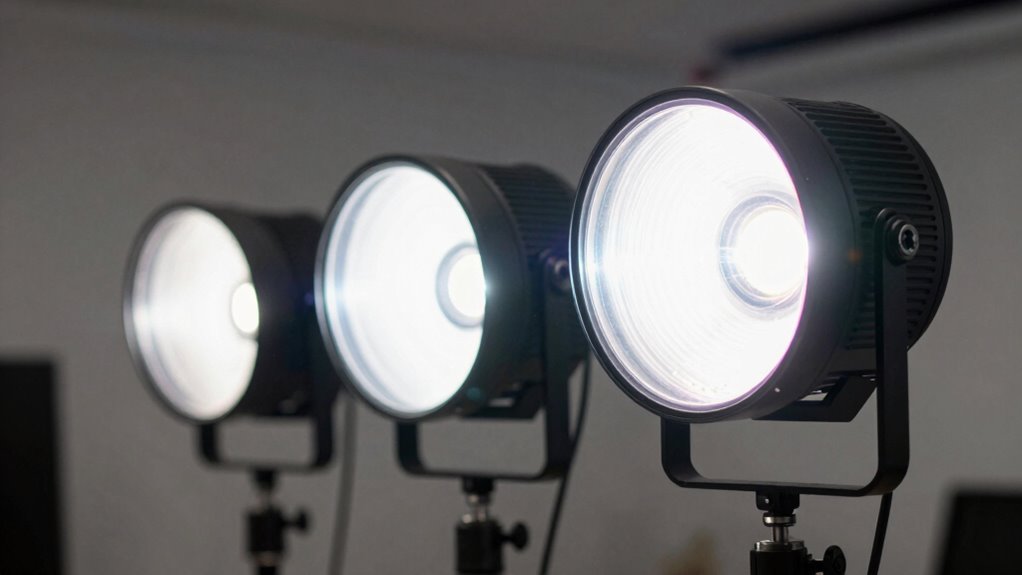
Different brightness measurements can be confusing because they often serve different purposes and are expressed in various units. Understanding these differences helps you interpret light intensity accurately. Here are four common brightness measurements:
- Lux: Measures illuminance, or how much light hits a surface, emphasizing light distribution. Lux measurement is particularly useful when assessing how evenly a light covers a scene or area, which is crucial for video lighting to avoid hotspots or shadows. Recognizing the measurement units used in each case can prevent misinterpretation of a light’s actual brightness. Additionally, the distribution pattern of light affects how well the scene is illuminated, making this measurement vital for achieving a balanced look.
- Foot-candles: The imperial counterpart to lux, used mainly in the US to measure light levels on surfaces.
- Lumens: Indicates total light output, showing how bright the light source is overall.
- Brightness units (like candela): Focus on the intensity of light in a specific direction, vital for spotlighting or focused lighting.
Knowing which measurement applies helps you choose the right LED video light for your filming needs, avoiding misunderstandings about light intensity. Additionally, understanding light distribution patterns can help you select a light that provides even coverage for your scene.

NEEWER FS150B LED Video Light 2.4G/APP Control,130W Bi Color COB Silent Photography Continuous Output Lighting with 4 Types Precise Dimming, 72000lux/1m, 2700K-6500K, CRI 97+,12 Effects, Bowens Mount
【130W Powerful Compact Studio Light】 NEEWER FS150B Video Lighting uses premium and highly efficient COB LEDs for exceptional…
As an affiliate, we earn on qualifying purchases.
As an affiliate, we earn on qualifying purchases.
How to Choose the Right Brightness Level for Your Filming Needs
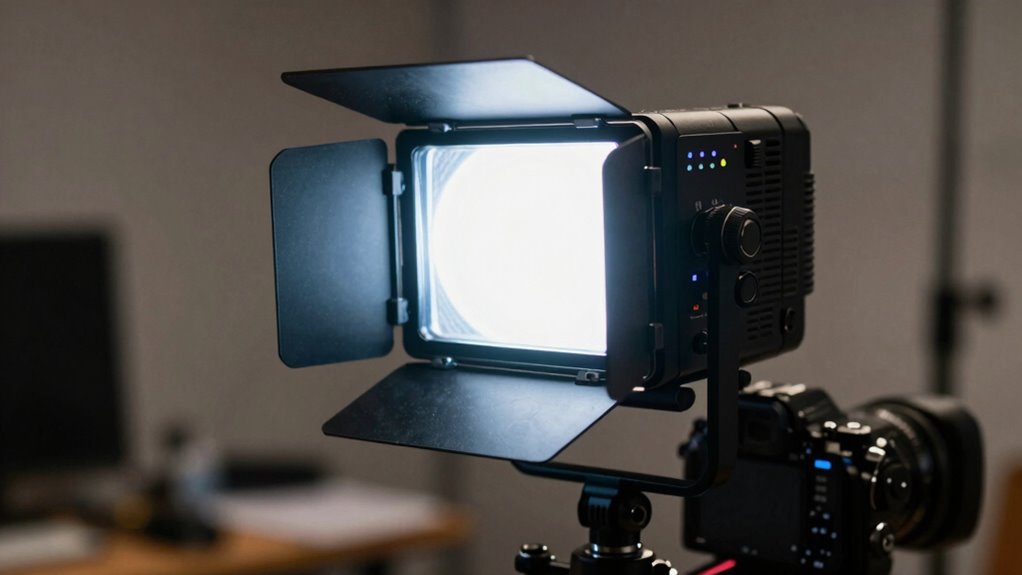
Choosing the right brightness level for your filming depends on the environment and the specific look you want to achieve. Consider the lighting color you need; warmer tones may require lower brightness, while cooler, daylight-balanced lighting often demands higher output. Think about your scene’s context—interviews, product shots, or artistic effects—each calls for different brightness levels. Additionally, be mindful of power consumption, especially if you’re working on location without easy access to power sources. Higher brightness settings generally consume more energy, so balance your needs with your power supply limitations. Properly assessing the lighting environment ensures you choose a brightness level that complements your scene and enhances the overall visual quality, much like maintaining harmony in Indigenous wellness practices that emphasize balance and connection. Understanding brightness specifications can help you make more informed choices for your filming setup. Moreover, familiarity with lighting technology can improve your ability to select the optimal brightness for diverse filming scenarios.

NEEWER 2 Pack Bi Color 660 LED Video Light and Stand Kit: (2) 3200-5600K CRI 96+ Dimmable Light with U Bracket and Barndoor, (2) 75 inches Light Stand for Studio Photography, Video Recording (Black)
【Bi Color Dimmable LED Studio Light】 With 330 warm white and 330 cool white LEDs, this 660 40W…
As an affiliate, we earn on qualifying purchases.
As an affiliate, we earn on qualifying purchases.
Tips for Comparing LED Video Lights’ Brightness Effectively

When comparing LED video lights’ brightness, it’s essential to look beyond the wattage ratings and focus on actual output measurements. Don’t assume higher wattage means brighter light; instead, consider these factors:
- Lux or Lumen Output: Check the measured brightness at a specific distance to gauge real-world performance. Understanding lighting efficiency can help you identify which lights produce more brightness with less power consumption. Comparing performance metrics provides a clearer picture of actual brightness rather than relying solely on wattage.
- Color Temperature: Ensure the light’s color temperature matches your filming needs, as it affects the perceived brightness.
- Power Efficiency: Look for lights that deliver maximum brightness with less power, saving energy and reducing heat.
- Consistent Brightness: Verify if the light maintains steady output across different settings or over time.
- Understanding Lighting Innovations: Recognize how design innovation in LED technology can impact overall brightness and performance.
Common Mistakes When Reading LED Light Brightness Specs
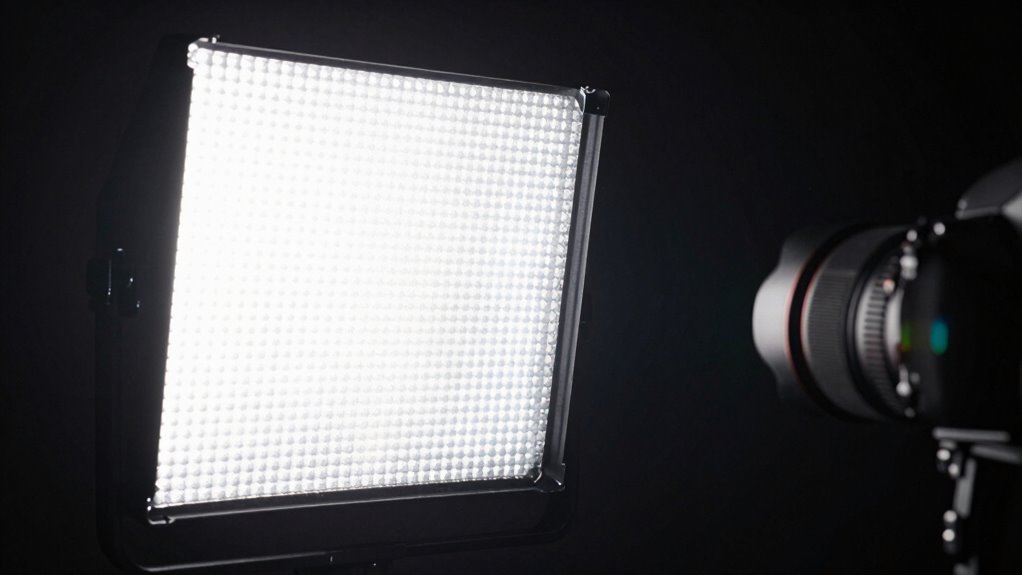
Many people make the mistake of taking LED light brightness specs at face value without understanding what the numbers truly represent. Brightness alone doesn’t reveal the full picture. For example, a higher lumen count doesn’t always mean better light quality or efficiency. You might overlook factors like color temperature, which affects the light’s warmth or coolness, or power consumption, impacting your setup’s energy needs. Misreading specs can lead to choosing lights that don’t match your filming needs. Here’s a quick comparison:
| Brightness (Lumens) | Color Temperature | Power Consumption |
|---|---|---|
| 1500 | 3200K (warm) | 50W |
| 3000 | 5600K (daylight) | 100W |
| 6000 | 7500K (cool) | 150W |
Always consider these factors alongside brightness specs for better decisions. Additionally, understanding the luminous efficacy of a light can help you evaluate its overall efficiency and performance. Being aware of energy efficiency standards can further guide your choice, ensuring you select lighting that balances brightness with power consumption. To make informed decisions, it’s important to evaluate multiple specifications and compare different models effectively. Furthermore, accurate interpretation of specs can prevent costly mistakes and improve your overall lighting quality.
Frequently Asked Questions
How Does Ambient Lighting Affect Perceived LED Brightness During Filming?
Ambient lighting can considerably influence how bright your LED video lights appear on camera. When ambient light has a warm color temperature or strong light diffusion, it can make your LEDs seem dimmer or brighter depending on the contrast. To get accurate results, control your environment by balancing ambient light and adjusting your LED brightness accordingly. Remember, softer diffusion and matching color temperature help maintain consistent perceived brightness during filming.
What Role Does Beam Angle Play in Brightness Perception?
Think of beam angle as a lighthouse’s sweep; a narrow beam focuses light intensely, making it appear brighter, while a wide beam spreads light over a larger area, reducing perceived brightness. Your light spread depends on the beam angle, which influences how the light interacts with your scene. A smaller beam angle concentrates brightness, giving a more intense, spotlight effect, whereas a larger angle offers softer, more even illumination.
Are Higher Lumens Always Better for All Filming Scenarios?
Higher lumens aren’t always better for filming because they can compromise color accuracy and flicker stability. If you boost brightness too much, you might notice color shifts or flickering, especially under certain camera settings. Instead, focus on finding a light with the right lumen level for your scene, guaranteeing it maintains accurate colors and flicker-free operation. Balancing brightness with quality features ensures professional results in various filming scenarios.
How Does Power Consumption Impact Brightness and Battery Life?
Power consumption directly impacts brightness and battery life. When your LED video light has high energy consumption, it uses more power, which can drain your batteries faster. To get the best results, look for lights with good power efficiency; they deliver ample brightness without wasting energy. By choosing energy-efficient options, you’ll extend your shoot time and maintain consistent lighting, making your setup more reliable and cost-effective.
Can LED Brightness Specs Fluctuate Under Different Temperature Conditions?
Yes, LED brightness specs can fluctuate with temperature changes. When the temperature drops, LEDs may appear dimmer due to diminished efficiency, affecting brightness and color temperature consistency. Conversely, higher temperatures can cause overheating, reducing lifespan and dimming performance. Dimming capabilities might also be impacted, as some features rely on stable temperature conditions. Always consider environmental factors to guarantee your LED lights perform at their best and maintain accurate color temperature.
Conclusion
Understanding LED video lights’ brightness specs is vital—you’ll make smarter choices and avoid costly mistakes. Did you know that many creators misread brightness ratings by up to 30%? By learning what these specs truly mean, you can select the perfect light for your filming needs and achieve professional results. Don’t rely solely on numbers; compare measurements carefully and consider your specific setup. Mastering this guarantees your videos look brighter, clearer, and more polished every time.