TL;DR

Get home appliances delivered free with Prime
- Fast, free delivery on millions of items
- Prime Video, Amazon Music and more included
- Member-only deals all year
A Hunker report says decorative, layered lighting is expected to be a prominent kitchen design trend in 2027, with sconces, lamps and sculptural fixtures supplementing central lights and pendants. The forecast reflects kitchens’ growing use as both workspaces and gathering areas, but it is a design prediction, not evidence of a measured industry-wide shift.
Decorative, layered lighting is expected to gain prominence in kitchens in 2027, according to a trend report from Hunker. The forecast points to homeowners and designers using sconces, lamps and distinctive fixtures alongside conventional overhead lights, as kitchens increasingly serve as both workspaces and gathering areas.
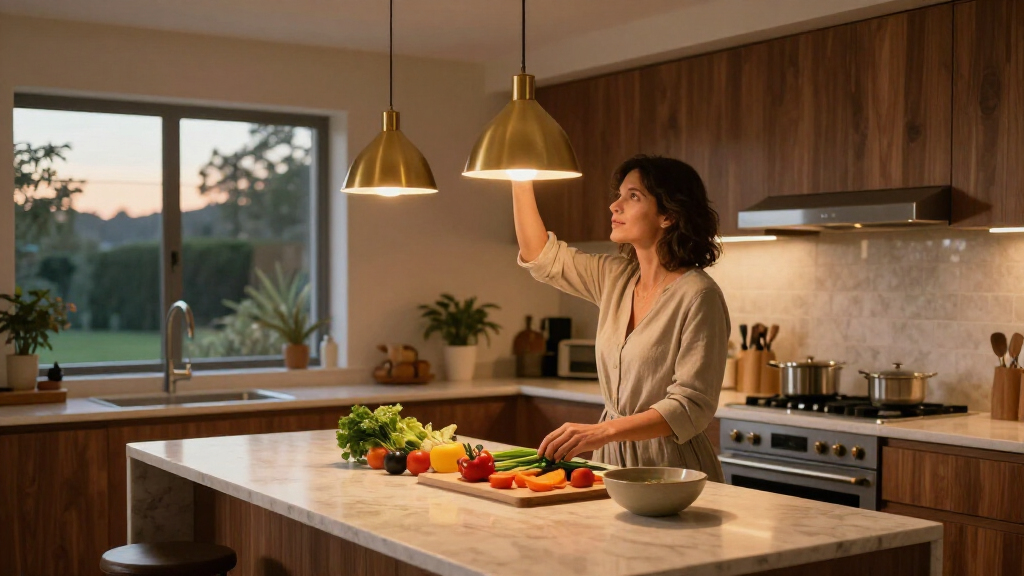
The report describes a shift away from treating a single central ceiling fixture as the kitchen’s main lighting solution. Instead, it says designers are combining lights at different heights and for different purposes: general illumination, task lighting and accents that add visual interest. The forecast does not mean overhead fixtures or island pendants will disappear; rather, it suggests they will be part of a broader scheme.
Examples include wall sconces, picture lights, table lamps with rechargeable bulbs, and pendants selected for sculptural shapes or distinctive finishes. Hunker also points to warm metals, woven shades and dimmable or portable lights as features that can give a kitchen a softer, more personal feel. Under-cabinet lighting remains one practical option, while accent lights can draw attention to architectural details or areas such as a home bar.
The report cites Michaela Sedlak of ODE Design, who told House Beautiful that architectural lights could take on a larger role in kitchen design. Her comment supports the direction of the forecast, but it is an expert’s view, not a guarantee that the trend will be adopted in kitchens everywhere.
Lighting Beyond the Ceiling Fixture
The forecast matters because lighting affects how a kitchen works as well as how it feels. A single overhead source can leave some work surfaces poorly lit and make the room feel stark. A layered plan can provide task light where food is prepared, while softer or dimmable sources can make the same space more comfortable for meals and conversation.
It also gives homeowners a way to update a kitchen’s appearance without changing cabinetry or major finishes. A lamp, sconce or carefully chosen pendant can add character, while accent lighting can emphasize existing details. The practical trade-off is that more fixtures may require additional planning, suitable outlets or wiring, and attention to cleaning and maintenance. Portable rechargeable lamps offer flexibility, but they are not a replacement for appropriate task lighting where dependable illumination is needed.
As an affiliate, we earn on qualifying purchases.
Kitchens Take on More Roles
Hunker frames the forecast around a change in how kitchens are used: they are not only places for cooking but also shared spaces for gathering. That helps explain the appeal of lighting that can shift atmosphere rather than produce uniform brightness from above. A layered approach can make room for different activities without requiring the same light level at every hour.
Many kitchens already combine a ceiling fixture, island pendants and under-cabinet lights. The reported change is less about introducing lighting from scratch and more about treating fixtures as part of the room’s design. The report’s suggestions—such as adding a counter lamp, a wall light or an accent source—extend familiar lighting arrangements rather than replacing every existing fixture.
“Sconces, art-style picture lights, and other architectural lighting will become just as important if not more than pendant lights.”
— Michaela Sedlak of ODE Design, speaking to House Beautiful
A Forecast, Not a Market Survey
The report offers a design prediction, not sales data or a survey showing how many homeowners plan to change their kitchens. It does not establish that decorative lighting will appear in kitchens “everywhere” in 2027, nor does it quantify how widely designers currently use these features. The forecast is based on design commentary and examples, so adoption may vary by budget, home layout and personal taste.
It is also unclear how the predicted mix will work in specific kitchens. The report does not set out installation costs, product availability or technical guidance for wiring, placement and brightness. Homeowners will need to account for the room’s existing electrical setup and the lighting required for safe, practical food preparation.
How the Forecast May Develop
The next indication will be whether designers, retailers and homeowners make layered decorative fixtures a more common part of kitchen projects during 2027. Hunker’s report does not name a launch date, announce a product line or provide a timetable for tracking uptake. For now, the forecast offers design ideas rather than a claim that a broad change has already taken place.
Anyone considering an update can start by identifying where the current lighting falls short, then decide whether a portable lamp, sconce, pendant or accent source addresses that need. Any new fixed wiring or electrical work should be planned and completed by a qualified professional, with local code requirements followed.
Key Questions
What kitchen lighting trend does the report predict for 2027?
It predicts more layered, decorative lighting, with fixtures such as sconces, lamps and sculptural pendants used alongside general and task lighting.
Will kitchens stop using overhead lights?
No such change is stated. The report describes adding varied light sources, not eliminating central fixtures or island pendants.
What are examples of decorative kitchen lighting?
Examples include wall sconces, picture lights, distinctive pendants, counter lamps with rechargeable bulbs, and accent lighting for architectural details or a home bar.
Is this trend confirmed to be widespread in 2027?
No. Hunker presents it as a trend forecast; the source material does not provide market data measuring adoption.
What should homeowners consider before adding fixed lights?
Consider the task being lit, existing wiring, placement and local requirements. Have fixed electrical work handled by a qualified professional.
Source: rss
NFL season / tailgating Picks
team gear
As an affiliate, we earn on qualifying purchases.