To design an edible landscape that feeds you, blend beauty and functionality by choosing native or adaptable plants like fruit trees, herbs, and vegetables that thrive locally. Incorporate perennials for long-term yields and use companion planting to boost health and reduce pests naturally. Plan a layout that allows easy harvesting and maintenance, creating a vibrant, sustainable space year-round. If you keep exploring, you’ll discover how to craft a productive garden that benefits both your family and the environment.

Get home appliances delivered free — and shop member deals
- Fast, free delivery on millions of items
- Access to Prime Big Deal Days deals on October 6–7
- Prime Video, Amazon Music and more included
Key Takeaways
- Incorporate a mix of edible plants, including fruit trees, vegetables, herbs, and flowers, for a productive and beautiful landscape.
- Prioritize perennial crops like berries, asparagus, and herbs for sustainability and easy maintenance year after year.
- Use companion planting to enhance plant health, deter pests, and maximize space efficiency.
- Select climate-appropriate, native, or thriving plants to ensure resilience and long-term productivity.
- Design with easy harvest access and ecosystem health in mind to create a vibrant, self-sustaining edible garden.
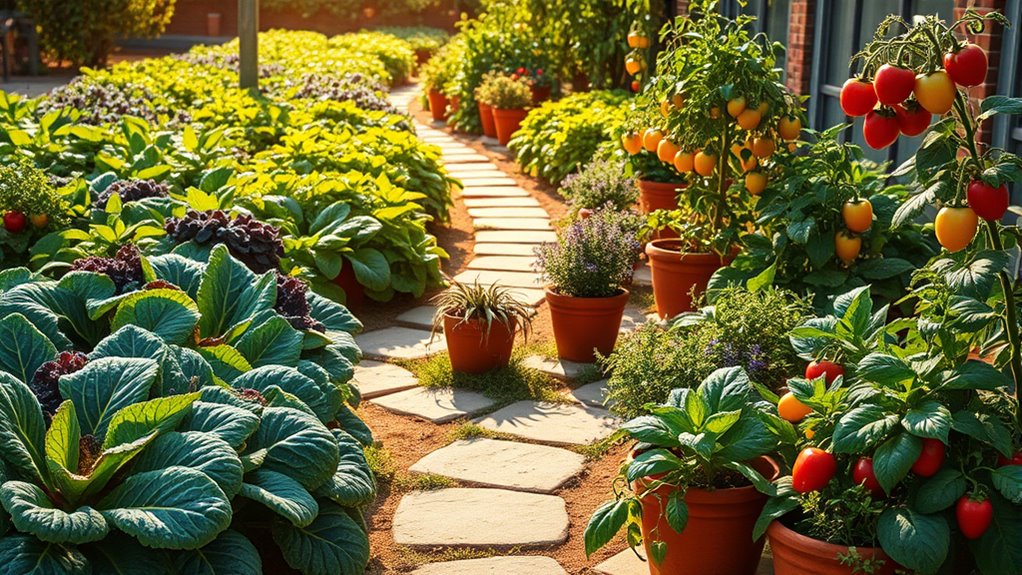
Edible landscapes transform traditional yards into functional, beautiful spaces by integrating fruit trees, vegetables, herbs, and edible flowers alongside ornamental plants. This approach not only enhances your outdoor environment but also provides fresh, homegrown food that can reduce your grocery bills and improve your diet. When designing your edible landscape, consider how different plants can coexist harmoniously, creating a lush, productive space that’s easy to maintain. One of the keys to a successful edible landscape is understanding foraging tips; knowing what wild or semi-wild edible plants are available in your area can inspire natural, low-maintenance additions to your garden, like wild herbs or berries. Incorporating native plants or those that thrive locally can also minimize upkeep and pest issues, making your garden more sustainable.
Transform your yard with edible plants, native species, and foraging tips for a sustainable, productive garden.
Perennial planting plays a essential role in creating a low-maintenance, resilient edible landscape. Perennials, which come back year after year, save you time and effort because you don’t need to replant each season. Think about planting fruit-bearing shrubs, asparagus, rhubarb, or perennial herbs like thyme, mint, and chives. These plants establish strong roots and become more productive with each passing year, offering ongoing harvests and reducing soil disturbance. When designing your landscape, position perennials in accessible spots so you can easily harvest without damaging other plants. Mulching around perennials also helps retain moisture, suppress weeds, and keep the soil healthy, which is essential for long-term success. Understanding lifespan perspective in development emphasizes the importance of planning for long-term growth and sustainability in your garden.
To maximize your edible landscape’s productivity, mix annuals and perennials thoughtfully. While annual vegetables like tomatoes and peppers give you quick harvests, perennials provide stability and ongoing yields. Plan your garden layout with companion planting principles to naturally discourage pests and improve plant health. For example, plant basil near tomatoes or chives around carrots. This strategy minimizes the need for chemical interventions and promotes a healthy ecosystem. As you develop your edible landscape, keep an eye on foraging tips—learning to identify edible weeds or wild herbs can add variety and flavor to your meals without extra planting.
Ultimately, designing an edible landscape is about creating a balanced ecosystem that feeds both your family and your soul. Focus on selecting plants suited to your climate, incorporating perennial planting for longevity, and applying foraging tips to take advantage of natural resources. With thoughtful planning, your yard can transform into a vibrant, productive space that yields fresh food year-round, all while enhancing its beauty and ecological health.
As an affiliate, we earn on qualifying purchases.
Frequently Asked Questions
How Do I Start Planning an Edible Landscape in a Small Space?
Start by evaluating your small space’s sunlight, soil, and water. Choose compact, high-yield plants suited for your climate. Use companion planting to maximize space and reduce pests. Plan seasonally to guarantee continuous harvests, planting early spring crops alongside summer favorites. Sketch a layout, grouping compatible plants, and consider vertical gardening to save space. With thoughtful seasonal planning, you’ll create an efficient, productive edible landscape that feeds you year-round.
What Are the Best Edible Plants for Shaded Gardens?
You should consider shade-tolerant edible plants like lettuce, spinach, and kale, which thrive in limited sunlight. Incorporate companion planting to maximize space and improve growth, such as planting herbs like mint or chives alongside vegetables. Focus on seasonal planting, choosing plants suited to your climate’s current season to guarantee success. These strategies help you create a productive, shaded edible garden even with limited sunlight.
How Can I Maintain Pest Control Without Chemicals?
You can maintain pest control naturally by practicing companion planting, which involves placing beneficial plants near your edibles to repel pests. Use natural deterrents like neem oil, garlic spray, or chili peppers to ward off insects without chemicals. Regularly inspect your garden for pests and remove them manually. Encouraging biodiversity and attracting beneficial insects, like ladybugs and pollinators, also helps keep pests in check naturally.
What Is the Average Cost to Establish an Edible Landscape?
You’re curious about the cost to create an edible landscape? Expect to spend between $1,000 and $5,000, depending on size, plant choices, and design complexity. Careful budget planning helps you manage expenses and prioritize essential elements. Keep in mind, investing in quality soil, plants, and tools guarantees your garden thrives long-term. Ready to turn your yard into a productive, beautiful space? The key is balancing your dreams with your budget.
Are Edible Landscapes Suitable for Urban Environments?
Yes, edible landscapes are perfect for urban environments. You can easily transform an urban rooftop or balcony gardening space into a thriving edible landscape. With container gardening, vertical planting, and compact fruit trees, you maximize limited space. These setups allow you to grow herbs, vegetables, and small fruit crops right in your city home, making fresh, homegrown food accessible even in small, urban areas.
Conclusion
So, next time you walk through your garden, remember—your plants aren’t just pretty faces; they’re potential meals waiting to be harvested. Instead of admiring those ornamental flowers, consider planting fruits and vegetables that actually feed you. Ironically, while traditional gardens may impress neighbors, edible landscapes can turn your yard into a delicious, sustainable paradise. Who knew that the secret to a stunning garden is simply growing what you eat?
Fall yard work Picks
leaf blowers
As an affiliate, we earn on qualifying purchases.