
AI-driven pattern recognition revolutionizes your approach to studying historical architecture by analyzing vast collections of images, blueprints, and records. It identifies recurring motifs, structural features, and stylistic trends, helping you uncover subtle connections across different periods and regions. This technology accelerates research and deepens your understanding of architectural evolution. As you explore further, you’ll discover how AI seamlessly complements traditional methods, enhancing preservation and restoration efforts.
Key Takeaways
- AI analyzes large datasets of images and blueprints to identify recurring architectural motifs and stylistic trends across history.
- Pattern recognition algorithms uncover subtle links between different architectural styles, periods, and cultural influences.
- AI facilitates the classification and comparison of historical structures, revealing evolution patterns and technological developments.
- Machine learning models detect structural motifs and design patterns that are often overlooked by manual analysis.
- Integration of AI with expert knowledge enhances understanding of architectural evolution and supports preservation efforts.
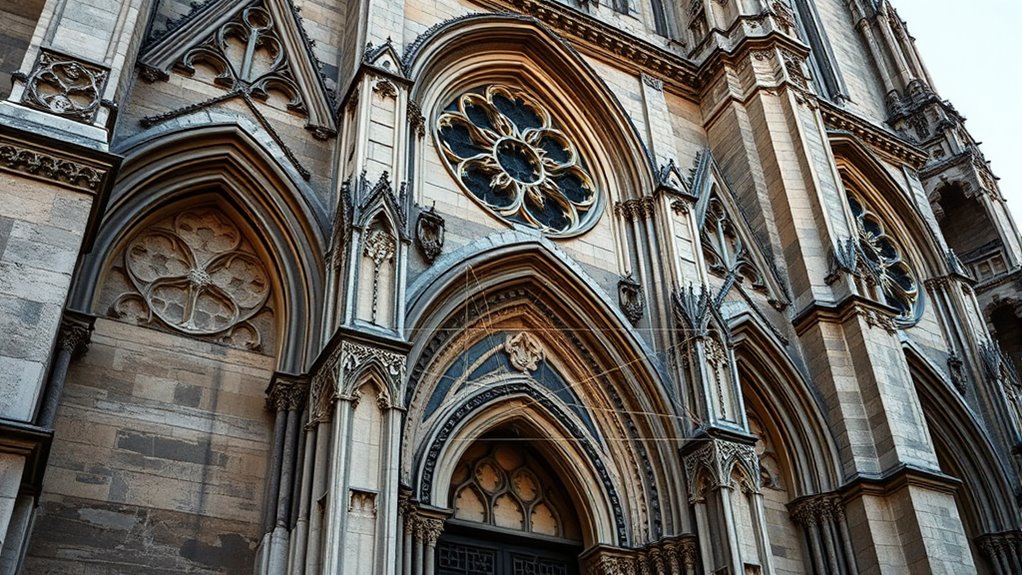
Advancements in artificial intelligence are transforming how we study historical architecture by enabling pattern recognition at an unprecedented scale. With AI, you can analyze vast collections of images, blueprints, and historical records to identify recurring motifs, structural features, and stylistic trends that might otherwise go unnoticed. This capability not only accelerates research but also deepens your understanding of architectural evolution across different periods and regions. As you harness AI-driven tools, you gain the ability to uncover subtle patterns that reveal connections between architectural styles, construction techniques, and cultural influences, enriching your overall perspective.
AI transforms architectural research by revealing subtle patterns and connections across styles and eras.
However, integrating AI into historical architecture studies presents notable preservation challenges. Many heritage structures are fragile or degraded, making traditional analysis risky or impossible. AI can help by working with high-resolution images or 3D scans, reducing the need for invasive examinations. Still, guaranteeing that digital representations accurately reflect the original materials and conditions requires meticulous data collection and validation. Preservation challenges also include dealing with incomplete or damaged records; AI models must be trained to interpret fragmented data without compromising accuracy. You need to carefully select and preprocess data to avoid biases that could lead to misinterpretations, which could ultimately harm restoration efforts. Additionally, understanding the importance of vetted data is crucial to ensure reliable AI analysis and preservation outcomes.
Restoration techniques benefit markedly from AI’s pattern recognition capabilities. When you’re restoring a historic building, understanding its original design details is vital. AI can analyze existing fragments, stains, and weathered surfaces to reconstruct missing elements with remarkable precision. This assists you in developing more authentic and historically accurate restoration techniques. Moreover, AI can simulate how different restoration approaches might impact a structure’s integrity over time, guiding you toward choices that balance preservation with practicality. Such insights ensure that your restoration efforts are rooted in data-driven analysis, helping to maintain the building’s historical value while adapting to modern demands.
While AI offers these promising benefits, you must remain cautious of overreliance. It’s essential to combine AI insights with expert judgment, especially when dealing with complex or ambiguous data. Preservation challenges, such as dealing with undocumented modifications or undocumented materials, require human expertise to interpret AI findings appropriately. The key is to view AI as a powerful tool that complements traditional methods rather than replacing them. By doing so, you can enhance your ability to study, preserve, and restore historical architecture, ensuring that these cultural treasures endure for future generations.
Frequently Asked Questions
How Accurate Are AI Pattern Recognition Tools in Identifying Architectural Styles?
You’ll find that AI pattern recognition tools are quite accurate in identifying architectural styles, thanks to high algorithm accuracy and extensive training datasets. These tools analyze visual features effectively, but their precision can vary depending on the quality and diversity of the datasets used. Generally, as training datasets grow and algorithms improve, the accuracy of identifying styles increases, making AI a valuable aid in architectural research.
Can AI Distinguish Between Authentic and Restored Historical Structures?
You might be surprised, but AI can distinguish between authentic and restored structures, especially through digital reconstruction and authenticity verification. By analyzing subtle differences in materials, construction techniques, and wear patterns, AI tools identify signs of restoration versus original features. This helps you confidently assess a building’s history, ensuring that preservation efforts maintain true authenticity, and providing valuable insights for historians, architects, and conservationists alike.
What Are the Limitations of AI in Analyzing Deteriorated or Damaged Architecture?
You’ll find that AI struggles with analyzing deteriorated or damaged architecture due to poor data quality, which makes accurate recognition difficult. Additionally, interpretative bias can skew results, leading you to misjudge the original features or restoration efforts. When data is incomplete or degraded, AI’s effectiveness diminishes, and its conclusions become less reliable. You need high-quality, detailed data to improve AI’s analysis of worn or damaged structures.
How Does AI Handle Cultural and Regional Variations in Architecture?
Did you know AI can identify over 90% of regional influences in architecture? It handles cultural nuances by analyzing vast datasets, enabling it to recognize specific styles and regional influences accurately. You’ll find that AI models adapt to diverse architectural traditions by learning from contextual patterns, helping preserve unique cultural identities while providing insights into regional variations. This enhances your understanding of architecture’s rich diversity across different regions.
What Ethical Considerations Arise in Using AI for Historical Preservation?
When using AI for historical preservation, you must consider privacy concerns, especially when handling sensitive data or personal information. Bias mitigation is also critical to guarantee the AI doesn’t reinforce cultural biases or overlook diverse architectural styles. By actively addressing these ethical issues, you protect cultural heritage responsibly, maintain public trust, and promote equitable preservation practices, ensuring AI tools support inclusive and respectful historical narratives.
Conclusion
As you harness AI-driven pattern recognition, you unseal a treasure chest of historical secrets, revealing intricate stories woven into ancient stones. This technology acts as a lighthouse, guiding your exploration through the fog of time with precision and clarity. With each discovery, you deepen your connection to the past, transforming dusty archives into vibrant tapestries of history. Embrace this fusion of innovation and tradition, and watch as the echoes of bygone eras come alive in your hands.