AI-powered trip personalization helps you find accessible accommodations, transportation, and tours tailored to your needs, making travel easier and more confident. It analyzes hotel reviews, recommends suitable routes, and suggests activities that match your mobility and sensory preferences. With assistive tech like voice assistants and real-time updates, you can navigate unfamiliar places independently. If you keep exploring, you’ll discover how these innovations can transform your travel experiences and empower your independence.
Key Takeaways
- AI analyzes large hotel and transportation databases to match travelers with accessible accommodations and services tailored to their needs.
- Assistive AI devices offer real-time navigation, obstacle alerts, and environment control, boosting independence during travel.
- Personalized AI recommendations suggest accessible transport options, sightseeing tours, and dining choices aligned with mobility and sensory requirements.
- AI-driven tools provide tailored navigation assistance, reducing reliance on guides and enhancing confidence in unfamiliar environments.
- Integration of accessible tech and personalized planning promotes seamless, inclusive travel experiences for travelers with disabilities.
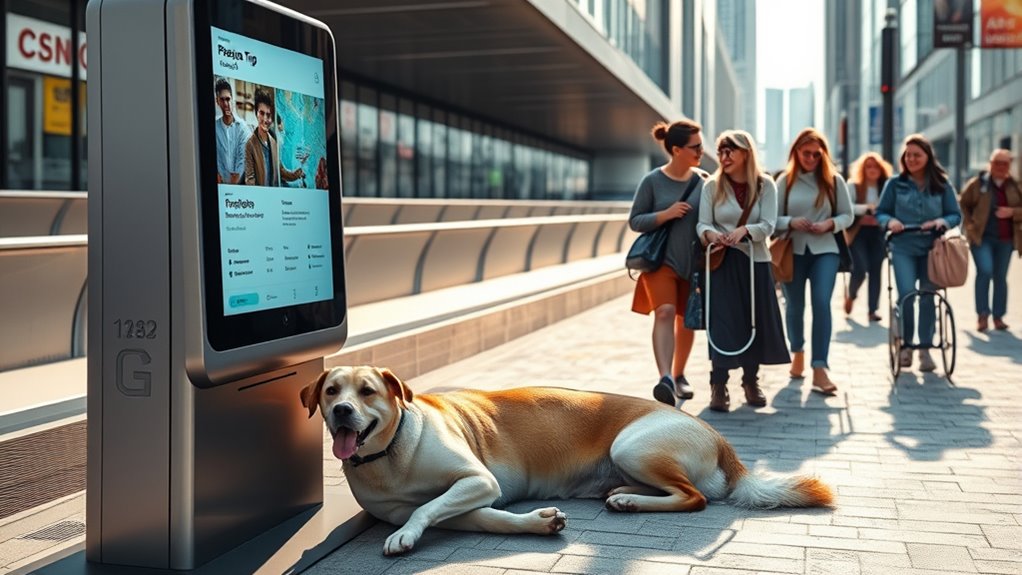
Advancements in artificial intelligence are transforming how travelers with disabilities plan and experience their trips. No longer do you have to sift through countless options or worry about whether your needs will be met. AI-powered tools now provide personalized recommendations that consider your unique requirements, making travel more accessible and enjoyable. When searching for accommodations, AI can help identify accessible accommodations that fit your specifications, whether you need step-free entrances, visual alert systems, or adapted bathrooms. These systems analyze vast databases of hotel features and user reviews, ensuring you’re matched with places that truly cater to your needs. This saves you time and reduces the frustration of finding suitable lodgings manually.
AI helps find accessible accommodations tailored to your needs, saving time and reducing travel planning stress.
Assistive technology plays an essential role in this revolution. AI-driven devices and software can enhance your independence and comfort during travel. For example, voice-activated assistants can help you navigate unfamiliar environments, find directions, or control room features without physical contact. Smart apps can coordinate your itinerary, notify you of accessible routes, and even provide real-time updates about elevator statuses or obstacle warnings. These innovations are designed to integrate seamlessly into your travel plans, giving you more control and confidence throughout your journey.
Moreover, AI customization extends beyond accommodations and assistive devices. It can help tailor transportation options, recommend accessible sightseeing tours, or suggest dining experiences that meet your dietary needs. For example, ride-hailing apps equipped with AI can prioritize accessible vehicles, ensuring you don’t have to compromise on comfort or safety. Travel agencies and platforms now utilize AI to craft personalized itineraries that align with your mobility, sensory, or communication needs, making sure every activity is feasible and enjoyable.
This technology also fosters greater independence. By providing real-time assistance and tailored information, AI reduces reliance on guides or companions. You can confidently explore new cities, knowing that your devices and apps are working in your favor. Plus, AI’s ability to learn from your preferences means future trips will become increasingly personalized, streamlining planning and reducing stress. Additionally, understanding personality test insights can help tailor the travel experience further to your preferences and comfort levels, enhancing overall satisfaction.
In essence, AI-powered trip personalization empowers you to travel with greater ease and confidence. It guarantees that accessible accommodations and assistive technology are integrated into your plans seamlessly, making your travel experience more inclusive and fulfilling. As these innovations continue to evolve, they promise a future where travel barriers are minimized, and every journey becomes more accessible for travelers with disabilities.
accessible hotel room with step-free entrance
As an affiliate, we earn on qualifying purchases.
As an affiliate, we earn on qualifying purchases.
Frequently Asked Questions
How Does AI Adapt to Different Types of Disabilities?
AI adapts to different types of disabilities by integrating assistive technologies and accessibility features tailored to each individual’s needs. It analyzes user preferences and challenges, then offers customized suggestions and tools, like voice commands or visual aids. This personalization guarantees a smoother travel experience, making navigation easier and more comfortable. By continuously learning, AI improves its support, helping travelers with disabilities enjoy more independent and accessible journeys.
What Privacy Measures Are in Place for Personal Data?
Think of your personal data as a delicate treasure chest guarded fiercely. To safeguard it, the system uses data encryption, locking your information with unbreakable codes, and guarantees your user consent is always prioritized, like a handshake sealing a trustworthy deal. These privacy measures act as a shield, keeping your details safe from breaches while respecting your control over what you share, giving you peace of mind on every journey.
Can AI Handle Last-Minute Travel Changes Effectively?
Yes, AI can handle last-minute travel changes effectively by making real-time adjustments to your itinerary. When unexpected obstacles like delays or cancellations occur, AI swiftly analyzes your options and suggests alternatives, ensuring your trip stays on track. It continuously monitors your journey, allowing you to adapt seamlessly without stress. With AI’s quick responses, you gain a more flexible, hassle-free travel experience even when plans change unexpectedly.
How Accessible Are Ai-Powered Trip Planning Tools?
You might find that AI-powered trip planning tools are becoming more accessible, but accessibility barriers still exist. Coincidentally, these tools can sometimes reflect AI bias, which affects their effectiveness for travelers with disabilities. While advancements are promising, it’s essential to stay aware of these limitations and advocate for inclusive design, ensuring everyone can use these tools seamlessly. Your feedback helps improve accessibility and reduces bias over time.
What Are the Limitations of AI in Personalizing Travel for Disabilities?
AI faces limitations in personalizing travel for disabilities due to accessibility challenges and ethical considerations. You might find that AI systems lack nuanced understanding of individual needs, leading to gaps in support. Additionally, ethical concerns around data privacy and bias can hinder effective personalization. While AI offers promising tools, you should be aware that it may not fully capture the complexity of your unique requirements or guarantee equitable access for all travelers.
AI-powered assistive navigation device for travel
As an affiliate, we earn on qualifying purchases.
As an affiliate, we earn on qualifying purchases.
Conclusion
Just as the compass guided explorers through uncharted waters, AI-powered trip personalization steers you toward unforgettable journeys tailored to your needs. With these innovative tools, you’re no longer steering alone but empowered to discover new horizons with confidence. Embrace this technological voyage, and let it transform your travel experience into a seamless adventure—proving that, like the pioneers of old, you too can chart your own path with courage and certainty.
accessible transportation app for disabled travelers
As an affiliate, we earn on qualifying purchases.
As an affiliate, we earn on qualifying purchases.

Etac Turner PRO Patient Transfer Aid – Sit to Stand Lift for Elderly with High Safe Working Load (440 lbs) – Patient Lift and Mobility Assist for Safer Transfers with Platform Disc & Anti-Slip Bottom
High Weight Capacity, Lightweight Design : Supports up to 440 lbs while weighing just 16.5 lbs. Etac Turner…
As an affiliate, we earn on qualifying purchases.
As an affiliate, we earn on qualifying purchases.