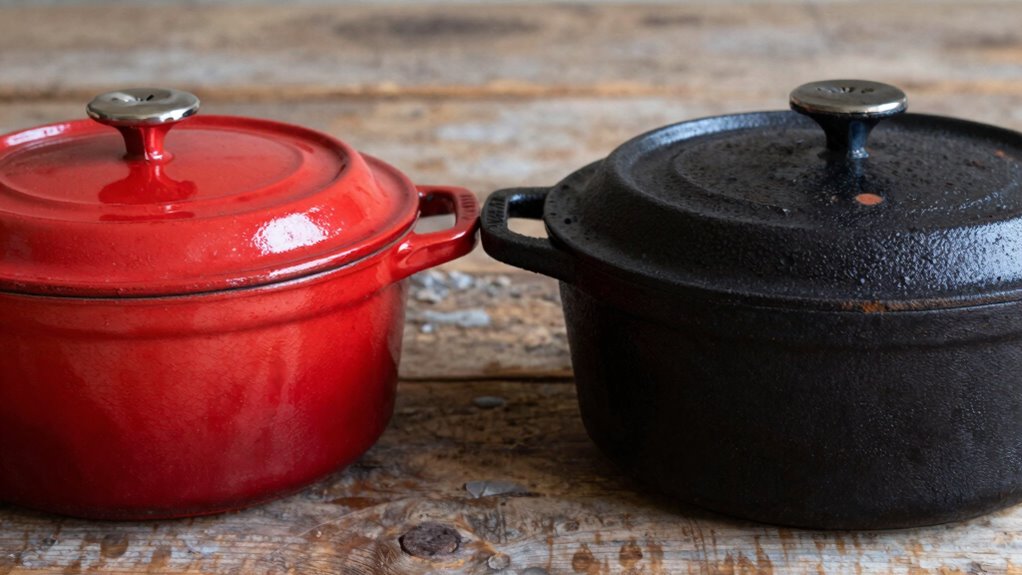

When choosing between enameled and bare cast iron Dutch ovens, consider durability, maintenance, and cost. Enameled models are easier to clean and resist rust but can chip or crack; they usually cost more upfront. Bare cast iron is highly durable, develops a natural non-stick surface over time, and is more budget-friendly but requires regular seasoning and careful maintenance. To understand which option suits your cooking style and needs best, explore the details that follow.

Get home appliances delivered free — and shop member deals
- Fast, free delivery on millions of items
- Access to Prime Big Deal Days deals on October 6–7
- Prime Video, Amazon Music and more included
Key Takeaways
- Enameled Dutch ovens are low-maintenance, resistant to rust and staining, but prone to chipping and cracking.
- Bare cast iron offers superior heat retention and durability, developing a natural non-stick surface over time with proper care.
- Enameled models typically cost more upfront but require less ongoing maintenance; cast iron is more affordable and improves with use.
- Bare cast iron demands regular seasoning and careful cleaning to prevent rust, while enameled options are easier to clean and care for.
- Choice depends on cooking style, durability needs, aesthetic preference, and willingness to perform maintenance routines.
As an affiliate, we earn on qualifying purchases.
What Are Enameled and Bare Cast Iron Dutch Ovens?
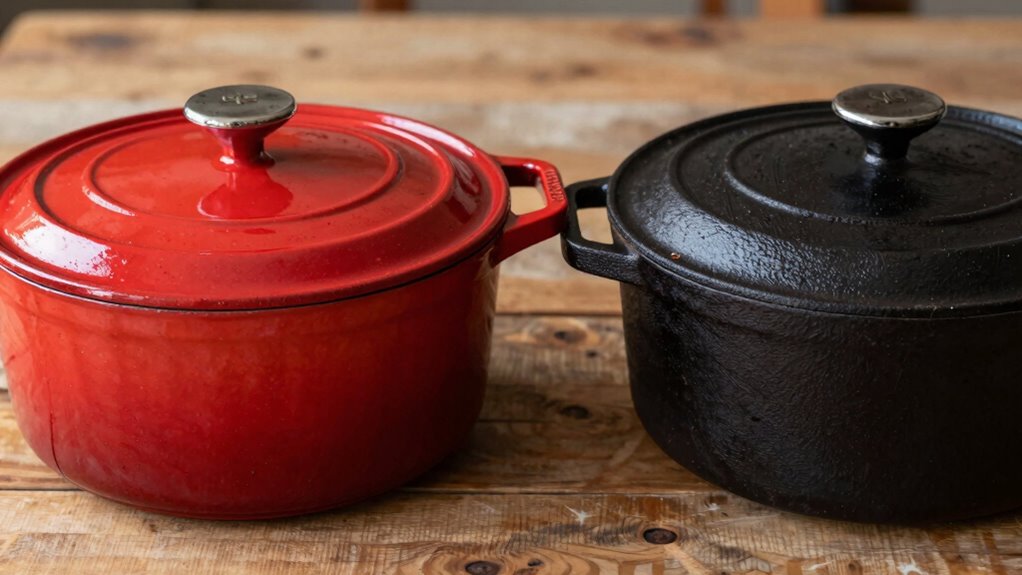
Enameled and bare cast iron Dutch ovens are both versatile cooking tools, but they differ substantially in their construction and maintenance. Bare cast iron requires seasoning techniques to build a natural non-stick surface and prevent rust, which involves applying oil and baking it onto the cookware regularly. Cleaning methods for bare cast iron typically include avoiding soap and instead using hot water and a stiff brush, then re-seasoning as needed. Proper seasoning techniques are essential for maintaining the cookware’s non-stick surface and preventing rust. Enameled Dutch ovens have a smooth, glass-like coating that doesn’t need seasoning, making them easier to clean with soap and water. This coating prevents rust and eliminates the need for ongoing seasoning techniques. While bare cast iron needs more upkeep, it’s prized for its durability and heat retention, whereas enameled options offer convenience and low maintenance. Color fidelity is less of a concern for Dutch ovens but is a critical consideration in other cookware types.
Which Cast Iron Dutch Oven Is Best for Your Cooking Style?

Choosing the right cast iron Dutch oven depends on your cooking style and priorities. If you prefer deep flavors and excellent heat retention, a bare cast iron pot is ideal, especially if you’re comfortable with seasoning techniques. Bare cast iron develops a natural non-stick surface over time, enhancing heat retention and cooking evenly, which is why many chefs favor it for its superior performance. On the other hand, if you value convenience and low maintenance, an enameled Dutch oven might suit you better, though it may not develop the same seasoning qualities. Consider how often you’ll cook certain dishes—slow braises or roasting benefit from seasoned cast iron, while soups and stews may do fine in enameled versions. Additionally, natural non-stick surface is a key advantage of bare cast iron that improves with use. Proper seasoning techniques are essential to maximize the benefits of bare cast iron and ensure longevity. Learning about initial seasoning and ongoing care can greatly impact how well your Dutch oven performs over time. Knowing how to maintain your cast iron through proper cleaning and care can significantly extend its lifespan and cooking performance. For those seeking a versatile and durable option, many enameled Dutch ovens come with colorful finishes that add aesthetic appeal to your kitchen. Ultimately, match your cooking habits with the maintenance and heat retention qualities of each type to find your best fit.
How Easy Is Maintenance for Enameled vs. Bare Cast Iron?

Maintaining a cast iron Dutch oven can vary considerably depending on whether it’s enameled or bare. With enameled versions, cleaning routines are simple—you can usually just wash with warm water and mild soap without worrying about damaging the surface. They resist rust naturally, so rust prevention isn’t a major concern. They also typically require less seasoning to maintain their non-stick properties compared to bare cast iron. Bare cast iron requires more care: you’ll need to scrub off stuck-on food with a stiff brush, avoid soap, and dry thoroughly to prevent rust. Regular seasoning helps maintain its non-stick surface and rust resistance. While enameled Dutch ovens are low-maintenance, bare cast iron demands more attentive cleaning routines to keep rust at bay. Proper maintenance practices are essential to prolong the lifespan of both types of cookware. Both types benefit from proper drying and storage, but enameled models generally offer easier upkeep. Additionally, understanding rust prevention techniques can significantly extend the usability of your cast iron cookware.
Are Bare Cast Iron Dutch Ovens More Durable for Heavy Use?
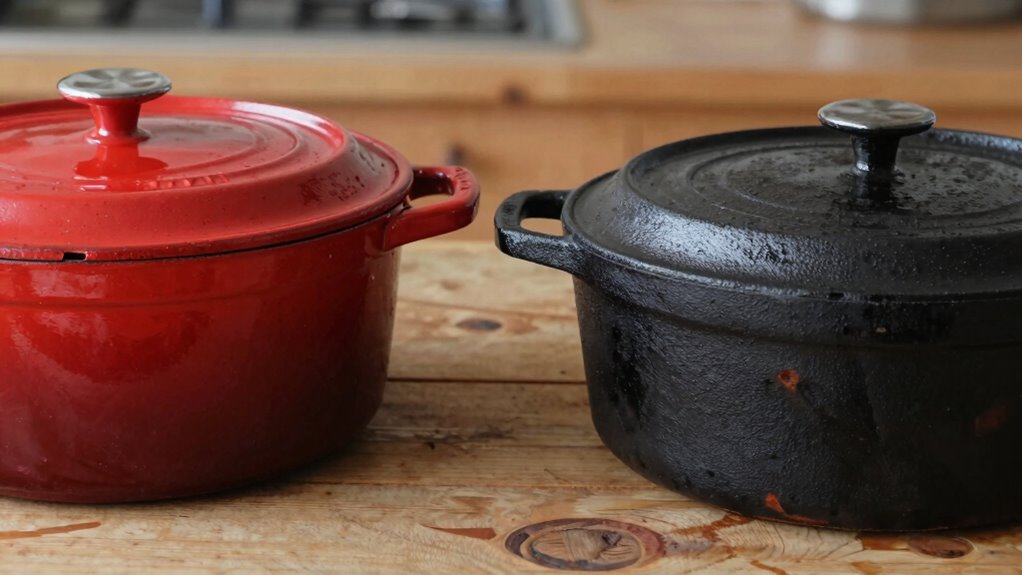
Bare cast iron Dutch ovens are often considered more durable for heavy use because they can withstand high temperatures, rough handling, and frequent use without significant damage. Their seasoned surface develops a natural non-stick layer that improves with time, making them resilient to chipping or cracking. Unlike enameled versions, they aren’t vulnerable to chips or cracks in a ceramic coating. This toughness allows you to cook at very high heats or handle them roughly without concern. Over time, the seasoned surface becomes more non-stick and durable, enhancing longevity. Additionally, proper seasoning techniques can further strengthen the surface, making it even more resistant to wear and tear. Because they are made of solid metal, they often have a longer lifespan compared to their enameled counterparts, especially when used frequently. Their ability to develop a natural non-stick surface through repeated use is a key advantage for heavy-duty cooks. With proper care and maintenance, bare cast iron can last for generations, making it a reliable investment for those who demand heavy-duty performance. While enameled Dutch ovens can chip or crack, bare cast iron withstands demanding use, making it a reliable choice for frequent, heavy-duty cooking.
How Do Costs Compare: Enameled vs. Bare Cast Iron Dutch Ovens?
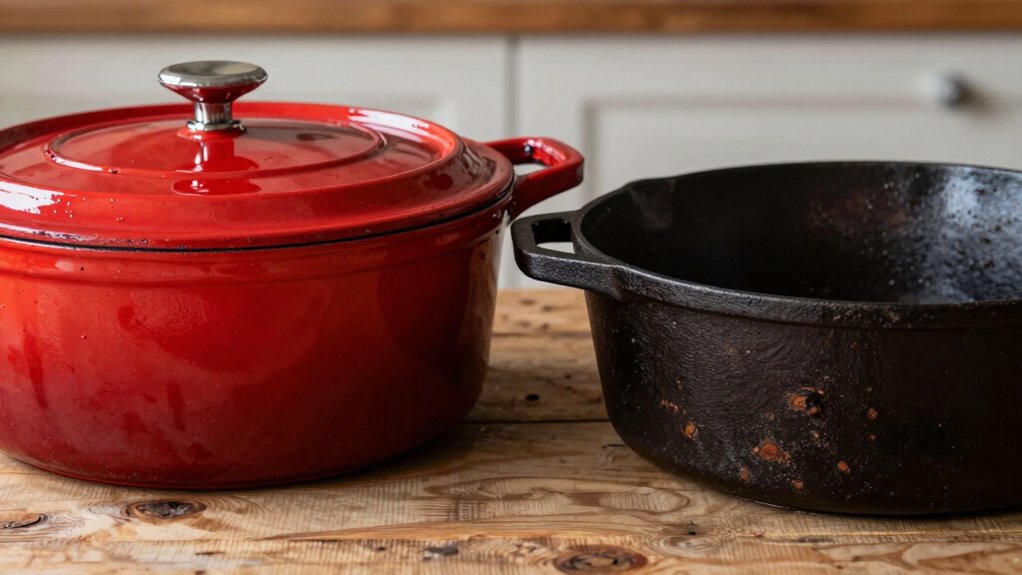
When comparing enameled and bare cast iron Dutch ovens, you’ll notice differences in initial cost, long-term value, and maintenance expenses. Enameled options often start higher but may save you money over time with less upkeep. Consider how these factors fit your budget and cooking habits to choose the best option.
Initial Purchase Price
Enamelled Dutch ovens generally cost more upfront than their bare cast iron counterparts. Your initial investment in an enameled version is higher due to the manufacturing process and added coating, which enhances aesthetics and ease of cleaning. When doing a price comparison, expect enameled models to range from $100 to $400 or more, depending on brand and size. Bare cast iron Dutch ovens are typically more affordable, often priced between $50 and $150. This lower initial purchase price makes them attractive if you’re on a tight budget. While the upfront cost favors bare cast iron, keep in mind that the price difference may influence your overall decision, especially if you’re looking for a durable piece that fits your budget from the start. Additionally, considering long-term durability can help determine which option offers better value over time.
Long-Term Investment Value
Although enameled Dutch ovens come with a higher initial price, their long-term value depends on factors like durability, maintenance, and versatility. Enameled cookware doesn’t require seasoning, making it easier to maintain, and it resists rust and chipping better over time. This can save you money on repairs or replacements. Bare cast iron, with proper seasoning, becomes seasoned cookware that improves with use, providing excellent thermal retention for slow cooking and browning. While it may need occasional re-seasoning, it generally lasts a lifetime if cared for properly. Over the years, both options can be cost-effective, but enameled Dutch ovens often retain their appearance longer, making them a good investment for those valuing long-term durability and aesthetic longevity. Additionally, enameled versions are less prone to staining and flavor absorption, which can help maintain consistency in cooking results over time. Proper cleaning and care can extend the lifespan of cast iron cookware, making it a cost-effective kitchen tool for many years. Regular use and proper maintenance can also enhance the non-stick surface of seasoned cast iron, improving cooking performance over time.
Maintenance and Repair Costs
Maintenance and repair costs for Dutch ovens vary markedly depending on whether you choose enameled or bare cast iron. With enameled models, you typically avoid the need to re-season, but enamel chipping can be costly if it occurs, often requiring professional repair or replacement. Bare cast iron, on the other hand, demands regular maintenance of the seasoned coating, which can be time-consuming but generally cheaper to fix, as you can re-season it yourself. If the seasoned coating wears thin or gets damaged, you’ll need to reapply oil and heat it to restore its non-stick surface. Additionally, seasoning techniques are essential to maintain the longevity and performance of bare cast iron. Overall, enameled Dutch ovens tend to have higher initial repair costs due to enamel chipping, while bare cast iron involves ongoing maintenance but lower repair expenses over time.
Troubleshooting Common Issues With Cast Iron Dutch Ovens
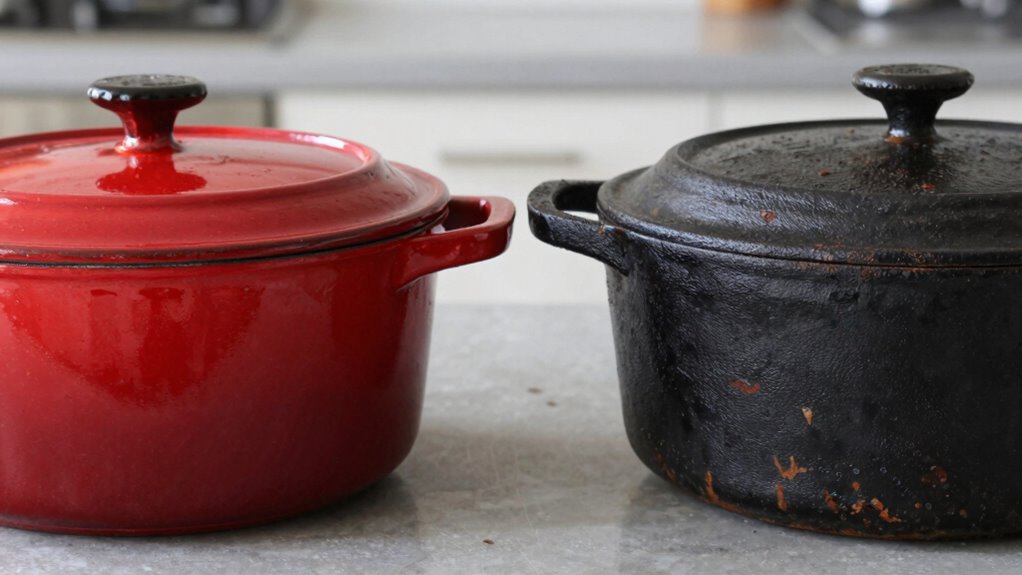
Even with proper care, cast iron Dutch ovens can develop common issues that affect their performance and longevity. If your oven isn’t non-stick anymore, it might be time to revisit your seasoning techniques; a well-seasoned surface prevents sticking and rust. Proper seasoning also involves understanding heat buildup and managing it effectively to avoid damaging the surface. Additionally, seasoning layers build up over time, creating a more durable and non-stick coating. Cracks or chips in the enamel or surface can sometimes be fixed by reseasoning, but severe damage may require lid replacement or professional repair. If the lid doesn’t fit snugly, it can cause moisture loss, so check for warping or cracks. Regularly cleaning without soap helps maintain seasoning, but avoid abrasive scrubbers that can damage the surface. Proper maintenance includes understanding impact investing principles, which emphasize sustainability and responsible stewardship. Incorporating seasoning maintenance into your routine can help prevent issues before they develop. Addressing these issues early keeps your Dutch oven working well, extends its lifespan, and ensures your cooking remains consistent. Proper maintenance and understanding of Gold IRA markets can help you make informed decisions about your investments.
Which Dutch Oven Fits Your Kitchen? Factors to Consider

Choosing the right Dutch oven depends on your kitchen’s space, style, and how you plan to use it. Consider the size and capacity that best fits your cooking needs, and think about durability and maintenance requirements. Additionally, understanding the energetic alignment of your cookware can enhance your cooking experience by promoting positive energy flow during meal preparation. A well-chosen Dutch oven can also serve as a long-term investment, providing years of reliable service and versatility in your kitchen. Finally, pick a design that complements your kitchen’s aesthetic to make it both functional and attractive.
Size and Capacity
Selecting the right size Dutch oven depends on your cooking needs and kitchen space. Consider the size options available and how they suit your typical dishes. Capacity considerations include:
- Small (3-4 quarts): Ideal for singles or couples, perfect for soups or side dishes.
- Medium (5-6 quarts): Versatile for family meals and roasting.
- Large (7+ quarts): Suitable for big gatherings or meal prep.
Think about your storage space and how often you’ll cook large batches. A smaller Dutch oven conserves space and is easier to handle, while larger sizes accommodate more ambitious recipes. Matching the size options to your culinary habits ensures you’ll get the most out of your Dutch oven without sacrificing convenience.
Material Durability and Maintenance
When evaluating which Dutch oven best fits your kitchen, durability and maintenance requirements are key factors to contemplate. Enameled cast iron offers easy cleanup and resists rust, but can chip if mishandled. Bare cast iron is incredibly durable and improves with use, developing a natural non-stick surface that enhances cooking versatility and heat retention. However, it requires regular seasoning and careful cleaning to prevent rust. Consider the table below to help decide:
| Material | Durability | Maintenance |
|---|---|---|
| Enameled Cast Iron | Resistant to chipping, scratches | Easy to clean, no seasoning needed |
| Bare Cast Iron | Very durable, lasts generations | Season regularly, dry after washing |
| Both | Long-lasting if cared for | Proper maintenance extends lifespan |
Style and Aesthetic Fit
Your Dutch oven’s style and appearance can considerably influence how well it complements your kitchen’s overall look. When choosing between enameled and bare cast iron, consider these factors:
- Color options – Enameled Dutch ovens come in a variety of hues, allowing you to match or contrast with your existing décor.
- Style versatility – Some designs blend seamlessly with modern aesthetics, while others suit rustic or traditional kitchens.
- Visual impact – A vibrant enameled finish can serve as a statement piece, whereas a classic bare cast iron offers a timeless, understated appeal.
Frequently Asked Questions
Can Enameled Cast Iron Withstand High-Temperature Oven Broiling?
Enameled cast iron can withstand high-temperature oven broiling, but you should stay within its high temperature limits to avoid damaging the enameled durability. Most enameled Dutch ovens are rated for up to 500°F, making them suitable for broiling. However, exceeding these limits risks chipping or cracking the enamel. Always check your manufacturer’s guidelines to guarantee you don’t compromise the cookware’s integrity during high-heat cooking.
Is It Safe to Use Metal Utensils on Enameled Dutch Ovens?
You shouldn’t use metal utensils on enameled Dutch ovens because it can harm the enamel’s durability. Metal can scratch or chip the surface, reducing its lifespan and affecting appearance. Instead, opt for wooden, silicone, or plastic utensils that are compatible with enamel. This prevents damage and ensures your Dutch oven stays in good condition, maintaining its utensil compatibility and enamel integrity over time.
How Do I Prevent Chipping of the Enamel Coating?
Want to keep your enamel shiny and chip-free? Treat it like royalty—avoid metal utensils and sudden temperature swings. Enamel durability depends on gentle handling; use wooden or silicone tools to prevent chip prevention mishaps. Don’t bash it around or stack heavy pots on top. With tender loving care, your enameled Dutch oven will stay pristine, proving that patience and kindness win the battle against chipping.
Are Bare Cast Iron Dutch Ovens Dishwasher Safe?
You shouldn’t put your bare cast iron Dutch oven in the dishwasher. It can strip away the seasoning and cause rust. Instead, use warm water and a stiff brush or sponge for cleaning, avoiding soap if possible. After cleaning, dry it thoroughly and apply a light coat of oil to maintain seasoning. Proper cleaning methods help keep your cast iron in great shape and prevent rust or damage.
What Are the Best Storage Practices for Cast Iron Cookware?
Did you know that proper storage can extend your cast iron’s life by up to 50%? To keep it in top shape, always guarantee your cookware is thoroughly dried and lightly seasoned before storing. Store in a dry, cool environment, avoiding humidity that can cause rust. Keep the lid slightly ajar or place a paper towel inside to promote airflow and maintain seasoning, preventing moisture buildup.
Conclusion
Ultimately, choosing between enameled and bare cast iron is like picking your ultimate kitchen weapon. Will you embrace the effortless elegance of enameled perfection or conquer the rugged durability of bare cast iron? Whichever you pick, you’re arming yourself with a cooking tool that could outlast civilizations. So go ahead—dive in, get your hands dirty, and cook like a legend. Your kitchen’s about to become the stage for culinary greatness!
Fall Picks
fall essentials
As an affiliate, we earn on qualifying purchases.