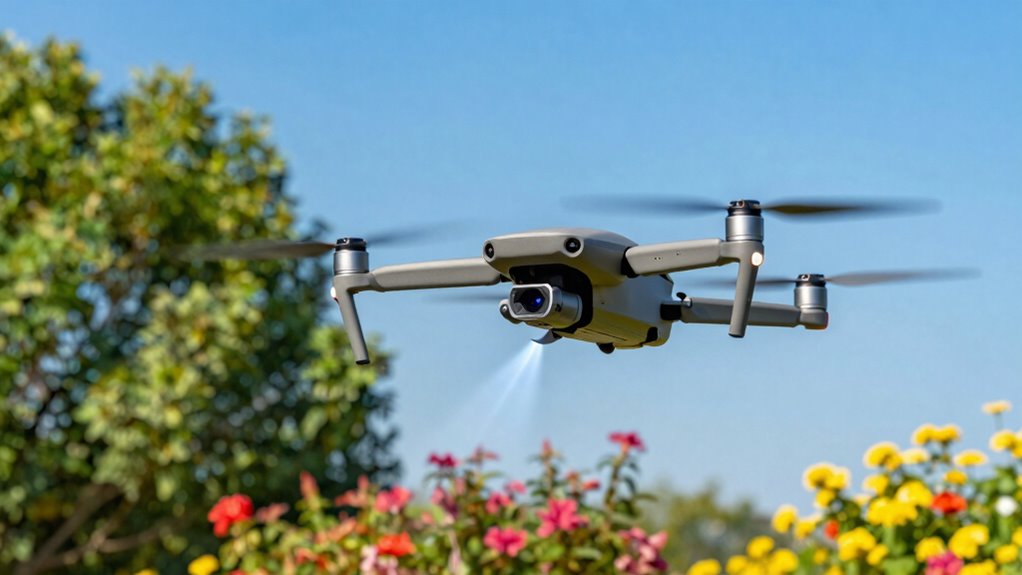

Obstacle avoidance on drones might sound magical, but it’s all about sensors like cameras, lidar, and infrared that constantly scan your surroundings. These sensors gather real-time data, which onboard processors analyze instantly to detect obstacles and adjust the drone’s path quickly. Safety protocols automatically trigger emergency landings or prevent entry into restricted areas when needed. Advanced technology, ongoing research, and regulations make these systems more reliable, ensuring safe and confident drone flights—keep exploring to see how all these pieces work together.

Get home appliances delivered free with Prime
- Fast, free delivery on millions of items
- Prime Video, Amazon Music and more included
- Member-only deals all year
Key Takeaways
- Obstacle avoidance uses sensors like cameras and lidar to detect and identify objects in real-time.
- Onboard processors analyze sensor data instantly to prevent collisions during flight.
- Safety protocols automatically respond to imminent obstacles with emergency maneuvers or landing.
- Advanced algorithms improve detection accuracy and enable adaptive navigation in complex environments.
- Regulations require obstacle avoidance systems, making drone operations safer and more reliable.
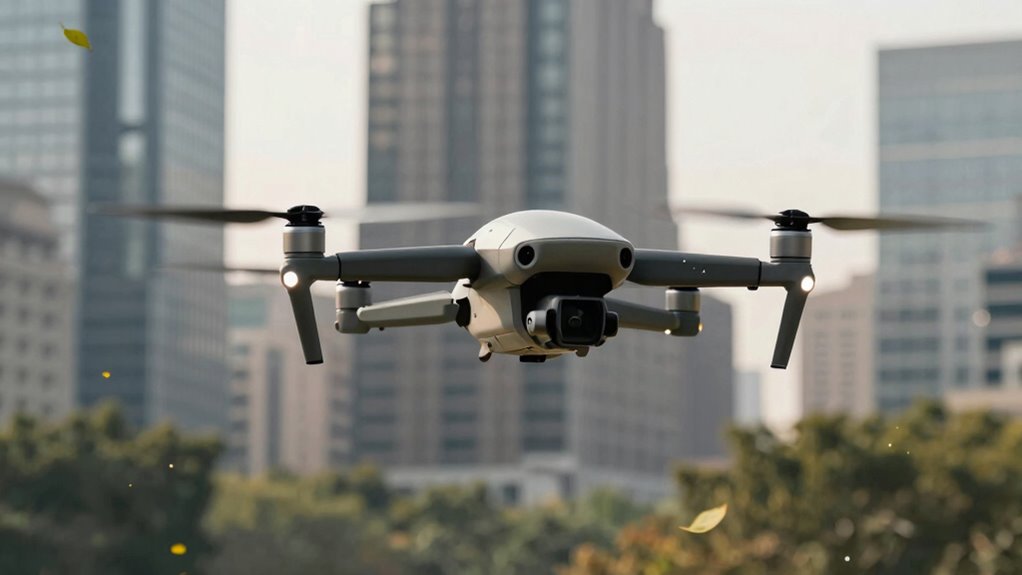
Have you ever wondered how drones navigate complex environments without crashing? It might seem like magic, but in reality, it’s the result of advanced drone navigation systems and strict safety protocols working together seamlessly. When a drone flies, it’s constantly gathering data from sensors like cameras, lidar, ultrasonic sensors, and infrared. This data helps the drone build a real-time map of its surroundings, allowing it to detect obstacles that might be in its path. The onboard processors analyze this information instantly, making split-second decisions to adjust its route and avoid collisions. This rapid processing and decision-making are what enable a drone to fly smoothly through tight spaces, around trees, or in cluttered environments without human intervention.
Behind this seemingly magical ability lies a sophisticated network of safety protocols designed to prioritize the drone’s stability and security. These protocols include automatic emergency landing procedures if a collision seems imminent or if the drone loses signal. They also involve predefined flight boundaries, so the drone doesn’t stray into restricted or dangerous areas. Many drones are equipped with fail-safe modes that activate if sensors detect a malfunction or if battery levels drop dangerously low. These measures ensure that even if something unexpected happens, the drone can respond appropriately, either by returning home or safely landing in place. Additionally, sensor technology plays a crucial role in providing accurate data for these systems to function effectively. Furthermore, ongoing research and development continually enhance these safety features, making drone flights even more reliable.
You should also know that drone navigation isn’t just about avoiding obstacles; it’s about doing so efficiently and reliably. Developers constantly refine algorithms to improve obstacle detection accuracy and response time. Some drones use machine learning techniques, enabling them to better interpret complex environments, like crowded urban streets or dense forests. These improvements make obstacle avoidance more precise, reducing the risk of accidents and making the drone’s flight safer for both the device and its surroundings. Furthermore, ongoing advancements in artificial intelligence contribute to the development of smarter navigation capabilities, enabling drones to adapt to new challenges in real-time. It’s also worth noting that regulations often require drones to have obstacle avoidance features, emphasizing how critical these systems are for safe flying.
Safety protocols are woven into every aspect of drone operation. They help guarantee that the drone can handle unpredictable scenarios without jeopardizing people or property. Many regulations require drones to have obstacle avoidance features, emphasizing how critical these systems are for safe flying. As a user, understanding that these safety features are an integral part of drone technology might give you more confidence when flying your drone in challenging environments. It’s not just about the tech looking magical; it’s about the robust safety measures that keep your drone flying smoothly, preventing crashes, and protecting everyone nearby.
Products Worth Considering

Philips Hue Large Smart Light Tube, Black – White and Color Ambiance LED Color-Changing Light – 1 Pack

Bose SoundLink Flex Bluetooth Speaker (2nd Gen), Portable Waterproof Speaker, Black

iRobot Roomba Max 715 Pet Robot Vacuum with AutoEmpty Dock
As an affiliate, we earn on qualifying purchases.
Frequently Asked Questions
How Do Drones Detect Obstacles in Real-Time?
You’re wondering how drones detect obstacles in real-time? They use sensor calibration to guarantee accurate readings from devices like LiDAR, ultrasonic, or infrared sensors. Software algorithms process this sensor data quickly, identifying obstacles and calculating safe flight paths. This combination allows drones to autonomously avoid collisions, even in complex environments, by constantly updating their understanding of surroundings and adjusting their flight trajectory accordingly.
What Sensors Are Used for Obstacle Avoidance?
You use sensors like LiDAR, ultrasonic, infrared, and optical cameras for obstacle avoidance. To guarantee accurate detection, you perform sensor calibration regularly, fine-tuning each sensor’s settings. You also optimize algorithms that process sensor data, making obstacle detection faster and more reliable. This combination helps your drone navigate safely by accurately sensing its environment, even in complex or cluttered areas, avoiding obstacles effectively and smoothly.
Can Obstacle Avoidance Be Disabled on Commercial Drones?
Yes, you can disable obstacle avoidance on some commercial drones, but it’s risky and often restricted by law. Legal restrictions and privacy concerns come into play, as disabling sensors might lead to unsafe flying and potential violations of privacy laws. Before doing so, check local regulations and manufacturer guidelines. Remember, obstacle avoidance helps prevent accidents, so disabling it could jeopardize safety and legality during your drone flights.
How Effective Is Obstacle Avoidance in Complex Environments?
Did you know that drones with obstacle avoidance handle over 80% of navigation challenges in complex environments? Their effectiveness depends on sensor limitations and how well the system processes data. In intricate settings, these systems can struggle with thin objects or fast-moving obstacles, reducing reliability. While they greatly improve safety, you shouldn’t rely solely on obstacle avoidance in highly dynamic or cluttered areas, as some challenges may still slip through.
Does Obstacle Avoidance Impact Drone Flight Time?
Obstacle avoidance can slightly impact your drone’s flight time because it uses sensors and processing power that drain battery efficiency. However, this trade-off boosts flight safety, helping your drone avoid crashes and collisions. While it might reduce flight duration marginally, the increased safety and reliability often outweigh the minor decrease in battery life. Overall, obstacle avoidance enhances your flying experience by making flights safer and more predictable.
Conclusion
As you watch drones navigate obstacles with seeming ease, you realize this technology’s true potential is just beginning to unfold. But beneath the sleek surfaces and smooth flights, challenges remain—limitations that could reshape how we see autonomous flight. Will these obstacles be forever overcome, or will new hurdles emerge as drones venture into even more complex environments? The future of obstacle avoidance is uncertain, and that mystery only makes it all the more exciting to witness what’s next.