
Ancient Roman engineering revolutionized transportation and water management with their innovations in roads, aqueducts, and bridges. You can see how they built durable, well-planned roads that connected vast regions, making travel and trade easier. Their aqueducts used precise gradients to carry water over long distances, supporting city growth. Roman bridges with arches showcased their mastery in load distribution and longevity. Continue exploring to discover how these innovations still influence modern infrastructure today.

Get home appliances delivered free — and shop member deals
- Fast, free delivery on millions of items
- Access to Prime Big Deal Days deals on October 6–7
- Prime Video, Amazon Music and more included
Key Takeaways
- Roman concrete’s unique composition enabled durable, waterproof structures like aqueducts, bridges, and roads.
- Advanced road construction techniques included layered foundations for durability and efficient transportation.
- Aqueducts utilized precise gradients and arches to transport water across varied terrains over long distances.
- Bridges incorporated arches and Roman concrete to distribute loads effectively and ensure longevity.
- Roman engineering innovations laid foundational principles influencing modern infrastructure and civil engineering practices.
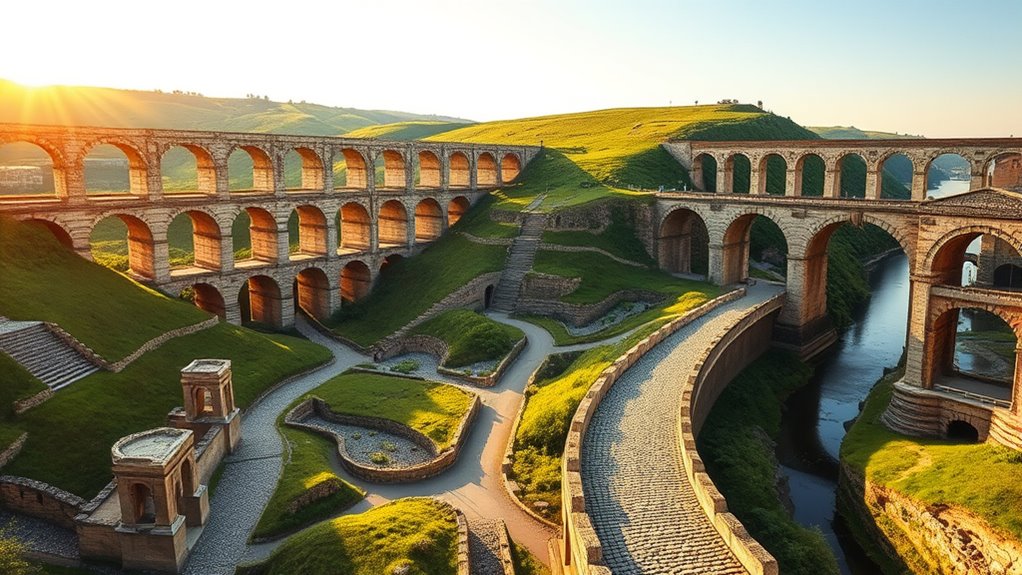
Ancient Roman engineering innovations revolutionized architecture and infrastructure, shaping the way civilizations built and connected themselves. You can see this influence today in the durability of Roman roads, aqueducts, and bridges, which have stood the testament of time. Central to this legacy was their mastery of Roman concrete, a revolutionary material that allowed them to construct massive, resilient structures. Roman concrete’s unique composition, combining volcanic ash with lime and water, created a material that was not only stronger than many modern counterparts but also capable of setting underwater. This innovation was especially critical in military engineering, where rapid, durable construction could mean the difference between victory and defeat. The Romans used their advanced military engineering skills to build fortified camps, bridges, and supply routes that supported their empire’s expansion and defense. These military innovations translated seamlessly into civilian projects, giving rise to sophisticated infrastructure that connected distant regions. Their understanding of material properties like Roman concrete was fundamental in these achievements.
Your experience of traveling through ancient Roman roads reveals their meticulous planning and engineering prowess. Roman roads were not just dirt paths; they were carefully layered, with a foundation of stones and gravel topped with tightly fitted paving stones. This engineering feat allowed for swift movement of armies, trade, and communication across vast distances. These roads often featured milestones and drainage systems, showing the Romans’ attention to detail. Their ability to design durable, long-lasting roads was fueled by their understanding of materials like Roman concrete, which provided strength and stability. Similarly, their aqueducts demonstrated their mastery of hydraulic engineering. These towering structures used precise gradients to carry fresh water over valleys and uneven terrain, supplying cities with clean water and supporting urban growth. The aqueduct arches, built with a keen sense of balance and load distribution, exemplify their ingenuity.
Bridges were another marvel of Roman engineering, facilitating travel and commerce across rivers and rugged landscapes. They combined functionality with aesthetic elegance, often incorporating arches that distributed weight efficiently. Many of these bridges, built with Roman concrete and stone, still stand today as testaments to their durability. Their engineering design considered not only immediate needs but also long-term resilience, ensuring these structures could withstand the forces of nature over centuries. Overall, Roman engineering innovations, from their advanced concrete techniques to their military engineering prowess, transformed infrastructure into lasting monuments of ingenuity. When you walk along a Roman road, cross an aqueduct, or stand on an ancient bridge, you’re experiencing a legacy that continues to influence modern engineering practices, demonstrating how their innovations laid the foundation for interconnected civilizations.
As an affiliate, we earn on qualifying purchases.
Frequently Asked Questions
How Did Roman Engineers Ensure the Durability of Their Structures?
Roman engineers assured the durability of their structures through careful material selection and advanced construction techniques. You’ll notice they used strong materials like concrete, stone, and waterproof mortar to withstand time and weather. They also employed innovative methods such as precise layering, arch designs, and thorough foundations, which distribute weight evenly. These strategies allowed their structures to last centuries, demonstrating their mastery in engineering resilience and longevity.
What Materials Were Commonly Used in Roman Engineering Projects?
Think of Roman concrete as a magic recipe, combining volcanic ash, lime, and water to create a durable, resilient mix. Roman engineers used innovative construction techniques, layering materials carefully and employing sturdy stones for foundations. These materials, like volcanic ash in Roman concrete, acted like armor, ensuring structures stood the test of time. Your focus on quality materials and clever techniques made their engineering marvels last nearly two millennia.
How Did Roman Roads Influence Modern Transportation Systems?
Roman roads revolutionized modern transportation by boosting military logistics and trade expansion. You benefit today from their durable, straight pathways that facilitated quick troop movements and efficient trade routes. These roads set the standard for road construction, influencing infrastructure development worldwide. Their design improved travel speed and connectivity, laying the groundwork for contemporary highway systems. By enabling faster movement of goods and soldiers, Roman roads fundamentally shaped how societies develop and connect.
Were There Any Innovations in Roman Water Management Besides Aqueducts?
Imagine the Romans as master gardeners tending a vast, intricate irrigation system. Besides aqueducts, you’d find their revolutionary sewer systems, which kept cities clean and healthy. They also pioneered lead pipe technology, ensuring water flowed efficiently to homes and baths. These innovations transformed urban living, demonstrating their ingenuity in water management. You can see their legacy today in modern sanitation and plumbing systems, still rooted in Roman ingenuity.
How Did Roman Bridges Withstand Natural Disasters Like Earthquakes?
Roman bridges used seismic resistant techniques and earthquake resistant design to withstand natural disasters. You’ll notice they often incorporated flexible arches and durable materials like concrete and stone, which absorb shock and prevent collapse. By carefully distributing weight and designing with seismic activity in mind, Romans improved the resilience of their bridges. This innovative approach helped their structures endure earthquakes, showcasing their advanced understanding of seismic-resistant engineering.
Conclusion
As you reflect on Roman engineering marvels, it’s clear their innovations quietly shaped the world you know today. Their roads, aqueducts, and bridges subtly laid the groundwork for modern infrastructure, often going unnoticed but never unappreciated. By appreciating their ingenuity, you can see how these timeless achievements gently continue to influence your daily life, guiding you toward a deeper respect for the quiet brilliance of ancient craftsmanship.
Fall yard work Picks
leaf blowers
As an affiliate, we earn on qualifying purchases.





![[Fact Check] Lee’s Claim Blaming Oh For Seoul Home Prices? - 최보식의언론](https://tweedot.com/wp-content/uploads/2026/09/fact-check-lee-s-claim-blaming-oh-for-seoul-home-prices-featured-260x140.jpg)