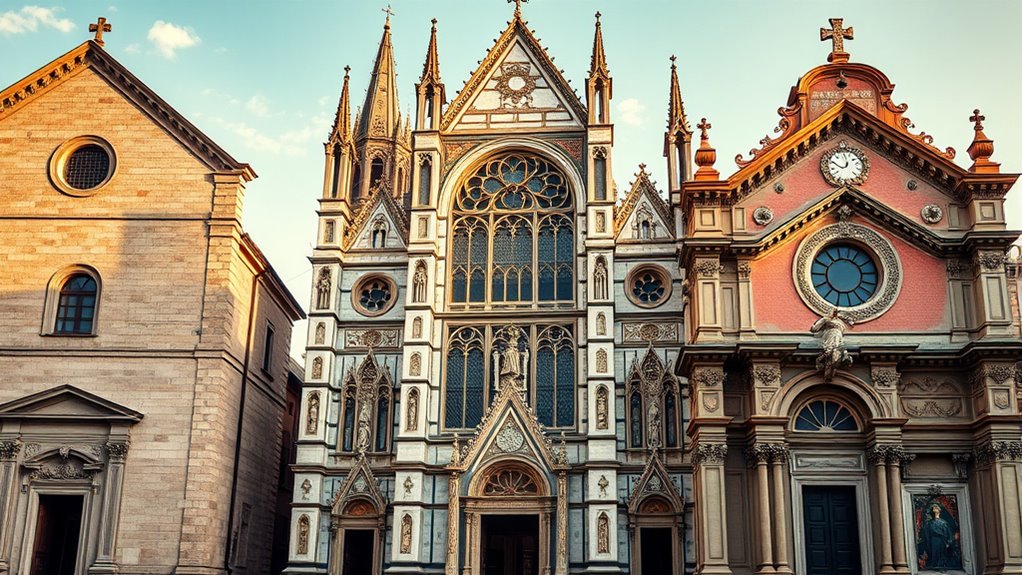

You can explore Italy’s churches with distinctive styles that tell their own stories. Romanesque churches feature fortress-like exteriors, thick stone walls, and rounded arches that emphasize stability. Gothic churches stand out with pointed arches, flying buttresses, and stunning stained-glass windows, creating soaring verticals. Baroque churches dazzle with bold curves, ornate sculptures, and dramatic interiors designed to evoke emotion. Continuing your look reveals how these styles evolved and shaped Italy’s rich spiritual and artistic heritage.
Key Takeaways
- Romanesque churches feature fortress-like exteriors, rounded arches, and minimal interior decoration emphasizing stability.
- Gothic architecture is characterized by pointed arches, flying buttresses, large stained-glass windows, and verticality.
- Baroque churches have elaborate façades with bold curves, sculptures, and interiors with dramatic lighting and ornate decorations.
- Each style reflects evolving religious expressions, from Romanesque’s solidity to Gothic’s spiritual elevation and Baroque’s emotional intensity.
- The architectural features serve structural and symbolic purposes, enhancing spiritual experiences and showcasing Italy’s artistic heritage.
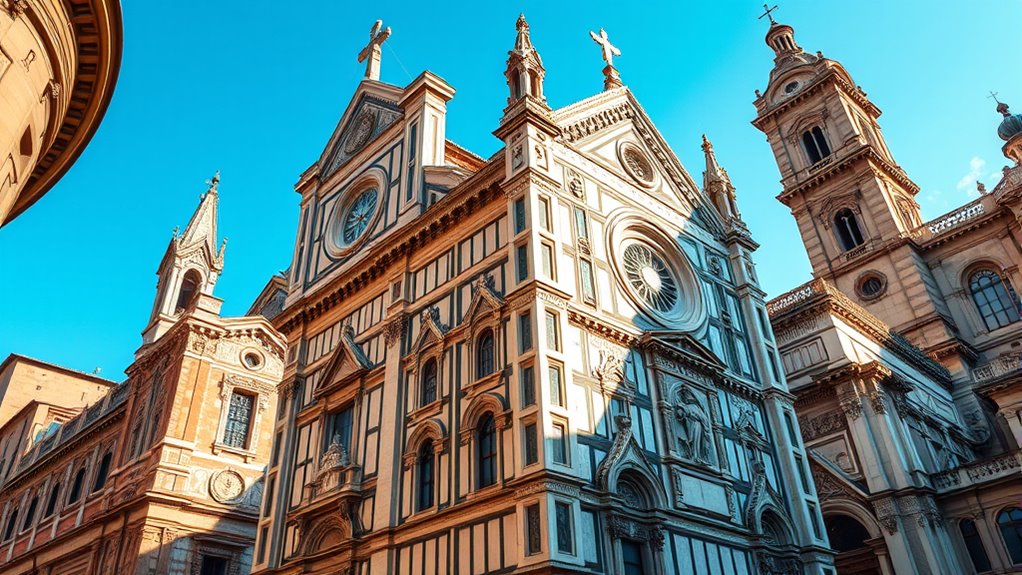
Italy’s churches showcase a remarkable diversity of architectural styles that reflect centuries of religious, cultural, and artistic evolution. As you explore these sacred sites, you’ll notice how each style brings its unique character through distinctive church façade design and interior ornamentation. Romanesque churches often greet you with solid, fortress-like exteriors. Thick stone walls, small rounded windows, and rounded arches define their façades, giving the impression of strength and permanence. Inside, you’ll find a sense of stability, with minimal ornamentation but intricate carvings around portals and capitals that tell stories from scripture. The interior tends to be dimly lit, emphasizing the weight of stone and the spiritual gravity of the space. The simplicity in the façade design is balanced by detailed interior ornamentation, such as frescoed ceilings or carved wooden altars, which draw your eye upward and invite reflection.
Italy’s Romanesque churches feature fortress-like exteriors with thick stone walls and small rounded windows.
Moving into the Gothic period, you’ll notice a dramatic shift in church façade design. The façades become more ornate, featuring pointed arches, flying buttresses, and large stained-glass windows that flood interiors with colored light. These windows aren’t just decorative—they serve to tell biblical stories in vibrant detail, engaging your senses and faith. Inside, the interior ornamentation intensifies with ribbed vaults, intricate sculptures, and expansive frescoes that cover walls and ceilings. The play of light and shadow through stained glass enhances the spiritual experience, making the space feel both divine and awe-inspiring. Gothic churches aim to lift your gaze upward, with spires and pinnacles reaching towards the heavens, emphasizing verticality and divine connection.
Then, as you encounter Baroque churches, you’ll be struck by their exuberance and emotional intensity. The church façade design in this style often features bold curves, elaborate sculptures, and dynamic forms that evoke movement and drama. The façades are richly decorated with statues, stucco work, and ornate pediments, creating a spectacle that captures attention from afar. Inside, the ornamentation becomes even more elaborate—think grand stucco ceilings, gold leaf accents, and dramatic chiaroscuro effects. These details are designed to evoke an emotional response, immersing you in a spiritual experience that feels both divine and human. The interior spaces are carefully crafted to guide your journey through light, shadow, and ornate decoration, making every visit a visceral encounter with faith and artistry.
In each style, the interplay of façade design and interior ornamentation tells a story of evolving religious expression, inviting you to step into a different era of Italy’s rich spiritual and artistic heritage.
Frequently Asked Questions
How Did Regional Climates Influence Italian Church Architecture?
You notice that regional climates markedly shaped Italian church architecture through climate adaptations. In hotter southern regions, thick walls and small windows help keep interiors cool, while in cooler northern areas, larger windows and light-colored materials reflect regional weather influences. These design choices respond to local temperatures and sunlight, ensuring comfort and durability. By tailoring structures to their environment, architects created churches that harmonize with regional climates and weather patterns.
What Role Did Local Materials Play in Style Development?
You might find that local materials truly shaped Italy’s church styles. When you use local stone, it lends strength and a sense of permanence, influencing the grand Romanesque arches. Regional clay, on the other hand, allowed for detailed decoration in Baroque facades. By working with what’s available, architects crafted distinctive designs that reflect regional identity, making each church a unique demonstration of local craftsmanship and material beauty.
Are There Hybrid Architectural Styles in Italian Churches?
Yes, Italian churches often feature ecclesiastical blends, creating unique architectural hybrids. You’ll notice elements from different styles, like Gothic pointed arches combined with Baroque ornate details. These hybrids reflect evolving tastes and local influences, making each church distinct. By combining features, designers adapted to materials and cultural trends, resulting in rich, layered structures that showcase Italy’s diverse architectural heritage.
How Have Modern Renovations Affected Historical Integrity?
Modern renovations can pose significant restoration challenges, potentially impacting the historical integrity of Italian churches. You might find that preserving original features while implementing modern preservation techniques requires careful planning. While renovations aim to update structures, they can sometimes compromise authenticity if not done thoughtfully. To maintain the balance, experts focus on sensitive restorations that respect the church’s original architecture, ensuring its cultural and historical value endures for future generations.
Which Italian City Has the Most Diverse Church Styles?
Florence has the most diverse church styles, showcasing regional diversity and architectural evolution. As you explore the city, you’ll notice a blend of Romanesque, Gothic, and Baroque influences, reflecting its rich history. The variety highlights Florence’s role as a cultural hub, where different periods and styles merge seamlessly. This architectural evolution offers a unique glimpse into Italy’s religious and artistic development over centuries, making Florence a must-visit for architecture enthusiasts.
Conclusion
As you explore Italian churches, you’ll discover diverse designs, from Romanesque robustness to Gothic grandeur and Baroque brilliance. Let their layered layouts lift your understanding, inspiring introspection and admiration. Remember, each style tells a story—structural strength, soaring spans, and sculpted splendor. Embrace these architectural accents, appreciating artistry’s allure and history’s heart. By studying these sacred spaces, you deepen your devotion, delighting in divine design and enduring elegance embedded within Italy’s inspiring interiors.