
Italy’s historic sites face many challenges, including wear from millions of visitors, environmental pollution, and natural deterioration. Over-tourism accelerates damage, requiring restrictions like visitor limits and protective barriers. Balancing preservation with tourism is complex, demanding expert restoration and sustainable practices. It’s essential to protect these treasures for future generations while respecting their cultural integrity. If you want to understand how Italy tackles these issues and secures its heritage, keep exploring these solutions further.
Key Takeaways
- Heavy tourism influx causes physical deterioration and environmental strain on Italy’s historic sites.
- Balancing authentic restoration with modern safety and accessibility standards presents preservation challenges.
- Pollution, climate change, and urban development threaten the structural integrity of historic structures.
- Limited funding and resources hinder comprehensive conservation efforts across Italy’s cultural heritage.
- Ensuring ongoing maintenance while managing visitor impact requires careful planning and collaboration among stakeholders.
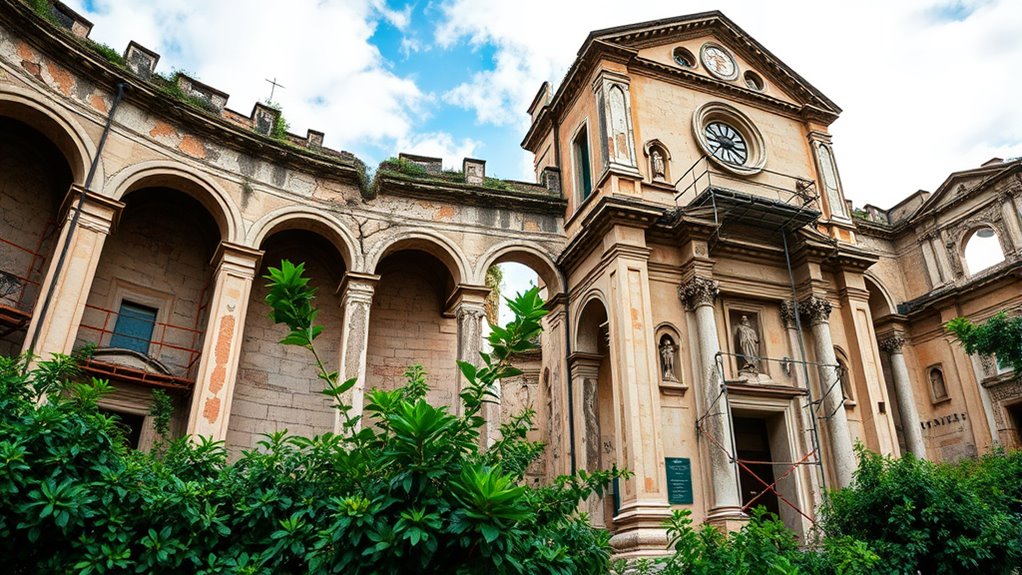
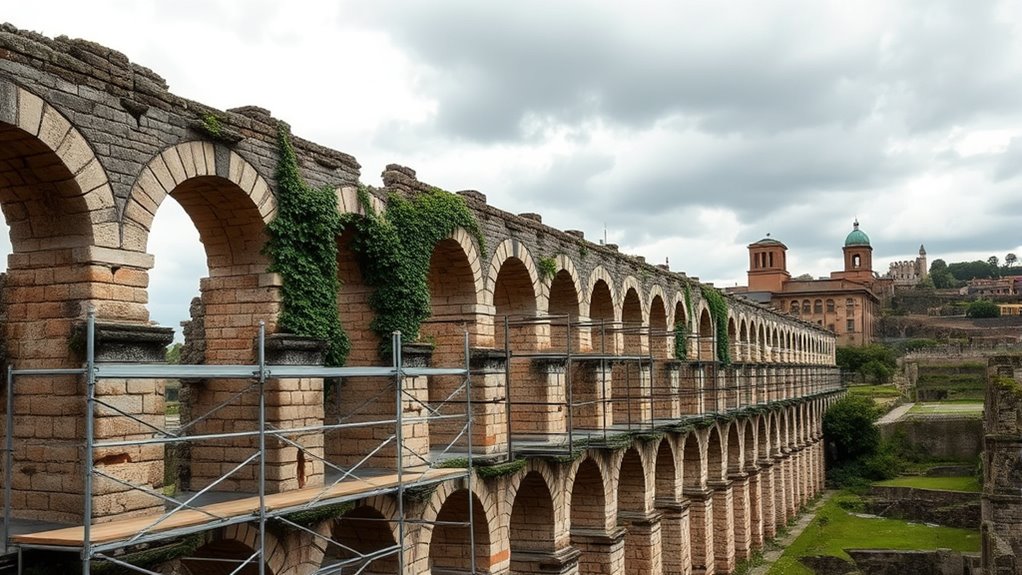
Have you ever wondered why preserving historic sites matters? When you visit Italy’s ancient ruins, charming towns, or centuries-old churches, you’re experiencing more than just beautiful architecture — you’re connecting with history. But behind these stunning sights lies a complex challenge: maintaining these sites for future generations while respecting their authenticity. Restoration techniques are central to this effort. Skilled craftsmen and modern technology work together to repair damaged stonework, reinforce fragile structures, and restore original features. These techniques aim to strike a delicate balance: preserving the site’s historical integrity while making it safe and accessible. However, every restoration decision can influence the site’s character, so experts carefully assess the best approach. Incorporating sustainable practices into conservation efforts ensures that preservation can be maintained responsibly over the long term.
Preserving Italy’s historic sites balances authenticity with safety through expert restoration and careful decision-making.
The tourism impact on Italy’s historic sites is significant. Every year, millions of visitors flock to landmarks like the Colosseum, Florence’s Duomo, or Venice’s canals. While tourism fuels the economy and raises awareness of Italy’s cultural heritage, it also presents risks. Heavy foot traffic can accelerate wear and tear, leading to deterioration that demands frequent repairs. The influx of tourists sometimes causes environmental strain, such as pollution or litter, which can further harm delicate structures. To manage this, authorities implement measures like limiting visitor numbers, installing protective barriers, or renovating pathways to reduce damage. These actions aim to protect the sites without diminishing their allure.
Balancing preservation with tourism is a constant challenge. You might notice that some sites have restrictions on access or require guided tours — all part of a strategy to minimize harm. These efforts ensure that Italy’s historic sites remain intact while allowing visitors like you to enjoy their beauty. Preservation isn’t just about fixing what’s broken; it’s about safeguarding the stories and craftsmanship embedded in these structures. When you appreciate the effort involved in restoration techniques, you gain a deeper respect for the care taken to keep these sites alive. This ongoing process involves careful planning, resource allocation, and collaboration between conservationists, architects, and local communities.
Ultimately, heritage conservation in Italy is a shared responsibility. Your awareness and respectful behavior during visits contribute to the preservation effort. Recognizing the importance of these sites helps ensure that future generations can experience Italy’s rich history firsthand. By understanding the challenges and the efforts to mitigate tourism impact while employing expert restoration techniques, you become a part of the ongoing story of Italy’s cultural legacy. It’s a collective effort that preserves not just stone and mortar, but the spirit of a nation’s history.
Frequently Asked Questions
How Does Climate Change Affect Italy’s Historic Sites?
Climate change worsens Italy’s historic sites by accelerating urban decay and increasing pollution effects. You’ll notice more damage from extreme weather, such as heavy rains and heatwaves, which weaken ancient structures. Rising sea levels threaten coastal landmarks, and pollution from industrial activities further erodes stone and mortar. These issues demand urgent conservation efforts, but if ignored, Italy’s rich heritage risks irreversible loss, impacting both cultural identity and tourism.
What Funding Options Are Available for Heritage Conservation?
You can access public grants and seek private sponsorships to fund heritage conservation projects. Public grants are often available through government agencies and international organizations that prioritize preserving Italy’s historic sites. Private sponsorships come from businesses or individuals passionate about heritage, offering financial support or resources. Combining these options maximizes your funding potential, helping you maintain and restore Italy’s cultural treasures effectively and sustainably.
How Do Local Communities Participate in Preservation Efforts?
Think of local communities as the heartbeat of heritage preservation. You can participate through community engagement initiatives, volunteer programs, or local festivals celebrating traditions. For example, villagers in Siena actively sustain their historic towers, blending local traditions with preservation. Your involvement guarantees that the stories and customs of your area are passed down, fostering a sense of ownership and pride that keeps historic sites vibrant and cared for.
What Are the Legal Protections for Italy’s Cultural Heritage?
Italy’s cultural heritage is protected by strict heritage laws and preservation policies. You benefit from these legal protections, which prevent unauthorized alterations and ensure proper restoration of historic sites. Local authorities enforce regulations that safeguard Italy’s monuments, archaeological sites, and historic buildings. By complying with these laws, you help preserve Italy’s rich history for future generations while maintaining the integrity of its cultural landscape.
How Can Tourism Be Balanced With Conservation Needs?
Think of balancing tourism and conservation as tending a delicate garden. You can’t let visitor impact overrun the blooms, so promote sustainable tourism that encourages responsible behavior. Set limits on daily visitors, provide education, and develop eco-friendly infrastructure. This way, you safeguard Italy’s historic sites while still letting travelers enjoy their beauty. By managing the flow, you ensure the sites remain vibrant and preserved for generations to come.
Conclusion
As you see, preserving Italy’s historic sites isn’t just about protecting stone and mortar—it’s about safeguarding stories and culture for future generations. Imagine restoring Rome’s Colosseum, ensuring visitors can walk through history. By supporting sustainable practices and innovative conservation efforts, you become part of this essential mission. Remember, your awareness and actions help keep Italy’s rich heritage alive, allowing everyone to experience its timeless beauty for years to come.