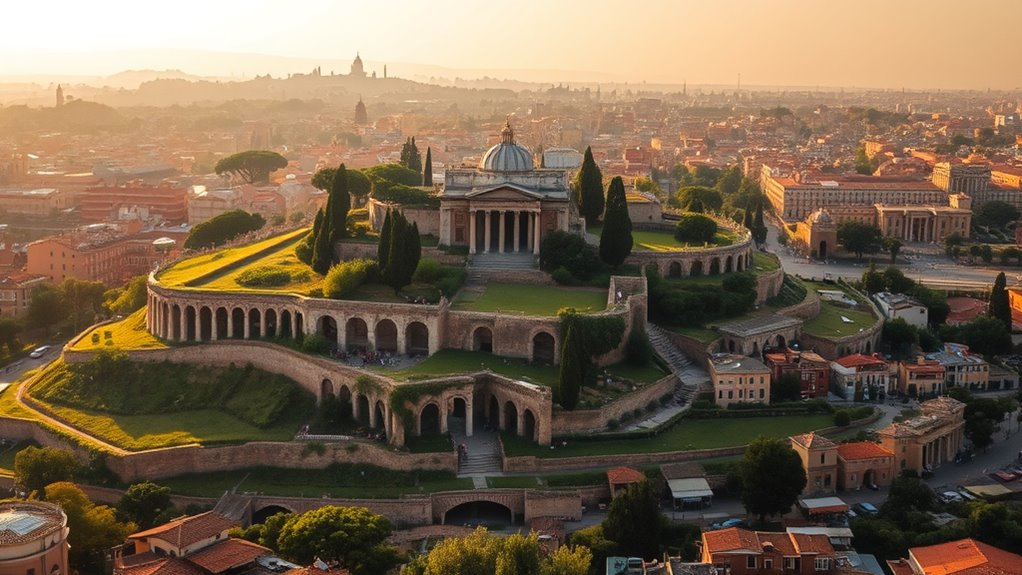

The seven hills of Rome form the city’s core, blending myth, history, and archaeology. Each hill—Palatine, Capitoline, Aventine, among others—holds unique significance with ancient ruins, temples, and monuments that reveal Rome’s legendary origins and political power. These sites tell stories of gods, kings, and emperors, shaping the city’s identity and culture. Exploring these hills uncovers a fascinating mix of myth and reality, guiding you through Rome’s enduring legacy.
Key Takeaways
- Each hill embodies a chapter of Rome’s mythic origins and historical development, linking legend to tangible archaeological remains.
- Palatine Hill reveals imperial palaces and early settlements, symbolizing Rome’s legendary foundation.
- Capitoline Hill was the political and religious heart, home to the Temple of Jupiter and significant artifacts.
- Aventine Hill is associated with mythic figures and contains ancient ruins, representing Rome’s mythic and cultural evolution.
- Together, the seven hills reflect Rome’s spiritual, political, and cultural identity through myth, history, and archaeology.

Rome’s seven hills are more than just geographic features; they are the foundation of the city’s rich history and cultural identity. These hills are woven into the very fabric of Rome’s mythology and history, serving as the birthplace of legendary tales and the sites of ancient civilizations. Each hill holds a story that connects the mythic origins of Rome to its archaeological treasures, making them essential to understanding the city’s enduring legacy.
Starting with Palatine Hill, you’ll find it’s not just a scenic overlook but also one of the most significant archaeological sites in Rome. According to Roman mythology, this is where Romulus and Remus were said to have been nurtured by the she-wolf, laying the mythic foundation of Rome itself. Excavations here reveal the remains of imperial palaces, ancient villas, and temples, offering a tangible link to Rome’s regal past. Walking through Palatine, you’re stepping into a space where legend and history converge, uncovering remnants of the city’s earliest settlements.
The Capitoline Hill, once the political and religious heart of ancient Rome, is steeped in myth and history. Its temples, including the iconic Temple of Jupiter, dominate the skyline and symbolize the city’s spiritual core. Today, the Capitoline Museums house invaluable archaeological finds that showcase Rome’s ancient civilization, from sculptures to inscriptions. As you explore, you realize these artifacts are not just relics; they’re stories etched in stone that speak to Rome’s grandeur and divine authority rooted in Roman mythology.
On Aventine Hill, you can enjoy a quieter side of Rome’s history. It’s linked to myth through stories of Roman gods and legendary figures. Archaeological sites here, like the Orto di Roma, reveal ancient walls and ruins that tell of a city expanding beyond its mythic origins. The hill’s peaceful atmosphere contrasts with the bustling city below, yet it remains a fundamental piece of Rome’s historical puzzle, connecting mythic tales to real, tangible remnants.
Each of Rome’s seven hills encapsulates a chapter of its mythic and archaeological history. These sites aren’t just points on a map; they’re living narratives of the city’s creation, growth, and spiritual identity. By exploring them, you immerse yourself in a world where myth and history blend seamlessly, revealing the true soul of Rome. They remind you that the city’s past is etched into its landscape, waiting to be discovered through stories, ruins, and the timeless myths that continue to shape its identity.

Pilgrim's Rome: A Christian's Guide to the Historical Sites (Travel Monograph Series)
Used Book in Good Condition
As an affiliate, we earn on qualifying purchases.
As an affiliate, we earn on qualifying purchases.
Frequently Asked Questions
Which Hill Is Considered the Oldest Among Rome’s Seven Hills?
The Aventine Hill is considered the oldest among Rome’s seven hills. Archaeological findings reveal it has the earliest human settlements, dating back to the early Roman period. You’ll find ancient ruins and artifacts that highlight its long history. As you explore, you’ll notice its significance in Rome’s foundation, making it a key site for understanding the city’s origins and early development.
Are There Any Myths Associated With the Founding of Each Hill?
You’ll find that each hill’s mythical origins hold divine significance, symbolizing Rome’s foundation story. For example, Palatine Hill is linked to Romulus and Remus, embodying resilience and divine intervention. Aventine Hill’s myth involves gods favoring the humble, representing hope. These stories reflect Rome’s deep spiritual roots, turning the landscape into a sacred narrative that underscores their divine purpose in shaping the city’s legendary past.
How Did the Geography of the Hills Influence Ancient Rome’s Expansion?
You should realize that Rome’s hills provided a hilltop strategic advantage, shaping its expansion. Their geographic influence on urban planning allowed the city to grow naturally from elevated areas, offering defense and commanding views. This terrain encouraged settlement on the hills first, then expanding outward. The hills’ strategic locations helped protect early Rome from invasion and facilitated trade routes, fostering a strong foundation for the city’s growth and dominance.
What Modern Structures Are Built on the Original Seven Hills?
You’ll find modern structures on Rome’s original seven hills, blending history with contemporary urban development. On Palatine Hill, you see remnants of ancient ruins alongside modern buildings. Capitoline Hill hosts government offices and museums that showcase history and modern architecture. On Aventine Hill, parks and residential complexes coexist with historic sites, while the Quirinal Hill features the Italian President’s residence. These sites demonstrate how modern architecture honors Rome’s timeless heritage.
Are the Seven Hills Accessible to Visitors Today?
Yes, the seven hills are accessible to visitors today. You can explore them with public access maintained across most sites, though some areas might have limited hours or restrictions. Visitor amenities like guided tours, informational signs, and nearby facilities make your experience easier and more enjoyable. Just plan ahead, wear comfortable shoes, and take advantage of the pathways and viewpoints to fully appreciate Rome’s historic landscape.
Roman archaeological site tickets
As an affiliate, we earn on qualifying purchases.
As an affiliate, we earn on qualifying purchases.
Conclusion
As you stand atop Rome’s iconic hills, you realize each one holds secrets of power, conquest, and transformation. These ancient sites have shaped history in ways you’ll never fully uncover. What stories lie hidden beneath their timeless stones? The more you explore, the more you sense that Rome’s past is alive, waiting to reveal its mysteries. Are you ready to uncover the next chapter in this eternal city’s fascinating saga?

Rick Steves Rome
As an affiliate, we earn on qualifying purchases.
As an affiliate, we earn on qualifying purchases.
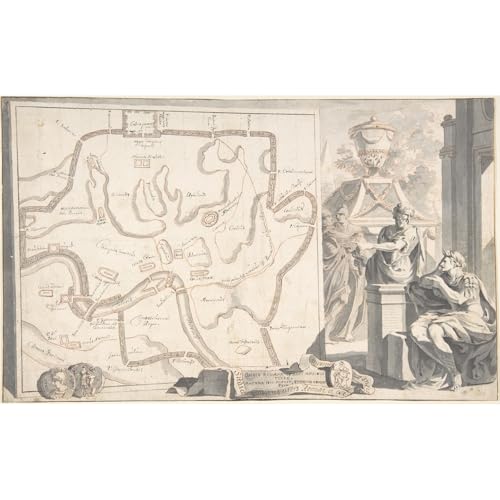
ArtDirect Map of Ancient Rome Illustrating Major Monuments and the Seven Hills (before 1704) Unframed Art Print Giclee Poster by Jan Goeree – Ready for Framing with Customization Sizes 10×6, 14×9, 20×12, 36×22, 48×30 and 60×37 inches
Artist: Jan Goeree
As an affiliate, we earn on qualifying purchases.
As an affiliate, we earn on qualifying purchases.