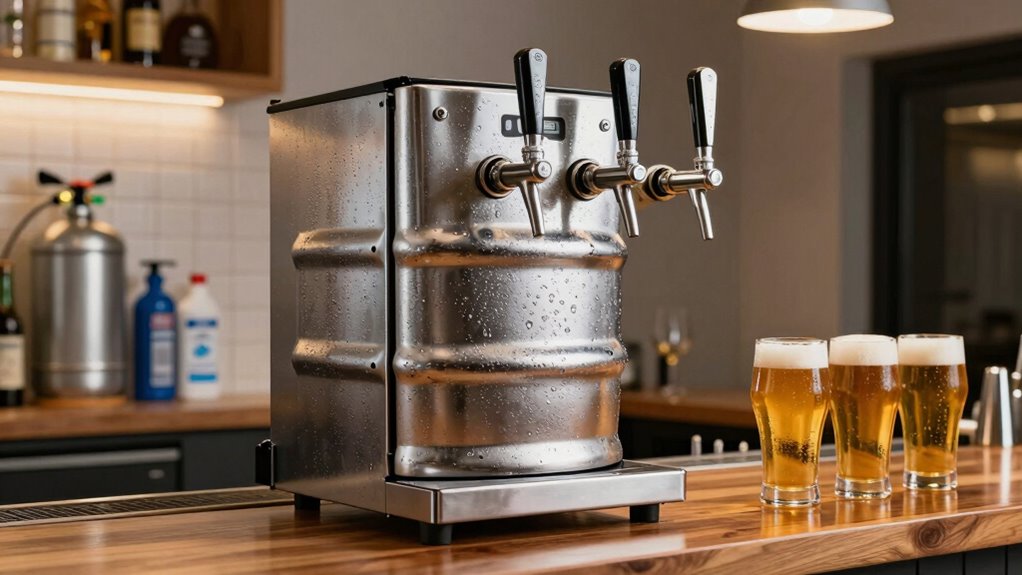

A kegerator is a special fridge that stores and dispenses draft beer, using CO₂ pressure to push the beer through taps. To keep it working well, you’ll want to manage your CO₂ properly, clean lines regularly, and sanitize surfaces to prevent contamination. Maintaining the right temperature and pressure guarantees fresh, fizzy beer every time. If you want to learn how to set up, troubleshoot, and keep your system in top shape, keep exploring these basics.
Key Takeaways
- A kegerator stores and dispenses draft beer using refrigeration, CO₂ pressure, and a tap system to ensure freshness.
- Proper CO₂ tank selection, regulator adjustment, and safety practices are essential for consistent carbonation and system longevity.
- Regular cleaning and sanitizing of beer lines, taps, and internal components prevent contamination and off-flavors.
- Maintaining correct temperature (36-38°F) and pressure (10-12 PSI) ensures optimal beer quality and minimal foaming.
- Troubleshooting includes checking for line kinks, cleaning taps, and monitoring system components to keep beer fresh and pour perfectly.
As an affiliate, we earn on qualifying purchases.
What Is a Kegerator and How Does It Work?
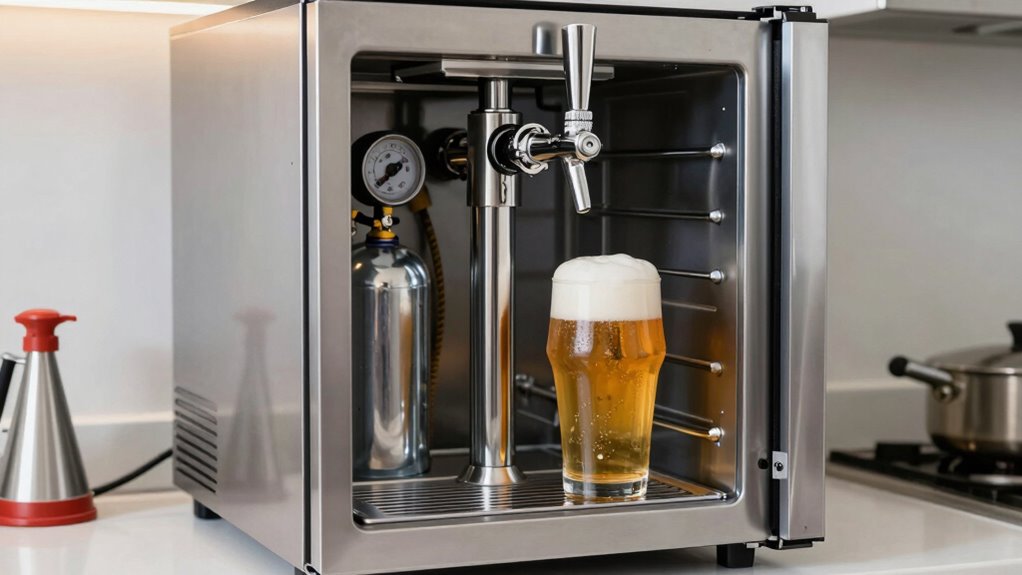
A kegerator is a specialized refrigerator designed to store and dispense kegged beverages, most commonly beer. It keeps your beer at the perfect temperature and uses a CO₂ tank to push the beer through the tap. When serving, proper draft beer etiquette is essential to avoid excessive beer foam, which can ruin the pour and waste product. A well-maintained kegerator maintains consistent pressure, ensuring smooth, steady pours with minimal foam. Understanding how it works helps you pour beer correctly, avoiding too much head. The system combines refrigeration, CO₂ pressure, and a tap to deliver fresh draft beer directly to your glass. Additionally, regular maintenance of the CO₂ system and internal components is crucial for optimal performance. Proper cabling and installation techniques also help prevent system failures and ensure consistent beer quality. Incorporating proper temperature control can also improve the taste and freshness of your beer. Using the correct CO₂ pressure settings is essential for achieving the ideal pour and maintaining beer carbonation. Ensuring your system has accurate measurement tools can help monitor pressure and temperature levels effectively. With a little practice, you’ll enjoy a clean, crisp pour every time, making your home bar experience even more enjoyable.
How to Set Up Your Kegerator for Home Draft Beer

Setting up your kegerator for home draft beer involves several essential steps to guarantee smooth operation and perfect pours. First, ensure the beer temperature is set correctly—ideally between 36-38°F—to keep the beer fresh and carbonated. Next, connect your CO₂ system securely, then attach the keg and check for leaks. Once connected, purge the keg to remove oxygen and stabilize pressure. Adjust the pressure to around 10-12 PSI for ideal flow. When pouring, grip the tap handle firmly and pull smoothly to avoid excessive foam. Make sure the tap handle is clean and functioning properly. Proper setup ensures your beer stays at the right temperature and carbonated just right, delivering a crisp, revitalizing draft every time. Proper maintenance also plays a vital role in keeping your kegerator functioning optimally over time, especially since maintaining consistent pressure levels is essential for quality pours. Regularly inspecting and cleaning the components can help prevent issues related to CO₂ leakage and ensure longer-lasting equipment. Additionally, monitoring the temperature regularly helps maintain ideal carbonation and freshness, which is crucial for air quality considerations inside your kegerator.
Choosing and Maintaining Your CO₂ System
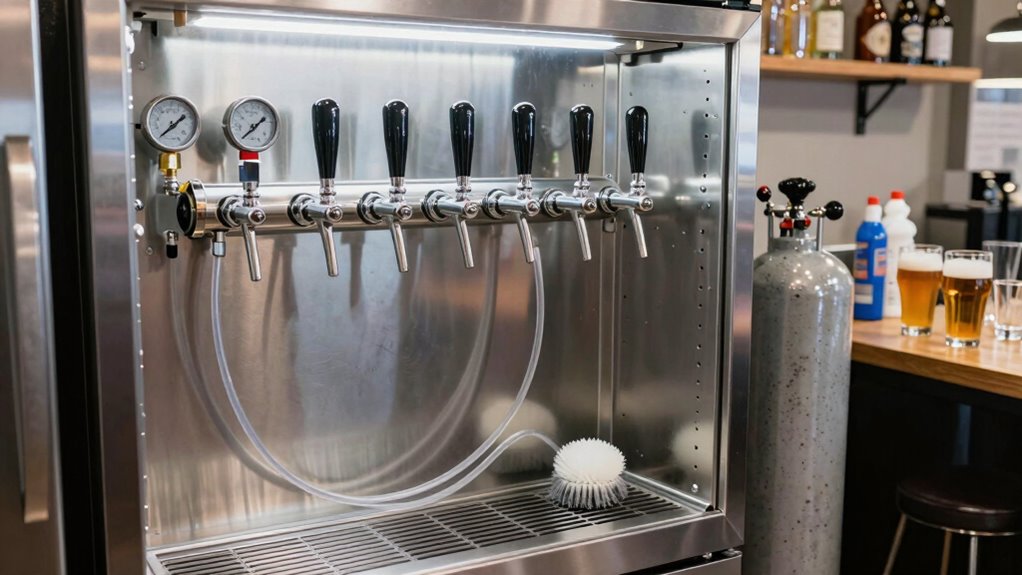
Choosing the right CO₂ tank and regulator is essential for consistent beer quality, so consider the types available and how they fit your setup. Proper regulator settings ensure your beer stays fresh and carbonated without over-pressurizing. Regular maintenance and safety checks help prevent leaks and keep your system running smoothly. Additionally, understanding the importance of safe handling of CO₂ can prevent accidents and ensure longevity of your equipment.
CO₂ Tank Types
When selecting a CO₂ tank for your kegerator, understanding the different types available is fundamental to guarantee reliable carbonation and pouring. CO₂ tank types vary mainly by material, size, and pressure ratings. The most common are steel tanks, which are durable and suitable for long-term use, and aluminum tanks, which are lighter and easier to transport. Sizes range from small 5-pound cylinders for home use to larger 20-pound or 50-pound tanks for frequent dispensing. Choosing the right tank depends on your beverage carbonation techniques and how often you plan to use your kegerator. Proper maintenance involves regular inspections for leaks, ensuring valves operate correctly, and keeping tanks upright for safety. Knowing your CO₂ tank types helps optimize performance and safety for your draft system. Tank safety protocols are essential for preventing accidents and ensuring proper handling during use and storage. Additionally, selecting the appropriate regulator ensures consistent pressure and optimal draft quality. Regularly checking the pressure gauges on your regulator is crucial for maintaining proper carbonation levels and avoiding over-pressurization. Implementing a maintenance schedule for your CO₂ system can extend its lifespan and prevent costly issues. Being aware of storage requirements can also help prevent accidents and preserve tank integrity over time.
Regulator Settings Tips
Proper regulator settings are essential for maintaining consistent carbonation and pour quality in your kegerator. Getting the pressure adjustment right ensures your beer stays perfectly carbonated without over-foaming. Regular regulator calibration helps you set accurate pressure levels, preventing guesswork. Start by checking your pressure gauge and adjusting in small increments. Keep an eye on your beer style; different types need different pressure settings. Make sure your CO₂ tank is fully open before making adjustments to avoid inaccurate readings. Remember, a steady hand and patience are key to fine-tuning your system. Managing heat buildup in your CO₂ system can help prevent fluctuations caused by temperature changes, ensuring more consistent carbonation. Additionally, understanding kegerator maintenance can extend the lifespan of your equipment and improve beer quality. – Always start with a clean, calibrated regulator – Adjust pressure gradually, avoiding sudden changes – Note your ideal pressure for each beer style – Recheck pressure after any regulator adjustments – Keep a log of your preferred settings for quick reference
Maintenance and Safety
Maintaining and guaranteeing safety in your CO₂ system is essential for reliable operation and your overall safety. Regular inspections help prevent leaks and ensure proper pressure levels, which are crucial for kegerator safety. Follow a maintenance checklist that includes checking for worn or damaged hoses, securing connections, and testing pressure gauges. Always handle CO₂ cylinders carefully—store them upright and in well-ventilated areas. When attaching or replacing cylinders, turn off the regulator and depressurize the system first. Keep safety in mind by wearing protective gloves and eye gear if needed. Proper maintenance not only extends the lifespan of your CO₂ setup but also keeps you safe from potential hazards. Staying vigilant with these steps ensures your draft system runs smoothly and safely. Additionally, regularly verifying charger settings and low-voltage cutoff levels can help prevent system malfunctions and prolong the life of your equipment. Regularly inspecting the pressure regulator can also prevent unexpected failures and maintain consistent draft quality. Remember that proper system calibration is vital for accurate pressure control and safety. Incorporating routine pressure checks can further enhance safety and system performance.
Cleaning and Sanitizing Your Kegerator for Fresh Tasting Beer
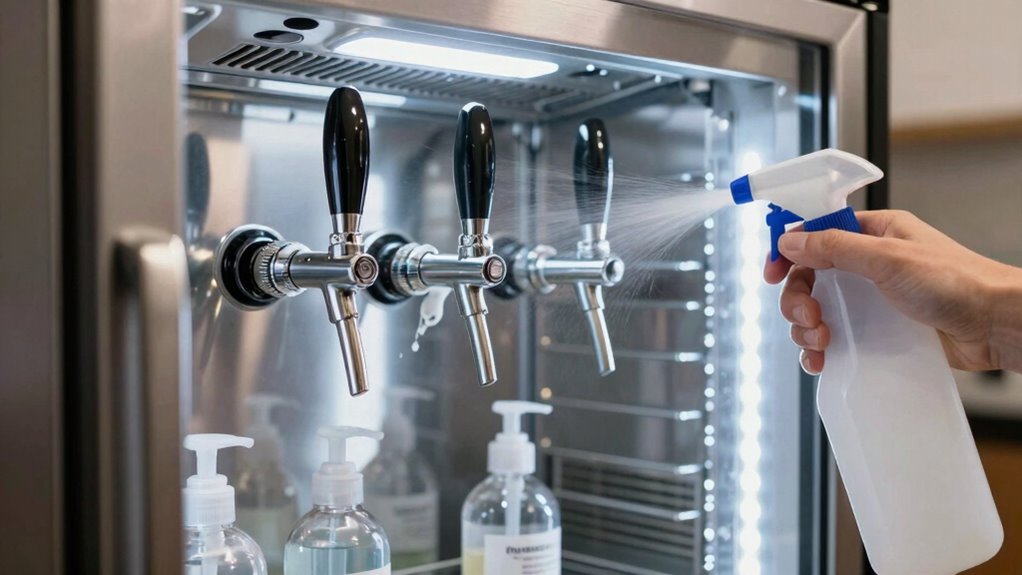
Keeping your kegerator clean and sanitized is essential for fresh-tasting beer. You need to follow a regular cleaning schedule and use proper sanitizing products to prevent contamination. By maintaining these practices, you’ll guarantee every pour stays crisp and flavorful. Additionally, ensuring your draft lines are regularly cleaned can help prevent off-flavors and maintain optimal beer quality for the best draft beer experience. Regularly inspecting and maintaining your equipment, such as the body jewelry measurements and materials, can also contribute to overall performance and reliability of your beverage dispensing system.
Regular Cleaning Schedule
To guarantee your beer tastes fresh and delicious, it’s essential to establish a regular cleaning schedule for your kegerator. Regular cleaning prevents build-up that can cause excessive beer foam and alter draft beer flavors. When you keep everything clean, you’ll enjoy smooth pours and consistent taste. Additionally, understanding regional flavors and brewing techniques can help you appreciate the nuances of different beers and maintain their optimal freshness.
Consider these tips:
- Clean the beer lines weekly to prevent mold and bacteria.
- Wipe down taps and faucets daily to maintain hygiene.
- Sanitize the interior and exterior monthly for a traditional Indonesian home decor principles feel that promotes a fresh environment.
- Check for mold or residue around the coupler and disconnects.
- Replace CO₂ hoses periodically to avoid contamination.
Sanitizing Methods and Products
Sanitizing your kegerator properly is essential for ensuring your beer stays fresh and tastes great. To achieve this, use effective disinfectant solutions designed for brewing equipment. These solutions eliminate bacteria and mold that can spoil your beer’s flavor. Start by rinsing all parts, including the beer lines and faucets, with warm water. Then, apply disinfectant solutions using sanitizing brushes to scrub hard-to-reach areas thoroughly. Pay close attention to the inside of the tap and the kegerator’s interior surfaces. After sanitizing, rinse everything with water to remove any residue. Proper sanitation prevents contamination and maintains ideal beer quality. Make sanitizing part of your routine, especially before installing new kegs or after cleaning, to keep your draft system in top condition.
Preventing Beer Contamination
Preventing beer contamination starts with thorough cleaning and sanitizing of your kegerator. When you keep everything sanitized, you help preserve the beer flavor and prevent off-flavors caused by bacteria or mold. Pay special attention to the tap handle, as it’s a prime spot for bacteria buildup. Regularly clean the faucet and lines to avoid contamination that can ruin your draft beer experience.
Here are some tips:
- Clean tap handles after every use
- Sanitize couplers and disconnects regularly
- Use proper cleaning solutions designed for beer equipment
- Rinse thoroughly to remove any residue
- Keep the interior of the kegerator free of dust and debris
These steps ensure fresh-tasting beer and a clean serving environment.
Selecting the Right Tap, Lines, and Storage Tips
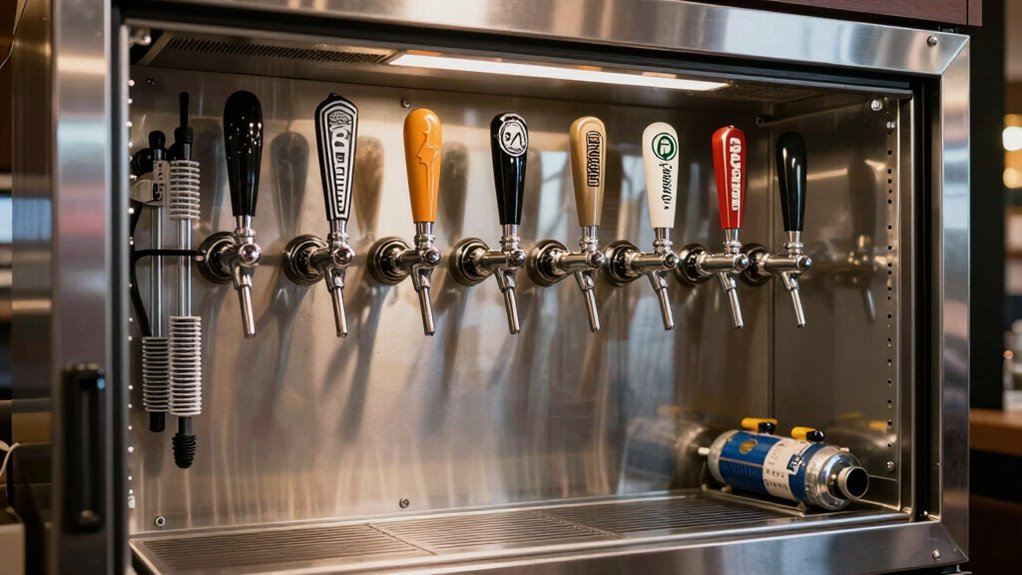
Choosing the right tap, lines, and storage tips is vital for guaranteeing your kegerator functions smoothly and keeps your beer fresh. When selecting a tap, consider the type and size that match your preferred beer styles. Proper line length is significant; too long, and it can cause foam and lose carbonation, while too short might not fit your setup. Aim for a line length of about 5 to 6 feet to balance flow and pressure. Use high-quality, clean lines to prevent contamination and guarantee a smooth pour. Store your kegerator in a cool, dark place to maintain ideal temperature. Regularly inspect your lines and fittings for wear or buildup. Correct tap selection, appropriate line length, and smart storage practices keep your draft beer tasting its best. Maintaining proper line maintenance is essential for optimal beer quality and preventing issues like off-flavors or excessive foaming.
Troubleshooting Common Kegerator Problems and Keeping Your Beer Fresh
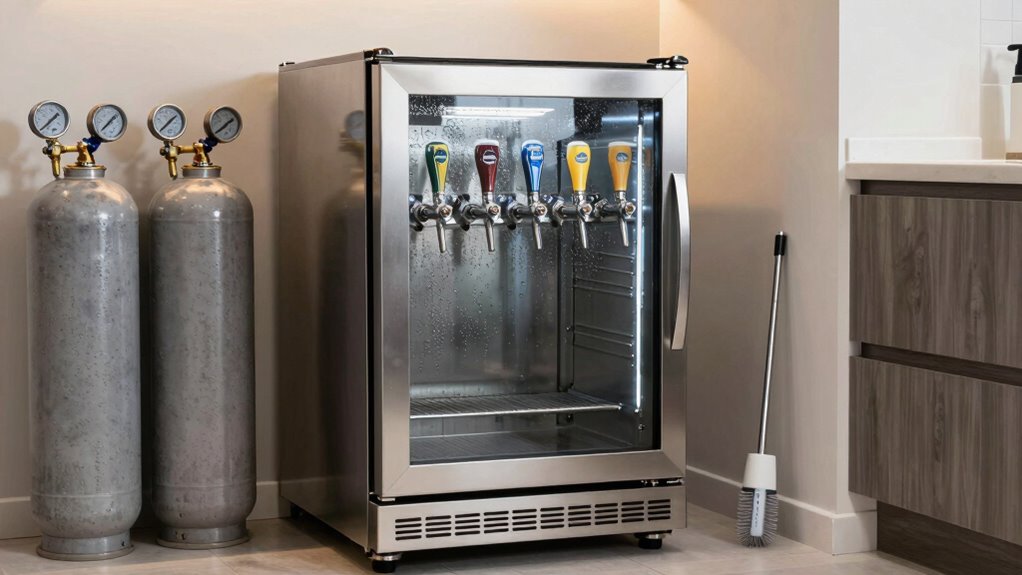
Even the best kegerator can encounter issues that affect your beer quality, but many common problems are easy to troubleshoot and fix. If you’re dealing with excessive beer foam, it’s often a temperature control issue—your beer might be too cold or too warm. Ensuring proper temperature regulation helps keep your beer fresh and reduces foam. Other common problems include kinks in the beer line, which can block flow, or dirty taps causing off-flavors. Sometimes, CO₂ pressure needs adjustment to maintain proper carbonation. Regular cleaning and checking for leaks also prevent spoilage.
- Check your temperature settings regularly
- Inspect and clean beer lines and taps
- Adjust CO₂ pressure as needed
- Look for kinks or blockages in lines
- Keep your kegerator in a consistent, cool spot
Frequently Asked Questions
How Long Can I Store Beer in a Kegerator Before It Goes Bad?
You can typically store beer in a kegerator for about 2 to 6 weeks before it starts losing freshness. To maintain ideal beer freshness, ensure your kegerator stays at the right temperature and is properly cleaned. Be mindful of storage duration; the longer beer sits, the more it can degrade in flavor. Regularly check for signs of spoilage, and enjoy your draft beer within this timeframe for the best taste.
What Are the Signs of a Failing Co₂ Regulator?
Spotting signs of a failing CO₂ regulator is simple. If you notice noticeable gas flow irregularities or inconsistent carbonation, these are clear clues. You might also hear hissing sounds or see a drop in pressure gauges. These CO₂ regulator issues can cause poor pouring and spoiled beer. Regularly check for leaks, listen for unusual noises, and monitor pressure levels to prevent problems before they pop up.
Can I Convert a Mini-Fridge Into a Kegerator?
Yes, you can convert a mini fridge into a kegerator. Start with a mini fridge conversion by removing the existing shelving and adding a tap tower. Guarantee proper kegerator insulation to maintain temperature and prevent heat transfer. You’ll also need to install a CO₂ setup for carbonation and draft beer flow. With some DIY skills, this makes for an affordable, fun project to enjoy fresh draft beer at home.
How Do I Prevent Beer Foaming During Dispensing?
Imagine pouring a smooth stream of honey instead of frothy syrup. To prevent beer foaming, master your pouring techniques—tilt the glass and pour gently down the side. Simultaneously, make sure your temperature control keeps the beer at about 38°F, not too cold or warm. Properly managing these factors minimizes agitation, reduces foam, and delivers a perfect pour every time.
Is It Necessary to Use a Pressure Relief Valve?
Yes, using a pressure relief valve is necessary for your kegerator. It acts as a safety valve, preventing over-pressurization that could cause damage or leaks. You should regularly check that the pressure relief valve functions properly and releases excess pressure when needed. This helps keep your kegerator safe, maintains ideal beer flow, and avoids potential accidents. Always verify your safety valve is in good condition and correctly installed.
Conclusion
Now that you know the basics, your kegerator is ready to serve perfect drafts and fresh flavors. With proper setup, maintenance, and care, you’ll keep every pour as satisfying as the first. Remember, a well-kept kegerator isn’t just equipment—it’s your gateway to great beer moments. So, embrace the process, enjoy the craft, and let each pour tell its story. Cheers to your journey into the world of home draft perfection!