Pellet grills produce rich smoke flavor by burning wood pellets steadily, releasing aromatic compounds that infuse your food. They offer precise temperature control with digital settings and airflow adjustments, making cooking consistent and easy. Cleanup is simple—just remove ash and grease regularly to keep the grill performing well. Understanding how combustion and smoke circulation work helps you get the best flavor and results. Keep exploring to discover tips for maintaining your grill’s performance and perfecting your smoky dishes.
Key Takeaways
- Pellet grills produce smoke flavor through the steady combustion of wood pellets, infusing food with aromatic compounds.
- Consistent airflow and regular cleaning of the burn pot prevent buildup, ensuring optimal smoke production and flavor.
- Digital temperature controllers and adjustable vents allow precise heat management for perfectly cooked dishes.
- Proper maintenance, including ash removal and cleaning grease traps, simplifies cleanup and prolongs grill lifespan.
- Compared to traditional methods, pellet grills offer convenient, multi-functional, set-it-and-forget-it outdoor cooking with reliable smoke and heat control.
How Do Pellet Grills Produce That Signature Smoke Flavor?
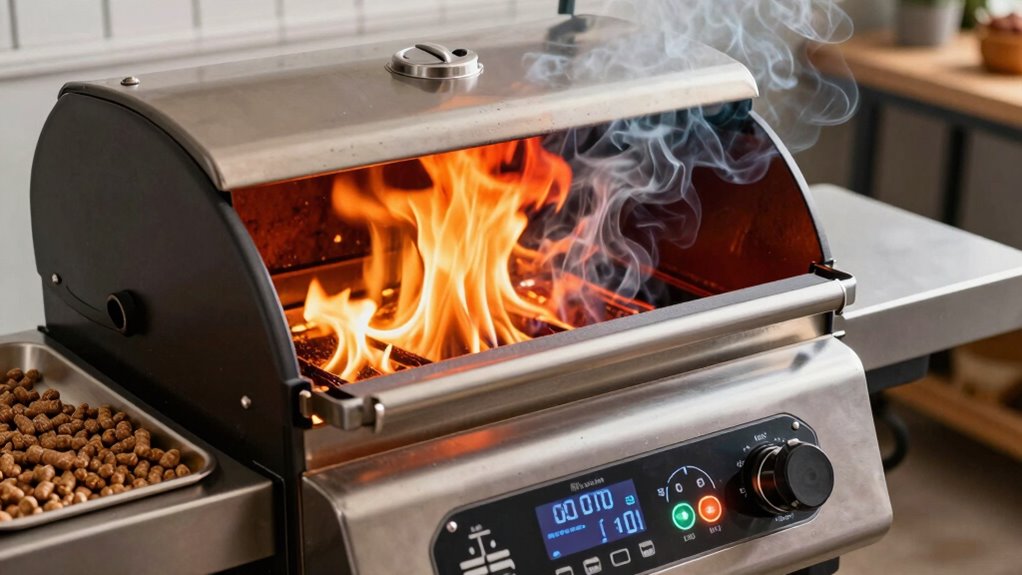
Have you ever wondered how pellet grills produce that rich, smoky flavor everyone loves? It all comes down to the wood flavor and smoke circulation. When you set your grill, the wood pellets burn steadily, releasing aromatic smoke that infuses your food. The design of the grill promotes consistent smoke circulation, ensuring every bite gets infused with that signature flavor. As the pellets combust, they generate a steady stream of smoke that surrounds your food, creating a deep, smoky taste. The type of wood used in the pellets also influences the flavor profile, from hickory to apple or cherry. This combination of wood flavor and efficient smoke circulation is what makes pellet grills a popular choice for authentic, smoky barbecue. Proper safety checklists ensure safe operation and optimal smoke production. Additionally, the combustion process is carefully controlled to maintain steady smoke output and temperature, which is crucial for achieving the desired flavor. Understanding the smoke circulation mechanism helps in optimizing the flavor infusion process. Wood pellet quality also plays a vital role in the consistency of smoke flavor and overall grilling performance.
How Do Wood Pellets and Fire Create Smoke and Flavor in Pellet Grills?
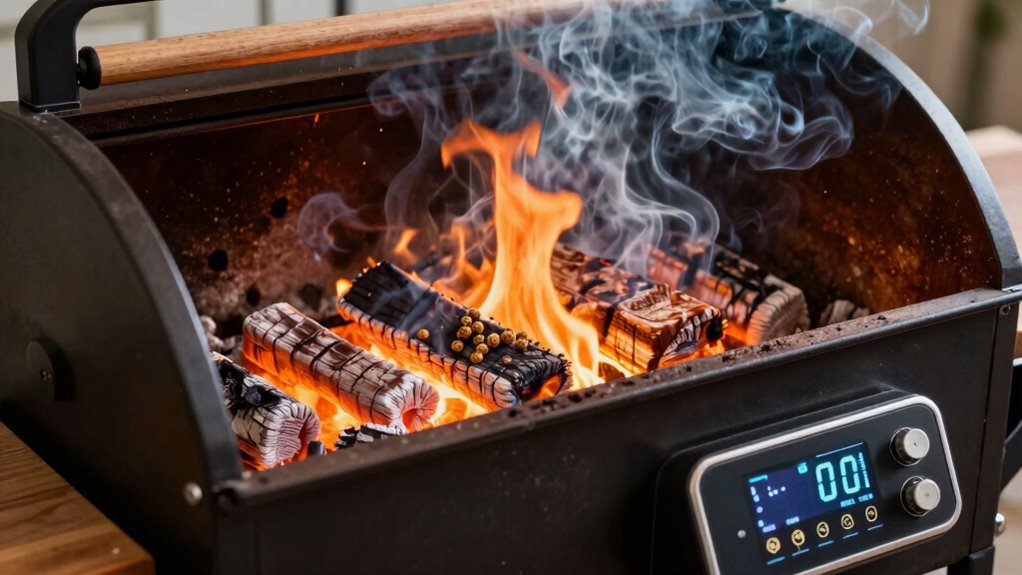
When you set your pellet grill in motion, the wood pellets ignite and burn steadily, creating a controlled fire that produces smoke. The key is the wood pellet composition, which is typically made from compressed sawdust and wood waste, ensuring consistent burning and flavor. As the pellets burn, they release smoke particles that vary in size, with smaller particles creating a finer smoke. This fine smoke penetrates your food, imparting that signature smoky flavor. The combustion process generates heat and smoke simultaneously, with the smoke carrying the aromatic compounds from the wood. The size and consistency of the smoke particles influence flavor absorption and the overall smoky profile of your meat. Proper pellet composition and controlled burning are essential for ideal smoke production and flavor. Additionally, the combustion process plays a crucial role in determining the amount and quality of smoke generated during grilling.
How Does Combustion Work Inside a Pellet Grill?
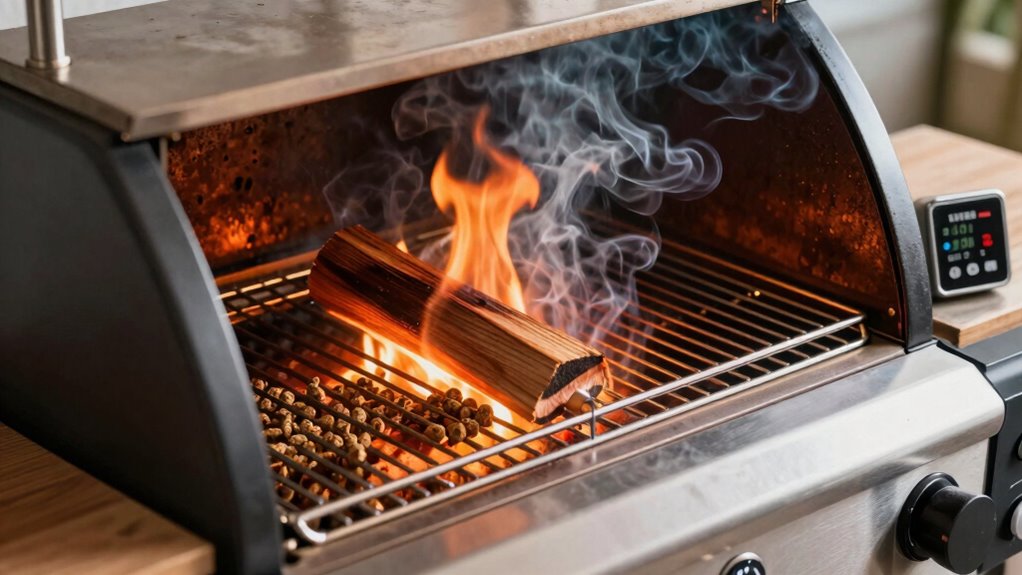
Inside a pellet grill, combustion occurs through a controlled process that ignites the wood pellets and sustains their burning. You start with fuel types like hardwood pellets, which are fed into the firepot. The ignition system, often an electric igniter, quickly heats up, sparking the pellets into flame. As the pellets burn, they produce heat and smoke, which cook your food and add flavor. Visualize this process as:
- Pellets dropping automatically into the firepot.
- An electric igniter glowing red, igniting the pellets.
- Flames flickering as the pellets burn steadily, maintaining a consistent temperature. Proper airflow regulation is essential for maintaining temperature control, which directly impacts cooking results and flavor infusion. Additionally, combustion efficiency plays a critical role in ensuring the grill operates effectively and produces the desired smoky flavor, while consistent airflow helps optimize the fire and smoke production. Effective ventilation considerations can also improve overall combustion performance and safety, ensuring a safer grilling experience.
How Does Smoke Circulate to Flavor Your Food?
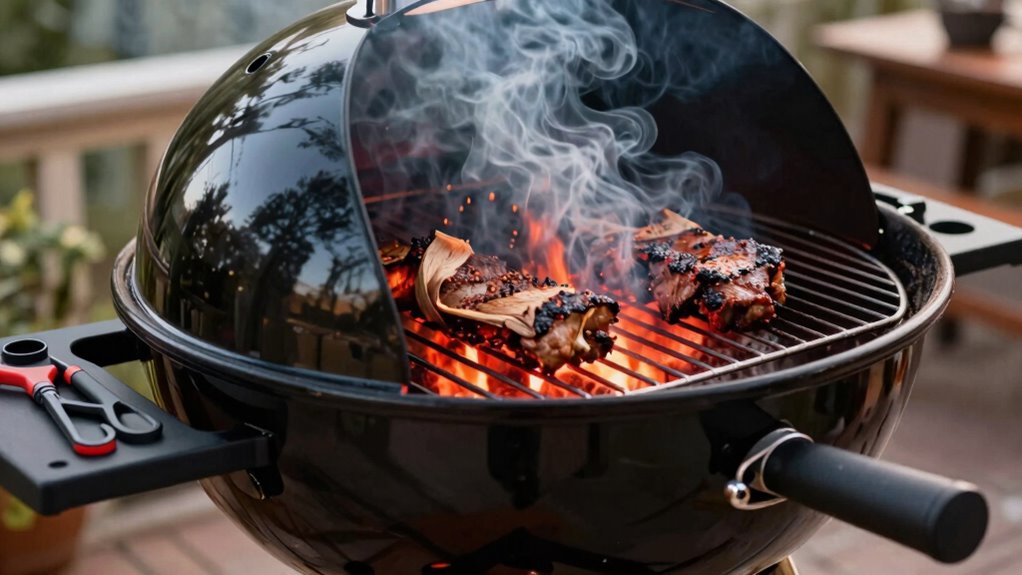
Smoke from the burning wood pellets rises through the grill’s interior, carrying flavorful compounds that infuse your food. This process relies on airflow dynamics to guarantee even smoke circulation. Proper airflow creates a continuous loop, pulling fresh oxygen in and pushing smoke out across your food. Factors like vent placement and grill design influence this movement, affecting flavor penetration. When airflow is ideal, smoke surrounds your food evenly, maximizing smoky aroma and taste. If airflow is restricted, smoke may linger or concentrate unevenly, reducing flavor quality. To understand this better, consider the following:
| Airflow Effect | Smoke Circulation Impact | Result |
|---|---|---|
| Increased airflow | Faster smoke movement | More uniform flavor |
| Restricted airflow | Stagnant smoke | Less flavor penetration |
| Vent placement | Direction of circulation | Even or uneven smoking |
| Pellet burn rate | Smoke density | Intensity of smoky flavor |
| Grill design | Airflow paths | Consistent or inconsistent |
Optimizing airflow management ensures your food gets that perfect smoky flavor. Additionally, modern grills often incorporate smart technology to monitor and adjust airflow automatically, enhancing flavor consistency. Proper airflow control not only improves flavor but also helps maintain consistent cooking temperatures. Maintaining proper airflow can also reduce the buildup of creosote, improving grill longevity and safety.
How Can You Control the Temperature on Your Pellet Grill?

Controlling the temperature on your pellet grill is straightforward with the built-in digital controller and adjustable vents. The digital controller uses temperature sensors to monitor heat accurately, ensuring consistent results. To adjust the heat, follow these steps:
- Set your desired temperature on the digital display.
- Use the heat adjustment feature to increase or decrease pellet feed, which affects temperature.
- Fine-tune with the adjustable vents to regulate airflow and stabilize heat levels.
- Remember that proper luggage & bags selection can help you carry your grill accessories securely during travel. Additionally, understanding the role of temperature regulation in maintaining optimal cooking conditions can improve your grilling outcomes.
Tips to Master Temperature Control for Perfect Results
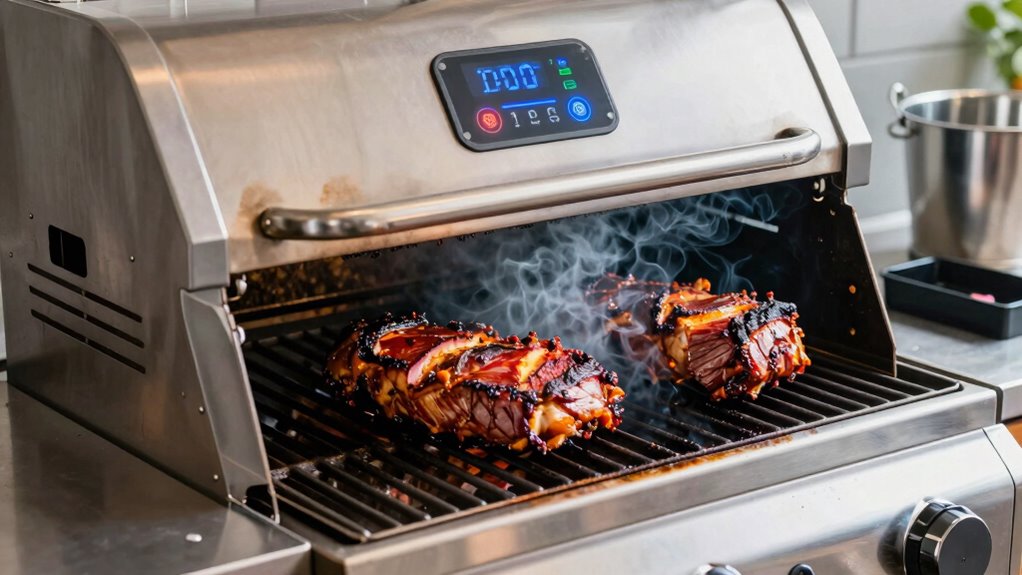
Mastering temperature control on your pellet grill takes practice and attention to detail. To achieve consistent results, focus on maintaining temperature stability by monitoring your grill’s digital readout regularly. Make small, precise heat adjustments rather than large changes, which helps prevent temperature swings. Keep your grill’s lid closed as much as possible to maintain a steady environment. Use the pellet feed rate to fine-tune heat adjustment—adding more pellets increases temperature, while reducing pellets lowers it. Also, verify your grill is level, as uneven surfaces can affect airflow and temperature stability. Being aware of temperature fluctuations and how to manage them can significantly improve your cooking outcomes. Incorporating advanced control systems can further enhance your ability to maintain consistent temperatures. Developing a feel for your grill’s behavior takes time and hands-on experience, but it is essential for precise temperature management. With patience and careful adjustments, you’ll develop a feel for your grill’s behavior, resulting in perfectly cooked dishes every time.
How to Clean and Maintain Your Pellet Grill
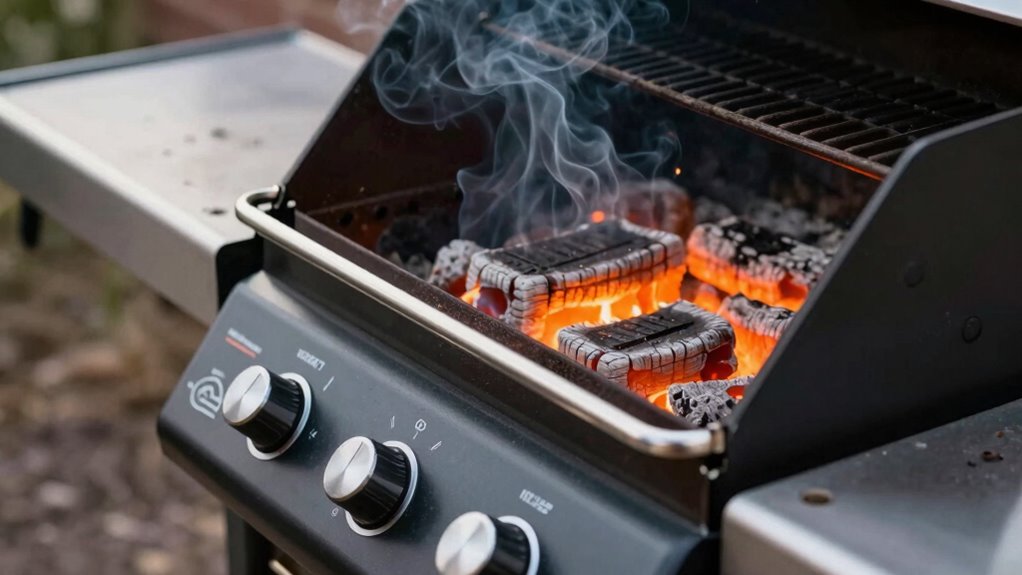
Regularly cleaning and maintaining your pellet grill is essential to guarantee it performs at its best and lasts for years. To keep it in top shape, follow simple cleaning techniques and stick to a maintenance schedule. First, remove ash and debris from the fire pot and burn pot after each use. Second, clean the grates with a grill brush to prevent buildup. Third, wipe down the exterior and interior surfaces to prevent grease accumulation. Establishing a routine, like deep cleaning every 50 hours of use or once a season, helps identify issues early. Consistent maintenance ensures ideal airflow, prevents flare-ups, and prolongs your grill’s lifespan. Proper tool maintenance and regular inspections can also help detect wear and tear before it causes major problems. Incorporating seasonal checklists can streamline this process and ensure no detail is overlooked. Additionally, inspecting the ash removal system regularly prevents blockages that could impair performance. Paying attention to airflow management ensures consistent temperature control and efficient operation. For optimal results, consider using grill covers to protect your equipment from weather damage. By staying attentive to these cleaning techniques and adhering to your maintenance schedule, you’ll enjoy flavorful, consistently cooked meals for years to come.
Easy Cleanup Tips for Pellet Grill Owners

Keeping your pellet grill clean doesn’t have to be time-consuming or complicated. Regular ash removal is essential for peak performance; after each use, let the grill cool, then scoop out the ash from the firepot with a small brush or vacuum designed for ash cleanup. Effective grease management also makes cleanup easier—place a drip tray or aluminum foil underneath the grates to catch drippings, preventing flare-ups and buildup. Wipe down the interior surfaces and grates with a damp cloth once cooled to remove grease and residue. Cleaning the grease trap periodically ensures it doesn’t clog or overflow. Additionally, understanding your grill’s electric power generation capabilities can help optimize its efficiency and longevity. Recognizing natural fuel sources used in pellet grills can further enhance maintenance practices. These simple steps keep your pellet grill in top shape, making future cookouts smoother and less messy.
Troubleshooting Common Smoke and Temperature Issues
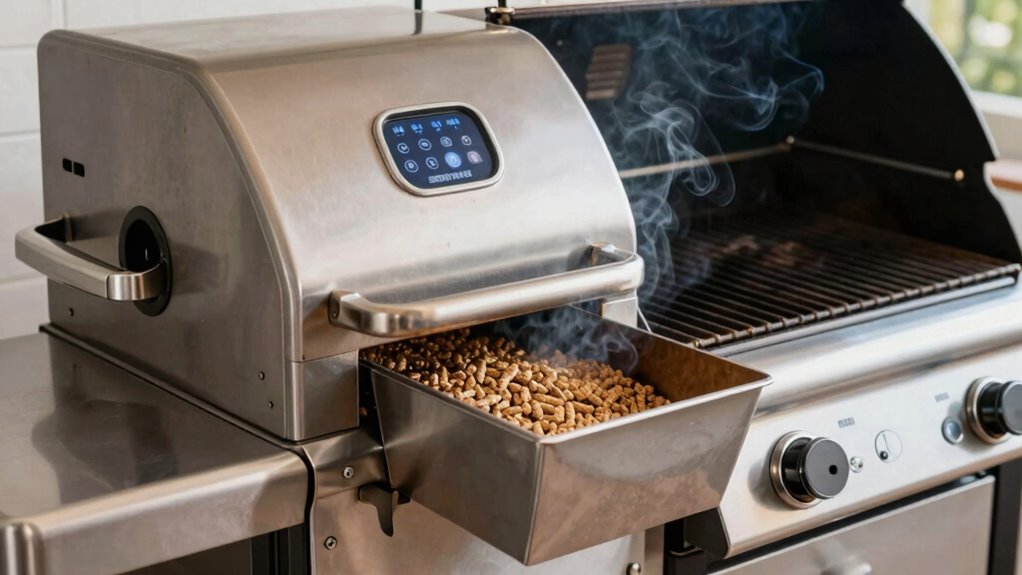
When your pellet grill isn’t producing smoke or maintaining the desired temperature, it can be frustrating, but many issues are easy to diagnose and fix. First, check your pellet storage: if pellets are damp or old, they burn inefficiently, affecting fuel efficiency and smoke production. Second, inspect the auger and firepot for clogs or jams that prevent consistent pellet flow. Third, ensure you’re using the right pellets for your grill and that your burn pot is clean, as buildup can hinder airflow. Also, verify the temperature sensor‘s accuracy and calibration. Properly storing pellets in a dry, sealed container helps maintain fuel efficiency and guarantees steady smoke. Addressing these common issues keeps your grill running smoothly and your smoke flavor consistent.
How Do Pellet Grills Compare to Other Outdoor Cooking Methods?
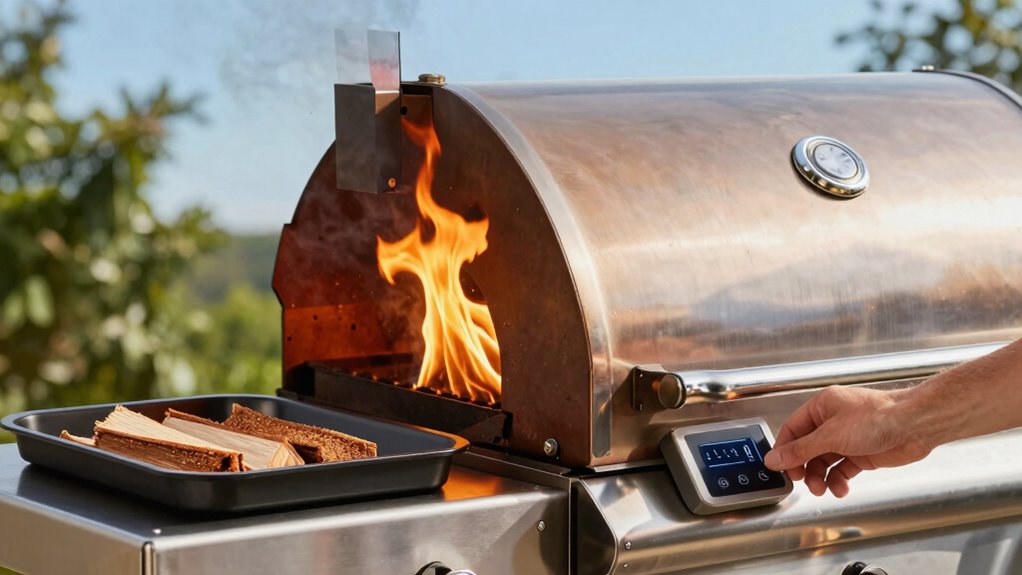
Pellet grills stand out among outdoor cooking methods because they combine the ease of set-it-and-forget-it operation with precise temperature control. Unlike charcoal or gas grills, they offer exceptional cooking versatility, allowing you to smoke, grill, roast, bake, or braise with a single appliance. This flexibility means you can prepare a variety of dishes without switching equipment. Additionally, pellet grills provide outdoor convenience—set the temperature, add pellets, and focus on other tasks while it maintains consistent heat. They eliminate the guesswork involved in traditional methods, making outdoor cooking simpler and more reliable. Whether you’re hosting a barbecue or slow-cooking brisket, pellet grills deliver consistent results, making them a practical choice compared to other outdoor cooking options.
Frequently Asked Questions
What Types of Wood Pellets Impact Different Flavor Profiles?
You’ll notice that different wood types impact flavor profiles uniquely. Hickory adds a strong, smoky taste, perfect for pork and ribs. Apple wood offers a mild, sweet flavor suited for poultry and fish. Cherry provides a fruity note that enhances beef and game meats. Maple imparts a subtle sweetness, ideal for vegetables. Choosing the right wood pellets allows you to customize flavor profiles and elevate your grilling experience.
How Often Should I Replace the Pellets for Optimal Flavor?
You should replace your pellets whenever you notice a decline in flavor or after about 20-30 pounds of use, as pellet shelf life varies with storage conditions. Keep your pellets in a dry, airtight container to maintain freshness. Regularly check for moisture or clumping, and refill as needed to guarantee consistent smoke flavor and ideal grilling performance. Proper storage extends pellet shelf life and enhances your grilling experience.
Can Pellet Grills Be Used for Baking or Roasting?
Yes, you can use pellet grills for baking or roasting. Simply select the appropriate temperature and use grill accessories like baking pans or roasting racks to optimize your cooking techniques. Many pellet grills offer precise temperature control, making them versatile for various recipes. Just make sure you adjust your grill settings accordingly, and you’ll achieve delicious baked goods or roasted dishes with the smoky flavor that makes pellet grilling unique.
What Safety Precautions Are Necessary When Cleaning a Pellet Grill?
When cleaning your pellet grill, prioritize cleaning safety by unplugging it and letting it cool completely to prevent burns. Use a wire brush to remove ash and grease, guaranteeing fire prevention. Wear gloves and eye protection to avoid injuries from hot surfaces or debris. Regularly check vents and the pellet hopper for blockages. Keep a fire extinguisher nearby, and never leave the grill unattended during cleanup to guarantee safety.
Are There Eco-Friendly Pellet Options Available?
Yes, eco-friendly pellet options are available. You can choose pellets made from sustainably sourced wood or those that participate in recycling programs, reducing environmental impact. Look for brands offering biodegradable packaging, which helps minimize waste. By selecting these greener options, you support eco-conscious practices and enjoy your grilling while reducing your carbon footprint. Always check labels and manufacturer info to guarantee you’re choosing the most environmentally friendly pellets available.
Conclusion
So, while pellet grills make smoking and temperature control seem effortless, don’t forget they still need your attention and care. Ironically, the more you master their quirks, the more you’ll realize they’re just fancy boxes with flames and smoke. In the end, true mastery comes not from the equipment but from your dedication. After all, even the best grill can’t replace a little patience and practice—because, surprisingly, perfection isn’t just about the smoke, but your hands in it.