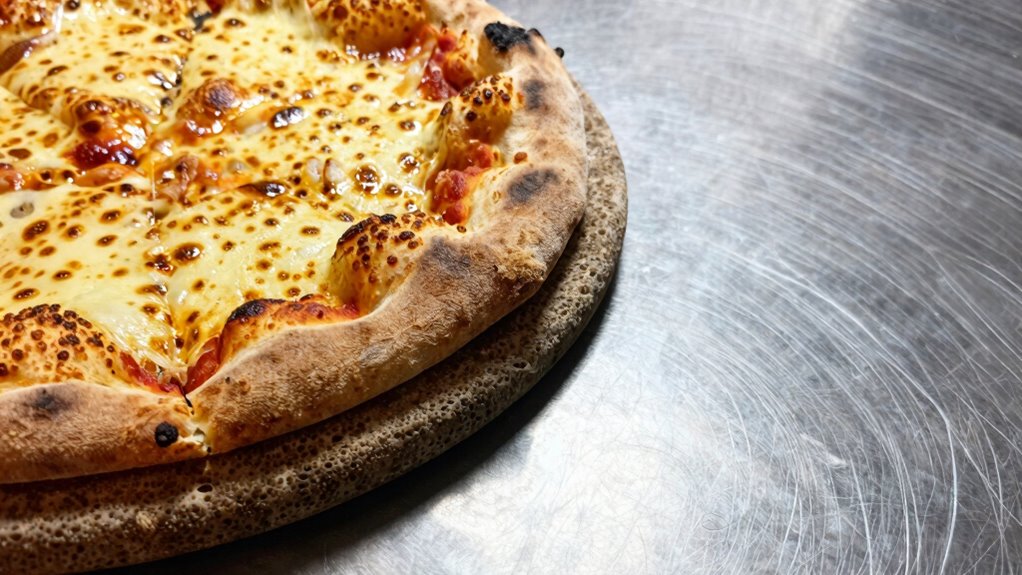

Choosing a pizza steel over a stone means you’ll get a faster, crispier crust thanks to its quick heat transfer and high thermal conductivity. Steel heats up quickly and maintains high temperatures, helping you mimic pizzeria-style results at home. Stones provide even heat and steady moisture, giving a more traditional crust. To really boost your baking, understanding how these surfaces differ will help you perfect your pizza game—discover more to upgrade your crust even further.
Key Takeaways
- Steel heats faster and transfers heat more quickly, resulting in quicker, crispier crusts than stones.
- Pizza stones offer even heat distribution and high heat capacity for consistent, traditional crust textures.
- Steel’s rapid heat transfer allows for better control and faster baking times, ideal for pizzeria-style results.
- Stones are more affordable and good for steady, evenly cooked crusts but are more fragile and slower to heat.
- The choice impacts crust texture: steel offers speed and crispiness, while stones provide authentic, evenly baked results.

Antarctic Star Wine Fridge,15 Inch Wine Cooler Refrigerator Under Counter(41-68°F),28 Bottles Built-in Dual Zone &Freestanding Wine Refrigerator with Stainless Steel & Double-Layer Tempered Glass Door
28 BOTTLE CAPACITY:This wine fridge could hold 28 bottles of your favorite wine in different size, there is...
As an affiliate, we earn on qualifying purchases.
How Do Pizza Stones and Steel Differ in Heat Retention and Transfer?

When it comes to heat retention and transfer, steel and pizza stones behave quite differently. Steel has a high thermal conductivity, meaning it quickly absorbs and distributes heat across its surface. This results in rapid heat transfer to your pizza crust, helping it cook faster and develop a crispiness. In contrast, pizza stones have a lower thermal conductivity, so they transfer heat more slowly. Their high heat capacity allows them to hold onto heat longer, maintaining a steady temperature over time. This slow, even heat transfer promotes a more uniform crust. If you want quick, intense heat transfer, steel is your best bet. But if you prefer consistent, retained heat for a perfectly crispy crust, a pizza stone excels. Understanding heat transfer properties and thermal conductivity can help you choose the right material for your baking style. Additionally, considering baking performance and the heat retention characteristics can help match your equipment to your preferred crust texture. Recognizing the material differences can also influence how evenly your pizza bakes and how quickly the crust develops its final texture.

Kalamera 24 inch Wine Cooler, 37 Bottle - Dual Zone Built-in or Freestanding Fridge with Stainless Steel Reversible Glass Door, for Home, Kitchen or Office
ECO-FRIENDLY WOODEN FRAME:This wine cooler adopts a sturdy wooden frame, which can reduce the vibration and friction of...
As an affiliate, we earn on qualifying purchases.
What Factors Influence the Crispy Crust You Want?
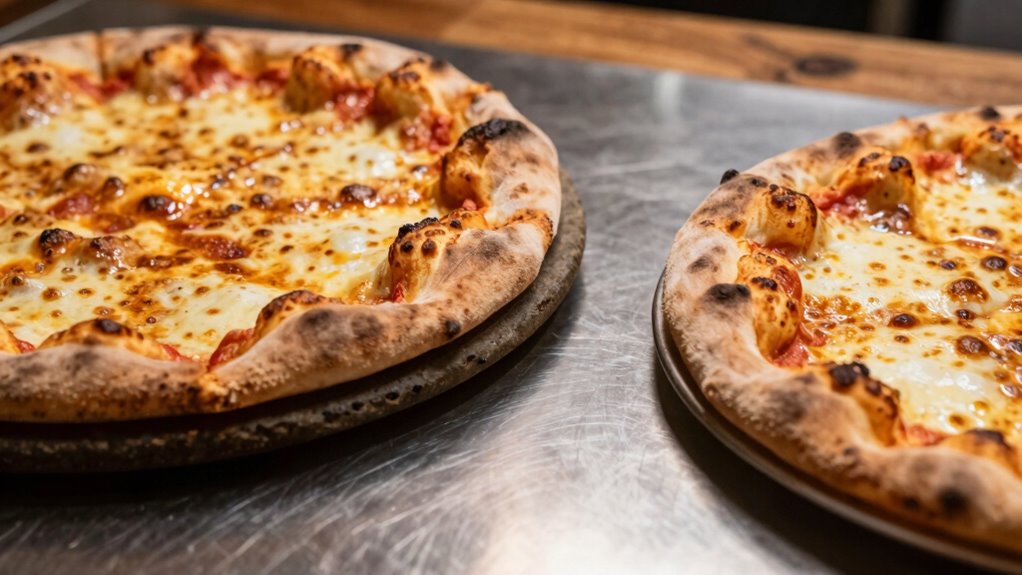
The factors that influence the crispy crust you desire hinge on how your baking surface interacts with heat and your specific preferences. Dough hydration plays a vital role—higher hydration creates a lighter, airier crust, but too much can hinder crispiness. To achieve that crunch, aim for a balanced hydration level. Oven temperature also matters; hotter temperatures promote rapid moisture evaporation, resulting in crisper crusts. The combination of a well-hydrated dough and a hot oven ensures your crust develops the ideal crunch. Additionally, your baking surface’s heat conduction influences how evenly the crust crisps. Understanding heat transfer is essential for optimizing your baking surface choice and technique. Recognizing the importance of spiritual alignment can also help you stay motivated and focused during your baking process, leading to better results. Adjusting these factors to match your preferred texture will help you craft a crust that’s perfectly crispy and tailored to your taste.

Ca'Lefort 15 Inch Wine Fridge, 28 Bottle Wine Cooler Refrigerator, 40-65°F Wine Refrigerator Glass Door, 3 LED Dual Zone Wine Fridge, Built-in or Freestanding Fridge for Home/Bar/Kitchen (3.0 cu.ft)
【Dual Zone Wine Refrigerator】Ca'Lefort Wine Fridge 3.00 cu.ft capacity holds at least 28 bottles of wine (standard 750ml)....
As an affiliate, we earn on qualifying purchases.
Which Surface Cooks Faster and Gives That Pizzeria-Style Crust?
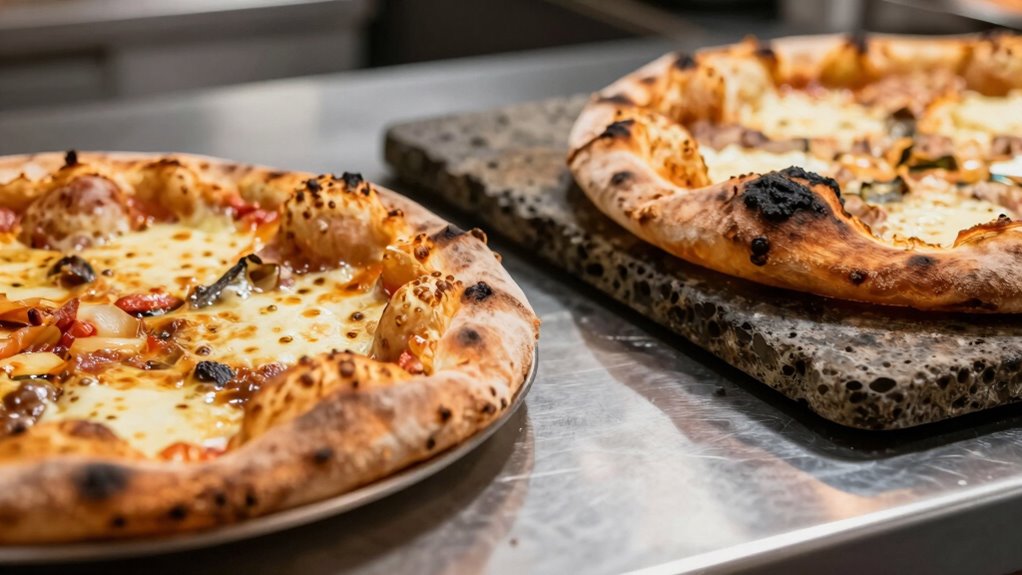
Steel surfaces heat up more quickly than pizza stones, allowing you to achieve that authentic, pizzeria-style crust faster. Because steel transfers heat rapidly, it encourages better dough elasticity, leading to a crispier crust with a nice rise. This quick heat transfer means your pizza cooks evenly and develops a golden-brown finish sooner. When applying sauce, the faster cooking time allows you to add toppings later in the process, preventing sogginess and ensuring a fresh flavor. The rapid heat conduction also helps create those signature pizzeria textures, with a chewy interior and crispy exterior. Additionally, temperature regulation is easier with steel, helping you maintain consistent heat for perfect results. If you’re after a quick, high-heat bake that mimics professional results, steel is your best choice for speed and that signature crust.

Philips 7000 Series Pasta Maker, ProExtrude Technology 150W, 8 discs, Perfect Mixing Technology, Prepare up to 8 Portions, HomeID App, White, (HR2660/03)
PASTA UNDER 10 MINUTES: Enjoy fresh homemade pasta effortlessly in under 10 minutes¹.
As an affiliate, we earn on qualifying purchases.
How Do Cost, Durability, and Maintenance Compare?
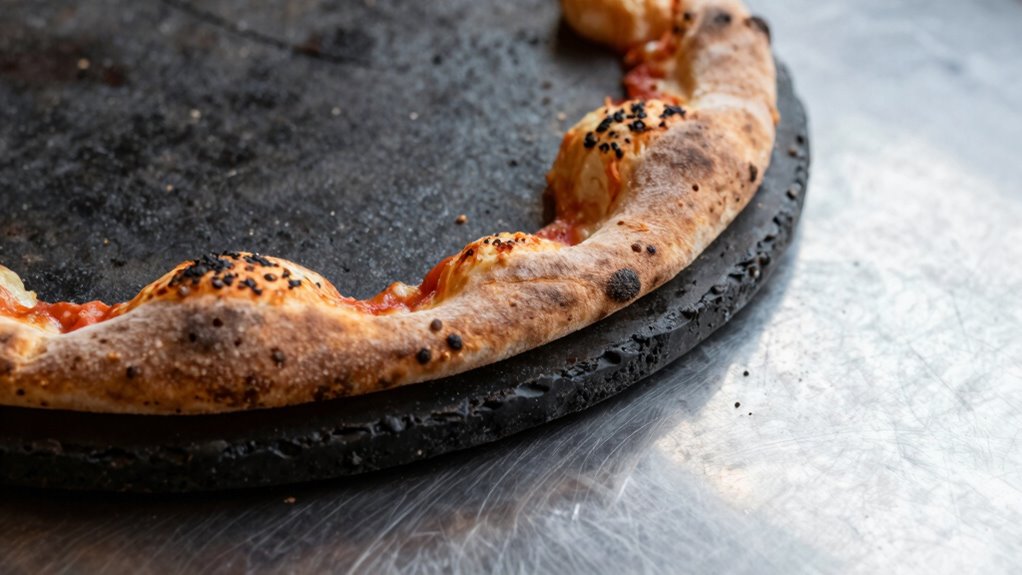
Although both pizza stones and steels can produce excellent results, their cost comparison, durability, and maintenance needs differ considerably. Generally, steel surfaces are more expensive upfront but tend to last longer with minimal wear, making them a cost-effective choice over time. Pizza stones are usually cheaper initially but can crack or break if mishandled, increasing replacement costs. Maintenance needs also vary; steels require little more than occasional cleaning and seasoning, whereas stones need gentle cleaning and careful handling to prevent damage. Steel’s durability means less frequent replacement, while stones demand more careful care to avoid cracks. Additionally, the thermal conductivity of steels allows for quicker heat transfer, enhancing baking efficiency and crust crispness. Proper temperature management can further optimize your baking results and extend the lifespan of your surface. Material properties also play a crucial role in heat retention and distribution, influencing your overall baking experience. For example, some steels have a higher thermal mass that can help maintain consistent heat during baking sessions. Choosing between these options also depends on factors like initial investment and how much effort you’re willing to devote to upkeep, impacting the overall longevity. Your decision depends on your budget, willingness to maintain, and how long you want your surface to last.
Which Is Better for Home Use and Different Pizza Styles?
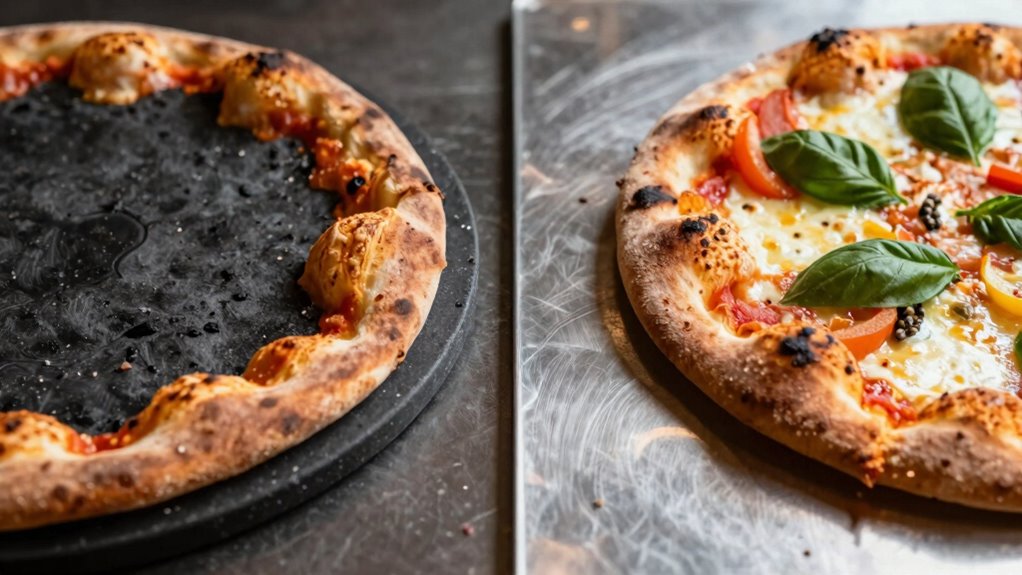
Choosing the right surface for home pizza baking depends on your baking style and the types of pizzas you prefer. If you want a traditional, crispy crust with excellent pizza flavor, a pizza stone provides even heat distribution and absorbs moisture, creating authentic results. On the other hand, if you’re after cooking versatility and a faster bake, a steel surface heats up quickly and maintains high temperatures, making it ideal for various styles like Neapolitan or thin-crust pies. Stones excel at producing a classic texture, but steels offer more control and consistency for different pizza styles. Your choice ultimately hinges on whether you prioritize authentic flavor and texture or flexibility and efficiency in your home oven. Material properties also influence how each surface transmits heat and impacts baking performance.
Frequently Asked Questions
How Does Cleaning Differ Between Pizza Stones and Steels?
Cleaning methods differ markedly between pizza stones and steels. For pizza stones, you should avoid soap and water; instead, scrape off food residue with a brush or scraper and let it cool before storing. Steel requires simple cleaning with warm water and a brush, avoiding soap that can cause rust. Maintenance routines involve regular scraping and drying to prevent moisture buildup, ensuring both surfaces stay in great condition for perfect crusts every time.
Can Pizza Steels Be Used on a Regular Stove?
Yes, you can use pizza steels on a regular stove, but you need to verify your oven compatibility first. Most steels are durable enough to handle the heat, but confirm your stove can accommodate the steel’s size without blocking airflow or vents. Material durability makes steels ideal for frequent use, and their heat conduction helps you achieve a crispy crust quickly, making them a great addition to your cooking setup.
What Are the Best Storage Practices for Each Surface?
To keep your pizza stone and steel in great shape, follow proper storage tips. Store the stone in a dry, cool place to prevent moisture buildup, and avoid stacking heavy items on it. For the steel, wipe it clean after use and store it in a dry area. Regular seasoning methods, like oiling your steel to prevent rust, help maintain its surface. Proper storage ensures ideal performance and longevity for both surfaces.
Are There Health Concerns With Any of These Materials?
Think of your pizza surface as a safety net—you’re concerned about health safety and durability. Both pizza stones and steels are generally safe when properly used, but some stones may contain glazes or additives that could pose health risks if chipped or cracked. Steel is highly durable and inert, posing minimal health concerns. Always choose food-safe, high-quality materials, and regularly inspect your surface to make sure it remains safe and effective.
How Do These Surfaces Impact Baking Time and Energy Consumption?
You’ll find that steel heats up faster and retains heat better than a pizza stone, which can lead to reduced baking times and improved energy efficiency. Steel’s superior heat retention means you use less energy overall, baking your pizza more quickly without sacrificing crust quality. Conversely, a pizza stone takes longer to heat but distributes heat evenly, which may slightly increase energy consumption. Overall, steel offers a more energy-efficient baking experience.
Conclusion
Choosing between a pizza stone and steel is like selecting the perfect canvas for your masterpiece. Steel acts as a swift brushstroke, delivering a rapid, crispy crust, while the stone offers a slow, deliberate glaze, rich in flavor. Your decision shapes your culinary art—whether you crave immediacy or patience. Whichever surface you choose, it’s your personal palette for crafting pizzeria-quality pies right in your own kitchen.