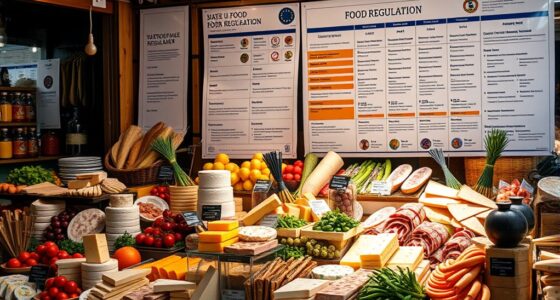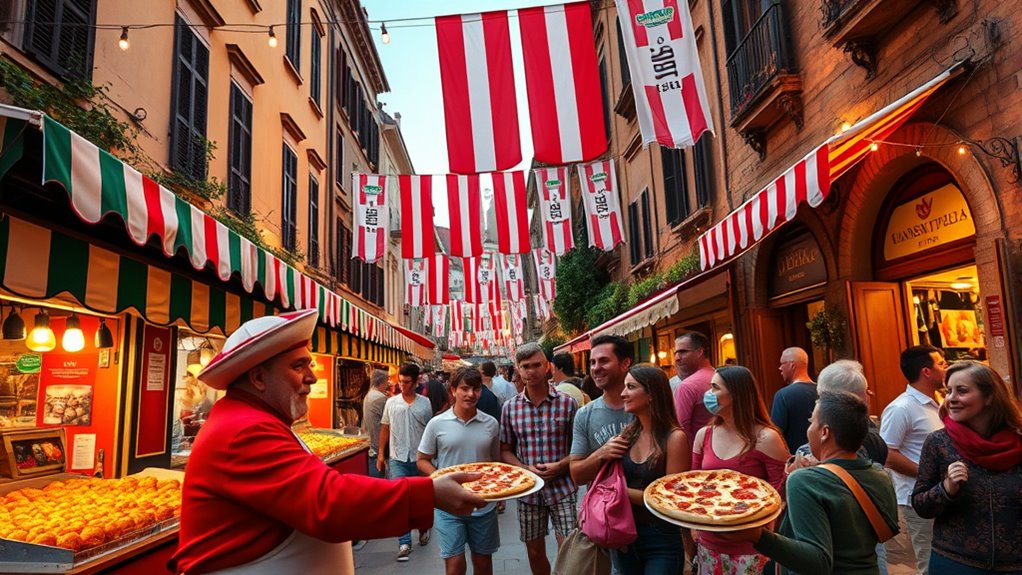

Italian street food has a rich history, starting in humble taverns and marketplaces where vendors served hearty regional dishes. Over time, these recipes evolved with local ingredients and traditions, shaping the diverse flavors you see today. Modern festivals and food trucks now celebrate this culinary heritage, blending tradition with innovation. If you want to discover how these vibrant street scenes reflect Italy’s history and creativity, keep exploring the fascinating journey of Italian street food.
Key Takeaways
- Italian street food originated from necessity, evolving from simple dishes served by ancient taverns to regional specialties.
- Regional ingredients and recipes shape the diverse flavors seen in Italy’s street food today.
- Modern innovations and chef-led experiments reimagine traditional street foods, blending heritage with creativity.
- Festivals and food trucks showcase Italy’s street food evolution, emphasizing cultural exchange and contemporary trends.
- The ongoing preservation and adaptation of tradition ensure Italian street food remains vibrant and relevant.

Have you ever wondered how Italian street food has transformed over the years? It’s a story that mirrors Italy’s rich history, regional flavors, and culinary innovations. Originally, street food was born out of necessity—vendors serving simple, hearty dishes to workers and travelers. Over time, these humble beginnings evolved, reflecting Italy’s diverse regions and their unique ingredients. As you walk through Italian cities today, you notice a vibrant tapestry of flavors, each with its own story. From the crispy supplì in Rome to the sfincione in Palermo, street food captures the essence of local traditions. These regional flavors are the backbone of Italy’s street fare, rooted in centuries-old recipes that have been passed down and adapted to modern tastes.
Culinary innovations have played an essential role in this evolution. Chefs and vendors continually experiment with ingredients, techniques, and presentation, blending tradition with creativity. You’ll find innovative takes on classic snacks, like vegan versions of arancini or fusion-inspired panzerotti that incorporate international flavors. This spirit of innovation keeps Italian street food fresh and exciting, appealing to both locals and tourists enthusiastic for authentic yet inventive experiences. Additionally, the increasing popularity of professional help in the culinary industry has contributed to elevating street food standards and techniques, ensuring quality and safety. These innovations help keep the tradition alive while respecting regional roots and embracing change.
Modern festivals celebrate this evolution, transforming street food into a cultural showcase. You’ll see street vendors competing and collaborating, sharing techniques and stories behind their dishes. Food trucks and pop-up stands bring a contemporary edge, making street food more accessible and diverse. These events highlight Italy’s culinary diversity—each region showcasing its signature flavors in innovative ways, often with a modern twist. It’s not just about eating; it’s about experiencing Italy’s culinary heritage in a lively, communal setting. The blend of regional flavors and culinary innovations helps keep the tradition alive, constantly evolving to reflect Italy’s vibrant food culture.
In essence, the evolution of Italian street food is a tribute to Italy’s ability to honor its past while embracing the present. It’s a reflection of local identities that adapt and thrive, offering delicious, inventive bites that tell stories of regional flavors and creative culinary progress. Every street corner or festival stall invites you to taste Italy’s history, innovation, and passion—all in a single, satisfying bite.
Top picks for "evolution italian street"
Open Amazon search results for this keyword.
As an affiliate, we earn on qualifying purchases.
Frequently Asked Questions
What Are Italy’s Most Iconic Traditional Street Foods?
You’ll love Italy’s most iconic street foods like gelato varieties, where you can savor flavors from pistachio to stracciatella. Don’t miss trying porchetta sandwiches or arancini, perfect for on-the-go bites. Embrace aperitivo traditions by grabbing a quick spritz or prosecco alongside small snacks. These foods reflect Italy’s rich history, offering vibrant flavors and social experiences that make every street corner a delightful feast.
How Have Regional Differences Influenced Street Food Development?
You’ll notice regional variations shape Italian street food, reflecting its rich culinary diversity. In the north, you might enjoy hearty polenta or rice dishes, while in the south, you’ll find vibrant flavors in arancini and sfincione. These regional differences develop from local ingredients, climate, and history, creating a diverse street food scene that offers unique tastes and traditions across Italy. This regional influence makes Italian street food endlessly fascinating and varied.
What Role Do Street Festivals Play in Italian Food Culture?
You might be surprised, but street festivals play a essential role in Italian food culture by fostering cultural exchange, where locals and tourists share authentic flavors. These events boost the economic impact of regional specialties, creating opportunities for small vendors and artisans. As you explore, you’ll find festivals celebrate tradition while embracing innovation, strengthening community bonds and keeping Italy’s rich culinary heritage alive through lively, festive gatherings.
How Has Tourism Impacted Italian Street Food Popularity?
Tourism has markedly boosted Italian street food’s popularity by fostering cultural exchange and culinary innovation. As visitors seek authentic experiences, you get to enjoy diverse flavors and traditional recipes showcased at festivals and markets. This influx encourages vendors to innovate while preserving their heritage, making street food more vibrant and appealing. So, your travels help preserve Italy’s culinary traditions while inspiring new twists that keep the street food scene dynamic and exciting.
Are There Any Health or Safety Regulations for Street Vendors?
You might worry about food safety when enjoying street food, but regulations are strict. Vendors need proper licensing to guarantee hygiene standards, and food safety protocols are enforced regularly. These rules protect you from potential health risks, so you can savor authentic Italian flavors with confidence. Trust that local authorities prioritize your safety, making every bite both delicious and secure.
Conclusion
So, next time you wander through Italy’s lively streets, remember that these foods aren’t just quick bites—they’re centuries of tradition, culture, and community in every bite. Sure, some might say street food isn’t ‘authentic’ enough, but that’s exactly what makes it special. It’s real, spontaneous, and full of history. Embrace the chaos, smell the aromas, and enjoy each delicious moment—because Italian street food isn’t just a meal, it’s a living story.