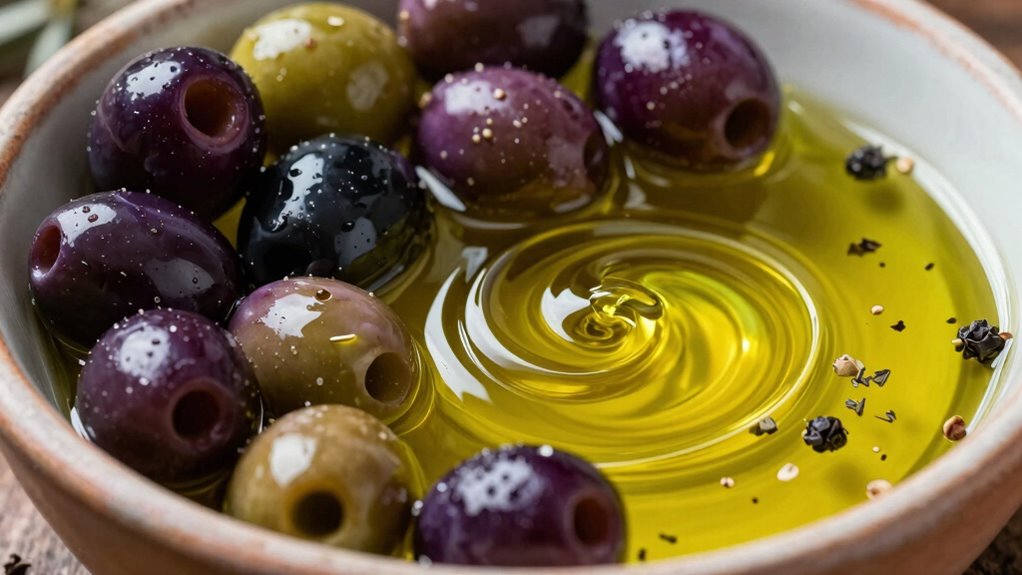

The unique taste of regional olive oils comes from factors like land, climate, and cultivation practices that shape their flavor profiles. Things like soil minerals, weather patterns, and harvest timing influence the olives’ chemical makeup, creating distinct aromas and tastes. Different varieties and processing methods also add to these variations. If you want to discover how these elements combine to create regional distinctions, there’s more to explore that can deepen your understanding.
Key Takeaways
- Terroir, including climate and soil, uniquely influences the chemical composition and flavor profile of regional olive oils.
- Different olive varieties grown in specific regions contribute distinct taste characteristics.
- Harvest timing and methods affect the oil’s flavor, with early or late harvests producing different profiles.
- Post-harvest processing techniques can enhance or diminish regional flavor nuances.
- Regional traditions and cultivation practices shape the overall sensory profile of the olive oil.
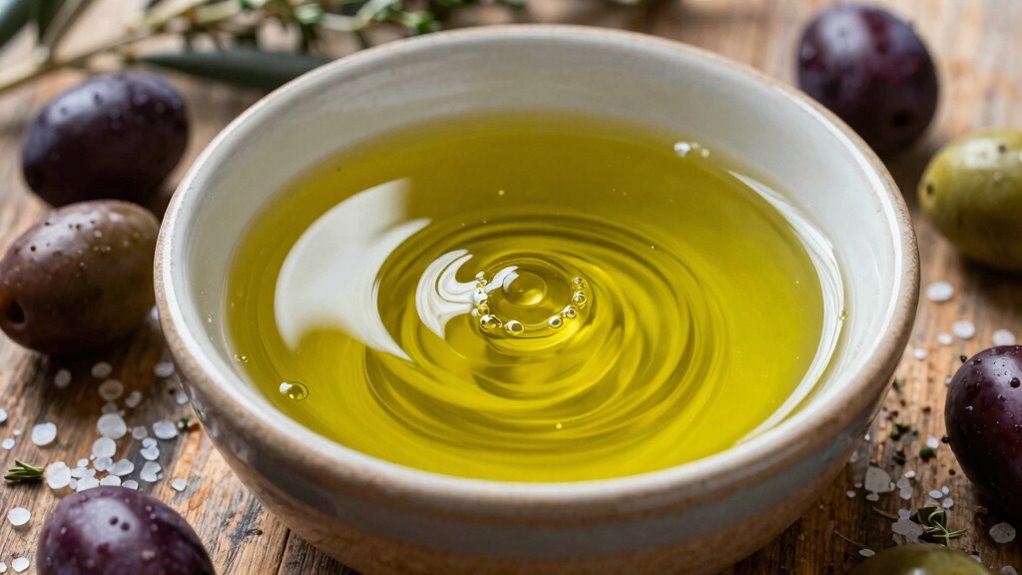
You might notice that olive oils from different regions have distinct flavors, even if they come from the same variety of olives. That’s because regional differences influence the oil’s taste in many ways. One key factor is the harvest methods used by local producers. In some areas, olives are hand-picked carefully to avoid bruising, which helps preserve their delicate flavors. In others, machines may be used to speed up the process, but this can sometimes lead to slightly different flavor profiles due to damage or oxidation. The timing of harvest also matters; olives picked early tend to have a more bitter, peppery taste, while later harvests produce milder oils. These choices in harvest methods shape the overall character of the oil you taste. Additionally, the chemical composition of olives varies by region, influencing the complexity and profile of the flavor. The terroir—a term encompassing climate, soil, and environment—plays a significant role in shaping these chemical differences. Variations in microclimates within regions can also lead to subtle differences in flavor, even among olives from the same area. Furthermore, microclimate variations can alter how the olives develop, adding to the regional uniqueness in taste.
Another big influence on flavor comes from the olive varieties grown in each region. Different types of olives have unique chemical compositions, which translate into distinct flavors and aromas. For example, some varieties produce robust, fruity oils with hints of green apple or tomato, while others yield softer, buttery notes. Regions often cultivate specific olive varieties suited to their climate and soil, which further reinforces regional differences. When you sample oils from different areas, you’re experiencing the combined effect of these unique varieties, giving each region its signature taste. The cultivation practices employed by growers also affect the health and chemical makeup of the olives, thereby influencing flavor profiles.
Climate and soil conditions are also crucial. Olives grown in the Mediterranean might develop a different profile than those cultivated in the Pacific Northwest, even if they are the same variety. The amount of rainfall, sunlight, and soil minerals influence the olives’ chemical makeup, which in turn affects the oil’s flavor, aroma, and even color. The way the olives are stored and processed after harvest can also impact flavor. Some regions prioritize cold-pressing and minimal processing to retain fresh, vibrant notes, while others might use different techniques that lead to richer or more intense flavors. Proper storage techniques are essential in maintaining the olive oil’s quality and flavor integrity, especially for regional specialties. These processing choices can also highlight or diminish specific flavor qualities, adding another layer of regional character.
All these elements—harvest methods, olive varieties, climate, soil, and processing—combine to create regional olive oils that taste uniquely their own. You don’t just get a bottle of oil; you get a story of the land, the climate, and the choices made during harvest and production. That’s what makes regional olive oils so fascinating: their flavors are a reflection of their origins, making each bottle a distinctive tasting experience.

Atlas Organic Extra Virgin Olive Oil, Moroccan, High Polyphenol, 1 L
- Quality: Cold-pressed Moroccan olive oil
- Health Benefits: Single pressing for maximum nutrients
- Aroma & Flavor: Delicate aroma with almond, herb, and citrus notes
As an affiliate, we earn on qualifying purchases.
As an affiliate, we earn on qualifying purchases.
Frequently Asked Questions
How Does Olive Tree Variety Affect Oil Flavor?
You’ll notice that olive tree variety directly influences oil flavor through unique Olive varietal characteristics and flavor compound diversity. Different varieties produce olives with distinct bitterness, fruitiness, or pungency, shaping the oil’s overall taste. As you taste, you’ll find that specific varietals bring out complex flavors, from grassy and peppery notes to fruity and nutty undertones. This variation is why regional olive oils taste so distinct, reflecting their unique olive tree genetics.
Do Harvesting Methods Influence Olive Oil Taste?
Yes, harvesting methods influence olive oil taste. You can impact flavor by choosing the right harvesting timing—early harvests often yield more bitter, pungent oils, while later ones are milder. Equipment choices also matter; handpicking preserves fruit integrity better than mechanical methods, which can cause bruising and oxidation. These factors help guarantee the olives stay fresh and healthy, resulting in a more vibrant, flavorful oil.
Can Storage Conditions Change Olive Oil’s Flavor Profile?
Storage conditions can change olive oil’s flavor profile like a painter’s palette shifting with light. If you keep olive oil too long, especially over extended storage durations, it can develop off-flavors. Using the right container material, like dark glass or stainless steel, helps preserve its freshness by limiting exposure to light and air. Proper storage keeps your olive oil tasting vibrant, fresh, and true to its regional character.
How Does Olive Oil Production Technique Impact Taste?
Your olive oil’s taste is shaped by harvest timing and pressing techniques. If you harvest early, the oil tends to be more bitter and pungent, while later harvests produce milder flavors. Using traditional, cold-pressing methods preserves delicate aromas and enhances flavor complexity. Modern techniques may yield higher quantities but can strip away nuanced tastes. Your choice of production method directly influences whether the oil tastes robust, fruity, or buttery.
Do Regional Climate Changes Alter Olive Oil Flavors?
You know what they say, “A change in the weather can change the flavor.” Regional climate changes definitely alter olive oil flavors through terroir influence and microclimate effects. Warmer temperatures can lead to fruitier, more robust oils, while cooler climates produce milder, more delicate flavors. These subtle shifts in climate impact the olives’ growth and oil composition, making each region’s olive oil unique and reflective of its specific environmental conditions.
Conclusion
You now see how factors like climate, soil, and olive variety shape regional olive oils’ unique flavors. Did you know that over 1,000 different olive varieties are cultivated worldwide? That means each region offers a distinct taste experience, making olive oil not just a cooking ingredient but a journey through diverse landscapes and traditions. So next time you drizzle some, appreciate the rich story behind its flavor—it’s a true reflection of its origins.