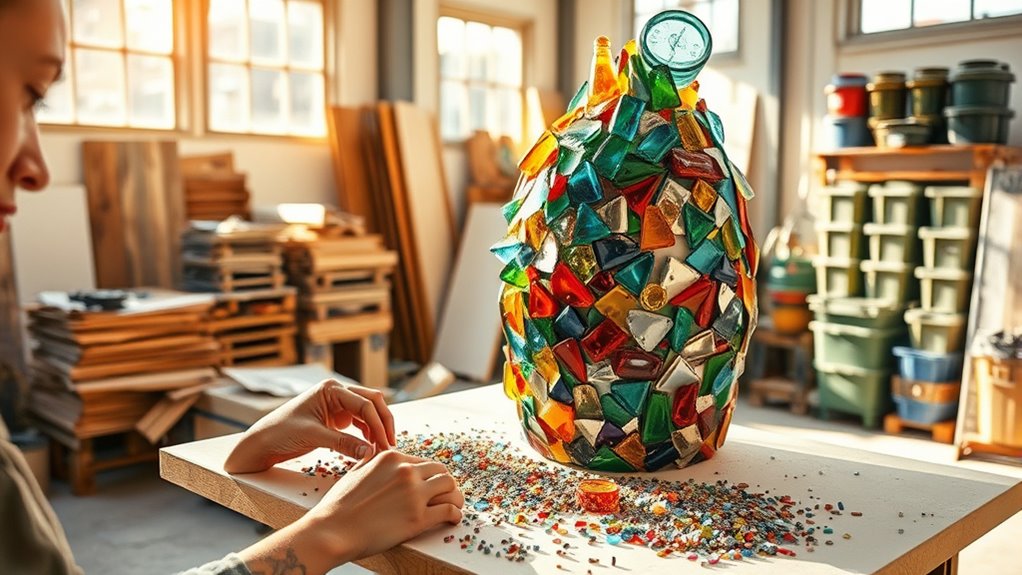

Creating art with recycled and upcycled materials allows you to turn waste into meaningful, eco-friendly masterpieces. By choosing durable, non-toxic, sustainably sourced materials, you reduce demand for new resources and promote environmental consciousness. Upcycling transforms discarded objects into innovative works, inspiring resourcefulness and uniqueness. This approach not only enhances your creativity but also sends a powerful message about sustainability. If you’re curious how to incorporate these practices into your projects, there’s more to discover below.
Key Takeaways
- Utilize eco friendly, durable, non-toxic materials like recycled paper, reclaimed wood, and repurposed metal to reduce environmental impact.
- Transform discarded objects through upcycling techniques to create innovative, higher-value art pieces.
- Consider lifecycle aspects by cleaning, repainting, or reconfiguring recycled items to extend their creative use.
- Use art to communicate sustainability messages, inspiring viewers to adopt waste reduction practices.
- Embrace sustainable practices to foster creativity, promote environmental responsibility, and produce impactful, unique artworks.

Sustainable art practices are gaining momentum as artists seek ways to create meaningful work while reducing their environmental impact. One of the most effective approaches involves using eco friendly materials that are either recycled or sustainably sourced. These materials not only lessen the demand for virgin resources but also give new life to items that might otherwise end up in landfills. By choosing recycled paper, reclaimed wood, or repurposed metal, you can craft artwork that promotes environmental consciousness without sacrificing creativity or quality. The key is to look for materials that are durable, non-toxic, and ethically sourced, ensuring your art project aligns with sustainability goals.
In addition to selecting eco friendly materials, employing upcycled techniques becomes essential. Upcycling involves transforming discarded objects into new, higher-value art pieces, turning waste into a creative resource. For example, you might repurpose old textiles into vibrant mixed-media pieces, or transform scrap metal into intricate sculptures. This approach not only reduces waste but also encourages innovation, pushing you to see everyday objects in a new light. Upcycled techniques foster a sense of resourcefulness, allowing you to create distinctive, meaningful art while minimizing your environmental footprint. Moreover, exploring innovative recycling methods can further enhance the sustainability of your artistic practice.
When integrating recycled materials into your work, consider the entire lifecycle of the items you choose. Think about how each piece can be given a second purpose, whether through cleaning, repainting, or reconfiguring. The process of upcycling often involves a hands-on approach, which can be deeply rewarding as you see discarded objects turn into stunning visual statements. It challenges you to rethink waste and encourages a more mindful attitude towards consumption and production. As you develop your craft, you’ll find that working with recycled and upcycled materials sparks new ideas and expands your artistic boundaries.
Using eco friendly materials and upcycled techniques also sends a powerful message to viewers about sustainability. Your art becomes a conversation starter about environmental issues, inspiring others to consider how they can reduce waste in their own lives. The beauty of sustainable art is that it demonstrates practicality and aesthetics can go hand in hand. By consciously choosing recycled and upcycled resources, you’re not only creating unique pieces but also contributing to a more sustainable future. This approach requires creativity and commitment, but the impact of your work can resonate far beyond the gallery walls, encouraging a broader shift towards mindful consumption and responsible artistic practices.

coowoz Travel Backpack For Women Men,Carry On Backpack,Hiking Backpack Waterproof Outdoor Sports Rucksack Casual Daypack Travel Essentials(Olive Green)
【Travel Backpack for women】This backpack is made of waterproof durable polyester, good air permeability and heat dissipation with...
As an affiliate, we earn on qualifying purchases.
Frequently Asked Questions
How Can Artists Find Quality Recycled Materials for Their Projects?
You can find quality recycled materials through upcycling partnerships with local businesses, community centers, and thrift stores, which often donate or sell items suitable for art projects. Focus on material sourcing by exploring online platforms and social media groups dedicated to sustainable art. Building relationships with these sources guarantees access to diverse, high-quality recycled materials, helping you create impactful art while promoting sustainability and reducing waste.
What Are the Best Techniques for Working With Recycled Materials?
Think of working with recycled materials as taming a wild garden—you need innovative techniques to nurture and preserve their essence. You can sand, cut, and glue with precision, and experiment with layering or weaving to enhance durability. Carefully cleaning and treating materials helps preserve quality while revealing new creative possibilities. By embracing these methods, you turn discarded items into art that’s both sustainable and visually compelling.
How Do Recycled Art Practices Impact Community Engagement?
You can boost community engagement by involving locals in recycled art projects, fostering community empowerment and environmental awareness. When you create art using recycled materials, people feel connected and motivated to participate, seeing their efforts make a difference. This hands-on approach encourages collaboration, educates about sustainability, and builds a sense of pride. Your recycled art practices can truly transform communities by inspiring collective action toward a greener, more engaged society.
What Challenges Do Artists Face When Using Recycled Materials?
You face challenges like material durability, which can compromise your artwork’s longevity, and limited availability of quality recycled materials. These constraints can hinder your artistic expression, making it harder to achieve your vision. You might also encounter difficulties in sourcing diverse supplies or convincing others of the value of recycled art. Despite these hurdles, your creativity can flourish by finding innovative solutions and emphasizing the impact of sustainable practices.
Are There Any Certifications for Sustainable Art Practices?
Yes, there are certifications for sustainable art practices. Eco labels and certification standards help you verify your commitment to sustainability. These certifications ensure your work meets specific environmental criteria, making your art more attractive to eco-conscious collectors. By obtaining these certifications, you demonstrate your dedication to responsible art creation, which can boost your reputation and open doors to new markets. Always research relevant eco labels to find the best fit for your practice.

Villeroy & Boch For Me Espresso Cup & Saucer : Set of 2, Premium Porcelain, White
For Me is truly versatile: This sleek, white porcelain can be combined in all kinds of ways, serving...
As an affiliate, we earn on qualifying purchases.
Conclusion
By embracing recycled materials, you not only reduce waste but also inspire change; you challenge norms and redefine creativity. You transform discarded objects into meaningful art, honoring the environment and sparking conversation. You practice sustainability, promote innovation, and cultivate awareness—all through your artistic choices. When you create with recycled materials, you embody a future where art and responsibility coexist, proving that your creativity can make a difference—one piece at a time, one act of reuse, one step toward a more sustainable world.

Hlukana Porcelain Espresso Cups Set of 4, 3.5 oz Small Coffee Mugs, White Demitasse Cups Perfect for Espresso Machine and Coffee Maker, Microwave Dishwasher Safe Espresso Cups
【Lovely Capacity for Espresso Lovers】 - Set of four 3.5-ounce white espresso cups set, working great with all...
As an affiliate, we earn on qualifying purchases.

homEdge Porcelain Espresso Shot Cup Set with Saucers and Stainless Steel Spoons - 80 ml / 2.67 oz, Set of 4, White
Thick Wall Design: The sturdy porcelain construction with a thick wall ensures optimal heat retention, keeping your espresso...
As an affiliate, we earn on qualifying purchases.