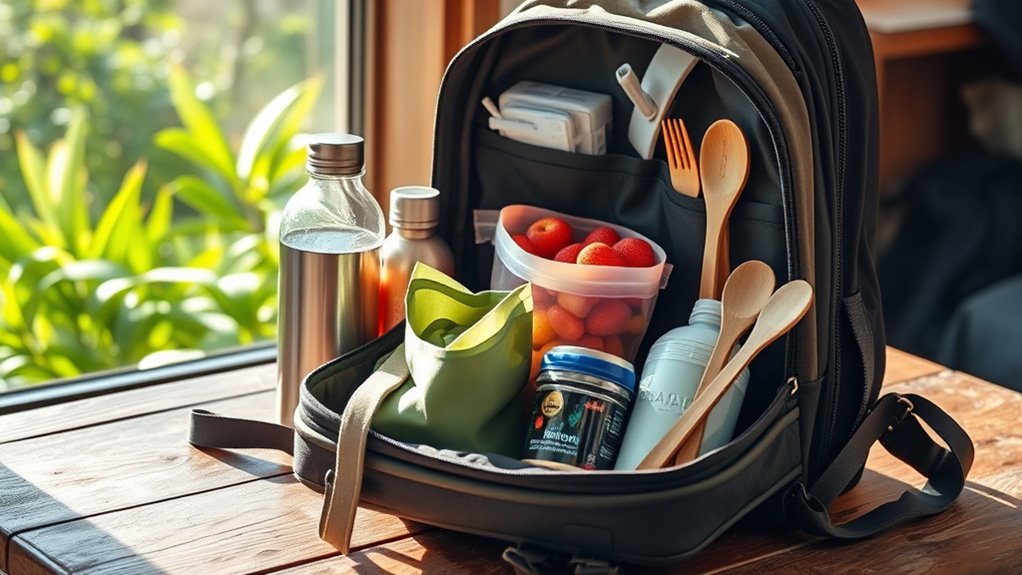

To embrace zero-waste travel, focus on packing reusable items like bottles, utensils, and cloth bags to cut down on single-use plastics. Pack versatile clothing to reduce overpacking and waste, and choose eco-friendly toiletries in solid or refillable containers. Develop a mindset of mindful consumption by refusing disposable items and seeking sustainable souvenirs. Small, intentional choices make a big difference; keep exploring for more ways to travel responsibly and leave a positive impact.
Key Takeaways
- Pack reusable essentials like water bottles, utensils, and bags to reduce reliance on single-use plastics.
- Choose versatile, minimal clothing to limit overpacking and waste during travel.
- Opt for eco-friendly toiletries such as solid shampoo bars and refillable containers.
- Plan transportation methods like walking, biking, or public transit to lower carbon footprint.
- Cultivate a mindful mindset by refusing disposable items and seeking sustainable options at destinations.

Traveling sustainably is easier than you might think. It begins with mindful packing and choosing eco-conscious habits that reduce waste and environmental impact. One simple step is to bring along sustainable souvenirs. Instead of grabbing mass-produced trinkets, seek out locally made crafts or items that support small businesses and artisans. These eco-friendly souvenirs not only serve as meaningful mementos but also help lessen the demand for plastic or cheaply manufactured products that often end up in landfills. Incorporating these thoughtful selections into your trip encourages responsible tourism and leaves a positive mark on the communities you visit.
Choose locally made crafts and support small businesses to leave a positive, eco-friendly impact on communities.
Another key component is opting for eco-friendly transportation options whenever possible. Instead of relying on taxis or rental cars, consider walking, biking, or using public transit. These choices considerably cut down your carbon footprint and allow you to experience your destination more intimately. Many cities now offer bike-sharing programs, making it convenient to explore while staying eco-conscious. If distances are longer, look into trains or electric shuttles that prioritize sustainability. Not only does this reduce emissions, but it also often leads to a more authentic and immersive travel experience. Additionally, choosing vetted newborn products ensures safety and sustainability for families traveling with infants.
Packing smart is essential for zero-waste travel. Think lightweight and versatile—bring reusable water bottles, cloth bags, and utensils to cut down on single-use plastics. Packing minimal clothing also reduces luggage weight and makes it easier to avoid overpacking, which often leads to waste. Remember, every item you bring should serve a purpose, and avoid packing unnecessary disposables like travel-sized toiletries in plastic bottles. Instead, opt for solid shampoo bars or refillable containers. Preparing this way not only minimizes waste but also simplifies your journey, making it easier to stay committed to zero-waste principles.
Developing a zero-waste mindset involves planning and awareness. Be conscious of your consumption habits, and aim to refuse single-use plastics whenever you can. Carry a set of reusable straws and utensils, and politely decline disposable items offered at restaurants or shops. When shopping, choose products with minimal or biodegradable packaging. Also, be mindful of waste disposal—look for recycling options or composting facilities at your destination. By adopting these habits, you’ll contribute to a healthier environment while setting an example for fellow travelers.
Ultimately, zero-waste travel isn’t about perfection but progress. Small, intentional choices like selecting eco-friendly transportation, bringing sustainable souvenirs, and packing thoughtfully can make a markedly positive difference. With each trip, you reinforce your commitment to reducing waste and respecting the planet, ensuring that future travelers can enjoy the beauty of your destinations just as you do today.
reusable water bottles for travel
As an affiliate, we earn on qualifying purchases.
As an affiliate, we earn on qualifying purchases.
Frequently Asked Questions
How Can I Find Zero-Waste Accommodations?
You can find zero-waste accommodations by searching for sustainable lodging options that participate in eco certification programs. Use websites like EcoLodges, Green Key, or EarthCheck to identify places committed to eco-friendly practices. Read reviews and check their sustainability policies to make certain they prioritize waste reduction and eco-conscious initiatives. Booking these accommodations helps you travel more sustainably and supports businesses dedicated to protecting the environment.
What Are Eco-Friendly Alternatives to Toiletries?
Imagine splashing cool water on your face, knowing your toiletries are eco-friendly. You can swap out plastic bottles for refillable containers or choose solid toiletries like bars of soap and shampoo bars. These options cut down on waste and are compact for travel. By making this switch, you embrace sustainability, reduce plastic pollution, and enjoy a guilt-free trip, all while keeping your essentials eco-conscious and easy to pack.
How Do I Handle Waste During Long Trips?
During long trips, you handle waste by prioritizing recycling tips and exploring composting options. Carry reusable containers and bags to reduce single-use waste, and sort recyclables properly. When possible, find designated composting sites or bring compostable waste back home. Staying mindful of waste management helps you minimize your environmental impact. By actively practicing recycling and composting, you contribute to a more sustainable travel experience.
Can Zero-Waste Travel Be Budget-Friendly?
Yes, zero-waste travel can be budget-friendly. By choosing reusable travel gear like stainless steel bottles and containers, you save money on disposable items. Sustainable travel accessories, such as bamboo utensils and cloth napkins, are often affordable and durable. Planning ahead and bringing your own essentials reduces costs and waste. With some research and smart packing, you can enjoy eco-friendly travel without breaking the bank.
How Do I Navigate Cultural Differences in Waste Practices?
When managing cultural differences in waste practices, you should respect local waste customs and adapt your behavior accordingly. Research cultural recycling norms before your trip, and observe how locals manage waste. Use reusable items to minimize waste, even if practices differ. Engaging with locals can also help you better understand and respect their waste habits, making your travel more eco-friendly and culturally sensitive.
Conclusion
By adopting zero-waste travel habits, you become a conscious traveler shaping a better world. Think of your packing as tending a delicate garden—you nurture only what’s necessary, preventing waste from choking the environment’s beauty. Remember, each small choice adds up; just like a single drop creates ripples, your mindful mindset can inspire others. Together, we can turn travel into a journey of impact, leaving behind footprints that heal rather than harm.